


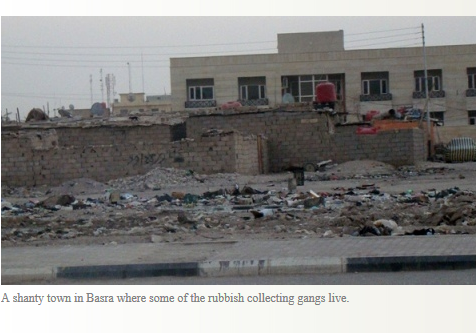
Additionally the local authorities also charge the families and gangs a fee for turning a blind eye to the unofficial garbage collectors.
“I found these lovely blue pants that I’m wearing in the rubbish, and this shoe,” says another of the garbage collectors Hussein Abed – he was a soldier in the Iraqi army but his leg was amputated in the war against Kuwait; he’s riding a skinny donkey as he goes about his daily business and he says this is only way he can make money for his family. “The municipal authorities know that the things we find have value, which is why they tax us for their share.”
Interestingly because the local waste collection is always late, and sometimes never comes at all, the wealthy locals have even started to welcome their refuse-collecting guests.
After years of going through the rubbish bins and containers, the faces of many of the foragers have become familiar to the wealthy whose rubbish they search through. “Some of them now give us food or used clothes and sometimes they ask us to do jobs that nobody else wants to do,” Sabbah says, adding with some pride, “they trust us.”
“In garbage cans we find all sorts of things,” says Zara, 20, who is part of a family of displaced Iraqis living in the slums on the outskirts of Basra; she came here from Baghdad six years ago and now she and her sisters sift through Basra’s garbage for a living. “Bags of rice, flour and lentils, dry bread and cooking utensils. All of these things have helped us to survive. Also sometimes we’re lucky and we can make enough money from the garbage in one day, as much as we are paid by social welfare in a month.”
“What we get here is much better than what the government promises us,” she concludes, before getting back to her search for buried treasure in Basra’s piles of rubbish.
Comments are closed.