


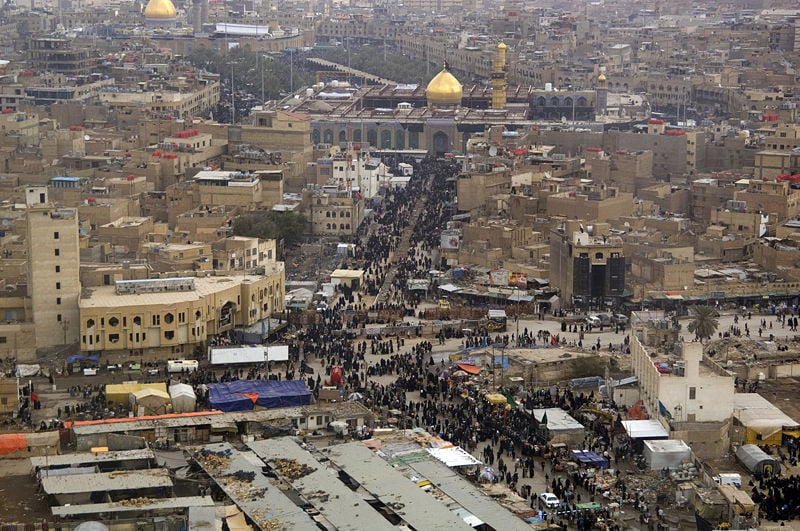
Often school buildings are also used as part of religious celebrations; those taking part might prepare floats for parades there or undertake other activities.
Of course, some younger students lower in the education system are pleased they don’t have to go to school. But others working for higher degrees and qualifications are paying a high price for all their vacations. One school supervisor, Yassin Ali, told NIQASH that his students were getting lazy. “They lose energy and drive and they get used to not having to go to school,” he says. “Whenever they come back from holiday it always takes several days to adapt to class and to regain focus and energy.”
“Students in the higher classes also need to finish their whole year’s curriculum within the school year and with all the holidays, it gets very difficult to do this,” Ali noted.
“It’s difficult to pass and get into a good university if you don’t complete the whole curriculum,” says Mahdi Karrar, a science student – he said his class has not even covered half of the year’s work even though six months have gone by.
And then there are locals who want to get some sort of government document or otherwise deal with government departments. The holidays can also be problematic for them.
“I am following up on a transaction that’s related to me being fired from my job for political reasons,” one Karbala local told NIQASH. “During religious holidays all the mail just piles up on someone’s desk – so I know I am going to be waiting a long time to have this problem dealt with.”
“I am waiting to finalize my pension claim,” another local tells. “I filed my papers some time ago but the holidays meant that all the government departments closed their doors for two weeks. So I am not sure where my papers are now, whether they have been sent on to Baghdad or not. I don’t know how long it will take before I can get my pension,” he complains. “I’ve been following it up for a week now.”
Comments are closed.