


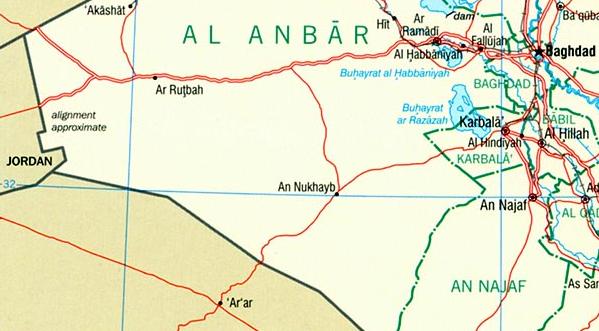
He added, “The government of Fallujah, with all its tribal sheikhs and dignitaries, are demanding that the central government and the armed forces stop the indiscriminate shelling of residential areas and withdraw the armed forces, as the [local] police are the only party responsible for managing the crisis.”
Business hours in most of state institutions, schools and colleges in Anbar continue to be disrupted, but the power is back in some areas, according to one local source. The army, which controls entrances to the province, has allowed fuel trucks into the center of Ramadi to unload their cargo.
There is no clear picture of the armed factions fighting in Anbar, because the organizations overlap. In addition, while the army declared that it is only fighting against al-Qaeda, some reports assert that a number of tribes have joined al-Qaeda's ranks and refer to the formation of a “military council.” It has been alleged that this council includes a number of tribal volunteers and seven armed groups along the lines of or possibly including the 1920 Revolution Brigade, the Mujahedeen Army, the Islamic Army, and the Naqshbandi Army.
While some tribal elements, such as the supporters of Sheikh Ahmed Abu Risha, have decided to fight alongside government forces, others are fighting against the Baghdad government as well as ISIS.
It appears that the Maliki government is receiving outside assistance in its fight against al-Qaeda. On Jan. 6, US Secretary of State John Kerry stressed that the United States would aid Iraqi authorities in their struggle against al-Qaeda and affiliated militants in Anbar. That same day, the Iranian deputy head of the general staff, Gen. Mohammad Hejazi, said that Tehran was ready to offer Iraq advice and military equipment.
Comments are closed.