


Indeed, Maliki needs KRG support, particularly as the crisis in Anbar rages and tensions with the Sunni Arab community continue. Still, there are limits to how far Maliki can go to assuage the KRG in light of the growing demands by provincial administrations and local populations for government services and revenues — all fueled by a sense of Iraqi resource nationalism. Some Iraqi officials have argued that Maliki could even lose votes if he supports Kurdish independent export and payment demands.
Others have reframed the oil imbroglio as a financial issue; a drain on the Iraqi economy that Baghdad can no longer sustain, given last year’s $18 billion budget deficit. Hence, Baghdad cannot afford to pay the KRG without Erbil’s contribution to the federal budget, which includes exporting 400,000 barrels per day via SOMO. These financial strains could increase further if Baghdad recognizes the creation of three new provinces, which would be eligible for their own budgets.
Despite the rhetoric, negotiations between Baghdad and the KRG continue, and short-term agreements are likely to be made before the April elections. Yet, the key issue of who controls oil and money extends beyond the Baghdad-Erbil dispute and into the provinces, which makes the problem a larger one of determining relative gains. For the KRG, the challenge is not only convincing Baghdad of its export and revenue rights, but other Iraqi provinces and populations who regard natural resources as part of Iraq’s national wealth to be distributed among Iraqis first.
Still, the onus of responsibility lies with Baghdad. To maximize Iraqi energy sector potential, Iraqi officials will have to devise a more convincing strategy that assures its control over energy resource, incorporates the provinces and KRG fairly into this plan, and assures an equitable distribution of revenues to Iraqi populations.
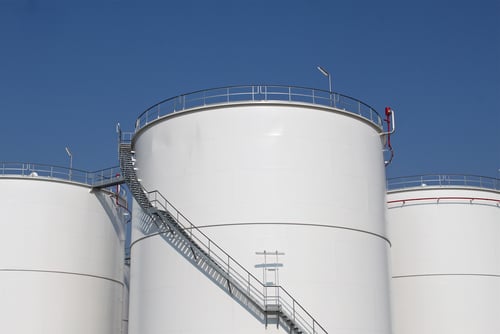
(Oil tanks image via Shutterstock)
RT @IraqMonitor: #Iraq Business News: Iraq’s Oil Brinkmanship http://t.co/LuIbCa5qhN
New Blog Post Iraq’s Oil Brinkmanship - By Denise Natali for Al-Monitor. Any opinions expressed are those of... http://t.co/YqTsg0dIVR
#Iraq’s Oil Brinkmanship http://t.co/SXt3e159pU
RT @IraqDaily: #Iraq’s Oil Brinkmanship http://t.co/SXt3e159pU
#Iraq’s #Oil Brinkmanship http://t.co/SXt3e159pU