


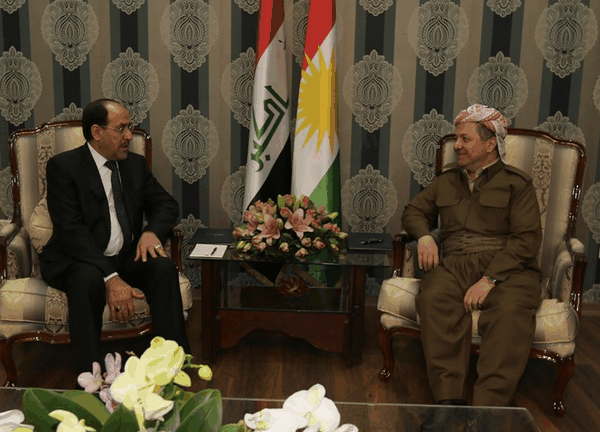
The KRG's interpretation is based on the assertion that the Iraqi constitution revolves around the principle of a decentralized state, whereby the provinces and regions have more powers than the federal government. On the other hand, the Baghdad government’s interpretation is based on the existence of a central authority whose powers supersede those of the provinces and regions. The constitution itself contributes to this dichotomy by leaving pivotal issues, such as the powers of each authority, subject to interpretation and thus diverging viewpoints.
Political maneuverings since the 2005 adoption of the constitution until now have exacerbated the interpretational crisis. Two different parliaments failed to pass a series of laws considered necessary for clarifying the various powers and authorities. This is particularly true of laws pertaining to the petroleum and gas industries, the federal council and laws regulating the functions of the security forces and the army.
The clashing interpretations will remain a flash point that threatens the relationship between the federal authority and Iraq's provinces. In truth, this issue threatens the very structure, unity and security of the Iraqi state, if the conflicting interpretations are generalized to all Iraqi crises.
The never-ending discussions between Baghdad and Erbil have, for the most part, focused on diffusing their crises by finding temporary compromises. This has been the case over the years and appears set to remain that way with the 2014 budget and the ongoing disagreement over the KRG's export of oil. These discussions will not address any solutions having to do with systematizing constitutional interpretations or passing pending laws, without which reaching permanent solutions are impossible.
Comments are closed.