


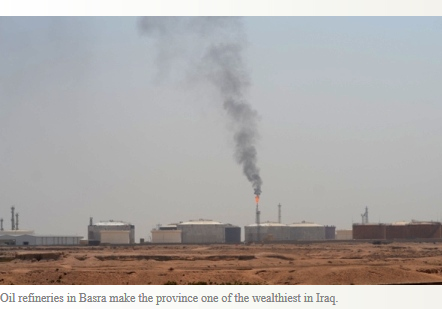
Majid al-Nasrawi, the new governor of Basra since the last round of provincial elections in 2013, is enthusiastic that this can happen.
“If funds are able to be controlled by the provincial government that will make it easier for us to complete important projects here and sign off on projects we have asked international companies to undertake,” he says.
“There are some huge projects planned,” assistant to the governor, Muhannad al-Saad, explained. “Things like the building of medical, industrial and media villages. Additionally we want to build a suspension bridge over the Shatt al-Arab waterway and a hydropower project is also planned as is a programme to try and train staff to reduce administrative and financial corruption.”
Al-Saad admitted there were around 1,500 unfinished or delayed projects that were to be completed in 2014 and that this budget would be covering those too.
But of course, as always in Iraq, things are not that easy.
Local authorities are often at the mercy of central government planners. Most of the proposed provincial projects are supposed to be approved by committees in Baghdad, who can take up to six months to make a decision. Even after they do approve them – if they do – the transfer of funds to start the projects can also take time. Sometimes funding doesn’t arrive in the provinces until April.
Article 44 of Law 21 is not yet in effect – the law has been suspended by the Iraqi central government. Previously Iraqi Prime Minister Nouri al-Maliki had been supportive of the amendments, which give provincial governments a lot more power over their own affairs and mean that not every single thing needs to go through Baghdad.
Comments are closed.