


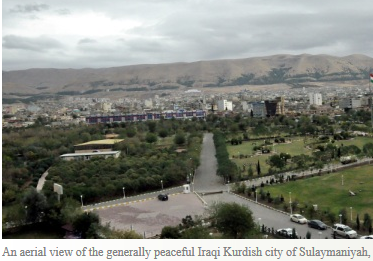
“Our troops are carefully and cautiously monitoring the situation,” Awat Mohammed, the head of Sulaymaniyah's security committee and deputy mayor, told NIQASH. “These armed extremists are a threat to all of Iraq, not only to our region, and our military are prepared to confront them if necessary.”
“In fact a number of persons of concern were arrested over the past few days,” one member of the military in Sulaymaniyah told NIQASH under condition of anonymity because he was not supposed to comment on these matters. “They were arrested on suspicion of being members of [Sunni Muslim extremist group] the Islamic State of Iraq and Syria. It is thought they were coming into the city to settle down so they could plan attacks for later on,” he says.
“Staff at the checkpoints have been told they should implement strict security measures and that they have the right to prevent anyone they think is of concern from entering the region,” he added.
Roads in and out of the province have been deemed particularly unsafe and local authorities are advising people not to travel overland. “People should avoid this because of the danger of being abducted by gunmen along the roads. If they need to travel they should go by air,” says Raman Othman, the spokesperson for Sulaymaniyah's provincial authorities.
Travelling by road has been made difficult by extremists in more than one way: Sulaymaniyah is also experiencing a shortage of fuel. The dangerous roads make it hard to deliver fuel and other goods and Sulaymaniyah is also missing out on oil coming from the fought-over Baiji refinery. Locals have started hoarding fuel in their homes in case gas stations run out
The authorities have also banned any trucks with license plates from other Iraqi provinces, especially if the authorities in the semi-autonomous region don't have any documentation on them. Equally tough security measures are also in use at Sulaymaniyah's airport.
Another thing that provincial security forces are doing is keeping a close eye on the activities of any of the young people who went to fight in Syria, where they may have made the acquaintance of members of ISIS or other militant groups, before returning home.
Comments are closed.