


Each province, no matter which sect or ethnicity the majority of its inhabitants are, has different needs. For example, the southern city of Basra suffers from a lack of water and power and it is also home to a large amount of poor people. Its people believe that if Basra had more autonomy then local officials could make better decisions more quickly and solve at least some of the city’s problems.
Another example: The northern city of Mosul needs its state officials to be given more power over local security. Part of the reason that the Sunni Muslim extremist group, the Islamic State, currently dominates there is because many locals felt they were a better alternative than the Iraqi army, that had been stationed there and which was mainly made up of Shiite Muslim forces.
However officials in these cities and provinces have been prevented from making many of their own decisions, with the government saying that they cannot make any moves without Baghdad’s prior approval.
Article 122 of the Iraqi Constitution actually gives the provincial councils this power “in accordance with the principle of decentralized administration”, Article 110 limits the federal government’s powers to things like foreign and fiscal policy and Article 115 says that anything that the federal government isn’t responsible for, should be the responsibility of the provincial councils.
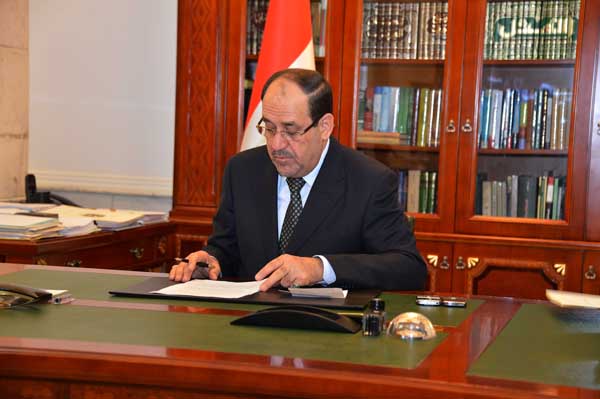
But of course the Iraqi government headed by al-Maliki has been ignoring those stipulations. Some would say it is those kinds of tactics that have pushed Iraq closer to splitting, and becoming three different countries: Sunni, Shiite and Kurdish.
“It really began when the federal government refused to apply Law 21, from the summer of 2013,” former judge and legal expert, Wael Abdul-Latif, told NIQASH. “That law would have forced the government to do as the Constitution told it and grant the provinces broader powers.”
Comments are closed.