


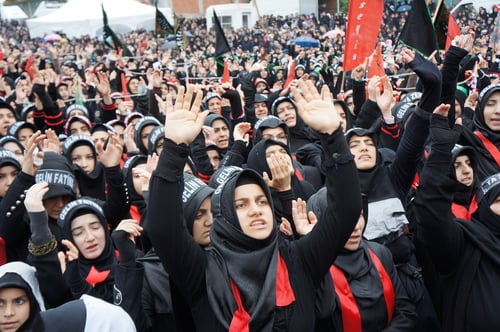
Shiite religious institutions have relative political and economic independence from governmental controls, which has given them major social influence, since these religious authorities have been seeking to exercise power outside politics.
This has tied them to their social base, and created common interests between the two parties. In contrast, Sunni religious leaders are usually elected by governments and operate as part of a regime, as is the situation now in Saudi Arabia and Egypt.
The Shiite authority is split into four main departments: a department to study and issue fatwas and religious edicts, the Department of Social Relations, the Department of Social Assistance and a department for communication with political authorities.
Each department communicates with its popular base, where authorities usually take into consideration the social pulse of all these fields. This system has evolved throughout the centuries and turned into a general office of authority for the management of affairs for Shiite religious power.
Communication between followers and religious institutions is done through a wide network of agents who are directly supervised by the office of authority. The process of selecting agents is done with great sensitivity so as not to be exploited by certain people. Sistani has developed a hierarchical network of licensed individuals that includes 350 personnel in various regions in Iraq.
Comments are closed.