


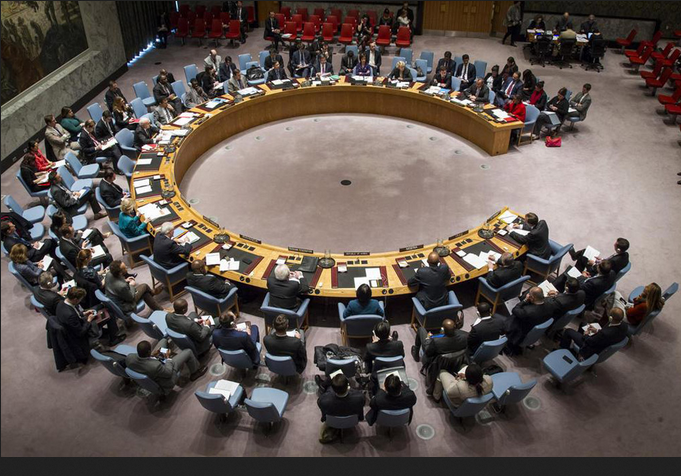
“Faced with a common threat,” he continued, “the political, community and religious leaders across Iraq focused on pulling back from the brink and saving their country.”
The UN High Commissioner for Human Rights, Zeid Ra’ad Al Hussein, meanwhile, painted a dire picture of the situation on the ground in ISIL-controlled territory, suggesting that the world remained “staggered” by the “monstrous” crimes committed by the group. Above all, he said, the crimes committed in Iraq were of “such scale and gravity that in all likelihood they qualify as international crimes, subject to the jurisdiction of the International Criminal Court” as reports of genocidal offences and crimes against humanity continue to leak out areas held by the militants.
To that point, Ms. Amos provided a bleak assessment of the numbers, indicating that some 5.2 million people across the country were now in need of assistance, including the 3.6 million Iraqis living in areas under the control of ISIL.
Despite the infusion of $500 million from the Saudi Arabia and resources provided by other donors early on in the crisis, the head of the UN Office for the Coordination of Humanitarian Affairs (OCHA) told the 15-member Council that “much more help is urgently required,” particularly as winter fast approaches.
According to the latest estimates, a minimum of 450,000 people, including 225,000 children, need warm winter clothes and shoes and 300,000 need blankets, stoves and other non-food item support.
Ms. Amos said that ongoing insecurity and fighting was preventing UN efforts from reaching all those in need of assistance, especially as the number of 2 million internally displaced persons continues to rise. Moreover, she reminded the Council that the crisis afflicting Iraq belonged to the wider international community and was part of “a regional catastrophe which we have a collective responsibility to address.”
Comments are closed.