


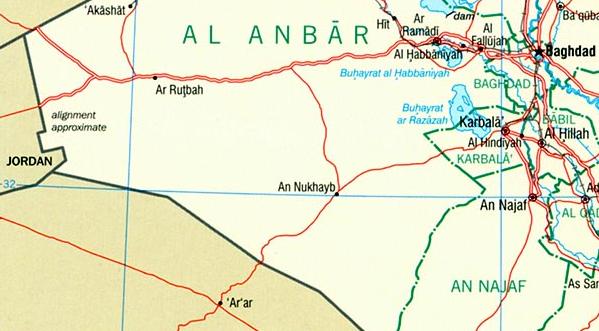
Many of the leaders of these groups are becoming angrier at the Iraqi government, saying that despite the fact that their men have fought, and died, alongside the Iraqi army in battles against the IS group, the Iraqi government doesn’t care about them. And some are even suggesting that it is the Iranian influence on the Iraqi government that is to blame – neighbouring Iran is a Shiite-Muslim-led theocracy and Iraq’s government is currently headed by Shiite Muslim-led political parties.
“The Iraqi government only wants to give the people of Anbar two options,” one of the leaders in Anbar, Mahmoud al-Fahdawi, told NIQASH. “Either the IS group enters Anbar. Or the Shiite Muslim fighters come in. The government doesn’t want the Sunni Muslim tribes to play a larger role in the liberation of Anbar, it wants the Shiite Muslim militias that it sponsors to do this,” he complained.
The Shiite Muslim militias, which consist of many volunteers who were moved to defend their own sect after the Sunni Muslim extremist IS group attacked, are well known to be sponsored, and in some cases even controlled, by Iranian operatives.
Al-Fahdawi speculates further that the US government has said that it will arm the Sunni Muslim tribes in Anbar soon because the Iraqi government won’t. This is causing tension in the relationship between the US and Iran, he suspects.
Last Friday the US Senate approved the country’s defence budget, which topped US$500 billion. This includes US$3.4 billion for the direct deployment of US forces against the IS group and a further US$1.6 billion for the training of Iraqi Kurdish and Iraqi forces for two years, in their own fight against the IS group. The Iraqi government was also expected to foot a significant proportion of the bill for the latter.
#Iraq Business News: Low Supplies, Political Disputes in Anbar http://t.co/jtLA1NPB5K
Low Supplies, Political Disputes in Anbar: This article was originally published by Niqash. Any opinions... http://t.co/l9moaORbmA #Iraq
Low Supplies, Political Disputes in Anbar: This article was originally published by Niqash. Any opinions expre... http://t.co/LWNjk9zFON
RT @IraqMonitor: #Iraq Business News: Low Supplies, Political Disputes in Anbar http://t.co/jtLA1NPB5K
Low Supplies, Political Disputes in Anbar http://t.co/rcZhh3oXtN
RT @iraqsolidarity: Low Supplies, Political Disputes in Anbar http://t.co/rcZhh3oXtN