


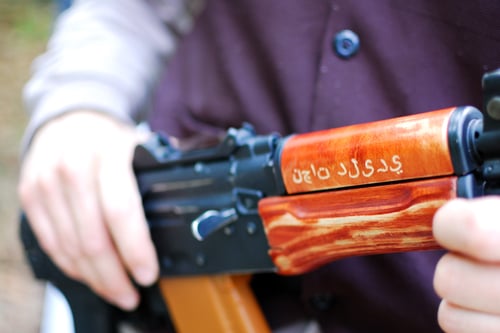
Since September 2014, the Iraqi government has actually been holding talks with armed Sunni Muslim factions such as the Mujahideen Army or Jaysh al-Mujahideen and the 1920s Revolution Brigades as well as with certain Sunni Muslim tribal leaders opposed to the IS group. Negotiations took place discretely in places like Erbil in northern Iraq, in Jordan and other Arab countries.
However there were no concrete results and in February many of the Sunni Muslim factions and tribal leaders announced they wouldn't enter into any kind of alliance with the Shite-Muslim-led government, headed by Prime Minister Haider al-Abadi.
Prominent among the groups who say they won't cooperate are the Association of Muslim Scholars of Iraq, the Islamic Army in Iraq, the General Military Council of Iraqi Revolutionaries, the Supreme Command for Jihad and Liberation, the council of Anbar's tribal leaders and another council representing Ninawa's tribal leaders as well as another extremist group, Ansar al-Sunna.
These armed factions from among Iraq's Sunni Muslim populations command influence and respect in Sunni Muslim areas because they are seen as protectors of the population and because they did not enter into, or remain in, an alliance with the IS group.
Another way that the Iraqi government had hoped to enlist the aid of local Sunni Muslims was through the formation of a so-called National Guard, which would effectively allow locals to form their own military units and police their own areas. The National Guard would have been able to fight alongside the regular Iraqi army and possibly even the Shiite Muslim militias, helping to expel the IS fighters from their cities.
Then afterwards the National Guard would be tasked with overseeing security in those areas while the other forces withdrew. This would effectively prevent the IS group, which played upon unhappy, popular Sunni Muslim sentiment, from returning.
Who Takes Over After IS? http://t.co/apHoK3yalw #iraq
Who Takes Over After IS?: This article was originally published by Niqash. Any opinions expressed are those of... http://t.co/hJ1dWpKnA6
#Iraq Business News: Who Takes Over After IS? http://t.co/69PkmEmkQW
DTN Iraq: Who Takes Over After IS?: This article was originally published by Niqash. Any opinions expressed ar... http://t.co/8YcccF7bQy
Who Takes Over After IS?: This article was originally published by Niqash. Any opinions expressed are th... http://t.co/SfvWDGKIE0 #Iraq
RT @IraqMonitor: #Iraq Business News: Who Takes Over After IS? http://t.co/69PkmEmkQW