


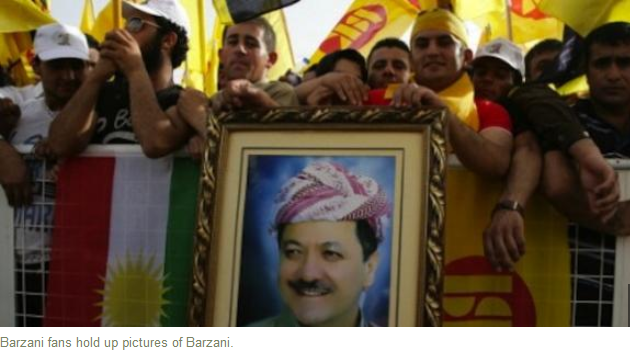
Some Iraqi Kurdish media have published articles saying that insiders told them the delegations had come out in favour of one solution or another. But those who were actually in the meetings say that none of the delegations actually specified whether they wanted Barzani to stay on as President, or whether they wanted him to go. Other reports confirmed this.
“None of the delegations asked us to retain Barzani as president,” confirms Emad Ahmad, a senior member of the PUK and a spokesperson for the party. “From what I know, the Iranian, Turkish and US delegations all wanted one thing: They don't want the issue of the presidency here to have an impact on security inside Iraqi Kurdistan.”
“They do not want the issue of the presidency to cause problems between the different parties,” agrees Mohammed Tawfiq Rahim, the coordinator of diplomatic relations for the Change movement.
The PUK and the KDP have a long and chequered history – at one stage, the two parties were fighting for control of Iraqi Kurdistan and even today the region is basically split into two zones of influence, with the PUK in charge of the area around Sulaymaniyah and the KDP in charge of the areas around Erbil. If there is a political power struggle, there are some fears that those old enmities will be revived.
Al-Karawani believes that this is exactly why all Iraqi Kurdistan's friends and neighbours have been showing up for talks; all of them have important interests in the area and nobody wants that jeopardised.
“This is why other nations are trying to find a solution for all the parties, instead of splitting them further apart,” al-Karawani argues.
Whether such external influence is good for Iraqi Kurdistan is another question, he notes. Then again, it seems unlikely that political parties with such oppositional and black and white views – should Barzani stay or go? - would be able to come to an agreement without some pressure from outside.
Comments are closed.