


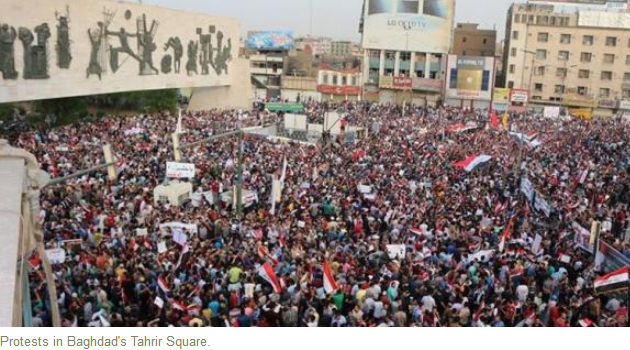
“What is most important today is holding those who have stolen the people's resources to account,” Abdul-Karim argues. “That is far more important than changing the system from a parliamentary to a presidential one and it is also more important than amending the Constitution. However,” he was quick to add, “those two options should still be considered if the reforms we were promised do not succeed.”
For the third Friday in a row, the highest Shiite Muslim religious authority in the country has said that it is important for demonstrators to give those politicians with good intentions a chance to prove themselves.
It is only logical to give officials a reasonable opportunity, senior cleric, Abdul-Mahdi al-Karbalai, one of the representatives of the most senior Shiite Muslim religious leader in Iraq, the Ayatollah Ali al-Sistani. The message from the country's religious establishment – which under al-Sistani has mostly refrained from interfering in politics – is understood by those on the street.
The most corrupt officials and leaders may leave the game eventually but they won't hesitate to use their power and influence to try and unsettle the political process and to remain in power. Plunging the country into even more chaos over this should be avoided, the clerics seem to be trying to say.
“The religious authority wants the voice of the people to be louder than all other voices,” says another local cleric, Ayad al-Taei, “but at the same time it also considers the political process – which brought the current government to power – a product of the will of the people. This started in 2003, which saw the birth of democracy in Iraq and this democratic process shouldn't be lost.”
Comments are closed.