


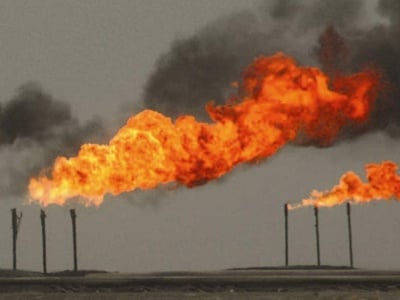
Associated gas puts constraints on actual production, first, because increasing production is associated with increased oil production, and second, because separating the gas from the crude oil and processing it for cooking or electricity-generating gas requires special techniques and facilities.
Due to the lack of such facilities and infrastructure to overcome these constraints, and as a result of reduced investment in the energy sector because of historical challenges — among them UN sanctions, war and rampant corruption — Iraq resorted to burning off gas associated with oil production.
In an extended report on Iraq's natural resources sector, the International Energy Agency (IEA) estimated that in 2011 Iraq burned 12 billion out of the total 20 billion cubic meters of gas produced. According to the World Bank, Iraq ranked fourth among countries that burn off the most gas.
In addition to the estimated loss of $5 million a day as a result of burning associated gas, not to mention the environmental damage, the practice hinders gas-powered energy production in a country that suffers from power supply shortages. All this ultimately exacerbates social and political tensions and increases reliance on foreign sources of energy.
Royal Dutch Shell, which has investments in southern Iraqi oil and gas projects, estimated in 2013 that converting wasted gas to electricity would generate 4.5 gigawatts of electric power — or enough to cover the needs of about 3 million homes.
Comments are closed.