


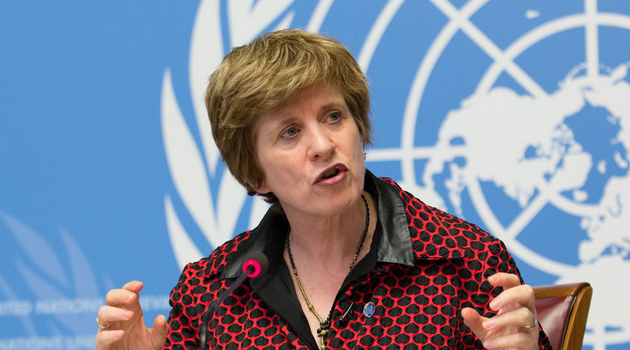
“The existence of armed conflict in certain regions does not excuse or justify the absence of the rule of law in the broader Iraq. Judicial independence, an end to arbitrary detentions, respect for due process, the prohibition of torture – these are neither ideals nor luxuries, but are indispensable foundations of stability,” she said.
“Firm steps must be taken – now – to plan for the day after ISIL, steps that broaden inclusion and deepen fairness, including through structured local, regional and national dialogue on inclusion, peaceful co-existence and mutual respect. Unchecked corruption, lack of accountability for past and present crimes, the problem of tribal militias, the growing number of internally displaced people, the partial or total destruction of entire villages and towns, violence against women, and the need for constitutional and legislative reforms are some of the many pressing human rights concerns in Iraq that need priority attention.”
During her mission to Iraq, Gilmore visited Baghdad, Najaf, Erbil and the Shariya camp for internally displaced people (IDPs) in Dohuk. She met the Minister of Foreign Affairs and other senior Government officials, as well as the President of the Kurdistan region of Iraq, leaders of civil society, including religious and ethnic communities, human rights defenders, and survivors of human rights violations.
Comments are closed.