


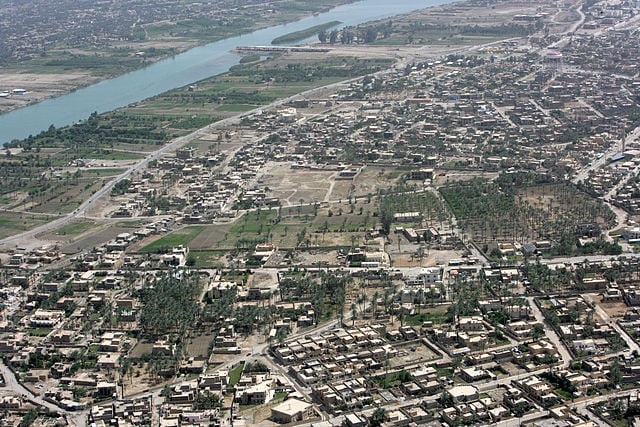
The statement continued, “Working in partnership with Iraqi Prime Minister [Haider al-] Abadi, Anbar Governor al-Rawi, the United Nations Assistance Mission for Iraq (UNAMI), and the United Nations Development Program’s Funding Facility for Immediate Stabilization (FFIS), Janus will begin initial efforts to survey unexploded ordnance, abandoned explosive ordnance, and IEDs in several Ramadi neighborhoods as well as the city’s main water station in Tamim.”
In an interview with Al-Monitor in Baghdad, Ali al-Mashhadani, a journalist and activist from Ramadi, said that it is difficult to survey the landmines in Ramadi, which pose a real threat to civilians. On April 7, landmines caused 11 families to return to Iraqi Kurdistan after they found their homes in Ramadi to be booby-trapped.”
He added, "The lives of civilians are in danger, and it is difficult to create suitable conditions for their return in the near future, especially since there is a political power struggle in Ramadi.” He did not identify the parties and the causes of the struggle.
Given the risks posed to those who return to Ramadi, the Anbar local council decided to stop bringing back the displaced to the city of Ramadi at the present time. Yet, those who return before landmines are removed from their neighborhoods and houses remain at great risk.
DTN Iraq: Landmines Hinder Return of Displaced to Ramadi: By Mustafa Saadoun for Al-Monitor. Any opinions exp... https://t.co/8gzRxvVybJ
Landmines Hinder Return of Displaced to Ramadi: By Mustafa Saadoun for Al-Monitor. Any opinions express... https://t.co/5AfZjlDzR6 #Iraq