


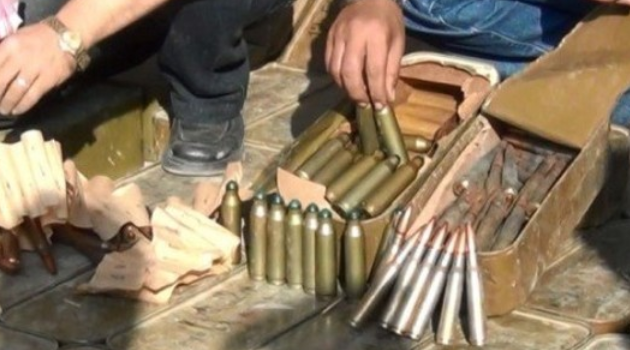
“There is higher demand for light weapons like the Beretta 16mm handgun because it is often used by army officers and bodyguards,” al-Yasiri says. Because of such demand, a Berretta 16mm can sell for as much as $US1,300 and, al-Yasiri adds, prices for this and other weaponry can increase or decrease depending on events. “Prices go up during security and political crises and down during economic crises,” the weapons trader explains, before detailing the market’s price list.
The Walther pistol is also used by army and police and can fetch as much as US$1,000. Different types of automatic weapons cost different amounts, depending on where they were manufactured. A Kalashnikov-style weapon could have been made in Russia, Belgium, Romania or Iran. Two kinds of machine guns are sold here too, some made in Russia and others in Iran, and these cost around US$2,000. There are also grenades that can be thrown by hand or machine-fired; they cost US$50 each.
“Iraqis call these rumanna [in English, pomegranates] because they look a little bit like them,” al-Yasiri notes.
“They even sell mortars and rocket launchers here. These are most often bought and used by militia groups because they’re not heavy and they’re easy to hide. They cost US$1,000 each though they may cost a little more.”
Having listed the prices of the guns and other weapons at the market al-Yasiri happily confirmed that he and his colleagues in arms dealing make a good profit, up to several thousand dollars daily and that no other job in the country compares.
Of course, the weapons sold at the market are illegal, he agrees. But the traders will often issue customers with forged gun licenses issued by offices inside Maridi market itself.
Comments are closed.