


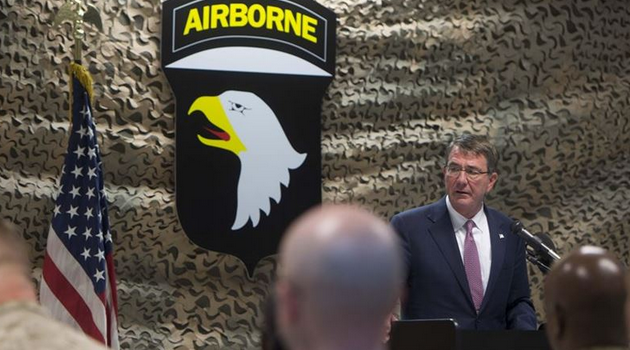
In discussions with Iraqi Prime Minister Haider al Abadi, Carter said, the two leaders also discussed possible support from U.S. intelligence and for countering improvised explosive devices for Baghdad, where ISIL has mounted deadly attacks in recent weeks.
Taking Control Away From ISIL
MacFarland emphasized that ISIL’s territorial losses are affecting the group’s ability to mount organized attacks.
“As the enemy loses control over some of these key support nodes, like Manbij [in Syria], and eventually Raqqah and Mosul, they lose a base of operations,” the general said. “They lose finances. They lose the ability to plan, to create the fake documentation that they need to get around the world.
“And they lose financial resources,” he added. “So we don't know how many acts of terror that we've disrupted or prevented so far. It's impossible to know or to prove. But you have to believe that as we continue to deny the enemy the ability -- or a safe haven where they can plan and prepare for these operations -- it will eventually support the larger campaign against terror around the world.”
MacFarland said that ISIL is an adaptive enemy that requires an adaptive offense.
“The best defense is a good offense,” the general said. “And by continuing to put pressure on the enemy in places like Raqqah, Mosul [and] Manbij, it does prevent the enemy from really hatching a lot of these types of plots. But we are starting to put pressure on the enemy's … terror networks, threat networks that are around the capital, and we will continue to ramp that up over time.”
Comments are closed.