


“Our city needs reconstruction projects and quickly,” Salahaddin’s governor, Ahmad Abdullah al-Jibouri, said at the conference. “But the fact that the power [to start them] is all in Baghdad means that this is not happening. Our council has decided to start using the powers granted to it by Law 21 anyway, and to move away from the dominance of the ministries and federal departments as much as possible.”
“Giving the provinces more power will speed up development and reconstruction,” argues Bassem Jamil Anton, a local economist. “That has got to be a positive for the future of the country.”
This situation is similar in other provinces. Provincial leaders say the central government, preoccupied with the security crisis and other political issues, is not able to discern exactly what is needed in other parts of the country. For example, while Basra needs to shore up water and power supplies and find better ways of dealing with the poverty in the province, Ninawa and Anbar want to take further control of their own security because they do not believe the central government knows how to deal with their populations and their specific security problems.
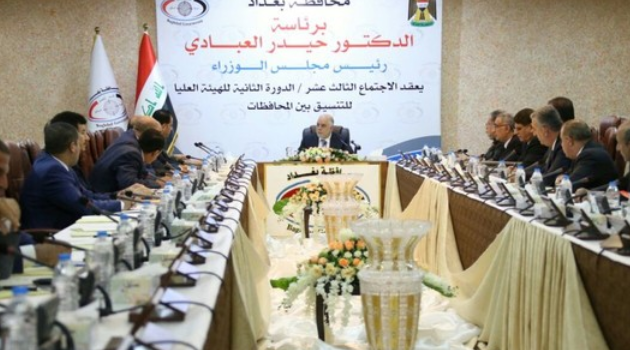
Earlier this month representatives from eight different southern provinces came together in Babel to discuss how they could transfer powers from the central government to their own councils.
“There is a major problem because there are too many people benefiting from the centralized power,” Mahdi Wadi, a financial affairs adviser to the governor of the province of Wasit, told NIQASH. “At the same time the provinces are suffering from a lack of services and poverty. We are determined to get these powers for ourselves,” he concluded staunchly.
Comments are closed.