


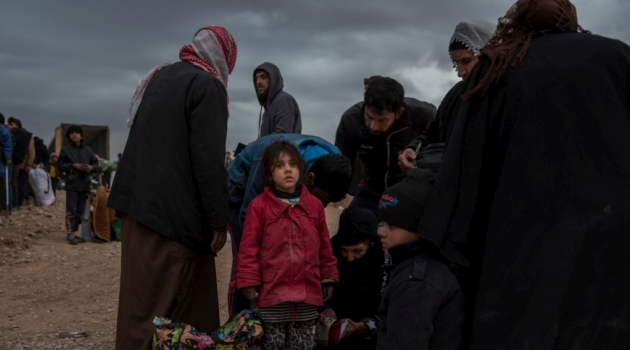
The number of people moving through Hammam al-Alil has surged in recent days, with around 8,000-12,000 arrivals daily. Work will soon begin in another UNHCR camp, As Salamiyah 2, south east of Mosul, with projected capacity for up to 60,000 people. In all, 340,000 people have been displaced by the fighting in Mosul, which started in October.
Of that number, about 72,000 have returned home, primarily to eastern parts of Iraq’s second city and villages nearby. But the process of returns to the east was not always smooth, with some returnees heading back into camps amid fears about security and the lack of amenities.
Geddo highlighted the recent trend of people leaving western Mosul, seeking sanctuary outside of camps, either with relatives and friends, or by squatting in unfinished buildings in areas of southern and eastern Ninewa.
UNHCR, and its partners have been assisting those outside of camps with mobile protection and distribution teams. The UN Refugee Agency has distributed 33,309 core relief kits, including essentials like stoves, utensils and jerry cans, reaching over 120,000 outside of camps and some 320,000 people in total.
Geddo stressed that the protection of civilians should be uppermost and that all parties must ensure civilians are not prevented from leaving areas of conflict and can access safe areas. Equally, civilians must not be forced to return to unsafe areas, he said.
“Liberating Mosul is necessary but not sufficient”, Geddo said.“We equally have to get it right with the protection of civilians and in the humanitarian response.”
(Source: UNHCR)
Comments are closed.