


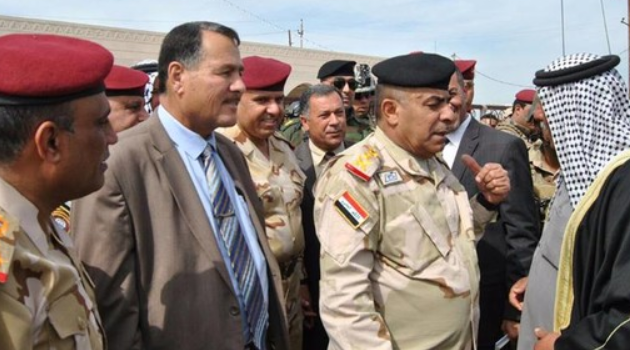
Afterwards the Tarmiyah area was declared safe by the Baghdad Operations Command, which is responsible for security in the capital. And people were encouraged to return at that stage, says Sabih al-Salman, one of Tarmiyah’s tribal leaders. However, as he says, the security forces are still cutting off streets, raiding different areas and searching for wanted people. Which means it is not actually as safe as we were told, al-Salman argues.
It seems clear that there are IS sleeper cells hiding in abandoned houses here, or keeping weapons and explosives there.
Tarmiyah connects four provinces: Diyala, Salahaddin, Anbar and to the south, Baghdad. If the IS group can infiltrate this area, it will make carrying out attacks in Baghdad easier – fighters can be funnelled from those other provinces into the city through Tarmiyah.
It is also a relatively rural area, with many orchards and farms, where extremists could hide, and it takes just half an hour to travel from the centre of Baghdad to Tarmiyah, which is about 50 kilometres away.
The locals in Tarmiyah do appear to want to protect themselves from the IS group. “It is the duty of the people to act against any of the kinds of activities that will darken this district again," al-Salman protests. “If any of the sons of any of the local tribes becomes a member of the IS group, then the tribe should disown him," he insists.
Comments are closed.