


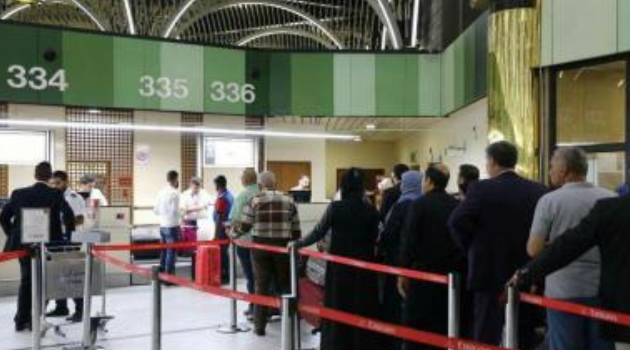
Erbil airport opened in December 2003, with the new modern version opening in 2010, and Sulaymaniyah airport opened in July 2005. But now, where once the departures and arrivals boards were filled with exotic names – Dubai, Frankfurt, Copenhagen – now there are only one or two local names, usually Baghdad or Najaf.
Although there is some hope that the airports could re-open soon because it has been agreed that the central government should be in control of them, which was a major condition for their reopening, Abdullah says he has no idea when his might go back to full service.
“We have asked the Iraqi Civil Aviation Authority to meet with us, so they can tell us what the conditions for re-opening the airport might be – but we have had no response,” Abdullah told NIQASH.
Despite the fact that the Iraqi prime minister, Haider al-Abadi, has said several times that the closure of the Kurdish airports is not supposed to equate to a collective punishment, there is no doubt the international flight ban is causing locals problems.
As one native of Sulaymaniyah tells, he was in the US when the ban came into force and his trip home went from a simple flight to 23 hours in transit in Doha and then Baghdad. “I lost a lot of money,” the traveller, Hussein Barzanji, says. “The only company that is benefitting from this decision is [domestic carrier] Iraqi Airways, because everyone is forced to travel on its planes.”
Local travel firms are also feeling the pain, as international travel has almost completely halted.
“All of the Kurdish people living outside the country simply stopped coming,” says Rabin Khasro, the head of a local agency called Moonlight Tourism. “There are also a lot of reasons for foreigners to come to Kurdistan whereas Iraq is a different destination altogether. People are only using the domestic flights if they really have to. All of which is leading to a major drop in bookings and flights.”
Comments are closed.