


From UN Iraq. Any opinions expressed are those of the author(s), and do not necessarily reflect the views of Iraq Business News.
FAO, European Union and Ministry of Agriculture inaugurate rehabilitated National Plant Genetic Resources Bank in Baghdad
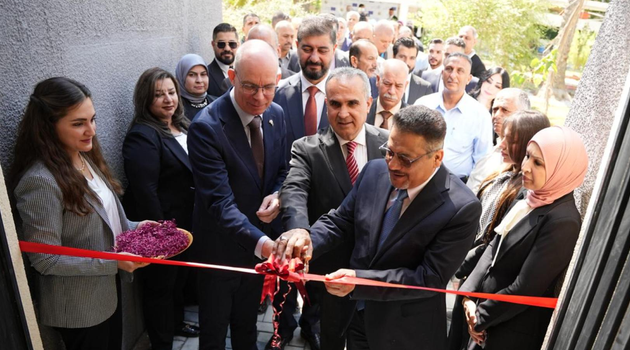
The Food and Agriculture Organization of the United Nations (FAO), the European Union and the Ministry of Agriculture have inaugurated the rehabilitated National Gene Bank in Abu Ghraib, Baghdad, marking a major milestone in Iraq's efforts to conserve and sustainably use its plant genetic resources.
The inauguration ceremony was attended by Technical Deputy Minister of Agriculture, Dr Mithaq Al-Khafaji, with the participation of Head of Cooperation at the European Union Delegation to Iraq, Mr Wim Riepma, FAO Representative in Iraq, Dr Salah El Hajj Hassan, Director General of the Directorate of Seed Testing and Certification, Dr Firas Muzahem Hussein, and Manager of the Genetic Resources Department, Mr Hayder Mukalif Hwawy, alongside representatives of national institutions and technical partners.
Established in 1977, the National Plant Genetic Resources Bank has played a central role in conserving Iraq's plant genetic resources for nearly five decades. Its modernization, together with the recently inaugurated Seeds/Gene Bank in Sulaymaniyah, strengthens Iraq's national system for the conservation and sustainable use of plant genetic resources, supporting food security, scientific research and climate-resilient agriculture.
The rehabilitation was undertaken through the European Union-funded project "Restoration and Strengthening the Resilience of Agrifood Systems in Southern Iraq," implemented by FAO in close partnership with the Ministry of Agriculture. The investment has modernized the facility with improved conservation and storage technologies, expanded capacity, digital documentation systems and sustainable solar energy solutions.
Located within the Fertile Crescent, the cradle of agriculture and one of the world's centres of origin and diversity for globally important crops, Iraq is home to a rich diversity of wheat, barley, lentils, chickpeas and other crops and their wild relatives. Conserving these genetic resources is critical to scientific research and to developing crop varieties better adapted to drought, climate change, pests and other emerging challenges.
"The rehabilitation of the National Plant Genetic Resources Bank represents an important investment in Iraq's agricultural future. By conserving our plant genetic resources, we are safeguarding an invaluable national heritage while providing researchers and farmers with resources that can support more productive, resilient and sustainable agriculture," said Technical Deputy Minister of Agriculture, Dr. Mithaq Al Khafaji.
The modernized facility can now preserve up to 30,000 seed samples for medium-term use and 20,000 samples for long-term conservation. Modern digital systems support the documentation and management of collections, helping ensure that these valuable genetic resources remain available for research and crop improvement.
Officials tour the rehabilitated National Plant Genetic Resources Bank in Abu Ghraib, Baghdad, and view its plant genetic resources collections and conservation facilities.© FAO
"The European Union is proud to have supported the modernization of Iraq's National Plant Genetic Resources Bank as part of our broader partnership for more resilient and sustainable agrifood systems. This investment helps safeguard a unique agricultural heritage while strengthening Iraq's capacity to respond to climate change and future food security challenges," said Head of Cooperation at the European Union Delegation to Iraq, Mr Wim Riepma.
Beyond preserving seeds, the rehabilitated Plant Genetic Resources Bank will serve as a resource for researchers, plant breeders and other specialists working to conserve agricultural biodiversity, improve crops and strengthen the resilience of Iraq's agrifood systems for generations to come.
"What we inaugurate today is much more than a rehabilitated facility. It is an investment in Iraq's food security, agricultural biodiversity and resilience for generations to come," said FAO Representative in Iraq , Salah El Hajj Hassan. "This achievement reflects the strong partnership between the Ministry of Agriculture, the European Union, FAO and our technical partners. FAO remains committed to working hand in hand with Iraq to conserve its invaluable plant genetic resources, strengthen national capacities and build more resilient and sustainable agrifood systems, leaving no one behind."
The initiative contributes directly to the achievement of the Sustainable Development Goals (SDGs), particularly SDG 2 (Zero Hunger), SDG 13 (Climate Action) and SDG 15 (Life on Land). It also supports the implementation of the United Nations Sustainable Development Cooperation Framework (UNSDCF) for Iraq and FAO's Country Programming Framework (CPF) by strengthening sustainable agrifood systems, conserving plant genetic resources and agricultural biodiversity, and enhancing resilience to climate change.
(Source: UN Iraq)

No comments yet.