



Russian Business Council "eyes Kurdistan as Gateway to Iraq"
Posted on 12 October 2026 .
From Rudaw. Any opinions expressed are those of the author(s), and do not necessarily reflect the views of Iraq Business News.
Russian Business Council Eyes Kurdistan as Gateway to Iraqi Market
The Kurdistan Region is a gateway to the wider Iraqi market for Russian companies seeking to expand their presence in the country, the executive director of the Russia-Iraq Business Council said on Sunday.
Posted in Iraq Industry & Trade News 0 Comments

Qs and As Regarding the Al-Zaidi Govt's Views on Petroleum Issues
Posted on 06 October 2026 .
By Ahmed Mousa Jiyad. Any opinions expressed are those of the author, and do not necessarily reflect the views of Iraq Business News.
Qs & As Regarding Al-Zaidi Government' Views on Petroleum Issues
Interest in the Iraqi petroleum sector has intensified lately, particularly from energy-focused Western media sources. In response to my articles and presentations since the US-Israeli war against Iran, I have received, through emails and direct discussions on Zoom and Microsoft Teams, many questions and requests for comments and clarification. All of them want to know and understand what the current Al-Zaidi government intends to do on a variety of issues pertaining to the Iraqi petroleum sector. Western inquiries focus on upstream petroleum and the prospects of IOCs, while Iraqi concerns focus on oil export prices, discounts, and the impact and consequences of the continued war on Iran.
This brief article provides answers to the questions and requests, which focused on the following topics*:
- The new higher oil production target.
- The increasing presence of US companies in Iraqi petroleum projects.
- IOCs' dominant role in upstream petroleum.
- The availability of enough resources to support a two-digit production level.
- Matters relating to bureaucracy and transparency in petroleum contracting and awarding decisions.
- The ongoing US war on Iran and its impacts on Iraq.
- New pipeline proposals to diversify export routes.
- Monetising associated gas.
- The prospect of Turkish involvement in the Iraqi petroleum sector.
- SOMO's high discounts on its official selling price.
Before answering the questions, I expressed, through direct communications, my readiness and delight to cooperate and respond professionally and objectively to the related parties. I highlighted that I have an elaborate, well-organised and updated database that covers more than three decades of development in the Iraqi petroleum sector in particular and the national economy in general. I have published numerous articles in Arabic and English, and authored seven books in English documenting the development of the Iraqi petroleum sector. Links to my publications were provided for easy access when needed. Therefore, everything I say or write in due course is verifiable and evidence/fact based. Below are the questions (Qs) and my answers (As).
Q1. On the oil side, Al-Zaidi initially said that the country's goal is to grow oil production to 7 million barrels per day (mbd) from the pre-US-Iran war level of over 4 mbd, most recently upping this target to 8-9 mbd and giving a timeline of six years. Is this feasible?
A1. Based on available data, Iraq (excluding the KRG) currently has an installed oil production capacity of ca. 5 mbd, while actual utilised capacity fluctuates. During the period 2014-2025, the maximum actual production was in 2019: 4.576 mbd (Ministry of Oil (MoO) data) or 4.678 mbd (secondary sources used by OPEC). The annual average during 2025 was 3.775 mbd and 4.011 mbd according to MoO and OPEC data respectively.
Yes, but Al-Zaidi proposed escalating targets reaching 10 mbd within six years! In my view this is unrealistic and probably unattainable.
- Since the signing of the first bid round in 2010, Iraq's installed production has almost doubled, reaching ca. 5 mbd in 2025.
- From 2019, actual production, according to MoO data, declined from 4.576 mbd to 3.775 mbd at the end of 2025.
- Almost all of the production increase is attributable to oilfields offered under the first two licensing rounds.
- Apart from the impacts of COVID-19, geopolitics and market fundamentals, the absence of a coherent, integrated and comprehensive Energy Policy has contributed to complicating and hindering progress in actual oil production. The Al-Zaidi government demonstrates no resolute orientation in its programme to remedy the situation.
- So, if it took the country 15 years to increase its installed capacity from ca. 2.3 mbd to 5 mbd, how is it possible to reach 10 mbd in six years?
Q2. Al-Zaidi appears to know the path to achieve it - bring in US and other international operators to develop legacy and new fields. Does he?
A2. I am not sure he knows the path well! He has absolutely no experience in oil matters, let alone the political economy of international oil contracting with IOCs and the recent historical experience of US IOCs in Iraq.
Materially verifiable evidence suggests the US "Big" oil companies had the "lion's share" in Iraqi upstream petroleum through:
- The Memoranda of Cooperation (MoCs) concluded between IOCs and the Ministry of Oil during 2004-2008.
- The list of IOCs qualified to participate in the bid rounds (2009-2024).
- The companies that participated in the first two bid rounds (2009-2010).
Yet none of the US "Big" oil companies won a contract, as operator, in the open, competitive and transparent bidding events. Through the "back door", yes, but in only one case, which did not last long.
Q3. Foreign-operated fields in Federal Iraq (excluding Kurdistan, where 100% of working fields are in the hands of international oil companies (IOCs)) already account for 75% to 80% of total oil production in the country. Is this so?
A3. Correct, and it could be more than 80%. The number of oilfields operated by "National Efforts" is declining because some of them have been offered to IOCs, such as NOC's four producing oilfields (Kirkuk, Bay Hassan, Jembour and Khabaz) contracted to BP, the Ratawi/Artawi oilfield offered to TotalEnergies, the Himreen oilfield to HKN, and the Nassiriya and Balad oilfields offered to Chevron, among others.
Regretfully, there has been a tendency by the last three governments, of Al-Kadhimi, Al-Sudani and now Al-Zaidi, to offer nationally operated oilfields and exploration blocks to IOCs.
Q4. Does Iraq have a sufficient number of explored fields in place to offer to international oil companies to support 8-9 mbd of production? One could suspect the Majnoon/West Qurna 2 oilfields will be central in achieving this goal, but maybe you can point to other fields that may be instrumental in achieving it? Do you think the goal is realistic at all?
A4. To answer this question, we have to remember that after concluding the contracts for the fields under the first two bid rounds, Iraq's plateau production target/capacity (PPT) was to reach 12 mbd by ca. 2017. The PPTs were revised downwards, and the contracts were revised accordingly in 2014/15.
Iraq, in my humble view, has many options to reach the 10 mbd threshold. But is it advisable to develop a production capacity of such a level while ignoring, as has been the case since 2010, the required parallel expansion of export infrastructure and outlets, associated gas utilisation, international market conditions, OPEC/OPEC+ compliance, and the absence of a coherent, comprehensive national petroleum policy?
That said, Iraq could increase oil production through the following options:
- Expedite oilfield development under the contracts concluded in the first four bid rounds.
- Revise the amended contracts back to, or close to, their originally contracted PPTs.
- Quick and timely conversion of exploration block contracts into oilfield contracts for already discovered oilfields. Exploration Block 10 to the Eridu oilfield is the most obvious example, with its huge discovery and the high possibility of its boundaries extending beyond the contracted area. Another example is the Salman oilfield in Exploration Block 12.
- The agreement with BP could enhance NOC's oil production, gradually.
- The Majnoon and West Qurna 2 oilfields could have significant impacts, but there are legal hurdles in offering them to IOCs under a different contract type and basic fiscal conditions.
As it stands today, Iraq has enough oil.
But the country needs to do more: first, to utilise associated gas, and second, to develop the gas fields, namely Akkas, Mansuria and Siba. Moreover, Iraq is a relatively under-explored country, particularly in its western part.
Evidence suggests a high exploration success ratio. Hence, the focus should be on exploration activities, with priority given to areas with promising natural gas prospects. The required exploration could be done by Iraqi national efforts, with some external assistance when needed.
Q5. It appears from Iraqi news that Al-Zaidi is making strong efforts to cut domestic bureaucracy and simplify the approval process for IOCs, as well as to increase the transparency of tenders and other governmental dealings. More often than not, exemptions from existing regulations are being granted by the Cabinet of Ministers to speed up approvals. So, the question to you is whether you think bureaucracy is indeed becoming less of an obstacle for IOCs, and whether there is a need to implement a wider reform/overhaul of existing regulations/laws to avoid such individual/per-case exemptions, instead putting more robust legislation in place to replace these regulations and laws?
A5. The increasing number of exemptions could reveal different forms of high-level corruption, irregularities or favouritism. This pattern of exemption intensified under ex-PM Al-Sudani. For example, exempting an oil company (x), because it is American, from the qualification criteria and process usually applied by the Ministry of Oil is counterproductive and undermines an established system of qualification.
Moreover, there has been a dangerous lack of transparency, particularly during the last ten years. No basic information has been disclosed regarding the fiscal, economic and legal regime of any contract or agreement the government has signed. Neither the Ministry of Oil nor the related IOCs have disclosed the regime of the signed contracts during the last ten years.
Logically, it is rather unreasonable to expect less bureaucracy in a strictly non-transparent working environment. Lack of transparency covers corruption, inefficiency and rigid bureaucracy.
So far, the Al-Zaidi government, as far as the oil sector is concerned, has not publicly and openly disclosed the basic details of any contract or agreement, or even the status of previously concluded deals. The Oil Ministry website usually shows more photos and a few words on any meeting it reports on; absolutely no substance on the subject matter.
And by the way, Iraq is obliged under the provisions of the EITI to disclose contracts and agreements in the extractive activities of the petroleum sector. And the Minister of Oil is the chair of the Iraqi EITI!!!
Finally, laws in Iraq are promulgated and amended according to the Constitution and through an established process and procedure. But "exemptions" are usually pursued by the executive branch, for justifiable reasons or otherwise, though mostly on unjustifiable premises.
Q6. Another key issue is the Strait of Hormuz and the US-Iran war. While grand plans are announced in Baghdad and IOCs are invited to Iraq, the country is having major issues with oil production/exports. These issues may drag on for months, if not years, as the US-Iran confrontation may last a long time. So, this poses the question of whether you think Iraq and Al-Zaidi remain hostage to the situation in the Middle East, and whether, until there is permanent peace/stability in the region, IOCs may be slow or reluctant to commit billions of dollars of new investment to the country?
A6. Many important issues are relevant for consideration regarding this topic.
First, the Strait of Hormuz remains strategically important not only for seaborne oil transport but also for other petroleum and petrochemical products, LNG, and a wide range of trade and supply chains. It will open again, fully or partly. The question is not if but when, depending on the geopolitical and military standoff prevailing since the end of last February.
Second, I recently proposed a southern-bound joint pipeline: Basrah-Kuwait-Bahrain-Qatar-Saudi Arabia-UAE-Oman, with terminal options on the Gulf of Oman or the Arabian Sea. This new, outside-the-box pipeline could provide a "necessity option" for exporting oil through terminals bypassing, but in addition to, the Strait of Hormuz.
Third, it is helpful to know or remember some data on the current status of Iraq's export outlets. The highest volume through the southern export terminals and the SPMs was 3.627 mbd in December 2018; this tells a lot about the infrastructural limitations on the country's export capacity and, consequently, the time and magnitude of investment needed to expand that capacity if Iraq aims to boost oil production to a much higher level than it has today.
As for exports through Turkey, Iraq, under current domestic and regional conditions and geopolitics, is unable to provide the 758 tbd envisaged by the transitional commercial arrangement, let alone provide 1.5 mbd by next July!
Q7. The pipeline proposals to diversify routes and connect Basrah/southern fields to the existing Iraq-Turkey pipeline and the rebuilt Iraq-Syria pipeline may take several years to complete. So, do you think the diversification of export routes should be completed (or at least started) before major Western investment can start coming into oil developments and higher production?
A7. As I mentioned above, Iraq needs to formulate and implement a harmonised, integrated petroleum policy that coordinates the parallel development of the four sub-sectors of petroleum: upstream, midstream, downstream and international marketing.
Iraq should always have some sort of "Dynamic Oil Material Balance" covering and aiming at the optimisation of oil production, oil exports and domestic requirements (for the refining sub-sector, electricity generation and other uses), which should be reviewed regularly - weekly, monthly or quarterly.
An IOC's attention is usually and mainly "project-focused"; the Ministry's approach should be "sector-wide", i.e., covering the four sub-sectors. Hence, contractual provisions, particularly "Take or Pay", should always be kept in mind when considering upstream petroleum projects.
Q8. Another question is about monetising associated gas. Al-Zaidi has emphasised that a priority is ending Iraq's reliance on foreign natural gas imports, notably from Iran. Do you expect any quick progress on this plan? With decades of gas flaring, declarations on eliminating gas flaring do not appear that easy to implement - and may take years to complete, delaying the desired ramp-up in oil production. But maybe you have your own opinion on the associated gas programme to share...
A8. Gas flaring is, and has been, one manifestation of the MoO's failure so far. The MoO has not published data on associated gas production, utilisation and flaring on its website since the last quarter of 2016.
Data from the World Bank's Zero Routine Flaring Initiative still shows Iraq among the top four countries in gas flaring: Russia, Iran, the USA and Iraq.
Gas provisions in the contracts for oilfields offered under the second bid round were not properly observed, or were even ignored, by the MoO in many oilfields, particularly Majnoon, West Qurna 2 and Gharraf.
Moreover, there are cases indicating confusion and inconsistency in awarding associated gas projects to companies while the related oilfields are operated by other companies.
Basrah Gas Company (BGC), a joint venture comprising SGC, Shell and Mitsubishi, which is supposed to utilise associated gas from six oilfields (Rumaila, West Qurna 1, Zubair, and the three Missan Province fields of Buzorgan, Faqah and Abu Gharab), has not yet reached its contracted target, even after 11 years in operation that followed 7 years of negotiation to finalise the JV agreement.
Finally, by definition and logic, associated gas is a by-product of oil. The exact relationship depends on the Gas-Oil Ratio (GOR) of each type of crude oil. There is, naturally, a strong statistical correlation/regression between the two, with gas dependent on oil. Therefore, if Iraq is unable to utilise associated gas at the current oil production level, it will not be able to utilise the higher volumes of associated gas resulting from higher oil production levels. Unless current gas flaring is ended, new oil production capacity (over 5 mbd) would augment the malpractice of gas flaring and all the negative consequences such flaring causes.
Q9. A question about Turkey. Turkey has strong ambitions of becoming a large regional oil hub by securing 2 mln bpd or more of Iraqi oil transiting the country. It also wants a guaranteed supply of 1 mln bpd to Turkey's refineries. Ankara is ready to jump on this opportunity to increase its regional importance as an oil hub, after securing natural gas transits and imports/exports. Do you think the interests of Baghdad and Ankara align? Do you think that in the long term Turkey may rival the US and China in Iraqi oil and gas developments and influence?
A9. The one-year transitional commercial agreement concluded on 1 August includes a 750 tbd throughput, rising to 1.5 mbd once the comprehensive new agreement is reached by the end of the current transitional commercial agreement.
Many important issues will need to be resolved, depending on what the comprehensive new agreement covers. No specific information has been revealed so far, and there is a good deal of confusion and contradiction even in what has been revealed.
Iraq has to optimise the allocation of oil exports between the four outlet options: Turkey, Syria, the Strait of Hormuz and the southern joint pipeline mentioned earlier.
I do not believe that Turkey has the strength and capacity to rival the US or China in Iraqi oil and gas developments and influence. China already has a strategically consolidated position in the Iraqi petroleum sector; Turkish companies do not pose any challenge to the Chinese.
As for US companies, it is rather early to assess their possible standing in Iraqi petroleum, since what has been concluded so far is a few framework agreements, not definitive contracts. But again, Turkish companies are no match for US "Big Oil" capabilities.
Currently, Turkish involvement in Iraqi upstream petroleum development projects is confined to two fields, through TPAO: a minor (7.5%) participating interest in the Badra oilfield, and a 40% interest in the Siba gas field. But some Turkish companies have a role in the petroleum sector as service companies or sub-contractors, such as in drilling activities.
Nevertheless, in a comparative sense, Turkey has an edge in its negotiations with Iraq: the water issue, the Development Road, the PKK and Turkish military forces in northern Iraq, and trade relations, all in addition to oil matters, including direct links with the KRG.
Q10. Why does SOMO offer high discounts while international oil prices are soaring, markets are tight and seaborne oil trading has been seriously interrupted by the closure of the Strait of Hormuz?
A10. This is an important, timely and complex topic that was raised by different parties, especially from inside Iraq, including journalists, parliamentarians and oil professionals, among others.
To begin with, offering discounts or imposing premiums on oil prices is normal practice for all oil exporters, depending on how they assess market conditions, geopolitical risks, their pricing mechanism/setting formula, their market share and their need for oil export revenues, among other considerations.
The recent discounts in question are primarily related to geopolitical risks that have increased tanker insurance, fuel and operating costs to unprecedented levels. Moreover, "dark" transits of the Strait and "ship-to-ship" round-trip practices increase oil tanker costs, which are compensated for by further discounts.
That said, the main issues in the Iraqi case are the magnitude of the discounts, their duration, which markets they apply to, why, and what the fiscal consequences of these discounts are.
SOMO-based information indicates discounts increased from $14 a barrel to $25/b during July and August respectively, while international sources give a much higher threshold of $30/b for mid-August deals.
Trading sources and Reuters report that SOMO offered September crude at discounts of $15 to $20.80 per barrel to its official selling prices, and some cargoes were sold at even larger discounts. Vitol and ADNOC have been active in concluding Iraqi oil liftings at such discounts; they purchased a total of 70 million barrels for September loading.
The above discounts are themselves significant, as are their fiscal magnitude and ramifications for Iraq's oil export revenues, and assessing them requires real, full and accurate data. But SOMO does/did not disclose the relevant data needed on the following related matters.
First, the reference Official Selling Price (OSP) to which the above discounts applied.
Second, Iraq exports two types of crude from the southern export outlets: Basrah Medium and Basrah Heavy. While the exported quantities of the two types are published occasionally, their prices are not, either in aggregate or for different market destinations.
Third, SOMO announces, on a ministerial monthly basis, the OSP setting formula for the two Basrah crudes destined for the three major international markets: East Asia, Europe and the Americas. The price formula for each market has its own "marker crude", which differs from market to market. Data from international sources indicates a wide margin of variation between the prices of the marker crudes used.
Fourth, Iran has publicly and formally exempted Iraqi oil cargoes from fees or restrictions on transiting the Strait of Hormuz. This implies that SOMO is not compelled to offer discounts when a cargo exemption is on offer.
Fifth, SOMO did not release its Monthly Export Reports for April to July. The August Export Report shows the following: Basrah Medium 55,702,595 barrels; Basrah Heavy 14,052,339 barrels; Kirkuk and KRG oil exported through Turkey 3,932,683 barrels.
The monthly report says nothing about the export price, total revenues, or how much Basrah crude was sold at the reported discount of $25/b during August. If this discount applied to all Basrah crude exports, SOMO lost well over $1.7 billion in August.
The MoO's preliminary estimate of all oil export revenues was $4.5 billion in August, indicating the discount represents 37.8% of oil export revenues. The preliminary average oil export price during August was $64.29 a barrel, indicating SOMO's OSP for Basrah crude could have been $89.29 a barrel at most. Lost oil revenue of more than $1.7 billion in one month is a painful, unacceptable fiscal blow for Iraq.
Sixth, as mentioned above, Vitol and ADNOC have reportedly contracted to lift a total of 70 million barrels during September. Unless oil production and exports from the southern terminals increase above August levels, all oil exports from the south will be earmarked exclusively for Vitol and ADNOC.
The consequences will be both costly and damaging in the short and medium term.
Discounts, if continued at such hefty levels, will remain fiscally heavy, eroding oil export revenues and deepening the fiscal crisis for the current government.
SOMO will not be able to fulfil its "Term Contracts" with all or most of its ca. 40 International Oil Buyers (IOBs); that could damage its reputation as a reliable supplier and could reduce its market share.
Moreover, in-kind payment of IOCs' entitlements could very well be affected, causing further delay in the ramp-up of oil production.
Seventh, the magnitude of the discount in just one month has outraged many inside Iraq, prompting calls to question the MoO on why its affiliated company, the Iraqi Oil Tanker Co. (IOTC), has no capacity to transport Iraqi crude. It has also exacerbated the sharp differences of position that surfaced during August between the Ministries of Transport and Oil when a parliamentary committee debated this issue. More debate is probably forthcoming on two options: offering costly discounts vs. enhancing IOTC's fleet capacity.
*My answers reflect data and information as of mid-September.
Mr Jiyad is an independent development consultant, scholar and Associate with the former Centre for Global Energy Studies (CGES), London. He was formerly a senior economist with the Iraq National Oil Company and Iraq's Ministry of Oil, Chief Expert for the Council of Ministers, Director at the Ministry of Trade, and International Specialist with UN organizations in Uganda, Sudan and Jordan. He is now based in Norway (Email: mou-jiya(at)online.no, Skype ID: Ahmed Mousa Jiyad). Read more of Mr Jiyad's biography here.
Posted in Ahmed Mousa Jiyad, Iraq Oil & Gas News, Politics 0 Comments
Russia-Iraq Business Mission Signs First Deals in Kurdistan
Posted on 06 October 2026 .
By John Lee.
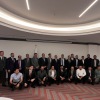
A Russian business mission has signed its first commercial agreements with Iraqi counterparts in the Kurdistan Region of Iraq (KRI), following meetings with the Kurdistan Importers and Exporters Union in Erbil. Branch heads from five provinces - Erbil, Sulaymaniyah, Dohuk, Kirkuk, and Halabja - took part in the expanded session.
According to the Russian-Iraqi Business Council, the delegation included producers of flour, vegetable oils, meat products, animal feed, pharmaceuticals, and consumer goods. The Council's executive director, Maxim Malyarchuk, said the range of products directly addresses demand from Iraqi consumers.
Mustafa Abdulrahman Abdullah, chairman of the Importers and Exporters Union, said his organisation was prepared to provide the infrastructure needed to establish regular direct deliveries from Russia. The KRG's deputy minister of trade and industry, Sarwar Kamal, said his ministry, working alongside the chambers of commerce, would assist Russian suppliers in obtaining the necessary permits, certificates, and import licences.
Dr Mohammed Shukri, chairman of the KRG Investment Board, said commercial contracts had begun to be concluded within the first days of the mission. Danar Mustafa, deputy head of the Kurdistan Region Government's representation in Moscow, called for the elimination of intermediaries and proposed expanding future business missions to other centres in Kurdistan.
(Source: Russian-Iraqi Business Council)
Posted in Agriculture, Iraq Industry & Trade News 0 Comments
US "Racing To Lock Down" Iraqi Gas Prize
Posted on 11 September 2026 .
By Simon Watkins, for OilPrice.com. Any opinions expressed are those of the author(s), and do not necessarily reflect the views of Iraq Business News.
Why The U.S. Is Racing To Lock Down Iraq's Most Explosive Geopolitical Gas Prize
Sharing its eastern border with Iran, its northern border with Turkey, its western border with Syria and Jordan, and its southern border with Saudi Arabia, Iraq is arguably the single most geopolitically important country to the U.S., China, and Russia in the entire Middle East.
In turn, the lawless western desert province of Anbar is perhaps the most geopolitically vital area in Iraq, and the most strategically important asset in Anbar is the huge Akkas gas field.
With the new Iraqi Prime Minister, Ali al-Zaidi, having taken office on 16 May and showing every sign of being open to new Western energy initiatives across the country, U.S. firms have positioned themselves centre-stage to take control of the Akkas field's development.
So, what are their key objectives here and how do they aim to achieve them?
Posted in Iraq Oil & Gas News 0 Comments
The US Power Play that Moscow & Beijing Didn't See Coming
Posted on 29 August 2026 .
By Simon Watkins, for OilPrice.com. Any opinions expressed are those of the author(s), and do not necessarily reflect the views of Iraq Business News.
The U.S. Power Play in Iraq That Moscow and Beijing Didn't See Coming
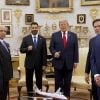
As Russia remains occupied with its war in Ukraine, Iran focuses on defending its territory against U.S. and Israeli attacks, and China maintains its involvement in both conflicts under the bar that would trigger direct conflict with America, Washington is leveraging its position in Iraq.
Posted in Iraq Oil & Gas News, Politics 0 Comments
OPEC+ to Increase Output by 188,000 bpd in September
Posted on 03 August 2026 .
By John Lee.
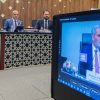
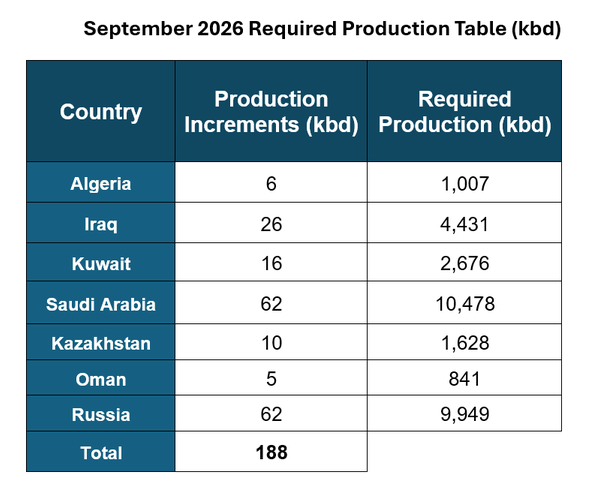
Seven OPEC+ member countries have agreed to implement a production adjustment of 188,000 barrels per day (bpd) from their additional voluntary cuts, effective September 2026. The decision was taken at a virtual meeting on Saturday, which was attended by Iraq's Ministry of Oil.
The seven countries involved are Saudi Arabia, Russia, Iraq, Kuwait, Kazakhstan, Algeria, and Oman.
They also confirmed their intention to fully compensate for any overproduced volumes since January 2024, with the Joint Ministerial Monitoring Committee (JMMC) tasked with monitoring conformity.
The group will continue to hold monthly meetings, with the next scheduled for 6 September 2026.
Full statement from OPEC:
Saudi Arabia, Russia, Iraq, Kuwait, Kazakhstan, Algeria, and Oman adjust production and reaffirm commitment to market stability
The seven OPEC+ countries, which previously announced additional voluntary adjustments in April and November 2023, namely Saudi Arabia, Russia, Iraq, Kuwait, Kazakhstan, Algeria, and Oman met virtually on 2 August 2026, to review global market conditions and outlook.
In their collective commitment to support oil market stability, the seven participating countries decided to implement a production adjustment of 188 thousand barrels per day from the additional voluntary adjustments announced in April 2023. This adjustment will be implemented in September 2026 as detailed in the table below.
The seven OPEC+ countries also noted that this measure will provide an opportunity for the participating countries to accelerate their compensation. The seven countries reiterated their collective commitment to achieve full conformity with the Declaration of Cooperation, including the additional voluntary production adjustments that will be monitored by the Joint Ministerial Monitoring Committee (JMMC). They also confirmed their intention to fully compensate for any overproduced volume since January 2024.
The seven OPEC+ countries will continue to hold monthly meetings to review market conditions. The next meeting will be held on 6 September 2026.
(Sources: OPEC / Ministry of Oil)
Posted in Iraq Oil & Gas News 0 Comments
OPEC+ to Increase Output from August
Posted on 06 July 2026 .
By John Lee.
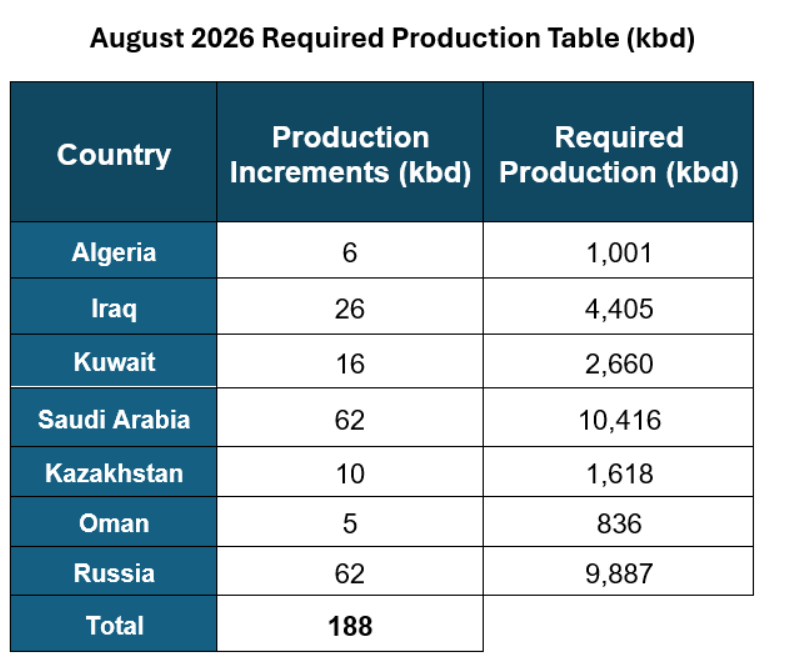
Seven OPEC+ countries, including Iraq, have agreed to a production adjustment of 188,000 barrels per day (bpd) from the additional voluntary adjustments announced in April 2023, to be implemented in August 2026.
The countries, Saudi Arabia, Russia, Iraq, Kuwait, Kazakhstan, Algeria, and Oman, met virtually on 5 July 2026 to review global market conditions and outlook, according to OPEC.
The additional voluntary adjustments announced in April 2023 may be returned in part or in full, subject to evolving market conditions, and in a gradual manner. The move also gives participating countries an opportunity to accelerate their compensation for previous overproduction.
The seven countries reaffirmed the importance of a cautious approach, and said they would retain full flexibility to increase, pause, or reverse the phase-out of the voluntary production adjustments, including reversing those announced in November 2023.
They reiterated their collective commitment to full conformity with the Declaration of Cooperation, including the additional voluntary production adjustments, which will be monitored by the Joint Ministerial Monitoring Committee (JMMC). The countries confirmed their intention to fully compensate for any overproduced volume since January 2024.
The seven OPEC+ countries will hold monthly meetings to review market conditions, conformity, and compensation, with the next meeting scheduled for 2 August 2026.
Full statement from OPEC:
Saudi Arabia, Russia, Iraq, Kuwait, Kazakhstan, Algeria, and Oman adjust production and reaffirm commitment to market stability
The seven OPEC+ countries, which previously announced additional voluntary adjustments in April and November 2023, namely Saudi Arabia, Russia, Iraq, Kuwait, Kazakhstan, Algeria, and Oman met virtually on 5 July 2026, to review global market conditions and outlook.
In their collective commitment to support oil market stability, the seven participating countries decided to implement a production adjustment of 188 thousand barrels per day from the additional voluntary adjustments announced in April 2023. This adjustment will be implemented in August 2026 as detailed in the table below. The additional voluntary adjustments announced in April 2023 may be returned in part or in full subject to evolving market conditions and in a gradual manner. The countries will continue to closely monitor and assess market conditions, and in their continuous efforts to support market stability, they reaffirmed the importance of adopting a cautious approach and retaining full flexibility to increase, pause or reverse the phase out of the voluntary production adjustments, including reversing the previously implemented voluntary adjustments announced in November 2023.
The seven OPEC+ countries also noted that this measure will provide an opportunity for the participating countries to accelerate their compensation. The seven countries reiterated their collective commitment to achieve full conformity with the Declaration of Cooperation, including the additional voluntary production adjustments that will be monitored by the Joint Ministerial Monitoring Committee (JMMC). They also confirmed their intention to fully compensate for any overproduced volume since January 2024.
The seven OPEC+ countries will hold monthly meetings to review market conditions, conformity, and compensation. The seven countries will meet on 2 August 2026.
 (Source: OPEC)
Posted in Iraq Oil & Gas News Comments Off on OPEC+ to Increase Output from August
Chevron, Basra Oil Company Sign Information-Sharing Deal
Posted on 02 July 2026 .
By John Lee.
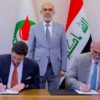
Basra Oil Company (BOC) signed a confidentiality agreement with Chevron of the United States on Wednesday to regulate the exchange of information for the evaluation of the West Qurna 2 oil field, and to negotiate future agreements.
According to the Ministry of Oil, West Qurna 2 is one of Iraq's giant oil fields, from which Russia's Lukoil had withdrawn.
Minister of Oil Basim Mohammed Khudair al-Abadi said the ministry was in negotiations with Chevron over a number of other projects in addition to West Qurna 2, and that it offered opportunities for international companies to invest in Iraq.
He added that such investment projects create work for local companies and Iraqi labour, as well as developing infrastructure and services in areas near project sites.
(Source: Ministry of Oil)
Posted in Iraq Oil & Gas News Comments Off on Chevron, Basra Oil Company Sign Information-Sharing Deal
The Strategic Value of Kurdish Gas for Europe's Energy Security
Posted on 15 June 2026 .
By Dr Kamran Yeganegi, for Middle East Monitor, under a Creative Commons licence. Any opinions expressed are those of the author(s) and do not necessarily reflect the views of Iraq Business News.
The Strategic Value of Kurdish Gas for Europe's Energy Security
Europe's Energy Challenge is Far From Over
Europe has made significant progress in reducing its dependence on Russian natural gas since the outbreak of the Ukraine war. Through increased liquefied natural gas (LNG) imports, expanded purchases from Norway, and greater reliance on the Southern Gas Corridor, European governments have managed to mitigate some of the vulnerabilities that once defined the continent's energy landscape.
Yet the notion that Europe's energy security challenge has been resolved is misleading. Diversification is not a one-time achievement but a continuous strategic process. As geopolitical tensions continue to reshape global energy markets, Europe must identify new sources of supply capable of strengthening resilience and reducing dependence on a limited number of producers and transit routes.
In this context, one potential contributor remains largely overlooked in European energy debates: the Kurdistan Region of Iraq.
Located at the intersection of the Middle East, Turkiye, and European energy markets, the Kurdistan Region possesses substantial natural gas resources that could play an important role in Europe's long-term energy strategy.
Why Kurdish Gas Matters
The Kurdistan Region possesses some of the most promising undeveloped gas reserves in the Middle East. Fields such as Khor Mor and Chemchemal already contribute to regional energy production, while additional projects including Miran and Topkhana-Kurdamir have the potential to significantly increase output in the coming years.
Unlike many energy producers in the Gulf, whose exports depend heavily on maritime routes vulnerable to regional instability, the Kurdistan Region enjoys a unique geographic advantage. Its proximity to Turkiye creates the possibility of direct pipeline connections to existing energy infrastructure serving European markets.
For Europe, the importance of Kurdish gas extends beyond additional supply volumes. Every new source of energy reduces strategic dependence on existing suppliers and enhances the flexibility of the broader energy system. The lessons of the Ukraine crisis demonstrated that excessive reliance on a single supplier can quickly evolve from an economic issue into a geopolitical vulnerability.
Kurdish gas offers Europe an opportunity to strengthen diversification before another crisis emerges.
Turkiye's Ambition and the Emerging Energy Corridor
No discussion of Kurdish gas can be separated from Turkiye's growing role in regional energy geopolitics.
Existing infrastructure already connects Caspian resources to European consumers through Turkiye, while new initiatives continue to expand the country's importance within regional energy networks.
The Southern Gas Corridor has become one of the European Union's most significant non-Russian energy routes. Carrying natural gas from Azerbaijan through Turkiye into European markets, the corridor has demonstrated both technical feasibility and geopolitical relevance.
However, its future effectiveness depends on diversification within the corridor itself.
Adding Kurdish gas would strengthen the resilience of this network by increasing available supply and reducing dependence on a limited number of sources. Rather than competing with Azerbaijani exports, Kurdish production could complement them, creating a more robust energy architecture stretching from the Middle East to Europe.
For Turkiye, the benefits are equally clear. Kurdish gas could contribute to domestic energy security, reinforce Ankara's role as a transit hub, and deepen economic interdependence with northern Iraq.
This convergence of interests creates a rare alignment between economic incentives and geopolitical objectives.
The Political Obstacle: Baghdad and Erbil
Despite its strategic potential, the future of Kurdish gas exports ultimately depends on politics.
The long-standing dispute between Baghdad and Erbil over hydrocarbon governance remains one of the most significant barriers to large-scale energy development. Successive Iraqi governments have maintained that energy contracts must be managed through federal institutions, while the Kurdistan Regional Government has consistently defended its authority to conclude agreements independently.
The result has been years of legal uncertainty.
For international investors, uncertainty is often more damaging than risk itself. Energy companies are prepared to operate in challenging environments, but they require predictable legal frameworks before committing billions of dollars to long-term projects.
Without a durable political settlement between Baghdad and Erbil, many of the region's most promising gas projects may struggle to attract the investment necessary for large-scale development and export infrastructure.
The challenge extends beyond domestic Iraqi politics. European policymakers seeking diversified energy supplies and Turkish officials pursuing regional energy connectivity cannot replace the need for an internal Iraqi consensus. Sustainable energy cooperation requires a governance framework accepted by both federal and regional authorities.
Security and Infrastructure Challenges
Political disagreements are not the only concern.
Recent attacks targeting energy facilities in northern Iraq have highlighted the vulnerability of critical infrastructure. Incidents affecting gas production facilities have demonstrated how security disruptions can influence both energy supply and investor confidence.
Energy corridors require long-term stability. Pipelines are not short-term projects; they are strategic investments expected to operate for decades. As a result, international investors evaluate not only resource availability but also political stability, infrastructure security, and institutional reliability.
These concerns should not be underestimated. However, they should also be viewed in perspective.
Many of today's successful energy corridors emerged despite significant geopolitical challenges. The Southern Gas Corridor itself was once regarded as an ambitious project facing considerable political and technical obstacles. Yet sustained political commitment transformed that vision into reality.
The same could be true for Kurdish gas if regional stakeholders demonstrate sufficient strategic determination.
A Strategic Opportunity for Europe
European energy policy often focuses on immediate challenges. Yet strategic planning requires a longer horizon.
The Kurdistan Region is unlikely to become a major supplier to Europe overnight. Infrastructure development, political agreements, and investment decisions require time. However, the essential foundations already exist: substantial gas reserves, geographic proximity to Turkiye, established energy cooperation, and growing European interest in diversified supply chains.
The question facing European policymakers is not whether Kurdish gas can replace existing suppliers. It cannot.
The more relevant question is whether Europe can afford to ignore a resource capable of strengthening long-term energy resilience.
The post-Ukraine energy order remains under construction. While Europe has reduced its dependence on Russian gas, the search for secure and diversified supplies continues. Strategic foresight requires identifying tomorrow's opportunities before they become urgent necessities.
In that regard, the Kurdistan Region deserves far greater attention than it currently receives.
Conclusion
The future of European energy security will depend not only on reducing dependence but also on expanding strategic options.
The Kurdistan Region of Iraq offers one such option. Its considerable gas reserves, advantageous geography, and proximity to existing transit infrastructure provide a foundation for a potentially significant energy corridor connecting the Middle East with European markets.
The obstacles are undeniable. Political disagreements between Baghdad and Erbil, security concerns, infrastructure requirements, and investment challenges all remain substantial barriers.
Yet history demonstrates that major energy corridors are rarely created under ideal circumstances. They emerge when political leaders recognize long-term strategic interests and act before opportunities are lost.
For Europe, Kurdish gas should not be viewed merely as a regional resource. It should be understood as a potential strategic asset in an increasingly uncertain energy landscape. The real question is whether Europe, Turkiye, Baghdad, and Erbil possess the political vision necessary to transform that potential into reality.
Posted in Iraq Oil & Gas News, Politics Comments Off on The Strategic Value of Kurdish Gas for Europe's Energy Security
OPEC+ Agrees Production Adjustment for July
Posted on 09 June 2026 .
By John Lee.
Seven OPEC+ member states have agreed to implement a combined production adjustment of 188,000 barrels per day (bpd) in July 2026, according to a statement from the group. The countries involved are Saudi Arabia, Russia, Iraq, Kuwait, Kazakhstan, Algeria, and Oman.
The group met virtually on Saturday to review global market conditions. The adjustment forms part of the additional voluntary production cuts first announced in April 2023, which the seven countries said may be returned in part or in full subject to market conditions.
The seven nations reaffirmed the importance of retaining flexibility to increase, pause, or reverse the phase-out of voluntary adjustments, including those announced in November 2023. They also confirmed their intention to fully compensate for any overproduction since January 2024, with the compensation period extended to the end of December 2026.
Conformity and compensation will be monitored by the Joint Ministerial Monitoring Committee (JMMC). The group will hold monthly meetings to review market conditions, with the next scheduled for 5 July 2026.
Full statement from OPEC:
Saudi Arabia, Russia, Iraq, Kuwait, Kazakhstan, Algeria, and Oman adjust production and reaffirm commitment to market stability
The seven OPEC+ countries, which previously announced additional voluntary adjustments in April and November 2023, namely Saudi Arabia, Russia, Iraq, Kuwait, Kazakhstan, Algeria, and Oman met virtually on 7 June 2026, to review global market conditions and outlook.
In their collective commitment to support oil market stability, the seven participating countries decided to implement a production adjustment of 188 thousand barrels per day from the additional voluntary adjustments announced in April 2023. This adjustment will be implemented in July 2026 as detailed in the table below. The additional voluntary adjustments announced in April 2023 may be returned in part or in full subject to evolving market conditions and in a gradual manner. The countries will continue to closely monitor and assess market conditions, and in their continuous efforts to support market stability, they reaffirmed the importance of adopting a cautious approach and retaining full flexibility to increase, pause or reverse the phase out of the voluntary production adjustments, including reversing the previously implemented voluntary adjustments announced in November 2023.
The seven OPEC+ countries also noted that this measure will provide an opportunity for the participating countries to accelerate their compensation. The seven countries reiterated their collective commitment to achieve full conformity with the Declaration of Cooperation, including the additional voluntary production adjustments that will be monitored by the Joint Ministerial Monitoring Committee (JMMC). They also confirmed their intention to fully compensate for any overproduced volume since January 2024. The compensation period will be extended until the end of December 2026.
The seven OPEC+ countries will hold monthly meetings to review market conditions, conformity, and compensation. The seven countries will meet on 5 July 2026.
 (Source: OPEC)
Posted in Iraq Oil & Gas News Comments Off on OPEC+ Agrees Production Adjustment for July