


Iraq-Syria Rapprochement "Makes Baghdad More Valuable"
Posted on 08 August 2026 .
From Amwaj Media. Any opinions expressed are those of the author(s), and do not necessarily reflect the views of Iraq Business News.
Iraq-Syria Rapprochement Makes Baghdad More Valuable, Not More Exposed
On July 8, 2026, the Donald Trump administration informed the US Congress of its intent to rescind Syria's designation as a state sponsor of terrorism, a label the country had carried since 1979.
The move follows a June 2025 executive order unwinding the sanctions architecture, and has been the clearest signal yet that Washington intends to shift Damascus from a pariah state into a functioning regional partner.
The move follows the May 31 appointment of US Ambassador to Turkiye Tom Barrack as presidential envoy for Iraq and Syria. Barrack has described the three countries now under his purview as the region's "strategic fulcrum," suggesting that all are now being seen in Washington as a single theater of US policy.
Posted in Iraq Industry & Trade News, Politics, Security 0 Comments

Jiyad: Al-Zaidi Govt on Petroleum Issues and US Visit
Posted on 27 July 2026 .
By Ahmed Mousa Jiyad. Any opinions expressed are those of the author, and do not necessarily reflect the views of Iraq Business News.
Al-Zaidi' Government on Petroleum Issues and Washington DC Visit
The Iraqi Council of Representatives (Parliament) voted on 14th May 2026 to endorse the new government headed by PM Ali Al-Zaidi, and approved its Minhaj (preliminary program) for government.
The same day, Al-Zaidi received a call from Tom Barrack, the US President Donald Trump's Special Envoy, congratulating him and expressing Trump's readiness to cooperate with him and his government.
Presenting the Minhaj by the new government and accepting it by the Parliament is a Constitutional prerequisite to form and confirm the new government, and the government should, based on the Minhaj, submit its Barnamaj (detailed program), according to which it will be accountable.
Click here to view the full report (pdf).
Mr Jiyad is an independent development consultant, scholar and Associate with the former Centre for Global Energy Studies (CGES), London. He was formerly a senior economist with the Iraq National Oil Company and Iraq's Ministry of Oil, Chief Expert for the Council of Ministers, Director at the Ministry of Trade, and International Specialist with UN organizations in Uganda, Sudan and Jordan. He is now based in Norway (Email: mou-jiya(at)online.no, Skype ID: Ahmed Mousa Jiyad). Read more of Mr Jiyad's biography here.
Posted in Ahmed Mousa Jiyad, Iraq Oil & Gas News 0 Comments
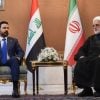
Iraqi PM Pitches 'Trilateral Business Opportunities' to Iran, US
Posted on 25 July 2026 .
From Amwaj Media. Any opinions expressed are those of the author(s), and do not necessarily reflect the views of Iraq Business News.
Exclusive: Iraqi PM Pitches 'Trilateral Business Opportunities' to Iran, US
Iraq's prime minister did not deliver a ceasefire proposal by the Donald Trump administration during his recent visit to Iran, senior sources in Baghdad and Tehran have confirmed to Amwaj.media.
Throwing cold water on a New York Times report which cited unnamed Iraqi and Iranian sources as saying that Iran rejected a "US proposal" for a truce, informed sources say Ali Al-Zaidi's focus was on business.
While the 41-year-old-who only took office in May-lacks experience in international politics, he has an established background as a successful entrepreneur.
Posted in Iraq Industry & Trade News, Politics, Security 0 Comments
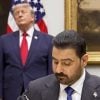
10 Key Takeaways from PM Al-Zaidi's Washington Visit
Posted on 21 July 2026 .
By Guest Blogger. Any opinions expressed are those of the author(s), and do not necessarily reflect the views of Iraq Business News.
1. A historic volume of agreements - 48 in total
A total of 48 agreements, memoranda of understanding, cooperation agreements and partnership declarations were signed between public and private sector entities in Iraq and the United States during the five-day visit. In total, Iraq's initial agreements with US firms, spanning the energy, healthcare and technology sectors, are worth more than $60 billion.
2. Major oil and energy companies ink deals
The agreements include cooperation and partnerships involving the Iraqi ministries of oil and electricity with ExxonMobil, KBR, GE Vernova, Shell and Halliburton. Chevron also signed two additional agreements with Iraq focused on boosting oil production.
3. Iraq-Syria crude oil pipeline to be revived
Iraq and Syria signed a cooperation agreement to reconstruct the long-defunct Iraq-Syria oil pipeline, which runs from the oil-rich Kirkuk region in northern Iraq to Syria's Mediterranean port of Banias [Baniyas]. Iraq's state news agency reported that Chevron would carry out the project. The US Department of State welcomed the plan, stating that upon rehabilitation the pipeline would have an initial transport capacity of two million barrels per day.
4. Pipeline deal framed as making Hormuz "an afterthought"
US ambassador to Türkiye Tom Barrack said Iraq's latest oil pipeline agreements would lead to a programme "that will make the Strait of Hormuz an afterthought." The deals come as Baghdad seeks to move away from dependence on the Strait of Hormuz, where shipping and oil exports have been heavily disrupted due to the US-Israel war against Iran.
5. Starlink deal for satellite internet services
Iraq signed a deal with Starlink to introduce services to the country. This forms part of a broader push to attract US companies across the technology sector.
6. Oil production ambitions front and center
Al-Zaidi said Iraq seeks to increase oil production to seven million barrels per day over the next three years, up from its current output of about 4.5 million bpd. A sovereign wealth fund structured around oil exports was also discussed as a vehicle for funding future development.
7. US companies given priority across key sectors
Al-Zaidi's government said it would prioritise US companies in energy, communications, technology and development projects, with the prime minister stating his goal is to move bilateral relations "from a phase of security cooperation to a sustainable economic partnership."
8. Deals signed at a US-Iraq Business Summit
The preliminary deals were signed at a US-Iraq business summit at the US Chamber of Commerce in Washington. Al-Zaidi told attendees: "We are using an open-door policy. Everybody who has a project can come and talk to us. We will not make it difficult for anyone."
9. Corruption crackdown cited as a confidence-builder for investors
Al-Zaidi has launched a corruption crackdown, with raids yielding millions of dollars in seized assets, a signal intended to reassure US partners that Baghdad is serious about improving the business environment.
10. Strategic shift from security to economic partnership
Al-Zaidi said discussions with Trump focused on strengthening bilateral relations, expanding economic cooperation and creating opportunities for American companies to participate in development projects in Iraq, particularly in the energy sector, stressing the importance of building commercial ties rather than focusing solely on military cooperation.
Posted in Investment, Iraq Banking & Finance News, Iraq Industry & Trade News, Iraq Oil & Gas News, Politics, Security 1 Comment
Iraq's Zaidi Courts US Investment amid Resistance from Iran-Backed Factions
Posted on 17 July 2026 .
From Amwaj Media. Any opinions expressed are those of the author(s), and do not necessarily reflect the views of Iraq Business News.
Iraq's Zaidi Courts US Investment amid Resistance from Iran-Backed Factions
Iraqi Prime Minister Ali Al-Zaidi has held high-level meetings in Washington with President Donald Trump and other senior officials.
The July 13 visit, his first since taking office in May, prioritized economic, energy and investment cooperation aiming to provoke a positive shift in relations.
Amid significant debate over Zaidi's outreach in Iraqi media, some Iran-backed 'resistance' factions say they will refuse to recognize any accords that might stem from it.
Posted in Investment, Iraq Industry & Trade News, Iraq Oil & Gas News, Politics, Security 0 Comments
Iraq-US Talks on Oil and Economic Partnership
Posted on 15 July 2026 .
By John Lee.
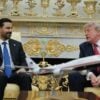
Iraqi Prime Minister Ali al-Zaidi met US President Donald Trump at the White House on Tuesday to discuss bilateral economic cooperation, opportunities for American companies in Iraqi development projects, and the future of the Iraq-US relationship following the conclusion of the US military coalition presence in the country.
According to the Iraqi Prime Minister's Office (PMO), the talks covered oil sector cooperation, security and intelligence collaboration, and joint efforts to promote regional stability.
Speaking after the meeting in the Oval Office, Ali al-Zaidi said the visit aimed to build a strong economic partnership, noting that as the US military presence under the international coalition against ISIS draws to a close, the focus would shift to an economic presence through American companies. He said the relationship should be grounded in people-to-people ties supporting economic cooperation rather than military partnership.
Al-Zaidi described the partnership as a link between Iraq, one of the world's oldest civilisations, and the United States as the heart of the global economy, emphasising that it would serve the interests of both peoples. He said Iraq needed a strategic partner of the scale of the United States to navigate its economic and technological challenges, and that planned development and economic cooperation would extend to the Kurdistan Region, Basra, Anbar, and all Iraqi governorates.
Trump said the United States had supported Iraq in the fight against ISIS and was backing the al-Zaidi government in reinforcing stability and the economic steps that underpin the bilateral partnership, highlighting Iraq's significance in energy and the international economy.
(Source: Iraqi Prime Minister's Office)
Posted in Investment, Iraq Industry & Trade News, Iraq Oil & Gas News, Politics, Security 0 Comments
Iraqi PM in Washington: What His Trip Actually Means for the Dinar
Posted on 15 July 2026 .
By Guest Blogger. Any opinions expressed are those of the author(s), and do not necessarily reflect the views of Iraq Business News.
Ali al-Zaidi in Washington: What His Trip Actually Means for the Dinar
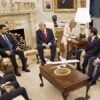
The forums have been buzzing. Iraq's prime minister is in Washington. He met Trump in the Oval Office. There were handshakes, warm words, and promises of deals. For the segment of dinar holders who treat every piece of Iraqi news as a potential trigger for the long-awaited revaluation, this week's visit looked like exactly the kind of high-level momentum they have been waiting for.
So let's look at what actually happened, what it means, and what it doesn't.
What al-Zaidi Was There to Discuss
Trump and al-Zaidi met at the White House on Tuesday, with both leaders pledging to deepen economic ties and boost Iraq's oil output. The visit was al-Zaidi's first international trip since taking office in May, and the agenda was clear well before the handshakes. Oil and gas agreements were expected to be signed, with US companies set to boost Iraq's production capacity and reduce reliance on the Strait of Hormuz.
Al-Zaidi was expected to sign several agreements, including a deal to establish a fund into which Iraq will deposit half a million barrels of oil per day in exchange for the US helping to boost the country's electricity supply. In a show of support for al-Zaidi's administration, the US also resumed cash shipments for Iraq's oil revenue, which have been handled by the Federal Reserve Bank of New York since 2003.
Trump's framing was characteristically direct. He said "massive" new oil deals with Iraq would be announced soon, adding: "Iraq has tremendous potential because of their oil and because of other things. We're going to create a lot of jobs for both countries, and we're going to be taking out a lot of oil. A lot of oil is coming out, and the American companies are doing it."
Al-Zaidi, for his part, described a shift in the relationship's character. He said: "On the 30th of September, the US forces will be out of Iraq, while these companies will be inside Iraq. The social relations is about like economy, it's not about like military relations."
The Security Dimension
The visit was not only about oil. The disarming of pro-Iran Iraqi armed factions and restricting weapons under state authority, as well as Baghdad's relationship with Tehran, were expected to be among the issues the US side would raise. Al-Zaidi has set a September 30, 2026 deadline for all armed factions to disarm, which aligns with the withdrawal of the international coalition's military troops.
That deadline is significant, and not only for security reasons. Washington's willingness to resume dollar shipments to Iraq, and to deepen the oil investment relationship, is directly connected to Baghdad's progress on militia disarmament. The Trump administration has issued sanctions on Iran-backed militias, including Kata'ib Hizballah and Asa'ib Ahl Al-Haqq. The economic partnership being discussed this week is inseparable from the political conditions the US expects Baghdad to meet.
Shortly before al-Zaidi's departure, the Islamic Resistance in Iraq, an umbrella group of Iran-backed armed groups, rejected the prime minister's visit and its outcomes. That rejection is a reminder that the September disarmament deadline is an aspiration, not a settled outcome.
What the Dinar Forums Are Saying - and Why They're Wrong
Predictably, parts of the dinar speculation community have interpreted this week's visit as a bullish signal. A US-backed prime minister, Oval Office optics, Trump talking about "massive deals" - for those primed to read every development as a precursor to revaluation, the ingredients are all there.
They are not.
Nothing discussed in Washington this week has any bearing on the exchange rate of the Iraqi dinar. The agenda was oil production, electricity infrastructure, militia disarmament, and the withdrawal of US troops. The Central Bank of Iraq sets exchange rate policy, not the prime minister, and not the White House. As noted in our November 2025 coverage, the CBI issued a formal statement confirming there is "no intention whatsoever to amend the exchange rate of the Iraqi dinar," explicitly calling revaluation rumours "speculation aimed at disrupting the market and undermining economic stability." That statement has not been withdrawn or updated. No CBI official was in Washington this week.
The resumption of dollar cash shipments to Iraq, which some forum commentators have flagged as significant, is also being misread. The US resumed those shipments as a signal of support for al-Zaidi's administration - a diplomatic tool, not a monetary one. The dollar pipeline from the Federal Reserve Bank of New York exists to allow Iraq to pay for imports and manage its oil revenues. It is not a mechanism for dinar revaluation, and its resumption says nothing about where the IQD/USD exchange rate is headed.
What the Visit Actually Represents
Taken on its own terms, the Washington trip was a genuine diplomatic achievement for al-Zaidi. His administration has prioritised anti-corruption investigations, including "Operation Dawn," which resulted in 67 arrests and the seizure of 375 kilograms of gold. That kind of concrete action gave him something real to show Washington, and the warmth of the reception reflected it.
Al-Zaidi has said he wants to move the relationship "beyond crisis management to opportunity creation, particularly opportunities that have a measurable economic impact." That framing is credible in the context of what was actually discussed: US companies entering Iraq's oil and gas sector, electricity infrastructure investment, and a structured path toward ending the US military presence.
These are meaningful developments for Iraq's long-term economic trajectory. A more stable fiscal position, deeper US investment, and a functioning relationship with Washington are all positive for the country. None of them, individually or together, creates a mechanism by which foreign holders of physical Iraqi banknotes profit.
The Bottom Line
Al-Zaidi's Washington visit was about oil, security, and the future shape of the US-Iraq relationship. It was a successful first international trip by a prime minister who needed to demonstrate credibility in Washington, and by most accounts he achieved that. The deals being discussed - energy agreements, electricity investment, alternative export routes - are the substance of a serious bilateral relationship.
For holders of physical Iraqi dinars waiting for a life-changing revaluation, however, the calculus is unchanged. The Central Bank has not altered its position. The exchange rate was not on the agenda at the White House. Trump's enthusiasm for Iraqi oil is enthusiasm for American companies extracting and profiting from that oil - not a signal that the dinar is about to multiply in value.
The forums will find reasons to be excited. They always do. But the question worth asking, before the next intel call tells you that the Oval Office handshake was a coded signal, is a simpler one: was the word "revaluation" spoken anywhere in Washington this week?
It wasn't.
This article does not constitute financial or investment advice. If you are holding Iraqi dinars and considering your options, consult a licensed, regulated financial advisor - not an online forum.
For more information on the Iraqi dinar, check out IBN's Dinar Page.
Posted in Iraq Banking & Finance News, Iraq Industry & Trade News 2 Comments

U.S. "Resumes Dollar Transfers to Iraq"
Posted on 02 July 2026 .
From The New York Times. Any opinions expressed are those of the author(s), and do not necessarily reflect the views of Iraq Business News.
U.S. Resumes Dollar Transfers to Iraq After Monthslong Suspension
The Trump administration had halted the shipments to Iraq as part of its efforts to pressure the Baghdad government to distance itself from Iran.
Click here to read the full article. (Subscription required.)
Posted in Iraq Banking & Finance News, Iraq Industry & Trade News, Iraq Oil & Gas News 0 Comments
Top 10 Dinar Articles from June
Posted on 02 July 2026 .
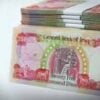
The following were the ten most read dinar-related articles on Iraq Business News for the month of June:
- Iraqi Central Bank Rejects Rumours of New Dinar Rate
- You Bought Iraqi Dinars. Now What?
- "Deleting the Zeros": What Iraq Actually Said, and What It Means for Your Investment
- 2026: The Year Iraqi Dinar Speculators Finally Strike Gold?
- Donald Trump and the "Great Iraqi Dinar Revaluation"
- New Governor Takes Charge at Iraq's Central Bank
- What a New Iraqi PM means for Your Dinars
- The Iraqi Dinar Revaluation Deception: 10 Persistent False Claims Exposed
- Iraqi Dinar Prospects: Reality Check After Six Months of Trump
- CBI Instructions for Exchanging Dinars
The previous month's listing can be viewed here.
For more information on the Iraqi dinar, check out IBN's Dinar Page here: https://www.iraq-businessnews.com/the-dinar-page/?swcfpc=1
Posted in Iraq Banking & Finance News 0 Comments
Iraq, US Outline Energy, Security and Investment Goals
Posted on 17 June 2026 .
Iraq and US Reaffirm Strategic Partnership, Eye White House Meeting in July
Iraq-US Joint Statement Outlines Energy, Security and Investment Goals
Chevron, Starlink and Pipeline Rehabilitation Among Priorities in Iraq-US Joint Statement
By John Lee.
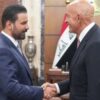
Prime Minister Ali al-Zaidi and Tom Barrack, Special Presidential Envoy of President Trump, have reaffirmed the commitment of both governments to building a strong and mutually beneficial US-Iraq partnership. Barrack conveyed President Trump's wish to receive Prime Minister al-Zaidi at the White House in mid-July to discuss the future of the relationship.
According to the Iraqi Prime Minister's Office, the two sides discussed the Iraqi government's vision for a future free from terrorism and outlined plans for the complete disarmament and dissolution of all armed groups operating outside state authority, the consolidation of weapons under state control, and the imposition of full sovereignty - with the aim of ensuring Iraq is kept clear of regional conflicts and that its territory is not used by any party to threaten regional peace.
Prime Minister al-Zaidi reaffirmed Iraq's commitment to deepening bilateral trade and investment relations. Both sides welcomed a series of specific commercial developments, including:
- Iraq's decision to complete the granting of an operating licence to Starlink to provide internet services to Iraqi consumers
- The launch of negotiations with Chevron for the development of the West Qurna 2 and Nasiriyah oil fields
- The resumption of operations by US companies HKN, Western Zagros and Hunt, with full security guarantees
- Progress on a memorandum of understanding with TI Capital for the rehabilitation of the Kirkuk-Banias pipeline as a vital oil export route
- Expansion of US-Iraq commercial cooperation to support Iraq's electricity needs, including US-based Excelerate Energy's project to develop a floating liquefied natural gas (LNG) import terminal at Khor al-Zubair
Both sides also affirmed their support for a strong, unified and sovereign federal Iraq grounded in constitutional institutions, with full equality for all citizens.
(Source: Prime Minister's Office)
Posted in Construction & Engineering In Iraq 0 Comments