


Dozens Of Countries Flock To Iraq
Posted on 24 May 2011 .
Just this week, we have seen a United Arab Emirates firm invest in a new Iraqi oil refinery, a German company discussing investing in Basram, and a Korean company building 25 power stations.
On top of that, there have been Iranian gas deals amd Saudi Arabian interest in Iraqi telecoms, plus both British and Turkish firms have been mentioned in the topic of new investment in Iraq.
It is not surprising, then, that the Iraqi Department of Trade is expecting even bigger things for the next Baghdad International Fair.
30 countries and 1,500 companies are expected to attend from around the world, the Ministry for Trade said. Learning its lessons from last year, the preparations for this year are to begin earlier.
(Sources: Iraq Ministry of Trade; Aswat Al-Iraq)
Posted in Investment, Iraq Industry & Trade News Comments Off on Dozens Of Countries Flock To Iraq
Transforming NGO Microfinance Institutions to Non Bank Financial Institutions
Posted on 22 May 2011 .
By T. Keyzom Ngodup, co-founder and Executive Director at Ideas sYnergy, an Iraq based private sector development consulting company.
For a long time now, the discussion continues within different circles and corridors in Iraq, on whether microfinance institutions (MFIs) can operate as NGOs and continue providing micro-loans to low-income entrepreneurs who lack access to finance for their ideas and enterprises. The NGO Directorate and the Central Bank of Iraq, both of whom recognize the importance of financial intermediation for micro, small and medium enterprises (MSMEs) applaud the work of MFIs with a few reservations on ownership of the fast growing assets of the lending NGOs, on interest rates (which is the lowest among MENA microfinance industries and globally), and on the transformation of NGO-MFIs to Non Bank Financial Institutions.
There are 12 microfinance institutions, operating as NGOs, providing access to finance for those living in poverty and those without access to banks, namely the un-banked. As of December 2010, these MFIs, operating in all 18 governorates of Iraq, boosted an outstanding loan portfolio of $106.4 million and 75,182 active clients, growing by 28.4% and 27.7% respectively since 2009. The support of USAID has been instrumental in the sustainability of these NGO-MFIs, and USAID-Tijara continues to provide technical assistance and lead the sector’s development. However, in order for NGO-MFIs to scale-up, institutional transformation to NBFIs is recognized as one of the most effective strategies for achieving a significant scale by offering a wider range of services, accessing commercial sources of capital and improving operational efficiency through enhanced systems, controls and transparency in reporting that would result from links to the Central Bank and other banking expertise.
The banking system, comprising of state, private and foreign banks, is highly liquid with total deposits amounting to $33 billion in 2009. Bank liquid reserves to bank asset ratio increased from 98% in 2004 to 156.6% in 2009, compared to 14% for Saudi Arabia and 12.32% for UAE in 2009. According to CBI, total bank loans amounted to $5.8 billion as of June 2010. This compares to around $22.4 billion for Syria and approximately $250 billion for Saudi Arabia. While there is a steady rise in credit to private sector as a percentage of GDP, at 6% in 2009, Saudi Arabia and UAE record above 50%, and even low success economies such as Libya and Syria record 16% and 21% respectively. Although the banking sector is the main component of the Iraqi financial system, the banks offers few credit facilities, and the credit culture is poor. USAID, through the recently incepted Iraq Financial Development Project (IFDP), in partnership with CBI, is working to address the infrastructure of the financial sector through targeted reforms, credit information systems such as credit bureau, and enhancement to the national payment systems to enable cost-effective financial intermediation.
Success achieved by the NGO-MFIs need to be accordingly considered within the Central Bank’s reform priorities, and clear guidelines need to be issued for NGO-MFIs that are considering transformation in order to access mainstream commercial capital for their target clients: the poor and the un-banked. NGO-MFIs CHF and Amalkom have demonstrated not just commitment, but also the capability to ‘mainstream’ towards a regulation institution and access the $90 million line of credit from OPIC, however unclear guidance from CBI and correspondence with the NGO Directorate has stalled the process, or in other words, delayed the deployment of enterprise financing that the young entrepreneurs in Iraq need.
Read www.microfinancegateway.org, www.sanabelnetwork.org for more information on microfinance and MSME financing.
T. Keyzom Ngodup is co-founder and Executive Director at Ideas sYnergy, an Iraq based development consulting company committed to economic and social development through market-based solutions that help build and scale innovative businesses for sustainable and inclusive private sector development.
Posted in Iraq Banking & Finance News, Keyzom Ngodup Comments Off on Transforming NGO Microfinance Institutions to Non Bank Financial Institutions
Baker Hughes sees Increased Drilling in Iraq
Posted on 19 May 2011 .
Baker Hughes, the world's third largest oilfield services firm, expects drilling activity to pick up in Opec-members Saudi Arabia and Iraq from the second half of this year as delayed projects restart, Reuters reported on Wednesday.
"For the second half of 2011, we expect activity to increase, especially if you look at Saudi and Iraq," Hans-Christian Freitag, Baker Hughes' vice president of marketing in the Middle East told th news agency in an interview.
"Together those two countries will see an increase in activity, with projects that were on hold for some time in Iraq now starting up and rigs are being deployed."
In Iraq, work in oilfields being developed by foreign oil companies is going ahead "normally" and faster than contracted, the country's deputy prime minister for energy Hussain Al-Shahristani said.
Alasdair Shiach, vice president and managing director of Baker Hughes in Kuwait, Saudi Arabia and Bahrain told Reuters in the same interview he did not expect oil prices to go below the $80 per barrel level.
(Source: Reuters)
Posted in Iraq Oil & Gas News Comments Off on Baker Hughes sees Increased Drilling in Iraq
Clyde & Co Wins Iraq Lukoil Contract
Posted on 19 May 2011 .
Clyde & Co has been appointed by Lukoil Mid-East Ltd to support them in their development of the West Qurna-2 field in Iraq. With recoverable reserves of 43 billion barrels West Qurna is the second largest oil field in the world.
This is a landmark project for Lukoil, representing as it does a planned production capacity of 1.8 mbd by 2017. This equates to more daily production than Libya currently achieves as an order of magnitude indicator. With planned investment levels of US$4.5bn over the next 3 to 5 years, and a total investment projection of US$30bn, the scale of this project for Lukoil is clear.
Commenting on the selection of Clyde & Co, Director of Legal Affairs for Lukoil Mid-East, Nikolay Isaakov said: "We are pleased to have selected Clyde & Co for a place on our panel of outside law firms for work in connection with Lukoil's operation of the West Qurna-2 field in Iraq. Clyde's major presence in the Middle East and their experience in Iraq, together with their oil and gas expertise, made them an obvious choice for us. We look forward to working with the Clyde's team on this important project."
With first oil projected for 2013 Lukoil and its IOC partner Statoil have an aggressive time table in place. As one of the world’s largest untapped oil fields, the second phase of West Qurna has known reserves of 12.9 billion barrels, and was awarded to Lukoil by Iraqi Ministry of Oil following a lengthy and keenly contested bidding process. The continuing development of this vital national asset, is indicative of the continued improvement in the national oil industry of Iraq.
Posted in Iraq Industry & Trade News, Iraq Oil & Gas News Comments Off on Clyde & Co Wins Iraq Lukoil Contract
Iraq to Head OPEC?
Posted on 13 May 2011 .
If Iranian President Mahmoud Ahmadinejad doesn't choose a minister for the ministry to replace the Iranian Ministries of Oil and Energy, then Iraq will chair the 159th meeting of the Organization of Petroleum Exporting Countries (OPEC) in the Austrian capital Vienna next June, an oil expert has said.
Jawad Barjani, speaking to Iranian news agency, Mehr, said that OPEC names the head of the organization in alphabetical order, and therefore if Iran failed to name its new minister the responsibility would pass to Iraq.
Iran and Iraq were founding members of the organization in 1960, along with Saudi Arabia, Kuwait and Venezuela.
(Source: AKnews)
Posted in Iraq Oil & Gas News Comments Off on Iraq to Head OPEC?
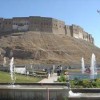
Book Fair in Erbil Exhibits 15,000 Titles
Posted on 09 May 2011 .
A book fair exhibiting 15,000 titles has been opened in Erbil city’s Central Library.
The book fair, organized by the media group Hana Group, in line with its motto “Books for all”, brings together 25 publishers from Iraq, Syria, Jordan, Saudi Arabia, Lebanon, Egypt and Iran and is expected to continue for 10 days.
The book fair is part of the efforts of the Kurdistan Democratic Youth Union, associate organizers of the fair, to introduce greater numbers of books to Kurdish readers and promote book sales in the region.
“The fair introduces some 8,000 new titles to Kurdistan” said Hana Group director, Handren Abdulqadir.
Visitors to fair will benefit from a 20% to 40% discount, in an effort to promote sales.
(Source: AKnews)
Posted in Iraq Industry & Trade News Comments Off on Book Fair in Erbil Exhibits 15,000 Titles
BurgerFuel Enters Iraq
Posted on 09 May 2011 .
BurgerFuel Worldwide, the New Zealand-based fast food company, has sold the Master License agreement for the rights to BurgerFuel Iraq.
BurgerFuel chief executive for international markets, Chris Mason, who is based in Dubai, said:
“We’re moving forward in our plans to establish BurgerFuel in the Middle East by adding Iraq to our other territories in the UAE, Saudi Arabia and Bahrain. Whilst Iraq poses new challenges, it's another important region and we think early establishment will allow time for us to eventually open a number of restaurants there.”
The first BurgerFuel in Iraq will open in Sulaymaniyah. The Iraqi consortium that has bought the rights for BurgerFuel Iraq also own 50% of Iraq’s North Bank financial institution as well as 50% of Pepsi Iraq.
With Pepsi being the dominant soft drink in Iraq, the consortium is looking forward to adding BurgerFuel to their stable of successful brands.
One of the new principals, Raad Braich, is already very familiar with the BurgerFuel brand and adds the Master Franchise agreement for BurgerFuel in Iraq to his interests as a board member of the Iraqi National Business Council.
“We’ve found the Iraq partnership an interesting prospect, with strong and established business partners who approached us already having a good understanding of the BurgerFuel brand as well as the local Iraqi market”, said BurgerFuel Worldwide chief executive, Josef Roberts.
“We are interested in all global territories and we seek to take advantage of our non-American, pure New Zealand positioning, wherever we can.”
(Sources: The National Business Review, Radio NZ)
Posted in Iraq Industry & Trade News Comments Off on BurgerFuel Enters Iraq

Postwar Iraq: Democracy or Theocracy?
Posted on 21 April 2011 .
By Tariq Abdell, Iraq’s political risk analyst, Founder & CEO of Mesopotamia Insight.
The opinions expressed here are those of the author, and do not necessarily reflect the views of Iraq Business News.
Mr Gates, U.S. Defense Secretary, recent visit to Iraq underlines Washington's uneasiness and frustration with Baghdad's indecisiveness and lack of strategic foresight in regards to the future of U.S.-Iraq postwar strategic partnership, namely, the future of U.S.-Iraq military cooperation.
Given the sacrifices endured by both countries, loss of lives and treasure, U.S. and Iraqi governments, two sovereign nations, ought to craft a clear and comprehensive postwar strategy that is capable of creating the conditions for a sustainable and successful partnership. However, before undertaking a such colossal and sensitive task, Washington and Baghdad ought to define the objectives of a such partnership (attainable and realistic), stakeholders’ roles and responsibilities, and the needed resources, e.g., training and equipping Iraqi Security Forces.
Nonetheless, given the high levels of interoperability of the two militaries, the complete withdrawals of U.S. troops, including combat advisors, will undermine Iraqi Security Forces' capabilities and, subsequently, Iraq's national security, namely, air sovereignty and border security. Moreover, the ensuing security vacuum entails great risks and dire consequences:
- Emboldening the quasi-dormant Sunni and Shiite extremist groups ( AQI, Ba'atists, Jaysh al-Islami, the Promised Day Brigade, Kata’ib Hizbollah, Jaysh al-Mehdi, etc...).
- Precipitating the war between Baghdad and Kurdistan over oil-rich Kirkuk, given the ongoing territorial tensions between the Arabs, Turkmen, and Kurds.
- Disrupting Iraq's oil production and export and, subsequently, Iraq's revenues - petrodollars.
- Turning Iraq into a prime battleground for proxy wars, chiefly Saudi Vs. Iran.
- Invigorating Iran’s centuries-old expansionist and religious ambitions in Iraq - turning Iraq into a satellite Shiite Islamic theocracy.
Case in point: the nomination of Mr. Hassan Danaifar, a Baghdad native and Qods Force (IRGC special operations unit) veteran commander, as Iran Ambassador to Iraq underscores Iran’s vested interest in building and strengthening its military, political and religious influence in Iraq and, consequently, expanding Iran's sphere of influence in the region beyond its traditional allies Syria and Hezbollah in Lebanon.
Thus, to avoid the aforesaid grim scenario, the Iraqi government (executive and legislative bodies) ought to outline clearly its postwar policy objectives and priorities, in accordance with the country' strategic interests. Nonetheless, the protracted political horse-trading over the security posts (defense, interior, and national security) is hindering communication channels between U.S. officials and their Iraqi counterparts and, most importantly, jeopardizing Iraq's hard-earned security gains. Furthermore, given the recent upsurge in violence, the outcomes of such injudicious decisions could easily reignite Iraq's ethno-sectarian violence.
Drawing on past experiences, namely, Germany, South Korea, and Japan, the scheduled complete withdrawal of the U.S. combat troops from Iraq, by December 2011, presents a unique opportunity to lay the foundation for a strong and sound postwar strategic partnership, that is Susceptible to preserve and foster Iraq's nascent democracy and, most importantly, prevent Iraq from reverting to a military dictatorship, religious tyranny, or ,worst, falling prey to Iran's Mullacracy suicidal ambitions.
Irrefutably, the success of a such momentous endeavor is contingent upon the genuine commitment and the political will of both Washington and Baghdad. Simply put, “…The one who adapts his policy to the times prospers, and likewise that the one whose policy clashes with the demands of the times does not…” Niccolo Machiavelli.
The opinions expressed here are those of the author, and do not necessarily reflect the views of Iraq Business News.
The author, Tariq Abdell, is an Iraq's political risk analyst, and Founder & CEO of Mesopotamia Insight
He can be contacted at: atariq@mesopotamiainsight.com
or
Followed on twitter: mesopotamia_iq
Posted in Tariq Abdell 2 Comments
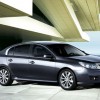
Renault Appoints UTAC as Official Distributor in Iraq
Posted on 20 April 2011 .
Renault GCC has announced that United Trading Automobile Company (UTAC), a new joint venture company formed by Mr. Khalil Abdel-Wahab Al Bunnia and partners has been appointed as the official distributor of Renault passenger cars and light commercial vehicles in Iraq. The joint venture partnership is formed from a tight triangular partnership between Al Bunnia Group, CET Holding and AW Rostamani which will provide confidence and assurance to the Iraqi market.
The inauguration ceremony was held at the new Renault showroom at Arasat, Baghdad.
The appointment of UTAC marks the official launch for the Renault brand and product range in Iraq and simultaneously reinforces Iraq's continuing post-war economic recovery.
Renault's strategy in the Iraqi market is to deliver an unbeatable combination of high quality passenger and light commercial vehicles ideally suited to a wide variety of customer needs and with the proven automotive retailing, after sales service and parts expertise of AW Rostamani Group (AWR). AWR is already a well-known name in automotive industry in Iraq through its representation of the Nissan brand. AWR will take overall management responsibility for Renault's activities by adopting its best practices and taking a customer-centric approach.
Speaking at the launch event, Renault's Executive Vice President for Asia and Africa, Mr. Katsumi Nakamura stated "Renault's on-going plan is to expand its sales outside of Europe and to engineer its product range specifically for emerging markets such as Iraq. Last year, we re-launched the brand into the Saudi Arabian market and today's launch into Iraq is of equal importance as we aim to ensure 50% of Renault's global sales are in markets outside of Europe by 2013. Renault is becoming a truly international brand backed by the power of the Renault-Nissan alliance with manufacturing plants outside of France in Korea, Romania and Turkey. With the combined expertise of the partnership forming UTAC, I am confident that the Renault brand will quickly establish itself as a popular choice in the Iraqi automotive sector" he concluded.
Attending the launch event, UTAC Chairman Khalil Abdel-Wahab Al Bunnia commented "Our partnership with Renault was primarily driven by their quality product range which will be very competitively priced and ensure a low cost of ownership for Iraqi consumers. In addition to this we have carefully chosen to partner with AW Rostamani who will ensure a customer-first approach in operating UTAC's facilities. Our strategy includes expansion of the Renault sales, service and parts offering across Iraq and so this is just the first chapter in the Renault in Iraq story".
Renault GCC's Managing Director, Mr. Mustansir Lakdawala, is confident of the success of the new dealership and stated that Renault is enthusiastic to enter in Iraq with exciting models on offer and exceptional customer service.
"Iraq is an extremely important market for us and we have big plans for the coming months. In-depth planning, analysis and huge investments have been made to develop new facilities and showrooms for our esteemed clients. All the cars we bring to Iraq are tested, adapted and aligned to suit the regions requirements. I am confident that together with our new partners, UTAC, we will gain market confidence and replicate the success we have witnessed across the GCC."
UTAC's commitment to Renault in the Iraqi market is underlined by a significant investment plan of more than ID25bn including showrooms, state-of-the-art service centers plus a network of spare part outlets. UTAC also plans a significant expansion strategy in the future to increase the Renault 'footprint' in Iraq with plans for further Sales/Service/Spare parts facilities as well as commitment to a training centre. UTAC also plans to add additional retail partners to grow the geographic reach of the Renault presence in Iraq.
UTAC will offer from launch a wide range of 11 different Renault passenger and light commercial vehicles including: The Renault Logan sedan, Logan pick up and Logan van and the Logan MCV 7-seater family vehicle. The Sandero five door hatchback, the Duster SUV, the Koleos 4x4 SUV, the Megane hatch, Fluence sedan and the brand new Safrane sedan. The large Renault Trafic van will also be available.
Renault is a leading brand with a heritage of over 100 years of automotive excellence. In 1999, Renault bought a 44.3% stake in Nissan forging a powerful alliance. Today the Renault-Nissan alliance forms the fourth largest automotive group in the world.
Renowned for its cutting edge designs under the brand tagline 'Drive the Change', Renault is a pioneer when it comes to safety and is the only manufacturer that has 12 of its models certified with 5-stars from the Euro NCAP organization (European New Car Assessment Programme).
Posted in Iraq Industry & Trade News Comments Off on Renault Appoints UTAC as Official Distributor in Iraq
More Details of Basra Power Contract, Chinese Company Involved
Posted on 06 April 2011 .
According to a report from Reuters, the Saudi-based Dao al-Jomaih Group tendered the low bid of $204.4 million to install four gas turbines in Iraq's southern Basra province.
Salam Qazaz, Iraq's deputy electricity minister, said on Tuesday that the units will have a total generating capacity of 500 megawatts (MW) and will be installed at a power plant in al-Najibiya, a district in Basra, Iraq's southern oil hub.
The units are to be installed within 17 months, he added.
"Final approval of the deal will be decided after we study the technical aspects of the tender," Qazaz told reporters in Basra.
Reuters reports that China's Machinery Engineering Corp is also party to the winning bid; AFP says the company is China National Machinery & Equipment Import & Export Corp (CMEC).
The bid beat tenders submitted by Swiss engineering group ABB, Turkey's Enka Insaat and South Korea's Hyundai Heavy Industries, the ministry said.
(Source: Reuters)
Posted in Construction & Engineering In Iraq, Iraq Public Works News Comments Off on More Details of Basra Power Contract, Chinese Company Involved