


Iraq Awards $125m Power Deal to Saudi Firm
Posted on 30 March 2011 .
Iraq has awarded a $125 million [150 billion Iraqi dinars] contract to a Saudi Arabian company to build a 150 MW power plant in Basra, an Iraqi official said.
Haider Ali Fadhil, head of the Basra Investment Commission, said the Saudi-based Dao al-Jomaih Group was awarded a contract to build the plant and install two French-made gas turbines. It will take six months for the project to be completed, according to the report from Reuters.
Under the deal, the company will operate the plant and sell the electricity to the province for a three year period after finishing the installation of the turbines, Mohammed Oun, a representative of Dao al-Jomaih said.
Aswat al-Iraq, meanwhile, reports that an Emirati company called 'al-Jameeh Company' was granted the contract, which it values at $153m
(Sources: Reuters, Basra Investment Commission, Aswat al-Iraq)
Posted in Iraq Public Works News Comments Off on Iraq Awards $125m Power Deal to Saudi Firm

Iraq Nominates ex-Minister as FAO Director-General
Posted on 26 March 2011 .
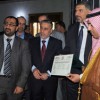
Iraq has officially nominated its former Minister for Water Resources, Abdul-Latif Jamal Rashid (pictured), for the post of the Director-General of the UN Food & Agriculture Organization (FAO), the Saudi-based al-Sharq al-Awsat (Middle-East) Newspaper reported on Wednesday.
The newspaper quoted Rashid as saying that his nomination for the post had been addressed in an official letter by the Iraqi Council of Ministers to the UN Food & Agriculture Organization.
“Iraq’s role in FAO reflects a responsible position towards fighting poverty, desertification, as well as striving to improve the living standards of the people, through the development of water projects, along with other projects for the improvement of production,” Rashid said.
He said that “such a position would further boost Iraq’s international goodwill, in the event of the success of FAO’s director-general to achieve his missions,” adding that he had gained broad expertise during his work with the Organization.
Rashid added that “Iraq has gained a major support by the Arab League, being a strong platform in this respect.”
(Source: al-Sharq al-Awsat, Aswat al-Iraq)
Posted in Agriculture 1 Comment

Iraq and the new geopolitical calculus
Posted on 22 March 2011 .
By Tariq Abdell, Iraq’s political risk analyst, and Founder & CEO of Mesopotamia Insight.
The opinions expressed here are those of the author, and do not necessarily reflect the views of Iraq Business News.
In light of ongoing socio-political changes in MENA region, Iraq's massive protests, from Zakho to al-Faw, accentuate the political astuteness and the frustration of the Iraqi people with their elected officials. Disenfranchised Shiites, Sunnis, Kurdish, Arabs, and Christians are all demanding the same: an end to ethno-sectarian quota-sharing system, corruption, and, most importantly, universal access to basic services such as potable water, electricity, housing, education, healthcare, and jobs.
Nonetheless, given the legitimacy and urgency of the protestors' demands, the government nebulous responses (halving of some officials' salaries, 100-day ultimatum to incumbent ministers, boosting food ration with extra cash, etc...) are mere cosmetic measures to allay people's frustration and anger. Unarguably, the cumulative effects, hitherto, of the elected officials' ineptitude and schism are protracting decades of erroneous policies and, subsequently, the people's tribulations. Impelling the majority of the Iraqi people to question the legitimacy of their government and the effectiveness of its institutions, a dangerous threshold that could hastily throw the country back into its darkest years of sectarian violence and lawlessness.
Notwithstanding Iraq's colossal energy resources, billions of oil and natural gas reserves, Iraq fragile democracy and ineffectual institutions, in a restive region, are the breeding ground for societal and political upheavals and foreign interventions. In fact, Iraq's daunting and intricate challenges are both internal and regional:
Internal challenges:
- Lack of basic services, e.g., six million people with no access to clean water -UNICEF.
- 20 to 25 percent of Iraqis still live below the country’s poverty line.
- Unemployment rates hover around %18, notably among military-age male population.
- Higher illiteracy rates, exacerbated with massive brain drain, are eroding Iraq's skilled and professionally literate workforce.
- Rampant corruption and nepotism undermine the efficiency of the State institutions.
- Inequitable distribution and mismanagement of oil's revenues - no hydrocarbon law.
- Parliament still faces a backlog of sensitive issues.
Regional challenges:
- Given the region new geopolitical developments, heightened tensions between Iran and Saudi, Iraq could easily turn into a sectarian proxy war battleground - Shiite Vs. Sunnis.
- The fallouts of Iran's nuclear standoff with the West could easily spillover to Iraq’s already contentious politics and further undermining its stability.
- Given Kirkuk's enormous oil reserves and ethnic diversity (Arabs, Kurds, and Turkmen), it's protracted dispute is a timed bomb, which could expeditiously reignite Iraq's civil war.
- Turkey’s recurrent incursion into Northern Iraq in the pursuit of the Kurdish workers party (PKK) elements and PKK assiduous attacks on the northern oil pipelines are a major threat to the country’s resources and sovereignty.
- Given the hostile intentions of some neighboring counties, the U.S. planned troops withdrawal, by the end of the year, could further jeopardise Iraq's defense capabilities.
Thus, given the enormity and complexity of the aforementioned challenges, Iraq only viable mean to fend off political instability and chaos is to renounce its sectarian-based policies and espouse an inclusive and genuine democratic system that heads to the people aspirations and protects their rights (UN Universal Declaration of Human Rights). Furthermore, both the government and opposition ought to consolidate their efforts to bolster accountability, eradicate corruption and, subsequently, strengthen the State institutions, an essential prerequisite for a rapid socio-economic recovery. To this end, the new government’s long-term vision should entail an action plan that reflects the country strategic and pressing priorities, namely:
- Genuine national reconciliation to overcome sectarian and political schism and violence.
- Overhauling of State institutions to rein in corruption and enhance efficiency.
- Merit-based appointments to promote efficiency and accountability.
- Providing access to basic services (e.g., potable water, electricity, running sewer, etc)
- Equitable distribution of oil revenues.
- Investing in human capital through education and training.
- Job creation to fend off societal and political unrest (Organized crime, for instance).
- Advancing the principles of human rights and rule of law.
- Diversifying and reviving of Iraq' strategic industries to curb its dependence on a single commodity - fossil fuel.
Conversely, in the absence of a comprehensive and inclusive socio-economic development strategy, aiming at strengthening State institutions, eradicating corruption, and addressing the aspirations of the Iraqi people, regardless of their political and religious believes, Iraq may revert to its darkest years of sectarian violence and lawlessness (05-07), giving regional players (Iran, Saudi, Turkey, Syria) a free hand in Iraq's affairs - exploiting Iraq's vulnerabilities (Shiite-Sunni strife, for instance)- to further their national interests and, subsequently, turning Iraq into a prime battleground for proxy wars, or worse, a pariah State. Simply put, “a house divided against itself cannot stand” Abraham Lincoln.
The opinions expressed here are those of the author, and do not necessarily reflect the views of Iraq Business News.
The author, Tariq Abdell, Iraq's political risk analyst, and Founder & CEO of Mesopotamia Insight
He can be contacted at: [email protected]
or
Followed on twitter: http://www.twitter.com/atariqx
Posted in Tariq Abdell 2 Comments
US Countersues KBR for Alleged Kickbacks
Posted on 20 March 2011 .
Bloomberg reports that KBR managers in Iraq and Kuwait are accused by US authorities of taking $45,000 in kickbacks from a dining facility subcontractor from late 2002 through 2003.
Terry Hall, who was KBR’s regional food services manager for the two countries, and his deputy, Luther Holmes, were accused of violating the False Claims Act and the Anti-Kickback Act in U.S. claims court in Washington.
“Kickbacks in military subcontracts open the door to wartime profiteering and corrupt the integrity of our government contracting process,” Assistant Attorney General Tony West said in a statement. “When we learn of such illegal conduct at the expense of taxpayers, we will pursue it.”
The allegation came as a counterclaim to a lawsuit against the government by a unit of Houston-based KBR for an alleged breach of contract.
The original lawsuit from KBR seeks $41 million it had to forfeit after an audit by the Defense Contract Audit Agency that found KBR overpaid Tamimi $41 million for dining facility costs from July 2004 to December 2004 compared to what it was paying other contractors during that time period.
In its counterclaim, the U.S. alleges that kickbacks were made by Mohammad Shabbir Khan, vice president of Tamimi Global Co., which is based in Saudi Arabia. During the time the payments were made, KBR awarded Tamimi contracts worth more than $400 million, the U.S. says, according to the Justice Department.
A spokeswoman for KBR said “The DOJ’s claim that KBR improperly awarded food services subcontracts to Tamimi is not supported by facts or law. We anticipate the DOJ’s gross overreaching in the current counterclaim to likewise be rejected. We are disappointed with the DOJ’s decision to file this suit and its vague allegations more than six years after the events in question.”
He added that when the Army asked KBR to provide food services in support of the military in Kuwait, it already was using Tamimi for food services in Kuwait and Iraq and directed KBR to use Tamimi as a subcontractor in Kuwait.
“Despite knowledge of various alleged improprieties by Tamimi, the Army continues to contract with Tamimi for such services today.”
(Sources: Bloomberg, Wall Street Journal)
Posted in Security Comments Off on US Countersues KBR for Alleged Kickbacks
Iraqis Protest Against Bahrain's Rulers
Posted on 20 March 2011 .
About 7,000 Iraqis protested in the southern oil hub of Basra on Saturday against the presence of Saudi troops in Bahrain, highlighting the sectarian divide in Iraq.
Reuters reports that anger has been mounting among Shi'ites in Iraq, Lebanon and Iran over the movement of troops from Sunni Arab states to help Bahrain's Sunni royal family stifle pro-democracy demonstrations by majority Shi'ites.
Bahrain said on Friday more troops were coming from other Gulf states to help restore security. It has swept protesters from a central square and arrested opposition leaders.
More than 20,000 people rallied across Iraq on Friday, and several thousand on Wednesday, in demonstrations organised by the radical Iraqi Shiite cleric Moqtada al-Sadr.
The demonstration in Basra, and a smaller protest of about 200 people in Baghdad, was organised by the Shi'ite Dawa party.
(Sources: Reuters, AFP)
Posted in Politics, Security Comments Off on Iraqis Protest Against Bahrain's Rulers

Bahrain, Baghdad, and Barrels of Oil
Posted on 16 March 2011 .
As Bahrain declares a three-month state of emergency, and invites troops from Saudi Arabia and other Gulf states to help quell the protests, the effects of that particular unrest are being felt strongly in Iraq.
Despite having plenty of local issues to complain about, thousands on Iraqi have responded to calls from Moqtada al-Sadr to take to the streets in protest at Bahrain's heavy-handed reaction to peaceful demonstrations.
Within the administration, Prime Minister Nouri al-Maliki has voiced his concern that the protests will inflame sectarian tensions, while Speaker Osama Nujaifi and Foreign Minister Hoshyar Zebari will meet on Thursday to consider an official response.
Meanwhile, we are 17 days into al-Maliki's 100-day deadline for reforms at home; while this was an ultimatum to his ministers, Deputy Prime Minister Saleh al-Mutlaq has suggested that Maliki himself should step down if the government fails to meet the 100-day target to improve.
But with oil prices remaining high, even after recent falls, the indications are that Iraq will at least have more revenue available to fund these badly-needed improvements.
For more information on how Upper Quartile and AAIB can assist your business in Iraq, please contact Gavin Jones or Adrian Shaw.
Posted in Blog Comments Off on Bahrain, Baghdad, and Barrels of Oil
Comment on Rumaila Oilfield Production
Posted on 07 March 2011 .
By Ahmed Mousa Jiyad, Norway, 7th March 2011.
Recent data on Rumaila production for the period 26 December 2010 to 27 February 2011 indicates that after achieving the 10% threshold over the baseline production, daily production dropped sharply to the extent that in few days, production levels were lower even than the baseline production.
The purpose of this intervention is to provide a few comments on the issue taking into consideration the related provisions of the contract.
- The contract provides that the contactors (BP/CNPC +SOMO) are entitled to begin recovering cost and remuneration fee once they achieved 10% over the contracted baseline production for 30 consecutive days.
- For Rumaila the contracted baseline production is 1.066 million barrels per day (mbd), and hence the threshold for commencement of cost and remuneration fee is 1,172,600 barrels (the red line in the following chart).
- The actual payment to the contractor is limited to 50% of the “deemed revenues” for petroleum cost and remuneration fee, and 10% of the “deemed revenues” for the supplementary cost.
- Daily production data from Rumaila seems to satisfy the condition of 10% over the contacted baseline production for 30 consecutive days until 31st January 2011, as shown by NO (daily production rate) curve in the chart. Hence the contactor is entitled to apply the cost recovery modality.
 Average price for Basra crude during January was $93.37 (assumed to be the FOB price), which gives a total of $151.7 million as cap for payment to the contractor from the deemed revenues of the incremental production for the period 11 to 31 January (which the daily production data are officially available). If one assumes average daily production for the first 10 days in January is equal to the daily average of the remaining days of January, then the contractor share for the whole of January would be ca. $224 million for remuneration fees and cost recovery.Total incremental production (over the baseline production) during January is estimated to be 3,997,524 barrels, giving BP/CNPC a maximum remuneration fee of $3,897,586 (after deducting SOMO’s share and the income taxes). The remaining amount of ca. $223 million represents 14.9% or 13.1% of the budget for 2010 work programme, which was reported to be $1.5 or $1.7 billion.
 - During February, daily production fluctuated with 12 days below 1,172,600 barrels threshold including 4 days with daily production even lower than the baseline production itself, while the remaining 15 days are above this threshold. However, since the downward production was deep the average daily production in February was 1,155,593 barrels, which is only 8.4% over the baseline production. Even if we apply the contracted annual decline of 5% per annum, this would not make for the difference of 1.6% for February underperformance. This implies that the IOCs have failed to sustain the 10% over the contracted baseline production, and this disqualifies IOCs from recovering their cost and remuneration.
- It appears, as anticipated by many including myself, that IOCs would attain the 10% threshold over baseline production to invoke cost and fees recovery without insuring sustainability of the increase by applying short terms mechanical or technical modalities instead of the advanced enhance recovery methods. BP/CNPC uses contract for the supply and servicing of Electrical Submersible Pumps (ESP), which was split between two companies, Baker Hughes gets 60% of the work while Saudi Al-Khorayef Petroleum Co., has the remaining 40%. ENI, last year done some debottlenecking (at Zubair oilfield), reducing pressure here, re-perforating there; it is not really sustainable – they have some work to do (as Thamir Ghadhban said to IOR on 9 December 2010)
- The Ministry of oil, SOC and Iraqi oil technical/professionals are expected to address this issue openly, accurately and professionally as the problems of the concluded contracts began to surface loud and clear, and remedial prompt and effective actions are required. It is vital that an annual report on Rumaila, and for that matter on all other contracted fields, is published and posted on the websites of MoO and SOC (and other ROCs) to outline what has happened to the Work Program and its Budget. Oil and Energy Committee in the Parliament should also have its say on such matters.
Ahmed Mousa Jiyad, [email protected]
Mr Jiyad is an independent development consultant, scholar and Associate with Centre for Global Energy Studies-CGES, London. He was formerly a senior economist with the Iraq National Oil Company and Iraq’s Ministry of Oil, Chief Expert for the Council of Ministers, Director at the Ministry of Trade, and International Specialist with UN organizations in Uganda, Sudan and Jordan. Jiyad is regular contributor to MEES publications. He is now based in Norway. (Email: [email protected]).
Posted in Ahmed Mousa Jiyad, Iraq Oil & Gas News Comments Off on Comment on Rumaila Oilfield Production

Nissan’s Iraq Sales Office Based in Erbil
Posted on 06 March 2011 .
Japanese auto-maker Nissan has opened its main sales office in Iraq in the capital of the Kurdistan Region, Erbil.
Nissan becomes the second major Japanese car manufacturer to have an office in the Kurdish capital, after Toyota.
Sardar Cars Group will be the sole agent for Nissan in Iraq which has based its office in Erbil city, Sardar Cars’ sales manager Hasan Makiya told AKnews.
“From now on, the various Nissan vehicles will be imported to Iraq only by Sardar Cars” said Makiya, “In the near future, 2,000 Nissan vehicles comprising of 7 models with spare parts will be imported to Iraq”
The office is also likely to be a major support center for Nissan vehicles. “There is a probability that the office will be responsible in the future for Nissan’s technical repairs.”
Nissan, with its range of vehicles from passenger cars to powerful 4x4 series and commercial vehicles, is one of the most popular automobile brands in Iraq and in particular in the Kurdistan Region. Its history in the Middle East dates back to 1957 when the first Nissan vehicle was sold in Saudi Arabia.
(Source: AKnews)
Posted in Iraq Industry & Trade News, Iraq Transportation News 1 Comment
Will protests derail the ISX?
Posted on 26 February 2011 .
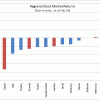
The demonstrations seen throughout Iraq over the past two weeks have so far had no discernable effect on the ISX. As of February 24, the RSISX index had risen 19% year-to-date to a new high for the year. Iraq is now the region’s top performer.
This strong performance is not hard to understand. In contrast to their counterparts elsewhere in the region, Iraqi demonstrators are not advocating radical political change. Indeed many of the reforms people have been calling for in other countries occurred in Iraq years ago following the overthrow of Saddam Husein. Nor, given the continuing influence of the United States, is the army likely to take advantage of the situation by staging a military coup, as appears to have been the case in Egypt.
At the moment, there doesn’t really seem to be that much potential for political instability. And investors long inured to mass casualty terrorist attacks can hardly be expected to turn bearish following the deaths of a relatively small number of protestors.
The relationship between protest movements and the year-to-date relative performances of regional markets is in any case not entirely straightforward. (See chart. Red bars indicate countries where demonstrations have occurred.) As you might expect, Egypt and Tunisia have been the worst performers. But the UAE and Turkey, which so far have not had any demonstrations, have fared worse than Kuwait and Jordan.
Or consider Bahrain and Saudi Arabia. The former is still up 0.5% year-to-date, despite a violent crackdown on Shia protestors demanding concessions from its Sunni ruling family. The latter has so far been an oasis of calm. Yet the Saudi market is nonetheless down 5%, apparently in part because of the risk that Bahraini unrest could spread across the causeway connecting the two countries!
Like Iran, the region’s second best performer, limited links to the international financial system make the ISX relatively immune to contagion from other markets. The main effect of regional disturbances on Iraq so far has been a rise in oil prices. As long as this continues to be the case, while events may trigger occasional corrections the bull market should remain solidly on track.
Posted in Iraq Banking & Finance News, Mark DeWeaver on Investments and Finance 8 Comments

Drake & Scull Eyeing Tenders in Iraq
Posted on 18 February 2011 .
Dubai contractor Drake & Scull International is eyeing project tenders in Iraq in the second half of 2011 as it looks to break into new markets and diversify its income.
Drake, whose biggest market is Saudi Arabia, is also keeping a close eye on political unrest in Egypt, where it is bidding for $200-300m worth of projects, chief corporate affairs officer Zeina Tabari told Reuters in an interview.
Drake, which specialises in mechanical, engineering and plumbing businesses (MEP), won a $126.6m contract in Egypt in January, and the project is on track, Tabari said.
"The majority of our contracts this year will be from the GCC," she said, adding: "We have a business development team in Iraq, but it is a new market for us and will take some time to start tendering. Probably in Q3 and Q4."
Gulf Arab companies see growing opportunities to invest in Iraq in sectors including energy, telecoms, finance and infrastructure, as the war-torn nation battles to recover from years of bloodshed.
Drake has been rapidly expanding its operations outside Dubai, where house prices have plunged some 60 percent since their peaks in 2008 as a result of the financial crisis.
(Source: Reuters)
Posted in Construction & Engineering In Iraq Comments Off on Drake & Scull Eyeing Tenders in Iraq