


Ex-Army Major admits to Taking Bribes
Posted on 18 July 2011 .
A former U.S. Army major has admitted that he took $250,000 in bribes from two companies that wanted contracts to supply the military with bottled water in Iraq and Afghanistan, according to Westlaw Journals.
Derrick L. Shoemake, aged 49, admitted accepting the bribes while serving as a contracting officer’s representative in Kuwait between October 2004 and August 2006, the Justice Department said in June 13 statement.
Shoemake entered his plea to bribery charges before Judge Dolly M. Gee in the U.S. District Court for the Central District of California.
Prosecutors said in an April 2010 criminal information that while stationed at Camp Arifjan in Kuwait, Shoemake was responsible for setting up deliveries of bottled water to be used by U.S. troops in Iraq.
The charges said Shoemake began accepting payments in August 2005 from an employee of an unidentified Saudi company that sought to supply water to the troops.
The employee paid Shoemake U.S. cash in frequent installments ranging between $10,000 and $15,000, the Justice Department said.
In addition, one of the principals of the Saudi company traveled to Los Angeles in 2006 in order to give Shoemake’s wife some of the illicit payments, according to prosecutors.
The Justice Department said the Saudi firm paid Shoemake a total of $215,000 for the contract.
The charges also say an unidentified Indian company paid Shoemake $35,000 in the summer of 2005 in order to win a bottled water supply contract in Afghanistan. Prosecutors said Shoemake accepted a total of $250,000 from both companies.
As part of his guilty plea, Shoemake agreed to return the money to the government, the Justice Department said. He faces a significant prison term and fine, according to prosecutors.
(Source: Westlaw Journals)
Posted in Security Comments Off on Ex-Army Major admits to Taking Bribes

FMG Iraq Fund Reports First Year Results
Posted on 11 July 2011 .
The FMG Iraq Fund has grown by + 25% since it began in May 2010. Year to Date the fund is up + 10% and in the month of June it was up by an estimated + 4.1%.
The Fund invests mainly in stocks listed on the Iraq Stock Exchange (ISX) and to a lesser degree in off shore listed shares that derive a significant part of their business from Iraq.
Johan Kahm, founder of FMG, who visited Iraq in June 2011 and said upon his return:
“Iraq is turning the corner for the better. We are looking at a unique investment opportunity where we hope to make outsized returns over the next 5-10 years. Our decision to launch the Iraq Fund a year ago seems to have been well timed. Iraq sits as the third largest proven oil reserves in the world and has the potential to overtake Saudi Arabia as the world’s largest oil producer.”
Henrik Kahm, who is managing the Iraq Fund, said:
“Over the last year there has been a strong performance of the Iraq Fund thanks to the successful efforts to stabilise and rebuilt Iraq. The Fund offers investors an easy way to participate in the Iraqi growth story and is positioned to take advantage of the growth derived from post-war reconstruction and massive oil production expansion.”
The following facts are supporting the investment opportunities in the Iraq:
- Iraq is currently producing 2.7 million barrels of oil per day planning for 12 million by 2015.
- A country with 143 billion barrels of Proven Reserves - only 20% of Iraq has been explored for oil.
- Iraq has $46bn in Cash Reserves and growing.
- The Economy is expected to double (from $75bn to $150bn) by 2015. The new democracy is standing up well to its reconstruction challenges. $186 billion infrastructure spending plan. Should the price of oil be over $100 per barrel, then the infrastructure spending can be expected to increase significantly.
- Expected GDP growth of some 7% in 2011 (IMF).
- The current market cap of the Iraq Stock Exchange (ISX) is less than USD 4bn, compared to its neighbour Saudi Arabia, that has a market cap 85 times larger despite only 1.9 times more oil reserves.
- In 1995 FMG launched one of the very first Russia Funds and the early investors have now made 2000% returns. Today a similar opportunity has unfolded. Iraq is emerging as a very exciting frontier market.
Although usually only open to larger institutional type investors, FMG provides investors with the opportunity to invest with a minimum investment of US $10,000. (£6,000)
Investment into the Iraq Fund is an attractive proposition for UK investors, as gains will be taxed as capital gains at 28% and not as income tax rate at 50% as the fund has Her Majesties Revenue and Customs “Reporting Status”.
Previously called the FMG Special Opportunity Fund it has now been renamed due to the nature of the investments as the FMG Iraq Fund.
(Source: FMG)
Posted in Investment 2 Comments

Iraq's Assets Subject to Seizure?
Posted on 01 July 2011 .
The passing of control of the Development Fund for Iraq (DFI) to the Iraqi government may make the assets vulnerable to seizure.
A lawyer for Kuwait Airways told Bloomberg in an interview that “the class of assets against which we can seek enforcement has expanded.”
Christopher Gooding (pictured), a partner at London-based Fasken Martineau, said:
“Despite pleas to the contrary, Iraq is an extremely rich country ... Its trading assets are available worldwide, and it remains our intention to seize Iraqi assets whenever and wherever they are available.”
Iraq amassed about $130 billion in debt under Hussein; it owes Kuwait about $21 billion and carries a significant debt to Qatar and Saudi Arabia. It continues to pay into the UN compensation fund.
“For anyone with unpaid debts with Iraq, this is a very significant development,” Stephen Fietta, a solicitor at Volterra Fietta in London, said in an interview.
Most legal jurisdictions recognize the ability of creditors to seize debtors’ assets as a means of debt enforcement. A sophisticated creditor may be able to track Iraqi cargo and try to seize it as it enters a port, or upon its discharge, he said.
“The risk might be minimized if the legal title was transferred by the Iraqi government before the oil was shipped,” Fietta said. “So there are ways around this, but the constant risk of seizure and enforcement can become a real headache for sovereign debtors, just as for private ones.”
(Sources: Bloomberg, UPI)
Posted in Iraq Industry & Trade News, Iraq Oil & Gas News Comments Off on Iraq's Assets Subject to Seizure?

'Next Year Iraq Will be Really Big', Schlumberger
Posted on 28 June 2011 .
Iraq will be one of the main revenue contributors to Schlumberger's Middle East operations and will be bigger than most of the company's other markets in the region with the exception of Saudi Arabia, Chief Executive Andrew Gould (pictured) told the Financial Times on Tuesday.
"Next year Iraq will be really big", said Gould.
The company has five rigs actively drilling, for BP and ExxonMobil among others, and will have 10 in operation by early next year. It has 450 employees on the ground and expects the number to rise to 900 by the end of the year.
(Source: Financial Times)
Posted in Iraq Oil & Gas News Comments Off on 'Next Year Iraq Will be Really Big', Schlumberger

Petrel Applies to Participate in 4th Oil Licensing Round
Posted on 27 June 2011 .
Petrel Resources has announced its preliminary results for the year ended 31st December 2010:
Highlights:
- The Subba and Luhais oil field development contract in Iraq is virtually completed.
- Petrel has received all US$7 million due from the sale of the Company's shareholding in Subba and Luhais. Petrel maintains a 10% profit interest.
- Petrel has applied to participate in the 4th Oil Licencing Round in Iraq.
- The Company await parliament approval on the Tano 2A licence block in Ghana where Petrel holds a 30% interest.
- Reprocessing of over 760 kilometres of seismic lines on Tano 2A has identified a number of promising areas.
- Petrel has submitted applications for blocks in the Porcupine Basin area offshore Ireland.
- The company has over US$6 million in cash.
John Teeling, Chairman, commented:
"Waiting is frustrating for shareholders, management and employees. We are waiting for necessary approvals in Ghana on the Tano 2A block. We are waiting for a hydrocarbon law in Iraq to clarify our position on the Western Desert block 6. We are an applicant in the current licencing round in Iraq, but that too will take time. We have gone back to our 1980s origins by using our extensive Irish offshore database to apply for blocks in the new licencing round. We are well funded and ready to move once necessary approvals are obtained."
Statement Accompanying the Preliminary Results:
Petrel has been in existence for almost 30 years. This will undoubtedly come as a surprise to many shareholders who know only of our Iraqi activities. It was set up in 1982 to explore for oil offshore Ireland - but that venture failed. Following an abortive and expensive incursion into US oil and gas, the company value was virtually written off. David Horgan, currently the Managing Director, bought the shell in the mid 1990s and financed it, initially for African exploration in Namibia and Uganda. Then an opportunity opened in 1999 to go into Iraq, which was and is the best hydrocarbon province in the world. We exited Africa.
In Iraq we worked with the Ministry of Oil under the Saddam regime. Since 2003 operating in Iraq has become more difficult, complicated and dangerous. In the last eight years Iraqi oil development has languished with production levels only now getting back to pre-war levels. There is no clear set of rules, there is no new Hydrocarbon Law. We had an early success getting access to a 10,000 sq km block in the Western Desert and a very substantial success in 2005 with the award of the Subba and Luhais US$197 million (Engineering Procurement and Supervision of Construction) development contract to a Petrel/Makman partnership. But repeated changes in rules and personnel made it difficult to operate. Nevertheless we obtained two further Technical Cooperation Agreements in Iraq, to produce evaluators of both the Merjan and Dhurfiya fields. The world's supermajors have rushed in and accepted service contracts on sub-economic terms.
Posted in Iraq Oil & Gas News Comments Off on Petrel Applies to Participate in 4th Oil Licensing Round
Kuwait Beverage Firm to Target Iraqi Market
Posted on 18 June 2011 .
Kuwait's Arabian Beverage Company (ABC), which distributes water, juice and dairy products in the Gulf region, plans to boost production and also aims to penetrate the Iraqi market this year, according to Reuters.
The company, owned by Kuwaiti conglomerate Bukhamseen Holding [Bukhamsin], founders of Kuwait International Bank and Abu Dhabi listed First Gulf Bank, wants to creatae a strong base in the region as it competes with rivals such as Kuwaiti Danish Dairy Company and Saudi's Al Marai Company.
ABC will double its water production capacity to 240 million units per year to feed demand in the Gulf market and also increase its fleet to about 800 trucks in three years, Elie Abdo, ABC's deputy general manager for business development told Reuters.
'Currently we have around 420 distribution trucks in Kuwait, Saudi Arabia, Bahrain and Qatar... and for the next three years we will stay focused on this region,' Abdo said.
On the Iraq foray, Abdo said ABC had entered the Iraqi market shortly after the US led invasion in 2003, but through a different brand name and distributors based there.
'Now we plan to penetrate the Iraqi market in October this year through the ABC brand...and that operation alone could need up to 500 trucks for distribution,' he revealed.
(Source: Reuters)
Posted in Iraq Industry & Trade News Comments Off on Kuwait Beverage Firm to Target Iraqi Market
Iraq to Repay $408 million Egyptian Debt
Posted on 06 June 2011 .
Iraq has agreed to pay $408 million in cash to Egypt to settle old debts owed by Baghdad from more than two decades ago, a government spokesman said.
Reuters reports that the debts date back to a period when United Nations sanctions following the 1990 Iraqi invasion of Kuwait blocked the payment of salaries that were due to hundreds of thousands of Egyptian labourers who worked in Iraq in the 1980s.
"The Iraqi cabinet decided that the finance ministry should pay the $408 million in original debts to Egypt," Ali al-Dabbagh said in a statement. "This payment is a proof of Iraqi solid economic relations with the world countries," he said.
Prime Minister Nuri al-Maliki's government wants to foster better ties with Arab neighbours and foreign creditors, and the Iraqi finances have improved post-Saddam.
In 2003, the country's external debt was $130-$140 billion but that went down to about $88 billion last year. The Paris Club of 19 rich creditor nations agreed in 2004 to write off 80 percent of Iraq's roughly $40 billion debt.
Progress on debt forgiveness talks with non-Paris Club creditors remains uneven though the United Arab Emirates cancelled Iraq's debt in 2008. Estimates of Iraq's non-Paris Club debt vary but Kuwait, Turkey and Saudi Arabia are among the notable hold outs.
(Source: Reuters, Aswat al-Iraq)
Posted in Iraq Banking & Finance News Comments Off on Iraq to Repay $408 million Egyptian Debt
Baghdad to Aqaba Rail Link - MoU Signed
Posted on 31 May 2011 .
Iraq and Jordan have signed a Memorandum of Understanding for a rail line linking the Jordanian Red Sea port of Aqaba with the Iraqi capital of Baghdad,
The Jordanian news agency Petra reports that the MoU was signed in Amman on Sunday by Jordanian Transport Minister Muhannad Qudah and his Iraqi counterpart Hadi al Ameri.
Jordan has plans for a $3.1 billion rail network running 950 kilometers (590 miles) to connect the kingdom with Syria, Iraq and Saudi Arabia. The kingdom is due to start the first bids for the project by the end of June, according to Bloomberg.
(Sources: Bloomberg, Petra)
Posted in Iraq Transportation News 1 Comment
Kuwait to Offer Guarantees on Port Project?
Posted on 30 May 2011 .
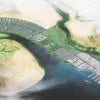
Teh Arab Times reports that Kuwait is ready to sign an agreement with Iraq to guarantee that the Mubarak Al-Kabeer port project will not hinder the construction of Iraq's Grand Faw port.
According to the Director of Information at the Iraqi Ministry of Foreign Affairs, Aous Al-Tamimi, the Iraqi Minister of State for Foreign Affairs Ali Al-Sajri held a meeting with the Kuwaiti Ambassador to Iraq Ali Al-Momen to discuss issues of mutual interest, during which they deliberated the construction of Mubarak Al-Kabeer port and its effects, where Al-Momen assured that the project will not affect Iraq's port project, or its regional waters.
Meanwhile, Al-Momen had indicated readiness to sign an agreement to allay their fears, and went ahead to present some maps and aerial photographs of the location which showed the two projects are 20 kilometers apart. The two countries stand to gain economically, so they agreed to set up a joint technical committee to resolve the issue, whereas a high-powered delegation from Iraq, involving ministers, lawmakers and experts will soon visit Kuwait for further talks on the project.
In the wake of campaign by Iraq against the construction of Mubarak Al-Kabeer port, and statements issued by Iraqi MPs, the Director of Consultative Studies at Kuwait's Ministry of Public Works, Sorour Al-Otaibi, has stated that almost 48 percent of the work in the first phase of the project has been completed, reports Al-Anba daily.
Posted in Construction & Engineering In Iraq, Iraq Oil & Gas News, Iraq Transportation News 1 Comment

Iraq beyond 2011: Prosperity or Turmoil?
Posted on 24 May 2011 .
By Tariq Abdell, Iraq’s political risk analyst, Founder & CEO of Mesopotamia Insight.
The opinions expressed here are those of the author, and do not necessarily reflect the views of Iraq Business News.
The recent upsurge in violence across Iraq ( sticky bombs, car bombs, roadside bombs, targeted assassinations, suicide bombers, prison breaks, etc...) underscores, irrefutably, the ubiquitous vulnerabilities of Iraq's national security forces that is exacerbated by a host of daunting and intricate constraints: politicized security apparatus, lingering ethno-sectarian loyalties, political sectarianism, and the region’s geopolitical tensions, namely, Saudi Arabia and Iran's regional ambitions.
In the absence, thus far, of a US-Iraq postwar strategic partnership, the impending complete withdrawal of the U.S. combat troops from Iraq by the end of 2011 and the protracted political horse-trading over the security posts (defense, interior, and national security) will, ultimately, undermine Iraqi Security Forces’ operational capabilities (air sovereignty and border security, for instance) and, subsequently, jeopardizing Iraq's national security. Moreover, given the high levels of interoperability of the two militaries, the foreseeable security vacuum could pose a serious threat to Iraq's national security, namely:
- Reemergence of the quasi-defeated extremist groups, namely, AQI, Jaysh al-Islami, the Promised Day Brigade, Kata’ib Hizbollah, and Asaeb Ahl al-Haq.
- Rekindling of sectarian violence and lawlessness that engulfed Iraq before (05-07).
- Precipitating the war between Baghdad and Erbil over the disputed oil-rich Kirkuk.
- Disruption of Iraq's oil production and supply and, subsequently, Iraq’s petrodollars.
- Invigorating Iran’s centuries-old expansionist and religious ambitions in Iraq – turning Iraq into a satellite Shiite theocracy.
Moreover, the cumulative effects of the ruling class’ ineptitude and schism are protracting decades of erroneous policies and, subsequently, the people’s tribulations. Thus, impelling the majority of the Iraqi people to distrust the legitimacy of their government and the effectiveness of its institutions as evidenced by the latest protests, which accentuated the Iraqi people frustration with their elected officials' ineptitude and their epic failure to curb corruption and end ethno-sectarian quota-sharing system.
The deep-seated political sectarianism and its inherent symptoms, namely, impoverished and disenfranchised population, lack of basic services, higher unemployment, severely languished infrastructure, ineffectual institutions, and rampant corruption are most likely to linger for years to come if the political class continue to pursue self-serving and sectarian-based agendas and political marginalization.
Thus, given the aforementioned challenges, the ruling class (executive and legislative branches) ought to outline clearly its postwar policy objectives and priorities, in accordance with the country’s laws and strategic interests, and heed to the aspirations of its people, regardless of their political and religious believes.
Drawing on past experiences (Eastern European Countries, for instance), Iraqi government ought to craft a comprehensive strategy encompassing socio-economic development, a genuine national reconciliation, and a modern security architecture as an imperative prerequisite for attaining political stability and, subsequently, building a modern and prosperous Iraq.
Conversely, in the absence of a strategic foresight and a strong leadership capable of implementing the aforementioned strategy, Iraq may revert to its darkest years of lawlessness, religious extremism, political instability, foreign interventions, and ethno-sectarian strife. Simply put, Lebanization of Iraq’s nascent democracy.
The opinions expressed here are those of the author, and do not necessarily reflect the views of Iraq Business News.
The author, Tariq Abdell, is an Iraq's political risk analyst, and Founder & CEO of Mesopotamia Insight
He can be contacted at: [email protected]
or
Followed on twitter: Mesopotamia_iq
Posted in Politics, Tariq Abdell 1 Comment