



Opec may face Iraq oil challenge sooner than expected
Posted on 05 April 2010 .
The storm brewing on the Organization of Petroleum Exporting Countries (Opec's) horizon over future Iraqi oil output could engulf the producer group sooner than it would like.
Opec was unlikely to discuss Iraq at its meeting on March 17 but it may need to do so within a couple of years.
"There's only one issue, but it's a big one. It's a tsunami. Iraq," said Leo Drollas at the Centre for Global Energy Studies. After years of sanctions and war, Iraq is exempt from the output targets OPEC uses to set supply levels.
But as Baghdad embarks on an unprecedented oil industry development, Opec will at some point need to bring Iraq back into the fold to prevent millions of barrels of new oil supply undoing its work to balance markets.
OPEC officials and analysts have said the issue is not urgent, as it could be years before Iraq makes significant increases to current output of around 2.5 million barrels per day (mbpd). Baghdad's failure to reach past ambitious targets has fed the skepticism.
The consensus among analysts is that it would take around five years for Iraq to boost output by between 1 mbpd and 1.5 mbpd. But output gains could surprise Opec in their speed. "You could be looking at 1.5 million barrels in two years," said a senior executive at one of the oil firms involved in Iraq.
"That could make a huge difference to the supply and demand balance." Iraq's deals call for foreign firms to boost output potential to 12 mbpd in seven years, which would leave it snapping at the heels of Saudi Arabia's capacity of 12.5 mbpd.
Iraq faces huge political, security and logistical challenges in reaching that target. The first test will be how the new government that emerges from elections will handle contracts signed by oil firms.
Posted in Iraq Oil & Gas News Comments Off on Opec may face Iraq oil challenge sooner than expected
Iraq oil output goals unlikely to be met: Report
Posted on 05 April 2010 .
Commodities Now - Apr 1 2010
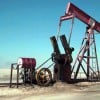
Toronto, Iraq's ambitious plans to boost crude oil production to as much as 12 million barrels per day in coming years is not likely to be met due to a myriad of challenges, IHS Cambridge Energy Research Associates said in a report on Wednesday. These "highly ambitious plans ... are unlikely to be fully realized given political, security, operational and infrastructure challenges," noted IHS CERA, an energy sector advisory firm based in Cambridge, Massachusetts.
The report points out that Iraq starts out with rich oil resources that have suffered from “underinvestment and underdevelopment for decades.”
“But Iraq’s new expansion timetable would dwarf the most rapid build-ups that we have recently seen in places such as Russia and Saudi Arabia,” said IHS CERA Senior Middle East Director, Bhushan Bahree. “The political, security, operational and infrastructure challenges in the country, along with a likely shortage of skilled personnel, are likely to hamper progress towards such an unprecedented achievement.”
Iraq’s recent elections and current efforts to form a new government could exacerbate existing sectarian and other tensions in the country and it is unclear what approach a new government could take regarding oil contracts. Security will also remain a concern as foreign workers and oil company operations expand in areas that have been prone to violence in the past, the report says.
The report identifies infrastructure and logistics as “major challenges.” Iraq is responsible for providing the infrastructure needed to receive the extra oil but its plans for providing a “complex network of capital-intensive infrastructure”—from ports and roads to power and water crucial for operations—in synchronization with the development oil fields are not known, representing a major potential bottleneck.
“Iraq’s expansion timetable appears extraordinarily ambitious in comparison to the recently completed capacity increase in Saudi Arabia,” says Bahree. “Saudi Arabia has significant security and infrastructure advantages yet it took Saudi Arabia between four and five years to expand its net output capacity by some 2 million barrels per day. Iraq will certainly be challenged to match this pace, much less exceed it.”
Though Iraq is unlikely to meet its “very stretch target” of elevating its capacity to 12mbd in six to seven years, the expansion of its production capacity still represents a significant increase with strong implications for OPEC and the regional balance, the report finds.
Iraq is not currently a party to OPEC’s production quota system. A significant ramp-up in Iraqi production would put the issue of bringing Iraq back into the quota system back on the agenda. Any issue within OPEC is likely years away; however, as it is widely assumed that the major producers will wait until Iraqi output begins to approach its OPEC share negotiated in 1988, which is at parity with Iran.
The discussion of quotas is also likely to be put off because OPEC cannot address quotas pertaining to Iraq without also discussing the allocations of other countries, such as Angola, Nigeria and Venezuela that dispute their current output targets.
“Expansion beyond parity with Iran is likely to generate a strong reaction from Tehran, which views parity as one of the concessions that it had to make for peace with Iraq in the late 1980s,” Bahree says. “Equally important will be the conflicting oil strategies that the two countries are pursuing. Iran, unable to raise its own output, is pursuing a strategy of maximizing oil revenues through higher prices. Iraq’s unfolding strategy is just the opposite—expanded volume to increase revenues.”
Posted in Iraq Oil & Gas News Comments Off on Iraq oil output goals unlikely to be met: Report
Access to Water in Middle East & North Africa World's Lowest
Posted on 03 April 2010 .
People in the Arab world need fuller and freer information about shrinking water supplies but their governments are withholding it for fear of fuelling unrest, a United Nations expert said on Thursday.
Arable land makes up just 4.2 percent of the Middle East and North Africa and is expected to shrink due to climate change - a potential source of political instability, analysts say, in a region where economic privation has sometimes sparked conflict.
"Arab countries do not disclose enough information on their water out of concern that transparency could fuel unnecessary public concern and unrest," said Hosny Khordagui, regional program director of the UN Development Program (UNDP) Water Governance Program for Arab States.
Disclosing figures on water scarcity might be perceived as reflecting bad management on the part of Arab states and so is generally avoided, he told a UNDP round-table on Arab environmental issues.
"If we have public participation, we would have better management, participation and more justice," Khordagui said, adding that ministers were accountable to those who appointed them and not to the public.
"Don't expect accountability without real democracy and free elections," he said.
People in the Middle East and North Africa have access to an an average of just 1,000 cubic meters of water a year, seven times lower than the worldwide rate, according to the UNDP's Arab Human Development Report.
As climate change takes its toll and the region's populations grow at nearly twice the global average, that figure is projected to shrink to just 460 cubic meters by 2025.
Coordinated water policy will be a challenge in a region where water politics is often seen as a zero-sum game and can be used as a lever in larger political feuds.
"If we lose one more drop of water and our capacity to give Arab citizens their right to food, this is a political issue par excellence," said Ismail Serageldin, a former World Bank environmental expert.
In one example, a temperature rise of 1-1.5 degrees in one area of Sudan in 2030-2060 would slash maize production by 70 percent, the UNDP report said. Such scenarios could be repeated elsewhere in the region.
Agriculture consumes more than 85 percent of water in the region, home to the Fertile Crescent in which the first civilizations of the Middle East emerged. Less water could make it impossible for already poor farmers to earn a livelihood, pushing them to move to overcrowded cities.
Droughts in Syria have already displaced hundreds of thousands of people. A September U.N report found that climate-related natural disasters displaced 20 million people in 2009, nearly four times more than conflicts.
"More people in Yemen will leave their villages because of water and environmental reasons," said Ali Atroos, manager of the planning department in Yemen's Ministry of Water.
Yemen is one of the region's most water-stressed countries, with per capita access to water seven times below the average in Europe. Some villages are pumped water only once a month, Atroos said.
Experts urged immediate action to confront the dire issue.
"Water is a security factor. If people do not have water to drink and to use for food production, that would be a direct threat to national security," said Hassan Janabi, Iraq's permanent ambassador to UN agencies in Rome.
At the MEED's 2010 Arabian Power and Water Summit that started on March 29 in Abu Dhabi, MEED said new power capacity requirement to 2015 is 7,500MW and new desalination requirement to 2015 is 310 million gallons per day, which calls for substantial investment.
The summit raised issues that will need to be dealt with going forward, such as how governments can create commercial and economic frameworks that will ensure that the most economic investment decisions are made. Governments still need to determine what the ideal portfolio for GCC future power generation is and how to integrate alternative fuel sources into existing structures.
Edmund O'Sullivan, MEED Events chairman, said "the purpose of the Arabian Power and Water Summit is to provide a platform for the industry leaders to come together and discuss the best way to meet the key strategic and technical challenges that lie ahead. The success of the power and water industry is vital to the region's growth so it is imperative that the industry's decision makers are fully informed of the different solutions available to fulfill power & water demand." For the first time anywhere in the Middle East, the summit also featured a presentation regarding the challenges Iraq is facing as part of their reconstruction effort.
John Dempsey, generation adviser, Iraq Transition and Assistance Office (ITAO) and Jeff Larkin, country manager - Iraq, Parsons Brinckerhoff, outlined the plans to raise the $26 billion that the country's Minister of Electricity has estimated is needed to refurbish and increase the electrical sector capacity in the country.
"It is of critical importance that companies and individuals have their fingers firmly on the pulse of industry developments and the opportunities within it. The involvement of so many of the region's governmental organizations is testament to the high regard that our annual summit is held within the region's power and water sectors, and the value that it offers delegates," O'Sullivan pointed out.
( The Saudi Gazette )
Posted in Iraq Industry & Trade News Comments Off on Access to Water in Middle East & North Africa World's Lowest
LUKOIL to Begin Production in 2013
Posted on 26 March 2010 .
The LUKOIL-Statoil consortium could begin producing oil at the West Qurna-2 oil field in Iraq in 2013, LUKOIL Vice President Andrey Kuzyayev said. LUKOIL’s capital investments in the project could be as much as $3.7 billion, the Oil and Gas Information Agency reports.
LUKOIL President Vagit Alekperov said his company could increase investments in oil production in Russia and double production in its foreign projects. For the next three years, $3 billion has been allocated for LUKOIL’s foreign projects. K2K NEWS reports that LUKOIL intends to increase its oil and gas production to 446,000 barrels per day by 2015.
LUKOIL is currently involved in projects in West Africa, Venezuela and Saudi Arabia and is reviewing the possibility of beginning projects in Uganda and Kenya.
( Oil and Gas eurasia )
Posted in Iraq Oil & Gas News Comments Off on LUKOIL to Begin Production in 2013
Iraq Oil Exports Hit 57.9m Barrels in February
Posted on 24 March 2010 .
Iraq exported 57.9 million barrels of crude oil in February 2010 at an oil price of $73 a barrel, the Iraqi Ministry of Oil said on Tuesday.
“Iraq has made $4.229 billion U.S. dollars in revenues,” according to a ministry statement received by Aswat al-Iraq news agency.
A total of 45.2 million barrels have been exported from Basra oilfields and 12.7 million barrels from Kirkuk.
The crude has been sold to 26 oil companies and exported via the ports of Basra, Khour al-Amiya and the Turkish Ceyhan.
However AFP reports that Iraqi oil revenues dipped on slightly lower oil prices despite the highest level of exports in 20 years.
"Revenue was 4.229 billion dollars, based on an average price of 73.4 dollars per barrel and exports of 57.9 million barrels," ministry spokesman Assem Jihad told AFP.
Iraq had revenues of 4.44 billion dollars in January, based on oil prices of 73.97 dollars per barrel.
The oil ministry said at the beginning of March that exports in February had reached 2.069 million barrels per day, the highest level since Saddam Hussein's invasion of Kuwait two decades ago.
With an estimated 115 billion barrels, Iraq has the world's third largest proven oil reserves behind only Saudi Arabia and Iran.
( Aswat Al Iraq )
Posted in Iraq Oil & Gas News Comments Off on Iraq Oil Exports Hit 57.9m Barrels in February

Oil Supply Surge, Price Drop in Iraqi Auction
Posted on 21 March 2010 .
Washington, 19 March 2010 (Oil & Gas Journal )
Iraq’s December 2009 auction of rights to develop 60 billion bbl of crude oil reserves in 10 fields will lift the country’s production to 9.6 million b/d by 2017 if several major obstacles can be overcome, a new Energy Policy Research Foundation Inc. (EPRINC) report concluded.
“By any standard, the Iraqi auction represents a major event in the history of the world oil market: It is the largest single transfer of reserves into the production stream since the beginning of the petroleum era,” the report maintained, saying the supply effect might lower oil prices enough to strain alternative fuels.
The report suggested that, although a wide range of external and internal threats and more traditional obstacles could derail Iraq’s prospects for a massive crude oil production increase, the prospect that it could send a supply shock into world markets can no longer be dismissed.
Expanded Iraqi production also could prevent a price spike if production outside the Organization of Petroleum Exporting Countries drops over an extended period, according to the report.
“In this scenario, the role of Iraqi supplies may be more of a brake on rising prices than a catalyst to a lower price path,” it explained. “In any case, the Iraqi auction clearly opens the door for a careful review of the conventional wisdom on the outlook for oil prices over the next 20 years.”
Under the new contracts, companies have committed to bring 9.6 million b/d online by 2017, which with production expected from fields not covered by the auction would meet the Iraqi government’s expectations for 12 million b/d. The EPRINC report assumed companies will be able to achieve only 50-75% of the targeted levels by 2017 but included scenarios under which total Iraqi production would approach or exceed the 12-million b/d benchmark by 2020.
The scenarios, it said, “clearly raise the potential for downward price adjustments in crude oil against a range of business-as-usual cases.” Several likely price outcomes, it added, “may also place alternative transportation fuels into severe financial distress.” Biofuels with economics marginal while crude oil prices are $80/bbl would require additional subsidies, “which may not be easily obtained in an era of ‘fiscal fatigue.’”
The US Energy Information Administration estimates Iraq’s reserves at 115 billion bbl, third behind Saudi Arabia and Iran. “However, credible estimates . . . suggest Iraq contains over 200 billion bbl of recoverable reserves and potential reserves of over 400 billion bbl,” EPRINC’s report indicated. It is available online at www.eprinc.org/pdf/EPRINC-Iraq-FirstLook.pdf.
Moving quickly
The unprecedented scale of the Iraqi government’s commitment and the project-management experience of many of the companies winning technical service contracts provide potential for field development to progress quickly, the report said. “Some of the difficult political issues have been met in the auction decision and process; others are being met, if grudgingly, by the very large and unexpected revenues which will be distributed to all Iraqi provinces on an equal per capita basis,” it said.
“The pitched rhetoric between the Kurdish government and the central government has softened, but substantial areas of disagreement remain,” it continued. “In line with their historical pursuit of autonomy, the Kurds have initiated and want to pursue a separate energy enclave. Under the proposed revenue distribution structure from the central government, the Kurdish government would receive 17%. It would be a great deal of money, much greater than the Kurds are likely to achieve from their regional oil development program.”
Other risks include the absence of a comprehensive law justifying the legal framework for the auctions, resolution of the Kurdish-Arab struggle for Kirkuk and oil and gas resources in Kurdistan, and Iraq’s outstanding debt with Kuwait, Saudi Arabia, and the United Nations.
“Several major oil companies, who chose not to bid, could not get comfortable with the lack of clarity on performance conditions of the contracts, stability of the tax regime, and the large carried interest of the Iraqi national oil company (approximately 25%) in the fields won by the bidders,” the report added.
Other problems include security, delivery of rigs, the handling of water for secondary recovery, and completion of government projects to upgrade pipelines and ports.
“None of these uncertainties are insurmountable, but resolving all these issues is critical if the Iraqis are to move forward on the ambitious production program,” the report said.
New ground
Besides scale, the auction broke new ground in two crucial ways, the report said. It would be the first time so many development projects of this size are started simultaneously with identical target completion dates. And the auction represents the first major break from the prevailing oil industry structure in almost 40 years.
EPRINC observed that since many producing countries began to nationalize their oil resources in the 1970s, multinational oil companies have had limited ability to explore for or develop reserves in those countries, particularly around the Persian Gulf. “The Iraqi auction will stand as an action that marries the interests of oil companies and of a government which controls a very large reserve base,” the report said.
“With its action Iraq has established a format for reserves development which leapfrogs the models of the other major Gulf oil producers—a transparent contractual arrangement that offers international companies an acceptable return on investment.”
Posted in Iraq Industry & Trade News, Iraq Oil & Gas News 48 Comments
Iraq's Oil Reserves to be Revised Upwards
Posted on 21 March 2010 .
Iraq’s oil sector is changing, and so could the identity of the man in charge.
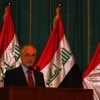
Asked if he hoped to keep his post as the minister of oil in the next Iraqi government, Dr Hussain al Shahristani said he would be happy to step aside.
“I wouldn’t try to stay unless I was forced to stay. It wouldn’t be my wish,” Dr al Shahristani said before yesterday’s OPEC meeting.
Another imminent change will be Iraq’s tally of its oil reserves, which for years have been estimated as the world’s third largest, at about 115 billion barrels.
The estimate of proved reserves “is going to go higher”, Dr al Shahristani said. “We’re revising it now.”
In the past two years, foreign oil companies drilling in Iraqi Kurdistan have reported at least three world-class discoveries.
Canada’s Heritage Oil has struck an oil deposit that may contain as much as 3 billion barrels of recoverable crude.
Gulf Keystone, a Bermuda-registered company, estimates it has found at least another 1.5 billion barrels.
The Hungarian oil group MOL last week reported a significant oil find that analysts said might contain 1 billion barrels of crude.
In addition, a number of the world’s biggest oil companies have recently pored over data on Iraq’s main oil reservoirs as they prepared to bid for long-term service contracts to raise production.
Dr al Shahristani said Iraq was producing 2.5 million barrels per day (bpd) of oil and exporting more than 2 million bpd, making it the third largest OPEC oil exporter after Saudi Arabia and Iran.
In the next few months, Iraq could boost exports by as much as 100,000 bpd by restarting Kurdish crude exports that were halted last September in a long-running dispute over oil jurisdiction between the semi-autonomous regional government and Baghdad.
“We expect to resume exports from the Tawke field [in Kurdistan] shortly, within a month,” Dr al Shahristani said.
“The issue of exporting oil from those fields is a completely separate issue from the contracts that were signed.”
Within seven years, Iraq would increase its production capacity, although not necessarily its output, to 11 million bpd, the oil minister predicted. That could mean export capacity of up to 10 million bpd,www.ekurd.netrivalling that of the world’s top oil exporters, Russia and Saudi Arabia.
Iraq would not consider rejoining OPEC’s quota system until its output capacity had risen to 4 million bpd, possibly as soon as two years from now, Dr al Shahristani said.
Iraq is the only OPEC member without a production quota. It was granted an exemption to refurbish an oil sector ravaged by decades of war and mismanagement.
“Iraq is a founder member [of OPEC]. They have a right to develop their reserves,” said Abdulla el Badri, the OPEC secretary general.
“At the end of the day, we will accommodate Iraq for the sake of the Iraqi people. I am sure this will not be a problem for OPEC.”
Posted in Iraq Oil & Gas News 1 Comment

Upper Quartile to run Oil and Gas Trade Mission to Basra and Baghdad
Posted on 15 March 2010 .
With the Iraq election completed, the oil and gas marketplace in Iraq is set to see explosive growth. The plan is to raise production from c.2 million bbd to approaching 12 million bbd. Infrastructure is in a parlous state with limited investment over 30 years. The current state owned infrastructure and the services sectors are unable to respond to existing demand and the previous regime’s systematic dismantling of the private sector leaves Iraq with no prospect of increasing capacity quickly. In this situation Iraq needs international private sector partners urgently.
To bring costs of looking into this massive market into an acceptable range, Upper Quartile will run the second Oil and Gas Trade Mission to Basra and Baghdad between the 2nd and 7th May - " ....... this will reduce costs for individual companies yet allow for maximum exposure to decision makers within government ministries and the private sector, in a safe & secure environment" said Adrian Green today.
If Iraq signs all contracts now on offer, output may approach 12 million barrels per day and lift Iraq to second or third place among global oil producers.
- Shell and BP have tenders out and further tenders on the way
- BP Rumaila site plan drawn up and about to be contracted
- Schlumberger are negotiating a significant sub contract
- Baker Hughes are having a site built in Rumaila
- Shell have tendered for a number of services in Majnoon
- ENI, Shell, BP, and other IOC planning team members are making weekly visits in and around Basra
- One IOC has office and accommodation base partly located in downtown Basra
Contracts on offer will push Iraq's oil services market to $8 billion by 2014. Capital spending on oilfield services in 2011 alone is estimated to be five times that of Saudi Arabia, Bahrain, United Arab Emirates, Oman, Qatar and Kuwait combined.
Contact Adrian Green on [email protected]
Posted in Iraq Oil & Gas News 1 Comment
Petrofac Targets Iraq Oil after Asfari Quadruples Share Value
Posted on 14 March 2010 .
Bloomberg - 12 March
Ayman Asfari, the chief executive officer whose oil and gas engineering skills guided a fourfold increase in the value of Petrofac Plc within five years, is now preparing to tap Iraq’s energy boom.
Iraq, with estimated reserves of 115 billion barrels of oil, the world’s third-largest, is set to ramp up production as companies including BP Plc, Royal Dutch Shell Plc and Exxon Mobil Corp. spend as much as $100 billion to develop fields awarded in contracts last year. A good chunk of that will go to contractors including Petrofac and larger U.S. rivals Baker Hughes Inc. and Halliburton Co.
“He’s passionate about his business model, which is about being a low-cost provider of quality engineering;” said Barclays Capital analyst Mick Pickup, who worked with Asfari on Petrofac’s initial public offering as a consultant at Lehman Brothers Holdings Inc. “Iraq is the billion dollar question. Ultimately, there will be the whole infrastructure to build there. It will be big.”
“We see Iraq as a growth market,” Asfari, 51, said in an interview from the company’s London headquarters. “This is a natural place for our expansion. We’re working in Kuwait, Saudi Arabia and Syria, and it’s very easy for us to step out across the border.”
The largest U.K. oil and gas services company reached a record in London this week after it announced the spinoff of North Sea fields it owns into a new company. The shares may outperform peers because the company has kept costs under control and is positioned to win work in Iraq, investors and analysts said.
Posted in Iraq Oil & Gas News 1 Comment
OPEC Concern over Iraq Oil 'tsunami'
Posted on 14 March 2010 .
Reuters - 12 March
The storm brewing on OPEC's horizon over future Iraqi oil output could engulf the producer group sooner than it would like, say analysts.
OPEC is unlikely to discuss Iraq at its meeting on March 17 but it may need to do so within a couple of years, they say.
'There's only one issue, but it's a big one. It's a tsunami. Iraq,' said Leo Drollas at the Centre for Global Energy Studies.
After years of sanctions and war, Iraq is exempt from the output targets OPEC uses to set supply levels. But as Baghdad embarks on an unprecedented oil industry development, OPEC will at some point need to bring Iraq back into the fold to prevent millions of barrels of new oil supply undoing its work to balance markets.
OPEC officials and analysts have said the issue is not urgent, as it could be years before Iraq makes significant increases to current output of around 2.5 million barrels per day (bpd). Baghdad's failure to reach past ambitious targets has fed the skepticism.
The consensus among analysts is that it would take around five years for Iraq to boost output by between 1 million bpd and 1.5 million bpd. But output gains could surprise OPEC in their speed.
'You could be looking at 1.5 million barrels in two years,' said a senior executive at one of the oil firms involved in Iraq. 'That could make a huge difference to the supply and demand balance. Is there going to be that kind of demand pick up in that timeframe?'
Iraq's deals call for foreign firms to boost output potential to 12 million bpd in seven years, which would leave it snapping at the heels of Saudi Arabia's capacity of 12.5 million bpd.
Iraq faces huge political, security and logistical challenges in reaching that target. The first test will be how the new government that emerges from Sunday's elections will handle contracts signed by oil firms.
But assuming the deals survive intact and work can go ahead, Iraq's huge oilfields present little technical challenge to oil majors that have had to push into regions such as deep water and the Arctic to access oil reserves. There is nowhere else on earth where international oil firms have access to such cheap to produce, abundant reserves.
Reaching 12 million bpd in seven years appears improbable, but oil firms believe early gains will be easy.
The terms of the contracts Iraq has signed encourage firms to boost output quickly to recover costs. Once firms boost output from producing fields by 10 percent, they start getting paid.
'The way the contract is structured is to incentivize swift progress,' said Bill Farren-Price of consultancy Petroleum Policy Intelligence. 'I'm fairly optimistic that we'll see Iraqi oil output rising over the next 12 months as Rumaila and other projects get underway.'
Iraq has said it expects another 200,000 bpd of oil from fields leased under the new contracts this year. Its biggest producing field, Rumaila, should rise 100,000 bpd by July. BP and CNPC won the contract to boost output at Rumaila, the workhorse of Iraq's oil industry to 2.85 million bpd from 1.07 million bpd.
What can OPEC tolerate?
OPEC, which has weathered many difficulties in its 50-year history including a bitter war between members Iran and Iraq, will likely put off thorny negotiations on how to accommodate a resurgent Iraq as long as possible.
'It's the last thing they want to do (tackle this issue), the want to sweep it under the carpet,' said Drollas of the CGES.
When the group calls on Iraq to rejoin the how quickly oil demand rebounds after two years of contraction due to the global economic downturn.
'If the market is very tight, with demand rising and non-OPEC supply continuing to disappoint, then Iraq could be accommodated quite well ... But if demand falls then it would be a very big challenge for OPEC,' said Bassam Fattouh at Oxford Energy.
Even if the market could absorb the extra production, other OPEC producers would have to maintain curbs on supply in place since late 2008, while Iraq pumped more.
This would create tensions within the group as other members effectively give up market share and billions of dollars of potential revenues to Iraq.
Baghdad has said that it believes OPEC should allow it to pump more without imposing a quota as it has lost market share and revenues to other members of the group as years of sanctions and war prevented Iraq from achieving its production potential.
OPEC officials have said they would need to think about quotas once Iraq showed it can consistently pump 3 million to 3.5 million bpd.
Some say the group would have to address the issue if Iraq's output approached 5 million bpd -- putting it ahead of Iran and making Baghdad the second largest OPEC producer after Riyadh.
That could challenge Saudi Arabia's position as dominant producer with the flexibility to influence output significantly.
'As Iraq substantially exceeds Iran's production level it will raise significant political problems for OPEC as a whole and for Saudi Arabia in particular,' said Edward Morse, head of global commodities research at Credit Suisse.
Iraq has strengthened its hand for future negotiations with the oil deals. Previous production targets have been based on reserves. Iraq's reserves are a little smaller than Iran's, so a renewed quota might be similar to that of its neighbor. Iran's target is around 3.34 million bpd, although Tehran disputes that and is pumping around 3.75 million bpd.
But Iraq would likely refuse to be saddled with that comparison, as the deals it has signed would put it on a par with Saudi capacity, regardless of its reserves. It would likely use that as a starting point for negotiations, analysts say.
Posted in Iraq Oil & Gas News 1 Comment