


The Oil Curse
Posted on 14 March 2010 .
Newsweek, Inc - 11 March
Yes, on Sunday the Iraqis once again proved bravely, stubbornly, even astoundingly that they won't be kept away from the polls by mere car bombs and mortar shells. But by and large they were voting for the same coterie of politicians who've made Iraq among the five most corrupt nations in the world. The country's near-term future is just about waiting, after the election, for a new government to take shape over the next many weeks. But its long-term future could be haunted by what Stanford professor Larry Diamond calls "the oil curse."
How much oil are we talking about? Even after years of embargo, occupation, and civil war that weakened its production capacity, Iraq was the third-biggest producer in OPEC in January, according to the trade journal Petroleum Economist. The 2.45 million barrels it pumped every day, on average, would have brought in roughly $172 million—every day. In another three or four years, now that development contracts have been agreed with several major Western oil companies, that production could double, racking up income on the order of $125 billion a year. And that doesn't even begin to calculate the billions in revenue from largely untapped natural gas deposits.
"Not a single one of the 23 countries that derive most of their export earnings from oil and gas is a democracy today," Diamond noted in an essay earlier this year. Especially in Arab countries, the fabulous riches that come from under the ground tend to create overbearing governments with apathetic citizens. "In these systems, the state is large, centralized, and repressive," Diamond wrote. Societies are usually "intensely policed" because "there is plenty of money to lavish on a huge and active state-security apparatus," and bureaucracies are "profoundly corrupt." They tend to see the money that pours into state coffers as everybody's and nobody's, and therefore more or less free for the taking. The public pays no taxes in the richer states, and in the view of the entrenched potentates no taxation means any need for representation.
Precisely because the Iraqi government is not entrenched, however, there's some hope. "My view is a bit paradoxical," Diamond wrote me in an e-mail. Corruption is indeed "rampant," he said, and the institutions the Americans tried to create in Iraq to deliver better government accountability "have been overwhelmed by the common desire to loot the golden pot." But "there is so much oil wealth—particularly with what's likely to come on stream … that there will be plenty to steal and still some for development."
"I'm not cavalier about this," said Diamond, who served in the early U.S. administration in Baghdad and whose book Squandered Victory chronicled the way good intentions went horribly awry. But if all the major factions and provinces of the country feel they're getting their cut, and then Iraq might "keep its political head just above water, though not without recurrent crises and uncertainty," Diamond told me. Not a comforting scenario, he said, but not a return to civil war, either.
In that same vein, oil analyst Ruba Husari in Baghdad tells me Iraqis often talk more about the need for federalism and decentralization than they do about the relative abstraction of "democracy." If they are going to get the basic public services and the jobs they desperately need—the issues that dominated Sunday's elections—the oil money has to be spread around. And Husari says there are positive signs that may be happening. Iraq's 2010 budget law has provisions for a portion of the income from each barrel produced in a given province or "governorate" to be paid back to it. There may be no comprehensive "hydrocarbon law" yet, but the article in the budget "is going to happen," says Husari. "The governorates are going to come at the end of the year and say, 'Where is our money?' "
Even if Iraq's rising oil and gas production does help to buy internal peace, however, it will pose an economic—indeed, a strategic—challenge to its most troubled and troublesome neighbor: Iran.
The government in Tehran already is having serious economic problems, and because embargos and boycotts have cut it off from a lot of Western oil technology, it has a very hard time raising its production of about 3.7 million barrels a day to compensate when prices fall. It wants to make sure that Iraq, which has been exempted from all OPEC quotas, will not start out producing it, driving down prices and further crippling the Iranian economy. Already, skirmishing has begun behind the scenes at the oil cartel as Tehran tries to make sure quotas are imposed on Iraq before it can surpass Iran and perhaps even start to rival Saudi Arabia (which produces a whopping 8.2 million barrels daily and could go higher).
The more the mullahs feel competitive pressure from Iraq, the more likely they are to meddle in its internal affairs, whether with violence or, more subtly, through a democratic process where they try to control key players from behind the scenes. Getting to Iran's level of oil production in the next three years "will not be a big issue for Iraq," says Husari. "Whether Iran will accept it—that's the big question."
Posted in Iraq Oil & Gas News 2 Comments
1st Umra Flight to Jeddah Airport
Posted on 14 March 2010 .
The first flight carrying pilgrims has taken off from Ninewa Airport to Jeddah International Airport, a civilian source said on Saturday.
“The plane, carrying 223 pilgrims from local residents aboard, took off this afternoon,” the source, who requested anonymity, told Aswat al-Iraq news agency.
Umra is a pilgrimage to Mecca, Saudi Arabia, performed by Muslims that can be undertaken at any time of the year. It is sometimes called the ‘minor pilgrimage’ or ‘lesser pilgrimage’, the Hajj being the ‘major’ pilgrimage and which is compulsory for every able-bodied Muslim who can afford it.
(Aswat Al Iraq)
Posted in Iraq Transportation News Comments Off on 1st Umra Flight to Jeddah Airport
OPEC to Keep Quota Unchanged With Oil Above $80, Survey Shows
Posted on 13 March 2010 .
The Organization of Petroleum Exporting Countries will uphold its target of 24.845 million barrels a day when it meets in Vienna on March 17, according to 42 of 44 analysts surveyed this week. Shokri Ghanem, chairman of Libya’s National Oil Corp. said on March 9 that “no new decision is expected,” while Saudi Arabian Oil Minister Ali Al-Naimi said in January that oil between $70 and $80 is “almost perfect.”
The producer group is unlikely to reduce quotas that it set at the end of 2008 as long as members are pumping more than the agreed limits, nor raise them without stronger signs that demand will keep improving, the analysts said. Oil inventories have risen again this year, after being whittled down in 2009 by OPEC’s record production cuts.
“OPEC is pretty satisfied with how stable the price is,” said Amy Myers Jaffe, an energy analyst at the Baker Institute and associate director of the Rice Energy Program in Houston. “They’re where they want to be. Compliance with quotas is not as good as it could be so I’d expect some jaw-boning about that.”
The group announced the biggest production cuts in its 50- year history at the end of 2008 as demand crumbled because of the global recession. Those cutbacks, led by Saudi Arabia, made oil prices rose to 78 percent last year. Oil futures made further gains this year, exceeding $80 a barrel in New York, driven by a recovery in the broader economy, even as OPEC’s oil output rose for a sixth consecutive month in February.
(Business Week)
Posted in Iraq Oil & Gas News Comments Off on OPEC to Keep Quota Unchanged With Oil Above $80, Survey Shows
Iraq Signs Initial Deal for Maysan Oilfields
Posted on 08 March 2010 .
08 March 2010 (Reuters)
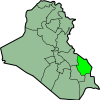
Iraq has signed an initial deal with China's CNOOC and Sinochem to develop the 2.5-billion-barrel Maysan oilfield complex, Oil Minister Hussain al-Shahristani told Reuters on Sunday.
A final deal with both companies will be signed in the coming days, after they accepted the government's proposed remuneration fee of $2.30 for every additional barrel of oil produced, Shahristani said.
"The Chinese companies have accepted all our conditions for this field," he said. "We have an authorization from the cabinet to sign the final deal."
CNOOC, together with Sinochem, made an unsuccessful bid for the three Maysan fields in Iraq's first auction of oilfield contracts last year. But since then they had decided to accept the government's proposed remuneration fee of $2.30.
CNOOC and Sinochem had projected plateau output of 450,000 barrels per day (bpd) when they first made the bid last year.
The deal is one in a series of contracts with international oil companies that could boost Iraq's output capacity to 12 million barrels per day, rivaling top producer Saudi Arabia, from around 2.5 million bpd now.
The government is hoping that the deals will generate cash needed to rebuild Iraq's shattered economy after years of war, sanctions and economic decline.
Posted in Iraq Oil & Gas News Comments Off on Iraq Signs Initial Deal for Maysan Oilfields
OPEC Production Level Hits 14-month High
Posted on 08 March 2010 .
The Organization of the Petroleum Exporting Countries’ (OPEC) crude oil supply rose in February to the highest in 14 months led by Angola and Saudi Arabia, a Reuters survey showed, further reducing compliance with output targets.
Supply from the 11 members of OPEC with output targets, all except Iraq, is averaging 26.80 million barrels per day (mbpd), up from a revised 26.69 mbpd in January, according to the survey of oil firms, OPEC officials and analysts.
The survey implies OPEC has made 53 per cent of promised supply cutbacks versus 56 per cent in January. OPEC, source of more than a third of the world’s oil, meets to set policy on March 17 and the widening gap between its supply target and actual output is likely to be a main topic of debate.
Even so, analysts said the extra barrels were not unwelcome in the market given that oil prices remain within the range favored by many OPEC members and inventories, which ballooned last year due to falling demand, were coming down.
“OPEC's told us that given the current economic environment, their goal is oil at $70 to $80. As long as prices are in that range, they are happy,” said Mike Wittner, analyst at Societe Generale in London.
(OilAndGasNewsOnline.com)
Posted in Iraq Oil & Gas News Comments Off on OPEC Production Level Hits 14-month High
Tide Turns as Kurds Push for Oil Law amid South's Sudden Bright Future
Posted on 07 March 2010 .
05 March 2010 (Arab News)
While the Iraqi government has made overtures to its Kurdish counterpart in the north to end an oil standoff, much remains in doubt without an actual law keeping the industry in check - rules which this time the Kurds are pressing for rather than Baghdad.
For a long time, the northern Kurdistan region was seen as the most attractive oil market in the country but the latest bid rounds in December and subsequent contract signings in the south have made it suddenly "less clear that Baghdad actually needs an oil law with Kurdistan, because they're actually doing pretty well on their own," said David Bender, an analyst in the Middle East practice of the Eurasia Group's Washington office.
Iraq's government initially pushed for petroleum-sector legislation, but lately the Kurdistan Regional Government (KRG) has been motivated to act "so they don't get sort of left behind, with this new international oil interest in Iraq," Bender argued.
Thirty-eight companies from 17 countries have exploration and production contracts in the Kurdistan region, according to Ashti Hawrami, the KRG's national resources minister. Several medium and large discoveries have been made, while one private sector refinery has been built and another is almost finished, Hawrami noted in a press release.
Baghdad has never viewed oil contracts signed independently by the Kurds as legitimate and blacklisted companies involved in the northern region's oil fields from working in the south. Oil exports from the Kurdish area stopped last year when companies were not reimbursed.
In recent days, however, the government of Prime Minister Nouri Al-Maliki has been considering covering the development costs of foreign firms working in the north, according to media reports, which also cite that oil exports would flow again soon from the north's Tawke field, operated by Norway's DNO and Turkey's Genel Energy.
The central government's ban on companies operating in the Kurdish area will probably remain until the implementation of an oil law, which outlines the sharing of profits, the signing of contracts and the role of Iraq's National Oil Company, Bender told OilPrice.com. He added the Kurds will presumably want to continue to forge contracts without Baghdad's involvement.
As of now, only small interests have been doing business with the KRG, "but if the Kurds ever want to attract major oil companies, they will have to come to some understanding with the Iraqi government," added Bender.
Baghdad's interest these days in reaching out to Irbil, capital of the Kurdish north, is "more politically based rather than anything having to do with oil," he maintained. With March 7 parliamentary elections looming, the Kurds may be the "king maker in whatever the next government is, and one of their prices is probably going to be some sort of progress on an oil law," he argued. He said eventually an oil bill will be passed but conceded it is "somewhat worrisome that there is no time table."
Without clearly defined rules in the petroleum sector, heightened international participation in the Middle Eastern country's oil market has forced dealing with certain issues through a budgetary process, Bender said. This year's budget spells out that provinces will be paid $1 per barrel for oil or gas they produce, while the provinces, namely the Kurdish north, have to agree to export oil or face a fine, he continued.
The whole country's proven oil reserves were last estimated at 115 billion barrels, and analysts have speculated Iraq will boast some six million to 10 million barrels a day over the next several years.
While different stakeholders argue over spreading around the oil wealth, some doubt the optimism of these predictions.
Robert Ebel, a senior adviser in the energy and national security program at the Center for Strategic and International Studies, a Washington-based think tank, told OilPrice.com he has heard Iraqis boast that more oil will flow from their country than from Saudi Arabia.
"I take all that with a huge grain of salt because I don't think it's doable," Ebel said, adding he has a "huge doubt" about how quickly Iraq can produce oil, sell it abroad and bring back money into the country. Responding to all of these contracts will take time, as well as a "tremendous amount of equipment" and personnel, he added.
And the key, Ebel said, is the fate of all that money. "Is it spent properly, or is it lost to the corruption and the variety of projects that don't really have that much importance to the economy?"
While the petroleum law remains paramount, the dispute over the Kirkuk region is also a major stumbling block that may cause problems for the nascent oil industry. Kirkuk finds itself front and center in the fight between Iraqis and Kurds over certain disputed territories.
"In the case of the Kurds, Kirkuk remains an extremely volatile situation. Right now, the US is sort of forcing Kurdish and Arab security forces to cooperate and even that is highly controversial," Bender added. US forces are set to depart next year. Whether such strategic cooperation between local militaries will continue is a lingering question, he warned, and "whether the security forces will start fighting is certainly a possibility."
Posted in Iraq Oil & Gas News Comments Off on Tide Turns as Kurds Push for Oil Law amid South's Sudden Bright Future
Abu Dhabi Lowers Crude Prices
Posted on 03 March 2010 .
Abu Dhabi National Oil Co., the state-owned producer, cut February prices on all its crude grades by about 4 percent after Persian Gulf suppliers including Saudi Arabia, Iraq and Iran lowered rates for buyers in Asia, according to Bloomberg.
The price for Murban crude, its largest export grade, was lowered to $74.20 a barrel.Upper Zakum crude was cut the most, by 4.6 percent to $72.55 a barrel.
The U.A.E., holder of almost 8 percent of the world’s oil reserves, is OPEC’s fourth-largest producer, pumping 2.28 million barrels of crude a day in January, according to a Bloomberg survey. The country, which exports most of its crude oil to Asia, has capacity to produce about 2.8 million barrels a day, Oil Minister Mohamed Al-Hamli said in Abu Dhabi today.
To contact the reporter on this story: Anthony DiPaola in Dubai at [email protected].
(Bloomberg)
Posted in Iraq Oil & Gas News 1 Comment
OPEC Crude on the Rise
Posted on 01 March 2010 .
Crude oil supply from OPEC is rising to the highest in 14 months led by Angola and Saudi Arabia, a survey showed, further reducing compliance with output targets.
Supply from the 11 OPEC members with output targets, all except Iraq, is averaging 26.80 million barrels per day (bpd), up from a revised 26.69m bpd last month, according to the survey of oil firms, officials and analysts.
The survey implies OPEC has made 53 per cent of promised supply cutbacks versus 56pc last month.
OPEC meets to set policy on March 17 and the widening gap between its supply target and actual output is likely to be a main topic of debate.
Even so, analysts said the extra barrels were not unwelcome in the market given that oil prices remain within the range favored by many members and inventories, which ballooned last year due to falling demand, were coming down.
'OPEC told us that given the current economic environment, their goal is oil at $70 to $80. As long as prices are in that range, they are happy,' said Societe Generale analyst Mike Wittner.
(Gulf Daily News)
Posted in Iraq Oil & Gas News Comments Off on OPEC Crude on the Rise
Credit Fundamentals of Mideast Resilient: Moody's
Posted on 26 February 2010 .
There were no downgrades in any sovereign ratings in the Middle East in 2009 by Moody's, which indicates the comparative resilience of the region's credit fundamentals and the sovereign ratings should "stay the course" this year, Moody's said in its first annual "Middle East Sovereign Outlook" report.
According to the rating agency, 2010 should be a year of improvement for the Middle East as a sluggish global recovery gains momentum and investor confidence rebuilds.
Moody's only sovereign rating actions in the region so far this year have been positive: the upgrade of Saudi Arabia's government bond ratings to Aa3 from A1 and Oman's to A1 from A2 based on the strong state of their government finances.
"The Middle East had a relatively 'mild crisis' in that it suffered less damage as a result of the global economic and financial turmoil of the past two years than some other regions. This stands it in good stead as the world economy recuperates," said Tristan Cooper, a Vice-President and Senior Credit Officer in Moody's Sovereign Risk Group.
"Overall, the Middle East sovereigns did not experience anything like the deterioration in credit metrics that we saw in some other regions in 2009 - most notably the advanced industrialized countries and Eastern Europe," he said.
According to the report, financial sectors in the region were not heavily exposed to "toxic" assets or failed western financial institutions during 2008 and 2009.
(Emirates Business)
Posted in Iraq Banking & Finance News Comments Off on Credit Fundamentals of Mideast Resilient: Moody's
Oil Deals between Iraq and Global Majors
Posted on 26 February 2010 .
Iraq has signed a raft of deals with foreign oil companies that could take its crude output capacity up to 12 million barrels per day, rivaling top producer Saudi Arabia.
There are still hurdles in the way, not least a March 7 parliamentary election that could usher in a new government inclined to try to renegotiate some of the deals.
At the same time, the lure of billions of dollars in revenues could persuade whoever forms the next Iraqi government to allow the contracts to stand unchallenged.
(Reuters)
Posted in Iraq Oil & Gas News Comments Off on Oil Deals between Iraq and Global Majors