


Who's Behind The Dodgy Electricity Deals?
Posted on 09 August 2011 .
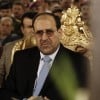
As we reported yesterday, the Iraqi prime minister, Nouri al-Maliki, has fired the electricity minister, Raad Shallal, following highly questionable energy deals conducted almost a year ago.
It was thought that the sacking may be politically motivated, because the minister had been appointed by a top rival to the prime minister.
Now the picture gets more complicated, as the prime minister's own name, and that of his deputy for energy affairs, Hussein al-Shahristani, have been dragged into it.
The al-Iraqiya Coalition - the leading rivals to the prime minister's own party, has accused all three men, and said that the prime minister is ultimately responsible, according to Aswat al-Iraq.
All three men had signed the "illusionary" $1.7bn contracts, but the prime minister. A statement from a representative said:
"If there had been any mistake in those contracts, they can’t be burdened by the electricity minister alone, because the mechanism of signing such contracts is discussed in the Energy Committee, led by Shahristany and after that they are signed by the minister and then raised to the Council of Ministers, to be discussed and signed by the prime minister."
He continued: "The first person, behind the electric power crisis in Iraq over the past few years has been Prime Minister, Nouri al-Maliki, and if we want to burden responsibility for the crisis, the first official would be Maliki himself."
The statement goes further to allege a different political cause for the dodgy deals, suggesting that they were faked to help Maliki consolidate his power at a time when his position was looking increasingly untenable: "Maliki wanted, through his announcement about the signing of the contracts to fool up the Iraqis that he was able to settle the electric power crisis, in order to suck-out the anger of the Iraqi street."
Deputy prime minister Hussain al-Shahristani explained that at least one of the companies was a fake with no offices, no employees, no manufacturing equipment and it does not have the ability to carry out the work contracted.
He said: "These contracts damaged Iraq's reputation, but this does not mean that key projects to build large plants will be affected."
The sacking of the electricity minister must be confirmed by a simple majority in parliament under the Iraqi constitution.
(Sources: Aswat al-Iraq; Iraq and Gulf Analysis)
Posted in Investment, Politics 3 Comments
Iraqi Electricity Minister Sacked for Deals
Posted on 08 August 2011 .
Iraq's prime minister has fired his electricity minister, who is under investigation following allegations that he failed to follow government guidelines in the signing of $1.7 billion in power generation deals with two foreign companies.
The minister Raad Shalal signed the deals in question with the Canadian Alliance for Power Generation Equipment (Capgent) and the German firm Maschinebau Halberstadt (MBH). The Canadian company was awarded a $1.7 billion contract in July to build 10 power stations with a total capacity of 1,000 megawatts while the German firm won a $625 million contract.
Iraq's deputy prime minister, Hussain Al Shahristani, said the deals violated government guidelines because the two companies do not meet the financial and technical capabilities to qualify as manufacturers for this type of project. He claimed the two companies presented false documents about their financial status and technical capabilities and the contracts were annulled on Thursday.
Gulf News reports that Shalal and the two companies could not immediately be reached for comment.
The sacked minister was nominated by a top rival to Prime Minister Nouri Al Maliki, raising questions about whether his firing late Saturday night and the allegations of financial misconduct are politically motivated.
(Source: Gulf News
Posted in Iraq Industry & Trade News, Politics 3 Comments

STX Group Plays Down Risk of Power Deal Failure
Posted on 08 August 2011 .
According to reports from Reuters, the Korean giant STX Group has played down the possibility that its $2.76 billion power deal with the Iraqi government may collapse.
Following report that STX was running out of time to secure a third party financial guarantor, the shipping-to-energy conglomerate says the contract does not mention a three-month deadline to find a third-party guarantor, adding that the issue was likely political in relation to the replacement of the electricity minister in Iraq.
"(We) plan to cooperate with the Iraqi government to complete successfully the issues such as financing," the company said in the statement.
In May, STX Heavy Industries, an unlisted unit of STX Group, signed an agreement to install 25 power plants to generate a total of 2,500 megawatts in Iraq.
Iraqi Prime Minister Nuri al-Maliki sacked his electricity minister after the government said an investigation had uncovered irregularities in power contracts with two foreign companies, a source in Maliki's office said on Sunday.
(Source: Reuters)
Posted in Construction & Engineering In Iraq, Iraq Public Works News 1 Comment
Rich Benefitting From Building Boom
Posted on 05 August 2011 .
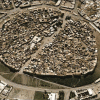
The capital of Iraqi Kurdistan is seeing a building boom, as developments go up at around the same rate as real-estate prices rise. Despite all the construction, though, the average citizen still can’t afford their own home.
At times Erbil resembles a building site. Construction sites, both residential and commercial, dot the cityscape. Yet the city still suffers from a housing shortage. Despite attempts by the local government to subsidise low-cost housing and encourage building, real-estate prices continue to escalate beyond the reach of Erbil’s poorer citizens and there still doesn’t seem to be enough accommodation to go around.
In 2006, the regional government of the semi-autonomous state of Iraqi Kurdistan passed the Kurdistan Investment Law, meant to encourage investment in the region. The law basically treats foreign and local investors and capital equally. Out of the 323 investment projects begun after the passing of the law, 104 were housing projects.
And over the past 11 years, Erbil authorities say that more than 100,000 pieces of land were sold or otherwise given to builders in the capital city of Iraqi Kurdistan.
However, as local investment analysts have pointed out, the costs of buying into the most recent residential projects remain prohibitively high for many locals, especially those on lower incomes. Often in Erbil housing projects consist of small, planned communities that resemble scenes out of American suburbia; the communities come with persuasive names like the English Village, American Village, Dream City and Royal City. And the prices appear to be just as aspirational as the developments’ names.
For example, a house in the Italian Village ranges in price from US$300,000 to US$500,000. In Vital Village prices go from US$400,000 to US$500,000 and in the even pricier Karin Land, prices start at US$600,000 and can go up to US$1 million. Meanwhile the Kurdish Globe reports that the average salary for anyone employed in the public sector works out at between US$4,000 and US$5,000, which makes home ownership a distant dream for many locals.
“These deluxe houses are built for rich people. I will never have the chance to live in my own house,” Hana Mohammed, 23 and father of two, told NIQASH.
Mohammed is employed as a cleaner for houses in the English and Italian Village developments and he felt that: “Both the government and the investors only care about profits. They don’t care about poor people like me and they are not interested in providing us with any solutions.”
Real-estate prices are also being driven upward by migration into Iraqi Kurdistan. There is an increasing number of Iraqis from elsewhere in the country who are choosing to relocate to Iraqi Kurdistan, tens of thousands according to local government statistics.
The semi-autonomous region, which defends its own borders and has its own military, has been quick to recover from past conflicts and is generally more safe and economically prosperous than the rest of Iraq.
Foreign companies investing in Iraq also tend to see Iraqi Kurdistan as the best base for their operations in the country for the same reasons – and again, they are driving prices up as they are prepared to pay more for housing in the area.
Kamal Shafiq, the owner of a local real-estate firm, confirmed this. “Increased demand on residential units and land has led to increased prices,” he told NIQASH. “Land that was being sold for US$20,000 three months ago is now being sold for US$23,000. And prices are expected to keep going up over the next few months.”
“Most of the residential units and villas are bought by the rich people,” Hussein Yusuf, an investment broker who has been working with the housing project investors for four years now. “Even the smaller housing units, which are sold for low prices are monopolized by wealthy buyers and their relatives and are often purchased to sell on later, at higher prices.”
Local taxi driver Rashid Mahmoud, 34, was shocked when one of his passengers told him that he owned large houses in three separate residential developments, all fully furnished and luxurious by local standards. “I move from one house to the other any time I want to,” the young man told the taxi driver as they went to one of the houses he was boasting about.
Mahmoud himself is still renting a small apartment. And he knows that with the income he earns he will never be able to afford an apartment in one of the new residential complexes.
However it does seem that the local government is aware of the issues around housing. Recent public opinion surveys have suggested that housing is at the top of the list of concerns for locals. And the oil-rich state has a housing fund, through which it subsidizes residential projects.
According to Yusuf, the government has realised that it should be encouraging smaller residential units at lower prices as well as encouraging the larger, wealthier investments. It has taken steps toward this by subsidizing housing units that cost US$50,000. The Fund pays half of the cost and the other half is repaid like a mortgage over a long period of time by the home owners.
However Yusuf believes that for these measures to be successful there needs to be changes made to the 2006 Investment Law and more specific instructions issued by the government. Architect Dara Hadi, director of the Investment Commission’s department of licensing, agrees. He told NIQASH “prices of residential units should be reduced and the reductions should be determined by the housing fund. This would encourage companies to build smaller, more affordable units.”
The regional government is also offering home builders loans of around US$17,000 (IQD20 million) as well as selling them cement at half of the market price. The move is popular, said Ayden Arsalan, head of Erbil’s cement distribution: “Every day we receive requests for cement and construction projects are on the rise.” Officials report that 6,350 citizens have been provided with cement.
At which stage the next big problem for Erbil’s building booms looms: the absence of water, electricity and paved roads.
(Source: NIQASH)
Posted in Construction & Engineering In Iraq Comments Off on Rich Benefitting From Building Boom
Iraq Future Energy 2011
Posted on 05 August 2011 .
The Iraq Future Energy Conference will be hosted in Istanbul, Turkey, from 26th September to 29th September.
There is a full programme to demonstrate how energy and infrastructure companies can take a piece of the projects worth tens of billions of US dollars.
Attendees can learn about the Ministry of Oil's four-year plan ending in 2014, the reorganisation of the Ministry of Oil, new regulations related to energy, and on getting the balance between domestic energy needs and exports, and how the electricity and oil and gas sectors can help.
There will be talks from Shell, Total and StatOil on their own projects, and attendees will learn what is on offer in the fourth bidding round for oil and gas-related projects.
Other sessions cover Iraq's ambitious infrastructure plans, including upgrading pipelines and building storage terminals, as well as information on the financing and how to overcome Iraqi bureaucracy.
And all that is just part of what's happening on the first day of the conference. For more details, visit The Energy Exchange.
Posted in Construction & Engineering In Iraq, Investment, Iraq Oil & Gas News Comments Off on Iraq Future Energy 2011
Foreign Investors Flock to Iraq
Posted on 29 July 2011 .
By David Rosenberg, for The Media Line. Reproduced with permission by Iraq Business News.
It was just another day in Iraq on July 15.
In the city of Kerbaba; two car bombs killed a total of seven people and wounded 19. An American solider was killed in Baghdad while in another part of the capital an Iraqi policeman was injured by a sticky bomb placed under a vehicle. More bombs wounded soldiers in Samarra and in Mosul.
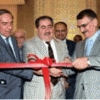
But July 15 also saw the grand re-opening Baghdad's renowned Al-Rasheed Hotel after a $65 million renovation. Britain’s Harlow International undertook the construction work while Holland’s Kempinski Hotel group will manage it.
"The rebuilding of infrastructure, including palaces and airports, is evidence of the ability of Iraqis to achieve what they want,” Foreign Minister Hoshyar Zebari said at the ribbon-cutting ceremony.
Even as Iraq suffers an upsurge of violence – June alone saw 155 civilians killed in attacks, the most since January – foreign investors are flocking to the country. Dunia Frontier Consultants, a Washington DC-based consulting firm, estimates that foreigners were responsible for $45.6 billion in investments, service contracts and other business in Iraq in the first half of the year. That was double the amount the same time in 2010.
Where others see carnage, chaos and corruption, investors see a potentially oil-rich economy whose population of some 30 million is desperate for housing, roads, consumer products and services.
“What you have is a country that produces oil, which makes it very attractive for the hydrocarbon industry to invest there. It’s a country with a very large population,” Daniel Broby, chief investment officer at London’s Silk Invest, told The Media Line. “The middle class suffered a lot of problems but they are educated and there is a lot of home ownership, so banking and telecommunications industries are very attractive for foreign investment.”
Driven by high energy prices, Iraq’s economy will grow 12.5% this year, according to the International Monetary Fund. Iraq’s Oil Ministry said in June alone petroleum brought in $7.17 billion as exports averaged 2.273 million barrels a day at an average price of more than $105 a barrel.
With the government’s coffers swelling, Planning Minister Ali Al-Shukri told Reuters on Monday Iraq is looking to raise its 2012 investment budget by 50% to as much as 60 trillion Iraqi dinars ($51 billion).
Posted in Investment, Iraq Banking & Finance News, Iraq Industry & Trade News 1 Comment
Finance Clouds Utilities Push
Posted on 29 July 2011 .
The following article was published in the latest edition of Inside Iraqi Politics, and it is reproduced here with the publisher’s permission. Any opinions expressed are those of the author, and do not necessarily reflect the views of Iraq Business News.
Full Text of Inside Iraqi Politics Issue No. 19 (PDF)
The government’s aggressive energy policy and its electricity push in particular have stood in contrast to broader policy stagnation, yet there are concerns that inadequacy of the banking sector in providing finance will stymie it. There are also increasing indications that Maliki’s China trip this past week, finance problems with a previously-arranged Korean deal, and his June 2 raid of the country’s only internationally-respected financial institution may be interrelated.
The government framed Maliki’s three-day state visit to China beginning July 18 entirely around economic development and mutual commercial interests. While petroleum supply to China was predictably a major topic, the subtext, discussed more gently, was Iraq’s need for finance. As economic analyst Sadiq al-Rikabi noted, as quoted in the UAE-based al-Ittihad, Iraqi banks lack the liquidity to finance projects, and this despite the enormous sums which the government has received, not only from oil revenue but also the $250 billion Iraq Development Fund Iraq took control of in June. In the past, the government has often grandly announced investment projects only to have them dissipate for a variety of reasons; this pattern may be continuing.
Government spokesman Ali al-Dabagh implied this in comments to AP on July 18, saying “We are asking the China side to make a fund, for the reconstruction, and to guarantee and assure the investment in Iraq for the Chinese companies.” The AP comments did not reference the faltering Korean agreement or Iraq’s banking problems.
In this context we may return to Maliki’s June 2 raid on the Trade Bank of Iraq (TBI) and the flight of its director, Hussein al-Uzri, from the country. Remember that Uzri claimed that Maliki started by demanding that TBI finance the Korean electricity deals, which he said he refused to do without a government guarantee. Maliki accused Uzri of stealing millions of dollars from TBI, which is the only bank in Iraq capable of accessing credit lines from international banks. (See IIP No. 18 for background.)
Hamdiya al-Jaf, whom Maliki appointed to replace Uzri, said in a widely-cited July 18 interview with Reuters “we have proved to the world that the TBI has not changed concerning its work and its banking activities.” She added that TBI [Reuters paraphrase] “operates independently and is monitored by the Central Bank of Iraq [CBI] and the Bureau of Supreme Audit like any other Iraqi bank,” and the “investigation of alleged financial violations had not been completed.”
Jaf’s claims may be true, but anyone concerned about the politicalization of TBI’s decision-making may want to ask for direct proof of this investigation. Our search of Iraqi and pan-Arabic news sources found numerous news outlets quoting Jaf’s remarks to Reuters, yet we found not a single news report citing an independent authority confirming even the existence of an investigation. We also performed searches of the Arabic websites of the CBI, the audit bureau and the justice ministry and found nothing referencing an investigation. So when sources say that “the Iraqi government” has accused Uzri of theft, this is based solely on statements from individuals tied to Maliki. While it is possible that there is an investigation which has not been reported openly, given the vital role of TBI to Iraq’s financing needs, the lack of transparency should raise questions.
Posted in Iraq Banking & Finance News, Politics 1 Comment

Iran to Increase Electricity Exports to Iraq
Posted on 27 July 2011 .
Iran plans to increase its electricity exports to Iraq to 1,250 megawatts, the Iranian Energy Minister Majid Namho told Mehr News Agency on Tuesday.
Mehr quoted the Iranian Minister, in a meeting in Tehran with Iraq’s Electricity Minister, Raad Shallal Saeed al-Any [Ra'd Shalal al-Ani], that “Iran’s power exports for Iraq, now estimated at 800 megawatts, are expected to rise to 1,250 megawatts, according to a decision taken by both countries recently.”
The Iranian Minister also mentioned the “close achievement of a 400-megawatt Karkha-Amara line during the current summer season, being part of electric power exports for Iraq.”
“The Iraqi side has confirmed the necessity to construct the Khorramshahr-Abuflous line, expected to be completed in summer 2012 ... in order to increase Iran’s electric power for Iraq to 1,250 megawatts."
(Source: AKnews)
Posted in Iraq Industry & Trade News Comments Off on Iran to Increase Electricity Exports to Iraq

‘Cautious Optimism’ about Iraq’s Future
Posted on 21 July 2011 .
Real progress had been achieved in replacing Iraq’s ruthless dictatorship with institutions mandated by constitutional principles, which laid the ground for “cautious optimism” about the future, provided that determined national leadership and a stronger spirit of cooperation in the region prevailed, Ad Melkert, Special Representative of the Secretary-General told the Security Council today.
Briefing the Council on recent developments, Mr. Melkert said that in some important aspects, Iraq was at the heart of fundamental changes in the region, as its system of government had incorporated a power-sharing Constitution that guaranteed the participation of women and minorities while nurturing a culture of constitutional debate. While it had been drawn out, Government formation had progressed, with Parliament now taking an increasingly important role in decision-making. In a departure from decades of authoritarian regime, negotiations among all parties had become the predominant feature of political life, he added.
Meanwhile, Iraq’s economy continued to grow at a 10 per cent rate amid higher than projected oil revenues, he said, noting that a 50 per cent jump in foreign direct investment to more than $42 billion in 2010 had benefited construction, transportation, electricity, health and agriculture. At the same time, the poverty index remained high, at 22.9 per cent. “These political and economic facts matter in a country that has suffered much during three decades of wars and oppression,” he stressed. Explaining that reconstruction, institution-building and “bringing back knowledge” took time, he said armed opposition groups had tried to make undue gains through kidnappings and assassinations. That such violence had not subsided underscored the need for determined, jointly shared political action against the perpetrators, regardless of the source of their support.
Consolidating gains would also require a “keen understanding” of the need to resolve pending issues, he said, stressing that the key lay in the implementation of the November 2010 Erbil Agreement that had brought together the Prime Minister of Iraq, the President of the Kurdistan Regional Government and the Iraqiya leader under a power-sharing arrangement. Since the appointment of security ministers was pending, and the National Council for Strategic Policies had not yet been formed, there was understandable concern over whether the post-election spirit could prevail, he said, calling on Iraq’s political leaders to set aside their differences and move swiftly to agreement on a way forward.
Posted in Iraq Industry & Trade News, Politics Comments Off on ‘Cautious Optimism’ about Iraq’s Future

Mott MacDonald sees Great Opportunities in Iraq
Posted on 19 July 2011 .
Mott MacDonald’s director of oil, gas and petrochemicals, Azfar Shaukat, told attendees at the Iraq Petroleum Conference of great potential in the oil and gas sector, but warned companies they will have to be patient until significant investment is found.
The event, held at the Landmark Hotel in London, UK, focused on the next phase of developing Iraq’s oil and gas resources as well as the current and future upstream opportunities. It was attended by international oil and gas companies from 70 countries together with key Iraqi oil and gas industry experts.
In his presentation Azfar told delegates that at present Iraq is losing, through flaring, in excess of 10 billion cubic metres (bcm) of associated gas a year. This is gas produced as part of oil production that has historically not been captured. In addition the gas infrastructure in the country is inadequate for the planned volumes and will need significant investment to upgrade.
“The primary focus for Iraq is to improve the reliability and availability of electricity to its population, and since this is planned to be gas-fired, most of the associated gas will be consumed by new power stations,” Azfar commented.
Mott MacDonald has been active in Iraq for more than 50 years and in the last six years has delivered over a 1000 projects in Iraq covering health, transport, power, and water. They are supporting major energy companies in the development of oil and gas fields which involves asset surveys and working with the state and international companies to come up with the right solutions to refurbish and upgrade oil and gas facilities in order to increase production.
Azfar said:
“With targeted oil production associated gas output could rise to 70bcm per year, equivalent to roughly three-quarters of UK annual consumption. However, although neighbouring countries and Europe are interested in gas from Iraq, the actual amount of gas available for export will be very limited over the next 5-10 years.”
Posted in Iraq Oil & Gas News 1 Comment