



Kuwait, Iraq Clash Intensifies Over Nuclear Project
Posted on 19 July 2011 .
In addition to the dispute between Iraq and Kuwait regarding the new Mubarak port in Kuwait, the two countries are also reported to be in conflict about the planned siting of nuclear reactors.
Press TV reports that the head of the Kuwaiti national committee for nuclear power, Ahmad Bisharah, has said that Kuwait is planning to build 4 nuclear reactors near the Iraqi border by 2022.
Kuwait says that it needs to go ahead with this project to generate enough electricity to meet the ever-increasing increasing demand.
The plan has outraged Iraqi politicians. They have urged Kuwait to stop its plan accusing the country officials of being a tool in the hands of the US to weaken Iraq economically and politically.
Meanwhile, members of Basra's provisional council have also urged Kuwait to stop its project planned to be launched in Warbh [Warbah] Island less than 4 km away from the Iraqi coast south of Basra .
They say that Iraqi government must take a serious stance towards the project.
The Iraqi government spokesman, Ali Al Dabagh, has said that Iraq 's foreign ministry will do its best through diplomatic channels to stop Kuwait from going on with the nuclear reactor project.
(Source: PressTV)
Posted in Politics 2 Comments
Political Shadow Remains Over Key Bank
Posted on 19 July 2011 .
The following article was published in the latest edition of Inside Iraqi Politics, and it is reproduced here with the publisher’s permission. Any opinions expressed are those of the author, and do not necessarily reflect the views of Iraq Business News.
Full Text of Inside Iraqi Politics Issue No. 18 (PDF)
Prime Minister Nuri al-Maliki’s dramatic in persona raid of the Trade Bank of Iraq on June 2 and the flight abroad of its director remains unresolved. While raising wide attention in political circles as TBI became a set piece in a fight between Maliki and Ahmad Chalabi, the abrupt change of management in the country’s premier financial institution also raises questions about broader issues of corruption and transparency.
On June 2, Iraqi security raided Iraq’s preeminent bank in what the government alleged was a move against corruption. Corruption is ubiquitous in Iraq, but what made the raid unusual is that Maliki carried it out in person. TBI’s director, Hussein al-Uzri, quickly fled to Lebanon. While basic facts and Uzri’s countercharges against Maliki have been reported in international media, most fail to mention the possible link between Maliki’s raid and his fight with Uzri’s famous uncle, Ahmad Chalabi.
 IIP No. 16 introduced the Uzri-TBI scandal and Uzri’s flight in the context of Maliki’s most recent attack in a months-long rift with Chalabi – Maliki’s Shia rivals had put forward Chalabi as a candidate for interior minister, but only as a spoiler. Then Chalabi moved to grab headlines by organizing a “relief ship” for Bahraini Shia – whose cause Maliki had himself championed – and Maliki blocked it on June 3 – just one day after the TBI raid. Then on June 8, Maliki issued an order removing Chalabi as head of the debaathification commission, a move he probably lacks the authority to make, but which is unlikely to face legal challenge all the same.
Chalabi responded vociferously, alleging that Maliki was ignoring other corruption cases and had a political vendetta, while Maliki allies – including his Chief-of-Staff Ali Allaq – have publicly alleged massive theft by Uzri. Since then additional facts have come to light, or least been alleged. According to Uzri, Maliki came to the bank at first like it was a business meeting to ask for $6 billion in financing for deals he had signed with a Korean company to build power generators. Only when Uzri demanded a government guarantee did Maliki begin making allegations. Maliki demanded a meeting with the full management, but seeing the heavy security presence, Uzri decided to slip away, although he wouldn’t say how he got out of the country.
Additionally, according to reports published on a number of Iraqi newsites, Uzri hid for two days in Baghdad before traveling to Irbil and from there to Beirut, where his wife and children have been living. In this regard remember Chalabi’s long relationship with Kurdish leadership going back into the 1990s. In addition to loans for the Korean projects, al-Jeeran claims sources say that Maliki also demanded commercial contracts for some of his allies. The same also quoted government sources as saying that while they were aware of Uzri’s “political relationship” with Chalabi, they were unaware the two were related. If this is an accurate representation, the claim is not credible.

Expanding on Uzri’s claims, the Iraqi writer Sabah al-Baghdadi has made broader allegations about tie-ins to electricity and housing deals, claiming that Maliki’s actions violate legal rules on project financing (but note the source’s bias; Maliki’s security are “Dawa Party militia”). IIP will return to this potentially explosive issue if anything like definitive information becomes available.
Although Uzri does not appear to have much support in parliament – whether due to belief in his culpability or just for being Chalabi’s nephew – some MPs have asked how Uzri could have been allowed to get away given previous flight cases. Most prominently, former interior minister and member of the Transparency Committee Jawad al-Bolani hit out at Maliki on June 20, complaining that they still didn’t know what had happened. At the same time the committee questioned Finance Minister Rafia al-Isawi, but he claimed to have no authority over the matter. Maliki had announced an official investigation on June 2, but it hasn’t released any information yet. Moving forward, Maliki has appointed Hamdiya al-Jaf, a finance ministry functionary, as the new director.
In mid-June, Sir Claude Hankes, a British banker who has served as a long-time advisor to TBI, spoke out and wrote an open letter to President Talabani warning that Maliki’s raid was pure politics and that it threatened Iraq’s banking system. So assuming the truth of the claim that Maliki simply wanted control of the bank, this might explain the fact that Uzri was allowed to escape, and the fact that the warrant for his arrest was not issued until he had arrived in Lebanon. If Maliki had arrested him, Uzri is too famous to have him simply disappear; there would have to be a trial.
The core problem therefore is the lack of transparency. As noted, the government has released no new information recently, and neither the official al-Sabah or the government’s official news website have reported any. (We have noticed over time that the official newspaper typically does not report politically controversial legal cases.) During the preparation of this report, we noted that TBI had no Arabic-language website, and reviewing its English website noted that just yesterday (July 13) did it update data on the new directors. It still lists advisor Hankes at the top despite his vocal support for Uzri, and provides is no information on recent events. The last dated news release is from 2010, and it refers to Uzri as the chairman.
Posted in Iraq Banking & Finance News, Politics Comments Off on Political Shadow Remains Over Key Bank

Foreign Office Minister for Energy addresses Iraq Petroleum Conference
Posted on 18 July 2011 .
Foreign Office Minister Lord Howell said that Iraq's natural resources have the potential to help tackle the world's energy challenge when he spoke at the Iraq Petroleum Conference.
| Speaker: | Foreign Office Minister Lord Howell |
| Event: | Iraq Petroleum Conference |
| Location: | London |
Ladies and Gentlemen
I am delighted to be back at the Iraq petroleum conference addressing such a distinguished audience, and I would like to thank Dr. Alirio Parra and CWC Group for the opportunity to be here today.
Rising energy prices and the Arab Spring have raised important questions across the Middle East and presented challenges for the world. Today I would like to share with you some thoughts about Iraq’s potential to help meet these challenges through leadership in the Middle East, and how it can be a game-changer in energy markets. I foresee this and similar conferences playing a part in developing this potential and in catalysing investment and decisions about investment in Iraq.
The geopolitical challenge
At the end of May I visited a number of Gulf States, where oil prices and energy security were high on the agenda. In a region which contains the planet’s largest oil reserves, the Arab Spring in a variety of forms has become interlinked with energy issues.
Few could deny the legitimacy of a people seeking freedom – seeking a voice to steer their future. But few could have predicted the pace of change we have seen brought by the so-called Arab Spring. At a time of fast-moving events, it must also be a time for wise reflection on how best to meet the aspirations of the Arab people. There are no simple answers. Those who offer simple answers are misleading us,as there are many ways for nations to achieve and maintain legitimacy, through their own pattern of participation and consent.
But governments that use violence to try and extinguish the legitimate aspirations of their peoples are destined to fail. The lasting answer to the challenges and instabilities of the Arab Spring is through reform, not repression. We have no doubt about that at all.
Posted in 'Your Country' - United Kingdom, Iraq Oil & Gas News 1 Comment
Iraq to Trim Bloated Cabinet
Posted on 18 July 2011 .
Premier Nouri Al-Maliki announced on Sunday that the number of ministries has become a real burden on the work of the state.
"This fact appeared after the 100-day period", he said in a letter sent to parliament.
Al-Maliki proposed a two-stage procedure, the first of which will see 29 ministries retained.
"So, as a result, we submitted a proposal to trim the government and increase the activities of the ministries, by canceling honorary posts, and combining or making changes in their leading personnel."
Aswat al-Iraq reports that the first stage will see the cancelation of all posts of ministers of state, except parliament, provinces and women ministries, provided that the parliament will take the necessary measures to create a women's ministry.
The second stage will be a sort of combination of ministries or cancellation.
Maliki proposed that the following ministries will be retained: defence, interior, foreign affairs, finance planning, oil, transport, justice, electricity, industry, agriculture, trade, municipalities, works and social affairs, construction, higher education, communications, education, health, culture, youth, technology and sciences, environment, water resources, immigration, human rights, womens affairs, provinces and parliamentary affairs.
(Source: Aswat al-Iraq)
Posted in Construction & Engineering In Iraq 1 Comment

Ex-USACE Workers Charged with Iraqi Corruption
Posted on 14 July 2011 .
Bloomberg reports that three former employees of the U.S. Army Corps of Engineers (USACE) have been charged along with two other men with participating in a bribery and kickback scheme involving more than $50 million in Iraqi contracts.
The indictment unsealed on Thursday in federal court in Newark, New Jersey, [U.S. v. Markus, 11-cr-366, U.S. District Court, District of New Jersey (Newark)] accused John Alfy Salama Markus, 39; Onisem Gomez, 32, and Ammar Al-Jobory, 33, of using their USACE positions to solicit bribes for construction and infrastructure contracts.
“The defendants allegedly treated projects to secure safe access to fuel, electricity, education and medical treatment as opportunities for illegally amassing personal wealth,” U.S. Attorney Paul Fishman said in a statement.
The 54-count indictment also charged Ahmed Nouri, 41, and Mithaq Al-Fahal, 36, with participating in the scheme. They were employees of separate private engineering and construction companies that got contracts in Iraq.
Markus and Nouri were first charged in October. Markus, a U.S. citizen and Egyptian-born resident of Nazareth, Pennsylvania, is free on $500,000 bail with electronic monitoring. Nouri, a U.K. citizen, was a vice president at Iraqi Consultants & Construction Bureau.
Prosecutors said Markus, a USACE project manager, solicited bribes in exchange for confidential bidding information and took $4.2 million in illicit payments. The money covered contracts for companies involving Nouri and Al-Fahal, an Iraqi citizen and project manager at Sakar Al-Fahal, prosecutors said.
“My client denies the allegations,” said Markus’s attorney, Michael Rogers. “As of right now, it’s just an indictment and we really haven’t seen the government’s evidence. He awaits his day in court.”
The projects included security enhancements to the Bayji [Baiji, Beiji] oil refinery, design and construction of the Baqubah landfill, and protection to the Bayji oil pipeline, according to the indictment.
(Source: Bloomberg)
Posted in Construction & Engineering In Iraq 2 Comments

Iraqi Banks Too Small for Major Projects
Posted on 13 July 2011 .
Iraqi banks are too small to be useful to international companies, resulting in major investment projects being impeded, Iraqi Electricity Ministry Spokesman Musab al-Mudarres told AKnews on Tuesday.
“Iraqi banks cannot provide financial guarantees to foreign companies because their capital is below the guarantees expected by corporations", he said.
"The Ministry of Electricity has submitted a request to the Council of Ministers about the need to facilitate banking transactions involving well-known foreign banks in the guarantees."
(Source: AKnews)
Posted in Iraq Banking & Finance News Comments Off on Iraqi Banks Too Small for Major Projects

Maliki Goes to China in Search of Investment
Posted on 13 July 2011 .
Iraqi Prime Minister Nouri al-Maliki will travel to China this week in a bid to attract Chinese investors to Iraq, an advisor to the PM told AKnews on Tuesday.
Ali al-Mousawi said that Maliki will head a trade delegation, following an official invitation from the Chinese government.
Mousawi said Chinese companies are already heavily engaged in investment in Iraq, “but research shows that China is interested in entering in Iraqi market in a much more significant way. This put the onus on Iraqis to coordinate with Chinese companies…especially in the energy sector.”
He added that the visit will not focus purely on economics: “China is a permanent member of the Security Council and is influential in the formation of international decisions, so politics will inevitably come up.”
China is heavily involved in several sectors in Iraq, including electricity, water, manufacturing and, most significantly, oil. In June, China’s largest oil company China National Petroleum Corporation (CNPC) opened the first major new oil field in Iraq in 20 years at al-Ahdab in southern Iraq.
(Source: AKnews)
Posted in Iraq Oil & Gas News Comments Off on Maliki Goes to China in Search of Investment
Shell, Mitsubishi, Sign Iraqi Gas Capture Agreement
Posted on 12 July 2011 .
Shell and Mitsubishi signed a final draft agreement with Iraq on Tuesday for a deal worth between $12 billion and $17 billion to capture flared gas at the southern oilfields.
The long-awaited deal still needs the approval of Iraq's cabinet, Oil Minister Abdul-Kareem Luaibi [Elaibi] said in a statement.
The Iraqi government will hold 51 percent of the venture, while Shell will hold 44 percent and Mitsubishi the rest.
The joint venture, to be called Basra Gas Company, will be vital to Iraq's plans to boost electricity production to keep up with demand that is double the rate of supply.
"The execution of the deal will open the door for Iraq to export liquefied natural gas to the international market," Ali al-Khudhier, head of state-run South Gas Co. said in a statement.
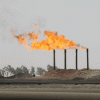
Iraq is losing 1 billion cubic feet per day of gas throughflaring, mostly from the south. It would use the gas produced under the Shell project in the domestic market to help meet the rising demand for electricity and export the surplus.
Iraqi officials have previously said the initial plan for the 25-year project includes setting up a liquefied natural gas project at a later stage, to export any excess gas with a maximum capacity of 600 million cubic feet of gas per day.
LNG is gas chilled to liquid form for shipping to export markets on specially designed tankers.
The venture would help Iraq capture more than 700 million cubic feet per day of gas being burnt off at three southern oilfields -- Rumaila, Zubair and West Qurna I.
Reuters reports that the initial signing took place behind closed doors without media coverage despite last-minute confusion over whether it was going to happen.
Two sources told Reuters on Sunday the oil ministry had scheduled the signing for Tuesday, but then on Monday the ministry retracted an invitation it had sent earlier to the press and said the signing would be delayed without giving a reason.
But an Iraqi oil source and another source close to the deal told Reuters earlier the contract had been initialled on Tuesday morning.
The project faced legal snags and some political opposition in the past since an initial pact was struck in 2008.
A renegotiation of gas pricing and other legal issues were the latest reasons to delay finalising the deal, an Iraqi oil official close to the talks told Reuters on condition of anonymity.
"The Oil Ministry wanted the gas prices to be subsidised, while Shell and Mitsubishi were asking for global market prices," said the official. "Iraq eventually agreed to increase prices for the gas that would be purchased from Basra Gas Co."
"The tough thing was to get Shell to definitely agree to the terms, and as this was done and it was initialled, then the cabinet will pass it," said Samuel Ciszuk of IHS Energy.
Shell said in a statement that it was "very pleased the Basrah Gas Company Joint Venture agreements have been initialized" and that the oil company will now "look forward" to Cabinet approval.
(Sources: Reuters, Wall Street Journal, Associated Press)
Posted in Construction & Engineering In Iraq, Iraq Oil & Gas News 1 Comment
Iraqi-US Business Council Opens in Basra
Posted on 12 July 2011 .
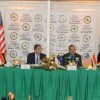
The chairman of the Iraqi National Investment Commission (NIC) has announced the official launch of the Iraqi-U.S. Business Council in Baghdad, which will be an extension of the American Chamber of Commerce in Iraq.
The council will deal with the Iraqi private sector to encourage economic development, particularly in small- and medium-sized industries.
NIC Chairman Dr. Sami al-Araji met with U.S. Deputy Secretary of State Thomas Nides and his accompanying delegation to complete the meeting in Washington.
The Council will deal with the NIC to attract investors to enter different Iraqi economic fields.
Araji called for the support of U.S. financial institutions through granting facilities to the investors, particularly in the fields of housing, electricity and infrastructure.
"The United States is a best friend and partner for Iraq," Nides stated, calling on U.S. companies to grasp the chances in Iraq and cooperate with both governmental and private sectors.
The head of the Iraqi-U.S. Business Council, Bruce Larsen, welcomed all contributions to the council.
The meeting was attended by U.S. Ambassador James Jeffrey, members of the embassy, and Iraqi-U.S. council members.
(Sources: Aswat al-Iraq, National Investment Commission)
Posted in 'Your Country' - United States, Iraq Industry & Trade News Comments Off on Iraqi-US Business Council Opens in Basra

$850m Housing Projects for Karbala
Posted on 10 July 2011 .
The Karbala Investment Commission laid the cornerstone for four housing developments valued at a total of $850 million [1 trillion Iraqi dinars], and consisting of about 11.000 housing units, Media Director Raed al-Asali told Aswat al-Iraq:
- The first project will be carried out by a Chinese company to erect 1,300 housing units in Hur area, 5 km west of Karbala, at a cost of 70 million dollars;
- The second consists of 5,166 housing units to be built by a Turkish company, 10 km southwest of Karbala at a cost of 467 million dollars;
- The third will cover 3,828 housing units to be implemented by a Canadian company at a cost of 76 million dollars;
- The fourth project will cost 237 million dollars, include 1,300 housing units by a Turkish company, 2 km outside of the main city.
He added the infrastructure requirements, such as sewerage, water, communications, electricity, internal roads, hospitals, police stations, markets and malls, will be included in these projects.
(Source: Aswat al-Iraq)
Posted in Construction & Engineering In Iraq Comments Off on $850m Housing Projects for Karbala