


Ministry of Electricity Officials 'Stealing Millions in Fuel'
Posted on 10 July 2011 .
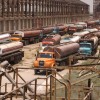
Officials in the Ministry of Electricity are involved in the theft of millions of dollars of fuel intended for power stations, an MP from the ruling National Coalition told AKnews on Saturday.
Susan al-Saad said that the tankers used to transport fuel to power plants across the country regularly go missing, and that this would not be possible without official collusion.
"Many officials in the Ministry are involved in the theft. Which is sad because it adversely affects the performance of electrical provision, in addition to contributing to the phenomenon of widespread financial and administrative corruption in state institutions," she said.
"The evidence to prove the existence of such thefts in the Ministry of Electricity will be submitted to parliament soon in order to reduce this phenomenon and also punish those involved."
Iraq recently had to make an emergency agreement for Iran to ship an extra 1.5 million liters of fuel to keep its power stations running.
(Source: AKnews)
Posted in Iraq Oil & Gas News Comments Off on Ministry of Electricity Officials 'Stealing Millions in Fuel'
Power projects: Request for Expressions of Interest
Posted on 07 July 2011 .
Request for expressions of interest for power projects - Kurdistan Regional Government of Iraq Ministry of Electricity (“KRG -MOE”)
The prospective investors are required to:i. Complete the questionnaire below.ii. Provide an outline proposal giving a technical and financial overview of the proposed investment, detailing as a minimum the plant type, capacity, fuel required implementation schedule, expected investment capital and proposed contract basis.
The Qualified Investors will be shortlisted and invite to submit a formal detailed proposal for consideration.
Investors must be able to demonstrate qualifications and considerable experience of delivering a comprehensive, cost effective, and efficient service to the KRG.
The KRG-MOE reserves the right to change or cancel these requirements at any time.
Only prospective investors that respond to this notice, and who are deemed to be qualified, may receive the invitation to submit detailed proposals or to negotiate a contract.
The KRG-MOE will not be liable for any costs incurred by applicants in completing this questionnaire or in providing outline or detailed follow-up proposals.
Expressions for interest documents in five (5) copies should be delivered to: Ministry of Electricity, 60 Meter Street, Erbil, Iraq on or before 15th September 2011 clearly marked “Expression of Interest for power generation expansion project”Guidance on the questionnaire to be completed by all applicantsa) The questionnaire must be completed in English. Any supporting document must clearly state the name of the organisation, the proposal reference details and the question number to which it relates.b) The Qualified Investor will be the organisation that will enter into a formal agreement with the KRG-MOE if awarded a contract. The following information must be provided:i. Prospective investor name, address, contact information and website details.
Background and scope
The Kurdistan Regional Government’s Ministry of Electricity (KRG-MOE) is seeking to increase the power generation capacity and associated network capabilities in the Kurdistan Region by 6000MW, operating on natural gas, heavy fuel oil (HFO) and hydro. The KRG-MOE wishes to receive expressions of interest and outline proposals from prospective qualified investors to design, supply, construct, commission, operate and maintain new power plants at various locations within the region. Expressions of interest and proposals are also required for a 400kv network for the region as a whole or in part, and this should include the links to the existing 132kv network.
Pre-qualifications and outline proposals
ii. Core business of the organisation and corporate profile.
iii. Financial status – previous three (3) years audited, and balance sheet.
iv. Corporate structure , worldwide office and support facilities, including in Iraq (if any).
v. Quality Assurance accreditation and Company Health and Safety policy.
vi. Previous experience in power project worldwide – provide projects data sheets of previous projects detailing as a minimum the five (5) most recent power projects executed by the organisation, giving: a) project title b) project location, c) client details, d) project value, e) project duration and dates, f) detailed description of the project and the organisation’s role, and g) details of manning levels/partnerships/subcontracts.
vii. Previous project experience in Iraq and the Kurdistan Region and any other information you feel may be of interest to KRG-MOE.
Posted in Tenders Comments Off on Power projects: Request for Expressions of Interest

German Company Lands $625m Iraq Power Contract
Posted on 06 July 2011 .
AKnews reports that the German energy firm MBH has landed a $625 million contract to build five 100-MW power plants in Nineveh province.
The Iraqi electricity ministry announced the deal on Wednesday, saying that the project is expected to be completed in 21 months.
The establishment of the plants is part of the government’s plan to plug national grid shortages – a central gripe in the nationwide wave of public protests earlier this year – which leave some provinces with just eight hours of national power per day.
According to AKnews, the Electricity Ministry spokesman Mosaab al-Muhandis said that the company will be paid in full one year after the completion of the project, while AFP reports that payment will begin one year after commissioning and will be spread over two years.
(Sources: AKnews, AFP)
Posted in Construction & Engineering In Iraq, Iraq Public Works News Comments Off on German Company Lands $625m Iraq Power Contract
Alstom Grid Wins Major Iraq Contract
Posted on 05 July 2011 .
Alstom Grid has been awarded a €80 million contract from Calik Energy [Calik Enerji], a leading Turkish energy company, for the supply of electrical transmission equipment to be installed in two power plants being built in Iraq by Calik Energy. This contract is considered the largest one to date for Alstom Grid in Iraq.
The contract, which includes the supply of GIS substations and power transformers, has been signed within the framework of the Ministry of Electricity’s “Mega Deal ” project to add more than 10,000 MW of power generation capacity in the country. The natural gas/ fuel oil power plants are critical to meeting Iraq’s growing demand for energy during the period of reconstruction and rebuilding.
Upon completion, the substations and related equipments supplied by Alstom Grid to transmit electricity from the Al-Khairat and Nainawa [Ninewa, Ninawa] gas-fired power plants will contribute to develop the region by transmitting an additional 2000 MW of new generation capacity through the grid. Project commissioning is scheduled for June 2012 with a second phase planned in October 2012.
Patrick Kron, Chairman and CEO of Alstom, said:
“Iraq is one of the most dynamic countries in the region with major construction plans in infrastructure, oil & gas and utilities. Alstom is proud to support Iraq’s economic development and intends to enhance its strategic partnerships, by bringing expertise close to the customer. This prestigious project demonstrates Alstom’s ability to respond to ever-greater needs with customer-valued solutions."
Posted in Construction & Engineering In Iraq, Iraq Public Works News Comments Off on Alstom Grid Wins Major Iraq Contract

Canadian Firm Wins $1.7bn Iraqi Power Contract
Posted on 04 July 2011 .
Iraq has signed a $1.2 billion contract with Canada's Capgent to build 10 power stations with a total capacity of 1,000 megawatts in a bid to meet local demand, Reuters reports.
A ministry spokesman told AFP that the plants were to be constructed within 12 months in the provinces of Anbar, western Iraq, and in Salaheddin in the centre of the country. AFP puts the value of the contract at $1.66 billion.
Each station has a capacity of 100 MW and will be installed by the Canadian Alliance for Power Generation Equipment (Capgent) around Iraq over 12 months, the country's Electricity Ministry said in a statement.
The private Canadian thermal and diesel power plant construction company has electricity projects around the world, including in Kenya, Nepal, Angola and Mexico.
Iraq will have to repay the cost of the contract to Capgent once the power stations come into service and the total amount should be paid within two years, the statement said.
In January Iraq awarded a $219 million contract to South Korea's Hyundai Engineering & Construction to install four gas turbines in Baghdad with a total generating capacity of 500 MW.
(Sources: Reuters, AFP)
Posted in Construction & Engineering In Iraq, Iraq Public Works News 3 Comments
Iraq Signs $365m Iranian Gas Pipeline Agreement
Posted on 01 July 2011 .
Iraq signed a $365 million agreement to install a pipeline network to import natural gas from Iran for power stations in the country, according to reports from Bloomberg and Iran Independent News Service.
The pipelines will eventually supply 25 million cubic meters of Iranian natural gas a day to the Sadr, al-Quds and South Baghdad power stations in the Iraqi capital, Mosaab Serri, a spokesman for the Iraqi Ministry of Electricity, told Bloomberg by telephone. The agreement with Iran, which holds the world’s second-largest gas reserves, requires the approval of the Iraqi Council of Ministers and Parliament.
The network of 48-inch pipelines will run for 130 km, and will pass the Mansouriya gas field, which is due to supply gas to the two power plants instead of Iran starting 2016, Serri said in a statement on May 22. Kuwait Energy Co., Turkiye Petrolleri AO (TPAO) and Korea Gas (Kogas) secured rights to develop Mansouriya.
Iraq and Iran have also reached an initial agreement to install another pipeline network from the Iranian region of Abadan to Basra in southern Iraq where it will feed a planned 1,250-megawatt power station, Serri said.
(Sources: Bloomberg, Iran Independent News Service)
Posted in Iraq Oil & Gas News Comments Off on Iraq Signs $365m Iranian Gas Pipeline Agreement
Conditions Worsen
Posted on 28 June 2011 .
Levels of violence are rising in Iraq. While some commentators in the press are referring to the increase as a spike, regular readers of Iraq Business News will understand that the rise has actually been very gradual - but consistent - with the number of attacks building up all the way from the beginning of the year. Last week AKE raised the risk rating for the country on Global Intake amid the slowly deteriorating situation and while it is our opinion that Iraq remains a major business opportunity, companies nonetheless need to emphasise the health, safety and security elements of their projects so as to minimise the risk of harm to their staff and assets.
Blame
Groups have not claimed responsibility for the latest string of violence but AKE believes that there is more than one organisation involved. Three of the attacks, including one in Basrah province, involved well planned and co-ordinated attacks using suicide bombers. This is a hallmark of radical Sunni groups such as the Islamic State of Iraq, while the targeting of the government and security forces is also typical of the group. Al-Qaeda affiliated organisations still have intentions of creating their own religious state in the country. While they have been critically weakened over the past four years they remain unwilling to compromise or negotiate with what they see as a corrupt, foreign-backed and apostate government. At the same time, recent attacks in the capital have taken place in areas normally associated with Shi'ah groups, while the prevalence of rocket and mortar attacks also suggests their involvement. Threat groups evidently abound on both sides of the sectarian divide.
Potential Targets
Some of the latest attacks have specifically targeted the places where individuals are supposed to be protected. Military bases, police stations and government compounds have all been targeted. Even normally well-guarded districts such as Jadriyah in Baghdad have been hit. While the Green Zone has not recently been attacked, it may be next on the target list if militant groups want to make an impact on the foreign presence in the country. While it remains well defended against infiltration it is nonetheless still vulnerable to rocket and mortar attacks.
Analysis
There are several possible reasons why conditions have worsened over recent weeks. As mentioned, conditions have been deteriorating gradually since the beginning of the year. Many are frustrated with the government's inability to provide electricity and jobs. Amid the 'Arab Spring' elsewhere in the region, Iraq too has suffered its own unrest, and some of the more radicalised elements of the frustrated population may be turning to militancy to express their dissatisfaction with the government.

The next weekly security update from AKE will show that conditions worsened once again in Iraq last week
The rise in attacks specifically against foreign interests is likely due to a different trend. The US is coming under increasing pressure to withdraw its military from the country by the end of the year. Amid speculation over the possibility of an extension of the Status Of Forces Agreement it could be that radical groups are attempting to send a strong signal to Washington that American forces are not welcome.
Advice
Foreign organisations looking to do business in the country should not be alarmed by what has been a very slow evolving trend in deteriorating security this year. However, safety needs to be treated as paramount when planning trips, meetings, accommodation and projects. Crisis management measures should also be taken into consideration. If you would like any assistance in planning an upcoming visit or you would like any advice in reviewing your current security measures please contact the AKE Iraq office at [email protected]
John Drake is a senior risk consultant with AKE, a British private security firm working in Iraq from before 2003. Further details on the company can be found here while AKE’s intelligence and political risk website Global IntAKE can be accessed here.
You can obtain a free trial of AKE’s intelligence reports here.
You can also follow John Drake on twitter here.

Posted in John Drake Comments Off on Conditions Worsen

Gas is Vital for the Future
Posted on 25 June 2011 .
By Chris Bowers, British Consul General in Erbil. This article was originally published by Rudaw, and is re-published with permission by Iraq Business News.
Let me start by asking a question: why is gas less talked about than oil in Iraq? I am not sure why this is the case but it does seem to be true. In fact, the development of Kurdistan’s huge gas reserves is vital to energy security in Kurdistan, Iraq, the region and beyond. I am proud to say that UK energy companies are playing an important role in this.
Kurdistan is blessed twofold on gas: firstly on reserves, and secondly in its proximity to growing markets for that gas; markets that won’t wait. There is a growing and urgent demand for gas-powered electricity in Kurdistan’s neighbouring provinces. Iraqi gas should, of course, first be used to satisfy domestic demand and is great to see KRG reaching out to neighbouring provinces. This is an excellent example of Kurdish and Arab interests coinciding exactly and to the benefit of everyone.
Once domestic demand is sated, the second and growing market is Turkey. Turkey’s booming economy needs a significant amount of extra power every year. Naturally, much of that can be fuelled by Iraqi gas from Kurdistan.
Cementing the recent progress on Turkey-Kurdistan relations through deepened energy co-operation makes obvious strategic and more importantly economic and business sense. Turkey is a great market for Kurdistan and Europe as a whole has an interest in Turkey sustaining its strong economic growth.
But, Europe also has a broad interest in Iraqi gas from Kurdistan. There is a gas shortage in Europe and the gap between supply and demand is likely to increase in the long run. Gas is better for the climate than coal, is less costly initially than most forms of renewable energy and less controversial than nuclear.
Posted in 'Your Country' - United Kingdom, Blog, Iraq Oil & Gas News 1 Comment
Iran to Supply Iraq with Gasoil for Power Generation
Posted on 25 June 2011 .
Bloomberg reports that Iran has agreed to supply 1.5 million liters a day (9,400 barrels), of gasoil to Iraq over the next 12 months for power generation.
Masaab Serri, spokesman for the Iraqi Electricity Ministry, said in an interview that the fuel will enable power plants to generate 250 megawatts, according to the agreement signed by officials from the neighboring countries in Baghdad. The gasoil will be transported by truck and sold at international prices, he said.
Iraq, holder of the world’s fifth-largest crude reserves, is seeking fuel to meet domestic demand. The nation’s refineries at Doura [Dora, Daura] in Baghdad, in the northern city of Baiji [Bayji], and in the southern region of Basra, have a combined capacity of about 700,000 barrels a day.
In practice, they process less crude than that because of wartime damage and are unable to meet the domestic demand of about 600,000 barrels a day, according to a U.S. Energy Department report.
(Source: Bloomberg)
Posted in Iraq Oil & Gas News 1 Comment

India's Lanco Wins $81m Anbar Power Contract
Posted on 22 June 2011 .
Lanco Infratech Ltd. (LANCI) of India signed an $81.3 million contract to build a gas-fired, 250-MW power station in western Iraq.
Masaab Serri, an Electricity Ministry spokesman, told Bloomberg that the company is scheduled to build the plant within 16 months in Al-Qaim, in Anbar province in western Iraq, using natural gas from the nearby Akkas field, which the Iraqi government has recently awarded to Korea Gas Corp (KOGAS).
The country sought bids this year to build more than 60 generation plants to add more than 14,000 megawatts to the national grid. Iraq currently produces 7,000 megawatts and imports 1,000 megawatts while domestic demand totals about 14,000 megawatts, Iraqi Electricity Minister Raad Shallal said in April.
(Sources: Dow Jones, Bloomberg)
Posted in Construction & Engineering In Iraq, Iraq Public Works News Comments Off on India's Lanco Wins $81m Anbar Power Contract