



More Details of Basra Power Contract, Chinese Company Involved
Posted on 06 April 2011 .
According to a report from Reuters, the Saudi-based Dao al-Jomaih Group tendered the low bid of $204.4 million to install four gas turbines in Iraq's southern Basra province.
Salam Qazaz, Iraq's deputy electricity minister, said on Tuesday that the units will have a total generating capacity of 500 megawatts (MW) and will be installed at a power plant in al-Najibiya, a district in Basra, Iraq's southern oil hub.
The units are to be installed within 17 months, he added.
"Final approval of the deal will be decided after we study the technical aspects of the tender," Qazaz told reporters in Basra.
Reuters reports that China's Machinery Engineering Corp is also party to the winning bid; AFP says the company is China National Machinery & Equipment Import & Export Corp (CMEC).
The bid beat tenders submitted by Swiss engineering group ABB, Turkey's Enka Insaat and South Korea's Hyundai Heavy Industries, the ministry said.
(Source: Reuters)
Posted in Construction & Engineering In Iraq, Iraq Public Works News Comments Off on More Details of Basra Power Contract, Chinese Company Involved
Turkish Contract for Electrical Cabling in Kurdistan
Posted on 05 April 2011 .
The Ministry of Electricity in Iraqi Kurdistan has signed a contract with a Turkish Company to connect electrical power lines between the provinces of Sulaimaniya and Erbil.
Kurdistan’s Electricity Minister, Yassin Sheikh Abu-Bakr, has signed a contract on Sunday with the Turkish ‘Shar’ Company to build these lines, adding that the total cost of the contract is 21.6 billion Iraqi dinars [$18 million], a Ministry statement said.
The Minister expressed his Ministry’s readiness to “extend every possible assistance to the Turkish Company, as well as accepting other foreign companies wishing to work in electric power plants in Kurdistan,” it added.
(Source: Aswat al-Iraq)
Posted in Iraq Public Works News Comments Off on Turkish Contract for Electrical Cabling in Kurdistan
2 New Power Stations for Maysan
Posted on 05 April 2011 .
The Iraqi electricity ministry has given the thumbs up to the construction of two new power stations with a capacity of 600 megawatt in Maysan [Missan], according to Aswat al-Iraq.
“One station with a capacity of 100 MW will be set up in al-Batira, (5 km) north of al-Amara, while the other will be near the al-Kahlaa transformer station, (18 km) southeast of Amara,” Amer Nasrallah, the Missan provincial council’s energy committee chairman, said on Sunday.
“The approval came after a visit by the council chairman, Abdul-Hussein al-Saadi, and the council’s energy committee chairman to the electricity ministry,” he added, noting the two stations will be linked to the public grid as part of the ministry’s plan to reduce power shortages.
Maysan, a province with a population of more than one million, needs 400 MW of electricity while the current capacity is below 150 MW from neighboring provinces.
(Source: Aswat al-Iraq)
Posted in Iraq Public Works News Comments Off on 2 New Power Stations for Maysan

Turkish Company to Build Power Plant in Ninewa
Posted on 31 March 2011 .
The local government in Ninewa signed a deal with a Turkish company on Wednesday to build a gas-fired electricity generating plant.
The plant will generate 750 Megawatts, a source from the Ninewa governor's office told Aswat al-Iraq news agency.
“The $388 million-deal aims to improve the electricity in the province,” he noted.
(Source: Aswat al-Iraq)
Posted in Iraq Public Works News Comments Off on Turkish Company to Build Power Plant in Ninewa
Iraq Awards $125m Power Deal to Saudi Firm
Posted on 30 March 2011 .
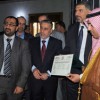
Iraq has awarded a $125 million [150 billion Iraqi dinars] contract to a Saudi Arabian company to build a 150 MW power plant in Basra, an Iraqi official said.
Haider Ali Fadhil, head of the Basra Investment Commission, said the Saudi-based Dao al-Jomaih Group was awarded a contract to build the plant and install two French-made gas turbines. It will take six months for the project to be completed, according to the report from Reuters.
Under the deal, the company will operate the plant and sell the electricity to the province for a three year period after finishing the installation of the turbines, Mohammed Oun, a representative of Dao al-Jomaih said.
Aswat al-Iraq, meanwhile, reports that an Emirati company called 'al-Jameeh Company' was granted the contract, which it values at $153m
(Sources: Reuters, Basra Investment Commission, Aswat al-Iraq)
Posted in Iraq Public Works News Comments Off on Iraq Awards $125m Power Deal to Saudi Firm

Legacy of Destruction
Posted on 29 March 2011 .
By Leanne Case.
Years of war and suffering in Iraq have left a legacy of destruction which includes ancient monuments and broken cities. During my time there I pestered those that I knew to share both their stories and images of what once was. One doesn’t have to go far to discover a land of awe inspiring architectural feats, ingenuity and adventure.
However, this is not the place that I have seen from behind the compound walls or the thick glass of my vehicle. This is not the expanse of mud and wreckage I have seen on my travels but I know that it existed and have seen it proudly displayed in the gait of the people I have watched, and in the proud histories of those I have been honoured to meet and listen to. This is the essence of what draws me to Iraq, proud, resilient and beyond belief.
This is exactly the reason that Iraq should not seek to recreate the bland architecture endemic in modern cities but should be brave in seeking new architectural paths. History is not something that should hold us back but should rather be proudly incorporated into the future. History is a recognised commodity in Iraq and the Tourism Board are very actively pursuing growth in tourism as a key economic opportunity. Although I realise that the thought of Iraq’s tourism potential is ludicrous to those that cannot see beyond the current security situation; Iraq is a cultural Mecca and that has always meant and will always mean tourism. The kind of tourism growth will very much depend on the future security situation and the preservation, development and tourism polices of the Iraqi government.
Basra known in the 17th century as the Venice of the Orient, rich in history and oil, once a cornerstone of Islamic civilisation is once again central to the re-emergence of Iraq. In December 2010 the Friends of the Basra Museum held a fundraising event in London. The first formal event in the plan to re-establish the Basra museum in a new location and a welcome one, after all any well thought out plan that recognises Basra’s place in history is a vitally important one.
Posted in Construction & Engineering In Iraq, Iraq Oil & Gas News, Leisure and Tourism in Iraq 4 Comments
$6.25 Billion to Build 50 New Power Plants
Posted on 25 March 2011 .
Iraq plans to sign power plant contracts valued at $6.25bn [7.3 trillion Iraqi dinars] next week with Caterpillar and other companies, according to Arabian Business.
Caterpillar, Man SE of Germany and at least one South Korean company will build 50 new power stations, each capable of generating 100 megawatts, Electricity Minister Raad Shallal said on Thursday.
"In the short term, nationwide we will build 50 stations with a capacity of 100 megawatts," he told reporters.
"Work will begin immediately and be completed in the summer of 2012, but the first effects will be felt next winter" when the plants connect to the grid, he added.
Iraq’s power plants and distribution network have suffered from years of war, sanctions, insurgent attacks and under- investment.
Iraqis currently receive power from the national grid for an average of about one in every five hours. Chronic outages are hampering the economy, and violent street protests over unreliable electricity supplies have made the issue a major concern for the government.
Former Electricity Minister, Karim Wahid, resigned last June after two people were killed while rioting over summer blackouts and power rationing.
Wahid said at the time that his efforts to tackle the problem had failed because of a lack of money and fuel. Prime Minister Nuri al-Maliki pledged after forming his new government in December to address the problem.
The planned investments are part of a plan to end power shortages completely by 2015. Power supply this summer, the peak season for electricity consumption, will improve to an average of eight hours a day nationwide, up from about six hours a day last summer, Shallal said.
Iraq produces 7,000 megawatts and imports an additional 1,000 megawatts, while demand totals about 14,000 megawatts, he said.
The country imports electricity mainly from neighboring Iran and Turkey, which has also sent two ships to southern Iraq where they serve as floating power plants, Masaab Serri, an Electricity Ministry spokesman, said on Jan. 4. Iraq is in talks about importing electricity via Syria using a regional grid.
The government invited bids in December for the construction of four power plants to raise generating capacity by 2,750 megawatts.
Those bids will be for a 1,250-megawatt plant near Basra, and three plants of 500 megawatts each in the cities of Samawa, Diwaniya and Amarah.
The contracts to be signed next week for 50 smaller plants would be in addition to these earlier projects.
(Source: Arabian Business, Middle East Online)
Posted in Iraq Oil & Gas News, Iraq Public Works News Comments Off on $6.25 Billion to Build 50 New Power Plants

Iran to Boost Iraq's Power Generation
Posted on 23 March 2011 .
Iran’s power development firm, Sunir [Sanir] is negotiating with the Iraqi side to expand the capacity of a plant it is constructing in Baghdad from 160 megawatts to 640 megawatts.
Sunir, the power construction arm of Iran’s energy ministry, is the largest foreign contributor in Iraq’s rickety power infrastructure, according the the report from Azzaman.
Iraqi Electricity Ministry’s spokesman Mussab al-Mudaris said a delegation from Sunir is currently in Baghdad negotiating new deals.
Sunir, which was given an ultimatum to finish a plant it is building in the low-income township of Sadr City before July, is reported have almost finished the project.
Mudaris said the plant, which Sanir wants to expand, will go into operation “within a few days.”
“The first unit producing 160 megawatts will start work within days. The second with a 155 megawatt capacity will be ready next month,” he said.
The plant has cost more than €155 million.
Mudaris praised Sunir for finishing the job before the deadline, saying the government would grant the company more power construction contracts.
He said the Electricity Ministry was negotiating with Sunir to install gas-driven turbines at Dibis, a major power plant in Iraq.
Last month, Iraq and Iran signed a new agreement under which Iranian firms were to construct 11 new power plants in the country.
Iranian firms are heavily engaged in contracts in Iraq. In 2010, Iran doubled its trade with Iraq to nearly $8 billion.
(Source: Azzaman)
Posted in Iraq Oil & Gas News, Iraq Public Works News Comments Off on Iran to Boost Iraq's Power Generation

Iraq and the new geopolitical calculus
Posted on 22 March 2011 .
By Tariq Abdell, Iraq’s political risk analyst, and Founder & CEO of Mesopotamia Insight.
The opinions expressed here are those of the author, and do not necessarily reflect the views of Iraq Business News.
In light of ongoing socio-political changes in MENA region, Iraq's massive protests, from Zakho to al-Faw, accentuate the political astuteness and the frustration of the Iraqi people with their elected officials. Disenfranchised Shiites, Sunnis, Kurdish, Arabs, and Christians are all demanding the same: an end to ethno-sectarian quota-sharing system, corruption, and, most importantly, universal access to basic services such as potable water, electricity, housing, education, healthcare, and jobs.
Nonetheless, given the legitimacy and urgency of the protestors' demands, the government nebulous responses (halving of some officials' salaries, 100-day ultimatum to incumbent ministers, boosting food ration with extra cash, etc...) are mere cosmetic measures to allay people's frustration and anger. Unarguably, the cumulative effects, hitherto, of the elected officials' ineptitude and schism are protracting decades of erroneous policies and, subsequently, the people's tribulations. Impelling the majority of the Iraqi people to question the legitimacy of their government and the effectiveness of its institutions, a dangerous threshold that could hastily throw the country back into its darkest years of sectarian violence and lawlessness.
Notwithstanding Iraq's colossal energy resources, billions of oil and natural gas reserves, Iraq fragile democracy and ineffectual institutions, in a restive region, are the breeding ground for societal and political upheavals and foreign interventions. In fact, Iraq's daunting and intricate challenges are both internal and regional:
Internal challenges:
- Lack of basic services, e.g., six million people with no access to clean water -UNICEF.
- 20 to 25 percent of Iraqis still live below the country’s poverty line.
- Unemployment rates hover around %18, notably among military-age male population.
- Higher illiteracy rates, exacerbated with massive brain drain, are eroding Iraq's skilled and professionally literate workforce.
- Rampant corruption and nepotism undermine the efficiency of the State institutions.
- Inequitable distribution and mismanagement of oil's revenues - no hydrocarbon law.
- Parliament still faces a backlog of sensitive issues.
Regional challenges:
- Given the region new geopolitical developments, heightened tensions between Iran and Saudi, Iraq could easily turn into a sectarian proxy war battleground - Shiite Vs. Sunnis.
- The fallouts of Iran's nuclear standoff with the West could easily spillover to Iraq’s already contentious politics and further undermining its stability.
- Given Kirkuk's enormous oil reserves and ethnic diversity (Arabs, Kurds, and Turkmen), it's protracted dispute is a timed bomb, which could expeditiously reignite Iraq's civil war.
- Turkey’s recurrent incursion into Northern Iraq in the pursuit of the Kurdish workers party (PKK) elements and PKK assiduous attacks on the northern oil pipelines are a major threat to the country’s resources and sovereignty.
- Given the hostile intentions of some neighboring counties, the U.S. planned troops withdrawal, by the end of the year, could further jeopardise Iraq's defense capabilities.
Thus, given the enormity and complexity of the aforementioned challenges, Iraq only viable mean to fend off political instability and chaos is to renounce its sectarian-based policies and espouse an inclusive and genuine democratic system that heads to the people aspirations and protects their rights (UN Universal Declaration of Human Rights). Furthermore, both the government and opposition ought to consolidate their efforts to bolster accountability, eradicate corruption and, subsequently, strengthen the State institutions, an essential prerequisite for a rapid socio-economic recovery. To this end, the new government’s long-term vision should entail an action plan that reflects the country strategic and pressing priorities, namely:
- Genuine national reconciliation to overcome sectarian and political schism and violence.
- Overhauling of State institutions to rein in corruption and enhance efficiency.
- Merit-based appointments to promote efficiency and accountability.
- Providing access to basic services (e.g., potable water, electricity, running sewer, etc)
- Equitable distribution of oil revenues.
- Investing in human capital through education and training.
- Job creation to fend off societal and political unrest (Organized crime, for instance).
- Advancing the principles of human rights and rule of law.
- Diversifying and reviving of Iraq' strategic industries to curb its dependence on a single commodity - fossil fuel.
Conversely, in the absence of a comprehensive and inclusive socio-economic development strategy, aiming at strengthening State institutions, eradicating corruption, and addressing the aspirations of the Iraqi people, regardless of their political and religious believes, Iraq may revert to its darkest years of sectarian violence and lawlessness (05-07), giving regional players (Iran, Saudi, Turkey, Syria) a free hand in Iraq's affairs - exploiting Iraq's vulnerabilities (Shiite-Sunni strife, for instance)- to further their national interests and, subsequently, turning Iraq into a prime battleground for proxy wars, or worse, a pariah State. Simply put, “a house divided against itself cannot stand” Abraham Lincoln.
The opinions expressed here are those of the author, and do not necessarily reflect the views of Iraq Business News.
The author, Tariq Abdell, Iraq's political risk analyst, and Founder & CEO of Mesopotamia Insight
He can be contacted at: [email protected]
or
Followed on twitter: http://www.twitter.com/atariqx
Posted in Tariq Abdell 2 Comments
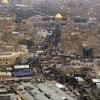
Karbala Allocates $60m to Roads and Power
Posted on 21 March 2011 .
Karbala has allocated 70 billion Iraqi dinars [$60 million] from the 2011 budget to improve the electrical grid and road system in the province.
The President of the provincial council in Karbala said that the Council decided to allocate 70 billion dinars from the budget for the sectors of electricity and roads from a total allocation of 90 billion dinars.
This allocation is designated to alleviate the suffering of citizens in these two major sectors, with 40 billion dinars going to improve the electric grid and 30 billion dinars for the road sector.
(Source: National Media Center)
Posted in Construction & Engineering In Iraq, Iraq Public Works News Comments Off on Karbala Allocates $60m to Roads and Power