



RTB Launches Low-Interest Solar Panel Loan Scheme
Posted on 27 July 2025 .
By John Lee.
Erbil-based Region Trade Bank (RTB) has launched a new low-interest loan programme aimed at supporting the installation of solar panels for residential and commercial customers across Iraq. The initiative aligns with the Iraqi government's national decarbonisation strategy and is funded through the Central Bank of Iraq (CBI).
The loan scheme offers financing between 7 million and 30 million Iraqi dinars (approximately $4,800-$20,700), with repayment over seven years and an optional six-month grace period. RTB's move is designed to address Iraq's electricity shortages and promote sustainable energy adoption by making solar energy systems more accessible and affordable.
RTB CEO Ahmed Nowzad said:
"This programme presents a great opportunity to promote sustainable development and diversify the energy sources of the country. At RT Bank, we are committed to supporting our customers in building a greener future while fostering economic growth through innovative financial solutions."
As Iraq continues to face severe electricity shortfalls-particularly during summer months when demand surges-this initiative aims to ease pressure on the national grid and reduce dependence on fossil fuels.
Applications for the loans are now open via the government's online portal at www.ur.gov.iq, with further information available through RTB's local branches.
(Source: Region Trade Bank)
Posted in Iraq Banking & Finance News Comments Off on RTB Launches Low-Interest Solar Panel Loan Scheme
Major New Report on Iraq's Energy Transition
Posted on 25 July 2025 .
By John Lee.
The International Renewable Energy Agency (IRENA) has published a major new report on the status and outlook of Iraq's energy transition. It says:
Iraq possesses vast renewable energy potential, yet the country's energy sector faces major challenges. This energy transition assessment evaluates Iraq's current energy landscape, highlighting the barriers to renewable energy adoption and outlining key recommendations for a sustainable energy transition. Despite abundant solar and wind resources, renewables meet less than 2% of Iraq's energy supply, with fossil fuels still dominating the mix. Addressing this imbalance is essential to achieving long-term energy security, economic stability and environmental sustainability.
This assessment, developed by IRENA in collaboration with the Government of the Republic of Iraq's Ministries of Oil and Electricity, and Kurdistan Regional Government, identifies urgent policy and regulatory reforms, infrastructure upgrades and financial mechanisms required to accelerate Iraq's clean energy transition. Iraq must establish clear renewable energy targets, modernise its grid, and create an enabling investment climate to attract local and international stakeholders.
By implementing these recommendations, Iraq has the potential to become a regional leader in renewable energy. Large-scale solar and wind projects, combined with institutional reforms and strategic financing, can drive the country toward energy independence while mitigating climate risks. The findings of this assessment therefore serve as a call to action for policymakers, investors and industry leaders to unlock Iraq's renewable energy potential and shape a more sustainable future for the country and its people.
Click here to download the full 96-page report.
To browse our comprehensive library of reports on Iraq, click here.
(Source: IRENA)
Posted in Iraq Industry & Trade News Comments Off on Major New Report on Iraq's Energy Transition
Al-Nukhba to Upgrade at Dora Power Station in Baghdad
Posted on 24 July 2025 .
By John Lee.
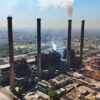
Prime Minister Mohammed Shia Al-Sudani has laid the foundation stone for a major upgrade at the Dora [Doura] Thermal Power Plant in Baghdad, including the rehabilitation of two existing thermal units (2 x 160 MW) and the installation of two new units (2 x 160 MW), adding a total of 640 MW to the grid.
Speaking at the launch event on Monday, Al-Sudani highlighted the strategic importance of the plant due to its central location in Baghdad and its ability to utilise output from the nearby Dora Refinery under strict environmental standards.
He reaffirmed the government's ongoing efforts to secure fuel supply for all power plants and to achieve energy independence. "By the end of 2027, Iraq will have attained self-sufficiency in gas supply for all current and future power stations," he said.
The Prime Minister also praised the Ministry of Electricity for maintaining a steady and acceptable level of electricity supply through its decongestion programme for transmission and distribution sectors.
He noted that Iraq is also advancing renewable energy initiatives, with solar power projects expected to come online within a year.
The new and rehabilitated units will be connected to the 132 kV internal grid in the Karkh area of Baghdad, supporting electricity distribution and meeting rising local demand. Rehabilitation of the existing units will be carried out on a phased schedule to avoid production downtime, using fuel from the adjacent refinery.
The project is being implemented by Dubai-based Al-Nukhba OFS.
(Source: PMO)
Posted in Construction & Engineering In Iraq, Iraq Industry & Trade News Comments Off on Al-Nukhba to Upgrade at Dora Power Station in Baghdad
Schlumberger to Develop Akkas Gas Field; Ukrainian Contract Cancelled
Posted on 22 July 2025 .
By John Lee.
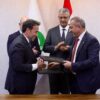
The Ministry of Oil has signed a contract with US-based Schlumberger (SLB) to increase natural gas production at the Akkas gas field in Anbar province.
Speaking at the signing ceremony, Deputy Prime Minister for Energy Affairs and Minister of Oil, Hayan Abdul Ghani, described the project as a major milestone in Iraq's gas development strategy. He confirmed that Midland Oil Company has been tasked with overseeing the implementation of the project, which targets increasing production at the field to 100 million standard cubic feet per day (mmscfd).
The new contract follows the cancellation of a previous agreement with the Ukrainian company Ukrzemresurs. Minister Abdul Ghani said the project will include:
Drilling new wells by Schlumberger;
- A forthcoming contract for the construction of surface facilities;
- A parallel contract with the State Company for Oil Projects (SCOP) to build a pipeline network linking wells to central processing units.
- The gas produced will be directed to the Anbar Combined Cycle Power Plant, currently under construction by the Ministry of Electricity.
The Minister stressed the urgency of delivering the project on schedule, noting that the initial 60 mmscfd addition will bring the total processed volume to 100 mmscfd out of an expected full capacity of 400 mmscfd.
Gokhan Yarim, President of Integrated Projects at Schlumberger, expressed satisfaction at signing the agreement and affirmed the company's commitment to the project timeline.
Deputy Oil Minister for Extraction, Bassem Mohammed Khudair, said the deal reflects Iraq's commitment to ending gas flaring, expanding domestic gas production, and providing a secure investment environment in Anbar. He highlighted the project as a key step in the ministry's strategy to develop gas fields like Akkas and Mansouriya through national efforts, supported by international expertise.
Mohammed Yaseen, Director General of Midland Oil Company, emphasised the strategic and economic dimensions of the project, noting the use of a new economic model and a more direct role for service companies.
(Source: Ministry of Oil)
Posted in Iraq Oil & Gas News Comments Off on Schlumberger to Develop Akkas Gas Field; Ukrainian Contract Cancelled
Work Starts at Qayara Combined-Cycle Power Station
Posted on 18 July 2025 .
By John Lee.
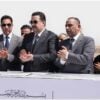
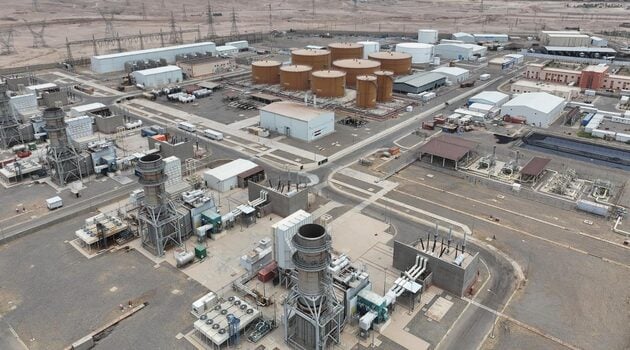
Prime Minister Mohammed Shia Al-Sudani has inaugurated the construction of the Qayara [Qayyarah] Combined-Cycle Power Station, which will add 375 megawatts (MW) of capacity and raise the station's total output to 1,125 MW.
The Prime Minister highlighted the importance of combined-cycle systems in improving electricity generation efficiency. He said the government's strategy to adopt this technology helps maximise fuel use and aligns with environmental standards.
Located in the Qayyarah subdistrict in southern Nineveh, the project adds three new combined-cycle units (125 MW each), which will utilise exhaust gases from the plant's existing six simple-cycle gas units.
Al-Sudani described the expansion as a strategic step toward strengthening Iraq's national grid and meeting growing energy demand.
The contact for the work was awarded to Argan Int in February 2025.
(Source: PMO)
Posted in Iraq Industry & Trade News Comments Off on Work Starts at Qayara Combined-Cycle Power Station

Cargo Volume Up at Iraq's Land Transport Company
Posted on 17 July 2025 .
By John Lee.
The General Company for Land Transport (GCLT), part of Iraq's Ministry of Transport, has announced that it transported 415,000 tonnes of goods during the first half of 2025 - an increase of more than 36 percent compared to the same period in 2024.
According to Director General Murtadha Kareem Al-Shahmani, the company executed 10,438 transport operations during the period.
Goods transported included:
- Agricultural fertilisers for the Ministry of Agriculture;
- Electrical equipment for the Ministry of Electricity;
- Kerosene (gas) for the Ministries of Water Resources and Health;
- Local wheat for the Ministry of Trade;
- Perishable medical supplies and laboratory items, under the air freight transport contract;
- Various materials for the Independent High Electoral Commission.
Al-Shahmani also highlighted the GCLT's role in transporting shipments from Iraq's seaports and handling inter-governorate cargo movements as part of ongoing contractual obligations. He reaffirmed the company's commitment to high service standards in reliability, speed, and precision.
(Source: Ministry of Transport)
Posted in Iraq Industry & Trade News, Iraq Transportation News Comments Off on Cargo Volume Up at Iraq's Land Transport Company
Mosul's Riverfront Redevelopment Preserves Historical Heritage
Posted on 17 July 2025 .
By John Lee.
Prime Minister Mohammed Shia Al-Sudani conducted a field visit on Wednesday to inspect the ongoing redevelopment of the historic riverfront in the old city of Mosul.
Highlighting the symbolic and cultural importance of the area, which includes numerous religious and archaeological landmarks, the Prime Minister affirmed that the reconstruction is being carried out in coordination with relevant ministries and the local government. The project was designed by a Spanish firm and is being implemented according to heritage-focused standards, in partnership with UNESCO.
He stressed the need to preserve the city's historical legacy, calling it a heritage of value not just to Iraq but to the entire world, while ensuring that the character and identity of the site are maintained during reconstruction.
Launched earlier this year, the project covers the riverfront area between Mosul's old and fifth bridges, and includes the creation of a riverside promenade, a boat dock, 273 traditional-style homes, and recreational parks, along with comprehensive infrastructure services for water, sewage, electricity, and telecommunications.
(Source: PMO)
Posted in Construction & Engineering In Iraq Comments Off on Mosul's Riverfront Redevelopment Preserves Historical Heritage
HKN Energy to Develop Iraq's Hamrin Oil Field
Posted on 16 July 2025 .
By John Lee.
The Ministry of Oil has signed an agreement in principle with HKN Energy to develop the Hamrin field in northern Iraq.
The agreement, signed on Tuesday between North Oil Company (NOC) and the US-based company aims to increase the field's output to 60,000 barrels per day, up from the current 20,000-25,000 bpd, and to capture and utilise 45-50 million standard cubic feet per day (mmscfd) of associated gas for power generation.
Oil Minister Hayan Abdul Ghani highlighted the government's commitment to working with reputable American and Western companies to develop Iraq's oil and gas assets and enhance energy output in support of the national economy. He noted the importance of investing in associated gas to help power electricity generation stations.
The agreement was signed in the presence of ministry officials, US Chargé d'Affaires Steven Fagin, and representatives from both companies. Fagin welcomed the partnership and expressed hope for more US business engagement in Iraq.
North Oil Company Director General Amer Khalil said the agreement lays the foundation for a future development contract covering all wells in the field and aims to train local staff and provide gas to electricity plants.
Matthew Zais, Vice President of HKN, said the company is proud to partner with the Ministry of Oil and aims to maximise the field's capacity while employing 80 percent Iraqi workers and contributing to local community development.
Earlier in the day, HKN reported an explosion at its Sarsang operations in Iraqi Kurdistan.
In May, HKN Energy and ONEX Group signed a binding term sheet with the Kurdistan Regional Government (KRG) to develop the Miran gas field through their new joint venture, Miran Energy. The KRG and Iraq's federal government have disagreed over the legitimacy of that contract.
(Source: Ministry of Oil)
Posted in Iraq Oil & Gas News 1 Comment
GE-Led Consortium Wins 750MW Mansuriya Power Contract
Posted on 16 July 2025 .
By John Lee.
GE Verona, in consortium with GE Global, General Electric Global Services, Ontex Trading, and Calik Enerji, has been awarded the contract for the expansion of the Mansuriya gas power plant.
The project involves adding two gas turbines and a combined-cycle system, with a total capacity of 750 megawatts (MW).
The Iraqi Cabinet approved the contract on the condition that GE:
- Fixes the total contract value;
- Ensures operation of the plant using gas from the Khasham al-Ahmar [Khashim Ahmer-Injana] field at no additional cost;
- Commits to covering the cost of the environmental impact assessment.
The expansion is part of the government's strategy to develop Iraq's electricity generation sector and increase reliance on domestic gas sources.
The Khasham Al-Ahmar field in Diyala was awarded to UAE-based Crescent Petroleum, as part of Iraq's fifth licensing round.
(Source: PMO)
Posted in Iraq Industry & Trade News Comments Off on GE-Led Consortium Wins 750MW Mansuriya Power Contract
PM Emphasises Citizen-Centric Design for New Cities
Posted on 15 July 2025 .
By John Lee.
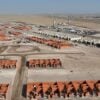
Iraqi Prime Minister Mohammed Shia Al-Sudani has underscored the importance of ensuring that new residential cities meet the needs of citizens, during a site visit to the under-construction Al-Jawahiri City (pictured), west of Baghdad.
The Prime Minister inspected the project, launched in December 2023, as part of his government's housing initiative. He reviewed implementation progress, met with project workers, and issued directives to overcome logistical obstacles, praising the efforts of the New Cities Authority and the Ministry of Construction for facilitating work.
Al-Sudani stated that the strategy to build integrated residential cities follows detailed analysis of Iraq's housing crisis, particularly addressing the needs of middle-income citizens, with a designated portion of housing allocated for low-income groups.
Key remarks by the Prime Minister included:
- Comprehensive services-commercial, economic, and public-will be integrated into all new cities.
- The housing model is designed to be simple, accessible, and affordable in terms of layout, pricing, and instalment plans.
- Past housing projects have faced issues in securing land and coordination across ministries regarding ownership.
- Ministries and local governments are instructed to prepare unified service plans for electricity, telecoms, roads, and national utility networks.
- Emphasis was placed on adhering to approved technical specifications and urban planning standards.
- The implementing company must expedite progress and adopt advanced construction technologies.
- Environmental requirements and green space allocations must be respected.
- Residential units must be designed with accessibility in mind and conform to smart city standards, in line with a modern and forward-looking vision.
Al-Jawahiri City is the first of several new planned urban developments aimed at alleviating the country's long-standing housing shortage.
(Source: PMO)
Posted in Construction & Engineering In Iraq Comments Off on PM Emphasises Citizen-Centric Design for New Cities