



Iraqi Stability: A Year in Review
Posted on 16 February 2011 .
Iraq Business News has been shedding light on the investment climate in Iraq for a year. Over that period there have been numerous improvements in conditions. However, security has continued to play a major role in the business sector. Attacks and instability have persisted despite a significant reduction in overall violence in recent years.

Violence in Baghdad on Election Day, 2010
The Elections
In terms of security incidents and developments, several stand out over the past 12 months. The most poignant day of the year was arguably the 7th of March. A spate of attacks swept the country as citizens went to the polls to vote. Intimidation and a fear of violence caused many to doubt whether or not they should participate on the day, but by sunset a sea of hands waved ink-stained fingers in defiance of the country’s terrorist groups. Protesters today are demonstrating across the Middle East to demand an increase in reforms but Iraq already has many of these democratic standards in place.

Iraqis Vote - taken from wikipedia
Trends in Violence
It took eight months for a government to be formed and many were concerned that terrorists would take advantage of the prolonged political vacuum by initiating attacks. However, these fears were not realised, with levels of violence fluctuating and eventually reducing towards the end of December.

Weekly violence in Iraq over the past year
Casualty Figures
Fatality rates have continued to fluctuate, with peaks and troughs in the weekly figure. Fortunately there have been more troughs than peaks over recent months, although most weeks still see at least 20 fatalities which is still a high figure. Three weeks over the past year have seen more than 100 fatalities, with mass casualty attacks, often against large crowds of Shi’ah worshippers or members of the security forces remaining a tactic of choice for radical Islamist organisations.

Weekly fatalities in Iraq - last year
Radical Islamists
That said, the jihadist movements in the country have suffered a series of setbacks. Two senior al-Qaeda figures were killed in a counter-insurgency operation in Thar Thar (Salah ad-Din province) on the 19th of April. The deaths of Abu Ayub al-Masri and Abu Omar al-Baghdadi were confirmed by the US military using DNA testing and signalled a major blow to the Islamist movement in the central provinces. Two other al-Qaeda figures were captured in the same week, including the network’s Baghdad ruler, Manaf Abdulrahim al-Rawi (Abu Hayder), and Mahmoud Suleiman, the military commander of the organisation in Anbar province. A series of financiers and cell members were also rounded up or killed in operations throughout the rest of the year. Al-Qaeda remains a threat group of concern in Iraq but the last year is likely to prove somewhat of an annus horribilis for the organisation.

The Iraqi security forces will be on their own from the end of the year
The Year Ahead
With tentative improvements in conditions, there is still uncertainty ahead. The US military is set to withdraw by the end of the year, raising fears of a possible security gap. Ethnic tensions continue to smoulder in the northern provinces of Ninawa, Ta’mim (Kirkuk) and parts of Diyala. Baghdad will remain the focus of political attention and will likely continue to suffer terrorist attacks. Crime may also become more of an issue, as the last phase of a (currently) dying insurgency, although ongoing improvements in the security forces will likely limit the risk. Finally, civil unrest and protestation may become more of a concern. For years many Iraqis were too scared to demonstrate. The expression of political will could result in murder, but now more and more are taking to the streets. With electricity shortages likely to intensify over the coming months the demands of the have-nots may become increasingly vocal. The authorities will have to exert extensive efforts if they are to appease protester demands. Evidently, democracy is no guarantee of stability. It is fragile and needs to be nurtured if it is to have a positive impact on a country’s security.
John Drake is a senior risk consultant with AKE Group, a British private security firm working in Iraq from before 2003. Further details on the company can be found here
You can obtain a free trial of AKE’s intelligence reports here
You can also follow John Drake on twitter at www.twitter.com/johnfdrake

AKE ltd
Posted in John Drake 2 Comments

Unlocking Iraq's potentials: strategy and constraints
Posted on 16 February 2011 .
By Tariq Abdell, Iraq's political risk analyst, and Founder & CEO of Mesopotamia Insight.
The opinions expressed here are those of the author, and do not necessarily reflect the views of Iraq Business News.
As Iraq-business news celebrates its one year anniversary, MENA region is witnessing a fundamental political upheavals and changes, costing Mubarak of Egypt and Ben Ali of Tunisia their presidencies, as result of decades of unpopular and undemocratic policies and, most importantly, for injudiciously disenfranchising a crucial segment of their societies: their younger constituents.
Unarguably, Iraq is undergoing major socio- economic changes, among them, the formation of a new and inclusive government, following months of political horse-trading, improved security conditions due to a strong and nonsectarian Army, and surge of foreign companies and investors' interest in Iraq's potentials. However, Iraq's severely languished infrastructure, lack of basic services, impoverished and disgruntle population - decades of wars and despair- could easily jeopardize its hard-earned achievements.
According to the Iraqi Institute for economic reforms, Iraq's agricultural output had fallen from 8% to 3.5%, industrial output from 7% to 1.5%, estimated poverty rate of almost 23%, unemployment still hover above 18%, the appropriation of credit to the economy as % of GDP is 3.37 % in 2008, current power output at 6,5000 megawatts is less than half of Iraq's needs, national debt amounts to $33 billion.
Given the aforementioned challenges, it's an absolute imperative for the Iraqi government to devise a comprehensive and inclusive post-conflict reconstruction strategy, taking into account the aspirations of its people and current budget constraints, which estimates overall expenditure at $81.86 billion and income at $68.56 billion, leaving a shortfall of $13.3 billion. Drawing on past experiences (BRIC countries, for instance) and the support of the international agencies (IMF and WB, for instance), Such a strategy ought to:
- Create a conducive and transparent business environment, compatible with Iraq's new constitution, that is legally and politically permissive (adoption of a new investment law, for instance), and susceptible to attract foreign capital, foster Iraq's political capital, and reinvigorate the efficiency of its institutions . According to the world bank, Iraq ranks 166 on the ease of doing business -next to Afghanistan.
- Institute an independent and inclusive Petroleum Council — reflecting the geographic distribution of Iraq’s energy resources — that is responsible for formulating oil strategies (hydrocarbon law, for instance), deflecting the politicization of the oil sector, enforcing transparency and accountability as bulwarks against corruption , and robust enough to reign in SOC, NOC, and IOCs.
- Set a mechanism that will allow for an equitable distribution of the oil revenues and avoid the resource-rich nations’ deleterious disease, the resource war. Historically, the bulk of Iraq’s oil revenues are distributed along ethno-sectarian, political, and tribal allegiances, as opposed to inclusive and growth-oriented economic policies.
- Foster strategic partnership with the private sector and academia. For instance, GOI could seek foreign companies’ expertise to help revamp its oil sector by introducing technological know-how, the industry best practices, and foster a professionally literate workforce. With such perspicacious initiative, Iraqi government will definitely enhance its oil sector efficiency, boost production, and, eventually, spur economic recovery.
- Revive Iraq's strategic industries(Petrochemicals, for instance) to curtail its dependence on a single commodity, fossil fuel, and, consequently, avoiding its hasty depletion. Furthermore, given Iraq's acute electricity and water crisis, direct solar energy is by far the most abundant renewable energy source in Iraq which can be used for power generation for domestic and international markets , and seawater desalination to help alleviate southern regions water shortage.
Conversely, in the absence of a concerted and inclusive national development strategy that reflects the needs of the Iraqi people (e.g., more jobs, better wages, universal access to basic services, health care, and education) and help resuscitate the country’s weakened economy, Iraq may risk reverting to its years of lawlessness, sectarianism, and chaos, which is far worse than Egypt and Tunisia combined. Irrefutably, "A nation’ s strength ultimately consists in what it can do on its own, and not in what it can borrow from others." Indira Gandhi
The opinions expressed here are those of the author, and do not necessarily reflect the views of Iraq Business News.
The author, Tariq Abdell, is an Iraq's political risk analyst, and Founder & CEO of Mesopotamia Insight
He can be contacted at: [email protected]
or
Followed on twitter: http://www.twitter.com/atariqx
Posted in Construction & Engineering In Iraq, Tariq Abdell 4 Comments
Weekly Security Update for 16th February 2011
Posted on 16 February 2011 .
Overview
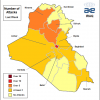
Levels of violence have been rising in Iraq over the past four weeks. The increase has been gradual, but consistent and last week saw more than 40 attacks reported countrywide for the first time since mid-December. Recent days have seen a particularly concerning rise in militant activity and social tensions in the northern city of Kirkuk. There have also been a number of attacks on Shi’ah worshippers in Salah ad-Din province. Demonstrations calling for an improvement in public services are also ongoing in many urban areas of the country, with violence reported today at a protest in Wassit province.

Weekly Violence in Iraq
North
While Mosul has suffered the majority of northern violence over recent months, the past few days have seen a worrying rise in the number of attacks taking place in Kirkuk. On 15 February three Turkish nationals were abducted in the city by unknown gunmen. These are the first foreign nationals to have been abducted in the country since a US national of Iraqi origin was snatched by Asa’ib Ahl ul-Haq in Baghdad in January 2010. Further analysis on the latest kidnap trends in Iraq can be found here. A further three Iraqi nationals were abducted in Kirkuk over the past week. One of them, a Christian, is still being held, while of the other two, one was found dead and the other alive but injured. The ethnically mixed and contested oil-rich city has been a smouldering crisis waiting to happen for years. Conditions have been quieter than normal over the past few months, but inter-communal animosity between the city’s Kurdish, Arab and Turkmen residents lingers on. 2011 may see a deterioration in community relations and a subsequent rise in violence, while concerns have been raised over a possible security gap once the US military withdraws on 31 December.
Centre
Last week saw a number of attacks on Shi’ah worshippers in the province of Salah ad-Din, including in the holy city of Samarra. A bomb blast against the revered Askari mosque in the city in 2006 helped catalyse a major escalation in sectarian violence in the country and it is likely that the Sunni terrorists responsible for the latest attacks are intent on emulating a similar worsening in conditions. In Diyala province the police have recovered a large number of bodies in recent days. They are believed to belong to the victims of radical Islamist violence which was rife in the province prior to 2008. Organisations such as al-Qaeda in Iraq have been significantly weakened since then, although such groups still have a presence in the region. Members and sympathisers continue to be arrested in police operations in Baghdad, Ba’qubah and other cities in the centre of the country. Meanwhile, demonstrations inspired by events elsewhere in the Middle East are also taking place in Iraq. Unlike Egypt, Tunisia and Bahrain however, the Iraqi protesters are demanding an improvement in employment conditions and the supply of public services (particularly electricity). The authorities have heightened their security measures around urban areas in Anbar province in anticipation of possible protest violence but the majority of events have so far passed peacefully. The main exception to this so far has been an incident in Wassit province. Here protestors stormed the provincial government headquarters in Kut, setting fire to buildings. Private security guards are reported to have responded by opening fire on the crowd, killing at least one person. Further analysis on the latest unrest in Iraq can be found here.
South
The south has also seen its share of demonstrations over the past week, with residents of cities including Basrah, Nassiriyah and Samawah turning out to demand improvements in employment rates, electricity supplies and water services. The majority of these gatherings have remained peaceful but they should be avoided nonetheless as they could turn violent at short notice. Note that an explosive device was defused west of Basrah city on 7 February. On 13 February a bomb on the main road between Zubayr and the border crossing at Safwan also killed one person and injured two. The police are conducting an investigation but it is being speculated that the victims may have been militants who accidentally detonated the device when trying to lay it. On 10 February in Dhi-Qar province four rockets landed on Imam Ali airbase near the southern city of Nassiriyah. No casualties were reported but personnel staying on fortified facilities in the south of the country should review their safety measures nonetheless. Rockets and mortars pose the greatest risk to facilities which might otherwise be deemed well protected and ‘secure’. There are no grounds for complacency in Iraq and personnel staying at such facilities are advised to familiarise themselves with their emergency procedures. Know where your nearest shelters and medical kits are and be prepared to take cover at very short notice.
John Drake is a senior risk consultant with AKE Group, a British private security firm working in Iraq from before 2003. Further details on the company can be found here.
You can obtain a free trial of AKE’s intelligence reports here
You can also follow John Drake on twitter at http://www.twitter.com/johnfdrake

AKE ltd
Posted in Weekly Security Update Comments Off on Weekly Security Update for 16th February 2011
Electricity Ministry Needs $8 Billion to Pay Debts
Posted on 16 February 2011 .
The Electricity Ministry says it needs $8 billion [9.6 trillion Iraqi dinars] this year to pay its debts and finance current and new projects. The sum amounts to nearly 10 percent of the country’s budget, reports Azzaman.
“The sum is needed to pay the ministry’s debts and finance new projects to revive the power sector,” said Adel Mahdi, the Electricity Ministry’s top financial adviser.
He said this year’s allocations “are exceptional” and that the ministry will not need such massive sums in the future.
Mahdi said he has been in contact with Prime Minister Nouri al-Malaki on how to make the money available for the ministry.
“I have received assurances from the prime minister, who sees improving electricity supplies as a top priority by his government, that the ministry will get most the allocations it needs,” Mahdi said.
If the money is made available, Mahdi claimed the ministry should be able to put an end to power shortages “in one to two years.”
But, the report claims, there are few in Iraq who take Mahdi’s claim seriously.
The electricity sector has devoured billions of dollars since the 2003-U.S. invasion and Iraqis still get less power from the national grid than they received previously.
(Source: Azzaman)
Posted in Iraq Oil & Gas News Comments Off on Electricity Ministry Needs $8 Billion to Pay Debts
Shell Gas Venture Delayed by Legal Issues
Posted on 16 February 2011 .
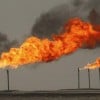
Dow Jones reports that legal difficulties could delay the $12 billion joint venture deal with Shell and Mitsubishi capture and market natural gas from Iraq's southern oil fields, possibly for months.
The deal is a joint venture with Shell holding 44% of the project, Mitsubishi 5%, and Iraqi state South Gas Co. the remaining 51%. It aims at capturing associated natural gas produced at fields near the oil hub of Basra, including Rumaila. Production at the 25-year venture is expected to peak at 2.5 billion cubic feet a day, officials said.
"There are some legal and economic aspects in the draft deal and also old Iraqi laws need to be changed or amended to allow the implementation of the project," Ahmed al-Shammaa, Iraq's Deputy Oil Minister, told Dow Jones Newswires in an exclusive interview.
Iraqi officials had originally intended to finalize the gas exports deal by the end of 2010. Iraqi officials are expected to meet later this week to try to work out a plan to allow exports to begin.
Shamma said that according to oil and gas law established in the Saddam Hussein era, only the State Oil Marketing Organisation, or SOMO, is allowd to export gas or crude oil. That poses a challenge to the Shell venture, even though another Iraq state entity holds a majority interest in the project. "There are officials in the ministry who think that the deal cannot be finalized under the past laws," Shamma said.
Iraq has yet to enact a new oil and gas law which has been stalled for more than two years. The government is hoping that the new law will be enacted this year.
Posted in Iraq Oil & Gas News Comments Off on Shell Gas Venture Delayed by Legal Issues
Iraq Delays Fighter-Jet Purchase to Buy Food
Posted on 14 February 2011 .
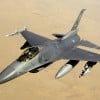
Iraq is delaying the purchase of 18 American fighter jets because of budget problems, and has decided to use the money to buy food for the poor instead, said the Iraqi government spokesman on Monday.
Associated Press reports that Iraq, like, many Middle Eastern countries in the wake of the uprisings in Tunisia and Egypt, is under pressure to demonstrate its commitment to helping its own people. But with American forces planning to leave the country, delaying the purchase of the jets may leave Iraq vulnerable.
Ali al-Dabbagh told The Associated Press that the Iraqi government would postpone the expected purchase of the F-16 fighter jets and would instead use the money to beef up food rations. The Iraqi government gives food rations to many of its neediest citizens, who complain the rations have gotten smaller.
Al-Dabbagh said an initial partial payment of about $1 billion was to be spent this year on the fighter jets, but did not have an exact figure on the total cost of the deal.
"We need the money badly this year ... to finance other important items," he said. "We thought that we cannot afford to buy the F-16s."
Al-Dabbagh said that Iraq did not intend to purchase fighters from another country at a cheaper price, as some Iraqi newspaper reports had indicated in recent days. "We feel that it is one of the most efficient fighters in the world, and we definitely need them."
According to al-Dabbagh's Web site, the Iraqi Cabinet had been moving forward with the deal as early as Jan. 26 when it authorized Prime Minister Nouri al-Maliki, who is the acting minister of defense, to negotiate with the Americans about making the first payment on the planes.
Posted in Agriculture, Security 3 Comments

Protests in Iraq Lead to Electricity Subsidies
Posted on 14 February 2011 .
Iraqi residents are to receive their first 1,000 kilowatt-hours of electricity each month free of charge, the Ministry of Electricity said on Saturday, according to Reuters.
The move follows protests over poor electricity supply and basic services.
In the most recent demonstration, hundreds of people gathered in Baghdad on Friday to protest shoddy services and sporadic power, as turmoil rocks other parts of the Arab world.
Acting Electricity Minister, Hussain al-Shahristani, said the subsidy would apply to all Iraqis but was mainly aimed at helping around 8 million low-income Iraqis.
Consumers who use more than 1,000 KWH will pay for what they use over the exempted amount.
In an attempt to encourage consumers to economise and to help tackle crippling power shortages, in October the government doubled the price of electicity from 10 to 20 Iraqi dinars per KWH (less than $0.02) for the first 1,000 KWH.
Under the new pricing scheme, consumers will pay 50 dinars per KWH for between 1,000 and 2,000 KWH, 80 dinars for between 2,000 and 3,000 KWH, and higher tariffs for higher amounts.
"Iraq's current production is 7,000 megawatts, while actual demand is 12,000 megawatts, so we have a shortage of 5,000 megawatts," Shahristani told reporters.
Iraq has big plans to install turbines and capture gas at oilfields to ramp up electricity production, and needs to spend $77 billion to improve the power sector by 2030, according to the 'master plan'.
Shahristani said power imports from Iran will be increased from 500 MW to 800 MW, while talks are being held with Turkey and Syria to import about 300 MW more.
Rehabilitation and maintenance work on existing power stations will supply an additional 1,500 MW before this summer, Shahristani added.
"Despite all efforts, our production capacities will stay below required level needed for next summer", he said.
(Source: Reuters)
Posted in Iraq Oil & Gas News 2 Comments

The Ongoing Govt-Formation Process: Phase 2 Completed
Posted on 14 February 2011 .
The following article was published by Reidar Visser, an historian of Iraq educated at the University of Oxford and currently based at the Norwegian Institute of International Affairs. It is reproduced here with the author’s permission. The opinions expressed are those of the author, and do not necessarily reflect the views of Iraq Business News.
The second government of Nuri al-Maliki that was confirmed by the Iraqi parliament on 21 December 2010 was in many respects an incomplete one. No security ministers had been nominated, and these portfolios, along with almost a dozen other ministries for which the parties in government had failed to nominate candidates, were left in the hands of caretaker ministers who were already heading other jobs. Notably, these arrangements included Prime Minister Nuri al-Maliki himself with respect to his continued control of the security ministries.
In today’s session in the Iraqi parliament, some further steps were finally taken after a long period of inaction, although the government-formation process remains far from complete. Altogether eight more ministers were confirmed. The Kurdish parties got trade and civil society as expected, and Iraqiyya got electricity, albeit with a new candidate (Raad al-Ani) instead of their previous nominee. Maliki’s own all-Shiite National Alliance took the portfolios of national dialogue (Amir al-Khuzai from Basra and of the Daawa party), municipalities (Adil Mahudar from Maysan, a Sadrist) and women’s affairs (Ibtihal Jasid). Additional ministries of state were given to the Kurds and Iraqiyya; the latter earmarked for tribal affairs and given to Jamal al-Batikh from Wasit and belonging to Ayad Allawi’s faction. It is noteworthy that among the State of Law candidates, both Khuzai and Mahudar had been floated as candidates back in December and it is unclear why it has taken so long to confirm them. It is also interesting that two ministries held by Sadrists as deputyships and expected by some to be filled by new Sadrist ministers have still not been distributed: Planning and public works, the first of which being considered as one of the key ministries on offer.
Thus, instead of completing his government, Maliki left key posts open (like security) and proceeded to create two new ministers of state with vague portfolios. But the enlargement of the executive branch of government does not stop with the now 40 plus ministers. Another item that got discussed today only to end with an impasse was the election of deputies to the president, Jalal Talabani. Despite the largely ceremonial powers of these posts (the presidency should not be confused with the powerful, veto-wielding presidency council which has now expired), Iraqi parties have put up an intense fight for them. A law passed in early January set a ceiling on a maximum three vice-presidents, but Talabani has recently begun calling for a fourth Turkmen deputy to be included alongside his current nominees for the post (Tariq al-Hashemi of Iraqiyya, Adil Abd al-Mahdi of ISCI and Khudayr al-Khuzai of the Daawa/Tanzim al-Iraq). This move met with resistance from both Maliki and those who thought more vice presidents would just be a waste of money, so on today’s agenda was only a motion for parliament to confirm Hashemi, Abd al-Mahdi and Khuzai. However, in today’s session, a temporary alliance that had warmed up to Talabani’s ideas for a Turkmen vice president – consisting reportedly of the Kurds, Iraqiyya and the Sadrists and hence somewhat reminiscent in composition of the opposition that Maliki was facing in early 2010 – tried to press for the vote on the presidential deputies to be conducted individually, with a tacit understanding that Khuzai might be voted out to leave room for a Turkmen. Maliki’s allies reacted to this, and with some reason since the relevant law just talks about a “nomination” (tarshih) by the president to be confirmed by parliament, which sounds pretty much like a singular bundle of names and a single vote. At any rate, on tomorrow’s parliamentary agenda is included a vote on an amendment to the law on the presidential deputies that will likely create a fourth deputy and thereby highlight the institution of the presidency as playground for those who want to highlight the consociational aspect of Iraqi democracy, i.e. ethno-sectarian quotas. It may well turn into a busy week with a second reading on the federal supreme court bill as well as continuing discussions of the budget (with or without oil-export controversy) scheduled for Monday and Wednesday. Additionally, the much-trumpeted strategic policy council – touted by the Obama administration as the cornerstone of the supposed power-sharing deal that was arrived at last December – may or may not come into existence over coming months, but probably not in the shape that had been envisioned initially.
The vice-president debacle was a sorry finale to a session that had started with a rather inappropriate lecture by Ibrahim al-Jaafari on the supposed Iraqi antecedents and inspirations for the events in Tunisia and Egypt. Those interested in real democracy should probably look elsewhere for inspiration right now! As we are nearing the one-year anniversary of the 7 March 2010 elections, the Iraqi government-formation process remains incomplete. At the same time, since all the parties except the Kurdish Gorran are included in government, there is the obvious lacuna of a healthy opposition. Little wonder, in that context, that political violence and extremism continue to thrive on the margins of a clogged parliamentary system.
Posted in Politics Comments Off on The Ongoing Govt-Formation Process: Phase 2 Completed
A case for higher tariffs?
Posted on 12 February 2011 .
Starting March 6, Iraq will begin imposing import tariffs ranging from zero to 80%. For many products, this will be a big increase. Up to now, importers have been subject to a uniform tariff of only 5%, which covered everything except food, medicine, books, clothing and products related to humanitarian assistance or Iraq’s reconstruction. (For more on the new tarrifs see: https://www.iraq-businessnews.com/2011/02/08/iraqi-import-tariffs-rise-sharply-from-march/).
Believers in the free market, like the “neo-cons” who abolished the Saddam-era tariff regime back in 2003, will doubtless see this move as a step in the wrong direction. Higher tariffs, they will argue, protect inefficient state-owned industries, raise costs for consumers, and create opportunities for rent seeking. Rather than putting up barriers to trade, the Iraqi government should simply stand aside and allow market forces to work their magic.
These arguments are not without merit. It is certainly true that introducing a tariff in the otherwise ideal world of the economics textbook will result in a suboptimal outcome. But in an economy like Iraq’s, the textbook result doesn’t necessarily hold. There may actually be an argument for taxing imports if doing so helps to alleviate distortions elsewhere in the economy.
Consider, for example, what happens if an air conditioner tariff is introduced. Obviously consumers will have to pay more for air conditioners and will buy fewer of them—a suboptimal outcome if that’s all there is to the story. In the case of Iraq, however, people are already air conditioning their homes more than they optimally would because of subsidized electricity prices. As a result, power outages are more frequent and result in greater economic losses.
An air conditioner tariff would partially correct this distortion. And it would make economic sense if the benefits from the reduction in power outages outweighed the cost to consumers. If simply eliminating the subsidy is politically impossible, a tariff might be the next best thing.
I’m doubtful that such a case could be made for all, or even most, of next month’s tariff increases. In the absence of a product-by-product cost/benefit analysis, however, there’s really no way to be sure.
Posted in Iraq Banking & Finance News, Mark DeWeaver on Investments and Finance 1 Comment

Unrest in Iraq - the Risk of Contagion
Posted on 08 February 2011 .
With unrest in several Arab cities, many in the region are worried about the risk of contagion. The latest flashpoints are Egypt, Tunisia, Yemen, Jordan and Algeria; but is Iraq vulnerable as well? The people certainly have a lot to complain about.
Electricity
The heat and increased use of air conditioning put a major strain on the national grid last summer. Blackouts became increasingly common and hours with constant electricity supply became less frequent. For those who could not afford the exorbitant fees of private generators there were intense periods of difficulty, with high temperatures and no fans or refrigeration. Conditions were harsh enough to prompt unrest in several cities in the south of the country. In Basrah two protesters were killed when the police opened fire on a crowd in an attempt to control it.
Electricity projects are currently underway around the country but many are not likely to be completed for several more years. Shortages are therefore likely to persist. With Ramadan taking place in the summer in 2011, tensions are likely to be particularly high. Electricity usage increases during the religious period, particularly if it falls during warmer months, and power shortages can be more emotive during the month-long event than at other times of the year.
Water
Water supply also remains a major issue, with varying service quality in different parts of the country. Infrastructure is being improved in Baghdad but many outlining towns and rural areas remain without a reliable supply. In agricultural areas this has also led to demonstrations in the past. Shortages in provinces like Diyala have provoked local farmers into protesting against what they perceive as excessive usage of water further upriver – crucially, in areas predominantly inhabited by Kurdish Iraqis. Over-usage in the north and in Iraq's neighbouring countries may not only harm yields later in the summer, it could even lead to inter-communal tensions between Kurds and Arabs in the mixed districts of northern Iraq.
Inflation
Another driver of current unrest in the Middle East has been the rising cost of living. Good agricultural performance in Iraq would help restrict domestic inflation in 2011, but difficult logistics and underdeveloped port facilities continue to push up the price of imported goods. This is something that affects all Iraqis, regardless of sector, location and community, and while it has not prompted any major demonstrations in the country so far, it will continue to put pressure on ordinary citizens and add to public frustrations.
Unemployment
Inflation woes are made all the worse by the high unemployment rate in the country. With a battered economy the job market remains poor and those of working age face a grim outlook when searching for employment. However, foreign firms will play an important role in addressing the underutilisation of the Iraqi workforce. Investment in key sectors and the employment of national staff will not only provide foreign companies with access to an important pool of workers, it will help cement a firm’s reputation in the emerging market and tackle a major source of discontentment in the country. As such, current joblessness is a crisis, but it could be viewed as an opportunity.
Congestion
In Baghdad a regular source of complaint is that of travel difficulty. Checkpoints, congestion and route closures clog the daily lives of the city's traders and commuters. However, the removal of checkpoints and opening of roads makes it easier for terrorists, militants and criminals to move around the city. The authorities therefore face a delicate trade-off when considering their priorities. Frustrated drivers may be a better problem to face than a rise in violence in the city.
Violence
Although security conditions have gradually improved over recent years Iraqis continue to die on a daily basis. A suicide bombing against a Shi'ah funeral in the northern Baghdad district of Shu'lah killed dozens and prompted a sporadic protest by local residents on 27 January. Many are frustrated with the failure of the security forces to provide them with protection and further attacks may provoke a backlash against the police, military and government for their perceived failure at protecting the people.
One point to note in Iraq which sets it apart from North Africa is the fact that so many people have died in recent years. Unlike in Tunisia where the death of a market trader in December sparked the beginning of an uprising, the death of Iraqis is less emotive. To put it bluntly, it happens all the time. It is not that an Iraqi life is worth less than a Tunisian one, but the Iraqi public have grown more used to regular carnage. Indeed, this desensitisation, which affects an entire population may be one of the most tragic legacies of Middle Eastern turmoil over the past decade. The aftermath will almost certainly outlive the various authoritarian regimes still clinging to power in the region.
Politics
Seeking to distance himself from comparison to such regimes, prime minister Nuri al-Maliki has pledged to cut his salary in half in response to the latest regional unrest. Evidently the risk of Iraq becoming one of the 'dominoes' has not been lost on him, but his pledge has touched on an issue of particular embitterment amongst the Iraqi electorate. Many despair at the country's high rate of unemployment, particularly when well-paid politicians take eight months to form a government. This delay alone hampered foreign investor confidence and arguably had more of an inhibiting effect on the jobs market than persistent terrorist attacks in the country. The fact that Iraqis had the right to elect these politicians to deliberate without conclusion for months does little to quell their animosity.
Even though Iraq may increasingly be viewed as a stable democratic state in the Middle East, the new regime should not consider itself infallible in the face of unrest in other cities in the region. Unless the Iraqi government can oversee the rapid expansion of services and development of national infrastructure it is likely that the coming year will see more protests in the country. What is perhaps important to note from the perspective of would-be foreign investors is that you will form a major part of the solution to Iraq's current difficulties. The above outlook should not be taken as grounds for alarm. Instead, it should be taken as a call to action by those seeking to capitalise on Iraq's many opportunities, whilst providing employment, development and opportunities for the Iraqi public.

AKE ltd
John Drake is a senior risk consultant with AKE Group, a British private security firm working in Iraq from before 2003. Further details on the company can be found at www.akegroup.com/iraq
You can obtain a free trial of AKE’s intelligence reports here http://tinyurl.com/245f9rm
You can also follow John Drake on twitter at www.twitter.com/johnfdrake
Posted in John Drake 2 Comments