



Challenges in Iraq's Agriculture Sector
Posted on 07 February 2011 .
By Ronald P Verdonk, Agricultural Counselor at the U.S. Embassy in Baghdad.
Iraqi agriculture, like other sectors of the economy, has a lot of catching up to do in order to create jobs and play a more significant role in boosting GNP.
Production of grain, vegetables and fruit faces a range of challenges of which the following are the most significant:
- reduced water availability made worse by inefficient irrigation systems;
- intermittent electricity;
- substandard seed quality with few commercially appropriate varieties available;
- insufficient fertilizer, insecticide and herbicide supply;
- under-mechanized production;
- a land tenure system that precludes economies of scale; and
- time-consuming/costly import inspection procedures to the extent feed components like corn and soybean meal, for example, are needed.
Iraq is increasing its use of drip irrigation and greenhouse vegetable production and has an improved supply of locally grown fruits and vegetables though imports of cheap, good quality products from neighboring countries are widely available.
The animal production sector is a key resource base for food security and economic growth in Iraq. Small ruminants – sheep and goats - offer the ability to reproduce on poor quality forage and minimal water. The poultry and fish sector are also enjoying some resurgence but are limited by obstacles to imported feeds.
Due to the interruption in flow of technology and ideas that has occurred since the 1980s, Iraqi agriculture has been unable to stay abreast of agricultural technology developments both in terms of personnel and inputs, and Iraq has become more dependent on imports of agricultural products.
As Iraqi security strengthens and the economy regains its footing, there is little question that Iraqi agriculture can produce more to ensure a greater measure of food security, though under any realistic scenario Iraq will remain dependent upon food imports.
Ronald P Verdonk is an Agricultural Counselor at the U.S. Embassy in Baghdad. He has extensive experience in the agriculture sector, including placements in a wide range of developing economies.
Posted in Agriculture, Ronald Verdonk 2 Comments
Maliki Takes Salary Cut, Will Not Stand For Re-Election
Posted on 05 February 2011 .
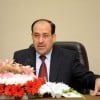
Iraqi Prime Minister Nouri al-Maliki has said he would give up half of his salary, and will not stand for re-election.
According to Reuters, Maliki's media advisor, Ali al-Moussawi, said the premier would forego 50 percent of his $30,000 monthly paycheck to bring his salary closer to other government employees.
"He feels there is a huge difference and says this leads to a kind of caste system in society," Moussawi said. Maliki made the announcement in a statement late on Friday.
Hundreds of people gathered in Baghdad on Saturday to demand better basic services. On Thursday, police fired on protesters making similar demands near the southern city of Diwaniya.
Political analyst Mazin al-Shammari said Maliki's pay cut could be an attempt to soothe public anger.
Maliki was confirmed for a second term in December after nine months of political squabbling over a new government following an inconclusive parliamentary election in March.
He told Agence France-Presse: "The constitution does not prevent a third, fourth or fifth term, but I have personally decided not to seek another term after this one. I support the insertion of a paragraph in the constitution that the prime minister gets only two turns, only eight years, and I think that's enough."
Iraqis complain bitterly about basic services. The national grid supplies only a few hours of electricity a day in a nation where temperatures rise above 50 degrees Celsius in the summer.
Members of parliament make $27,000 a month, according to Safia al-Suhail, a lawmaker from Maliki's State of Law political bloc, but have to pay from their salaries the cost of up to 30 personal security guards who make $635 each per month. Teachers earn about $350 a month.
"I admit that there is no social fairness between the government employees," Suhail said.
(Sources: AFP, Reuters, BBC)
Posted in Politics 14 Comments
Electricity Ministry Needs $6bn to Solve Crisis
Posted on 05 February 2011 .
A spokesman for the Iraqi Ministry of Electricity said on Saturday that resolving the energy crisis that has plagued the country in recent years will cost an estimated $6bn [7.2 trillion Iraqi dinars].
Musab al-Mudaris told AKnews that the ministry has asked parliament to provide appropriate funds in the 2011 budget to resolve the shortcomings that will prevent electricity provisions in the coming season.
“The ministry has legal obligations with a number of international companies,” he said.
One such obligation is a $219m contract with the South Korean firm Hyundai to install gas turbines in Iraq’s Qudus power station.
On top of the $6bn demanded, Mudaris said that in order to strengthen Iraq’s generating capacity, an investment of between $3bn and $4bn a year is needed.
Former Electricity Minister Karim Washid was forced to resign due to public pressure last summer, following protests about electricity shortages.
According to government figures, the energy available to Iraq is around 9 thousand megawatts, while demand is estimated at up to 14 thousand megawatts during the summer months.
(Source: AKnews)
Posted in Iraq Industry & Trade News Comments Off on Electricity Ministry Needs $6bn to Solve Crisis

Iraq Expects $30bn Investment in 2011
Posted on 02 February 2011 .
Iraq expects private investment in its economy to triple to $30 billion [36 trillion Iraqi dinars] this year, as energy, agriculture and housing projects accelerate now that the country has formed a new government, a senior government official said on Tuesday.
Investment exceeded $10 billion last year, Salar Mohammed Ameen, vice chairman of the National Investment Commission (NIC), told Reuters on the sidelines of an energy conference in Istanbul.
Some $4 billion of investment will be in Iraq's electricity sector, Ameen said.
(Source: Reuters)
Posted in Iraq Industry & Trade News Comments Off on Iraq Expects $30bn Investment in 2011

Iraq's Petroleum Sector Following Establishment of New Unity Government
Posted on 02 February 2011 .
By Thomas W. Donovan, Managing Partner at Iraq Law Alliance, PLLC.
Introduction
On December 20 2010 a new unity government was announced, whereby former Prime Minister Nouri Al Maliki maintained his position and Iyad Allawi, who won the most seats in the March 2010 election, joined in a special power-sharing deal. Unsurprisingly, the upstream petroleum industry was one of the salient issues that contributed to the almost 10-month impasse in the formation of a new government. Despite the long hiatus with no functioning government (during which time Al Maliki did not relinquish his day-to-day duties), once the new government was formed, several systemic changes occurred in quick succession.
Replacement of oil minister
The most significant change in the new unity government relevant to the Iraqi petroleum sector was the removal of Hussain Al Sharistani, who was minister of oil from 2006 to 2010. Sharistani, a longtime industry insider who was the pivotal architect in the 2009 and 2010 petroleum bid rounds, now holds the arguably more powerful ministerial appointment of deputy prime minister for energy - a position which did not exist before the unity government was created. Industry analysts believe that this appointment was due both to the new power-sharing arrangement and to a move to create more of a working relationship between the fiercely territorial Ministries of Oil and Electricity. A better relationship between these two ministries is needed to reform the electricity sector following the Ministry of Electricity's purchase of 56 fuel oil electricity turbines from General Electric and Siemens (the so-called 'mega-deal').
Posted in Iraq Oil & Gas News, Politics Comments Off on Iraq's Petroleum Sector Following Establishment of New Unity Government

Report on Iraqi Infrastructure
Posted on 02 February 2011 .
Infrastructure continues to be the key focus of reconstruction efforts in Iraq, as the country grapples with electricity shortages, a scarcity of housing and insufficient transport links. In BMI’s view, improving core economic social infrastructure provision should help place the country on the path to economic normalcy.
The key areas of focus continue to be:
Electricity: Iraq's power sector has opened up to allow a number of companies to enter the market and reap the potential rewards on offer. Back in May 2010, the government announced a new target for the electricity sector, to generate 27,000 megawatts (MW) of electricity by 2013. With current nameplate capacity standing at around 15,000MW, this includes almost doubling capacity in three years. This target is ambitious to say the least. Tenders have been released to install 28 of the 72 gas turbines ordered in 2009, which is a good start in a sustainable solution. This quarter saw new contracts awarded for the installation of 20 gas turbines, which were purchased from General Electric (GE) in 2008. The contracts, which are worth a combined US$900mn, were awarded to three Turkish companies: Calik Enerjim, Enka Insaat and Eastern Lights.
Transport: In light of growing demand, there are a number of projects under way or in the pipeline to improve transport infrastructure. The rail and port networks appear to be the main areas of interest at present; however, both the airports and the roads are also in great need of investment. In the last quarter, seven government funded road projects were finalised in Missan province, Iraq. Four roads have been newly paved, with three highways also finalised. The roads range from 4km to 27km in length and all lie within the province to the south of Baghdad.
Posted in Construction & Engineering In Iraq Comments Off on Report on Iraqi Infrastructure
Ministry of Electricity Tenders
Posted on 02 February 2011 .
Iraq’s Ministry of Electricity has today issued a tender for the supply of equipment at Mosul power station.
- Please click here to download details (in Arabic only).
The closing date for the receipt of bids is 15th February.
The Ministry has also issued tenders for the rehabilitation of boilers in Salahadin.
Please click below to download details (in Arabic only):
The closing date for the receipt of bids is 6th February.
Posted in Tenders Comments Off on Ministry of Electricity Tenders
Weekly Security Update for 2nd February 2011
Posted on 02 February 2011 .
Overview
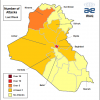
Last week saw considerable violence in Iraq, particularly in Baghdad. There was also a spate of attacks in Mosul and two especially bloody bombings in Karbala. Over 100 fatalities and up to 250 injuries were recorded in total around the country. There was also an increase in targeted shootings in the capital, resuming a trend which appeared to have died for the duration of Arba’een. Two statements have also been made by official organisations over the security environment in the country. While one outlined the positive reduction in attacks on the oil sector in 2010, the other warned that the Iraqi security forces do not have the sufficient capacity to assume responsibility for security without US backing. While efforts to train and prepare the Iraqi police and military will likely increase this year there are concerns that a security gap will emerge after the 31 December US withdrawal deadline. It would be controversial and unpopular for Iraqi politicians to ask them to stay any longer, even if that did prevent a lapse in security.

Regional Violence in Iraq Last Week
North
Levels of violence have risen consistently but very slowly in the two northern provinces of Ninawa and Ta’mim over the last few weeks. The number of security incidents in the region still remains lower than the average seen in 2010. On 24 January an Iraqi contractor was reportedly kidnapped in Mosul and his whereabouts are not currently known. The week also saw two small scale attacks in the usually more quiet Ninawa districts of Ba’aj and Hamdaniyah, although Mosul city remains by far the most hazardous part of the north. Kirkuk and the wider province of Ta’mim continue to see relatively few incidents of violence. Iraqi Kurdistan also remains stable, with very little security concerns being reported in the region. However, personnel should expect possible demonstrations by supporters of the opposition Goran party who are likely to have been inspired by similar unrest in Egypt and Tunisia. The Goran party continues to call for political reform and a reduction of unemployment figures, particularly amongst the youth. As a result, many have sympathies for and similarities to those protesting in Cairo and Tunis. However, unlike many other political groups in Iraq, the Goran party does not have a militant wing of its own and is therefore much less likely to engage in acts of terrorism or militancy to advance its political agenda. Protests have descended into vandalism in the past, but incidents have tended to be highly infrequent and concentrated in small areas. The professional Kurdish security forces will likely be able to contain any unrest and the vast majority of business operations in the region will remain unaffected.
Centre
The central provinces experienced the tail-end of Arba’een violence last week. Two large bombings in Karbala left several people dead, while Baghdad saw a rise in the total number of attacks. The capital also saw a rise in the number of targeted shootings, which were directed against state employees and senior members of the security forces. This type of targeting began to rise in late 2010 but decreased in mid-January after the authorities went on a state of high alert and arrested several people suspected of involvement. It would appear that their efforts only had a temporal impact on the trend, and several more assassinations should be anticipated over the coming weeks. The most devastating bomb attack in the city last week took place in the north-western district of Shu’lah on 27 January, when a car bomb targeted a Shi’ah funeral, killing dozens and injuring over 100. The incident prompted a sporadic protest with survivors and local residents criticising the authorities for failing to protect them. Inspired by protesters elsewhere in the region, and potentially driven by a lack of jobs, services and electricity (especially in the summer) Iraq may see even more urban demonstrations over the course of 2011.
South
The southern region remains relatively quiet when compared to the rest of the country. There were no major incidents reported last week, apart from low level criminality and the arrest of several suspected offenders around Basrah province. AKE personnel on the ground report that security measures have been lessened at checkpoints on key routes. The lack of violence has likely prompted the authorities to direct their resources elsewhere. However, this leaves a potential vulnerability in the event that terrorists attempt to initiate more attacks further down the line. Mass casualty bombings are relatively infrequent in the southern cities, but they do occur. It would therefore appear that one of the greatest risks perhaps is complacency.
John Drake is a senior risk consultant with AKE Group, a British private security firm working in Iraq from before 2003. Further details on the company can be found at www.akegroup.com/iraq
You can obtain a free trial of AKE’s intelligence reports here http://tinyurl.com/245f9rm
You can also follow John Drake on twitter at www.twitter.com/johnfdrake

AKE ltd
Posted in Weekly Security Update Comments Off on Weekly Security Update for 2nd February 2011

Hyundai Wins $219m Baghdad Power Station Contract
Posted on 27 January 2011 .
South Korea's Hyundai Engineering & Construction has reportedly won a contract worth $219 million to build a 500 megawatt power station near Baghdad, as part of the Iraqi government's efforts to address power shortages, a government spokesman said Wednesday.
Ali al-Dabbagh, who is also a minister of state, told Dow Jones Newswires after a weekly cabinet meeting: "The cabinet has approved a request by the electricity ministry to build the gas-fired al-Quds [al-Qudus] power station".
Dabbagh said the project is awarded on a turn-key basis, and will be completed within 18 months of the start of work.
Turbines for the project have already been bought by the Iraqi government from General Electric (GE).
Iraq, which suffers from an acute power shortage, hopes to at least double its power generation capacity, which stands at only 6,500 MW, less than half of the country's actual electricity needs.
The ministry has recently opened bids to build seven large power plants across the country that could boost its power generating capacity by 4,000 MW.
(Sources: Dow Jones, Trade Arabia)
Posted in Construction & Engineering In Iraq, Iraq Public Works News 1 Comment

Mitsubishi May Build Floating LNG Plant Off Iraq
Posted on 26 January 2011 .
Mitsubishi and Royal Dutch Shell (LSE: RDSA) are in talks with Iraq on a possible project to build a natural gas processing plant, with Mitsubishi planning a floating liquefied natural gas (LNG) plant to export some of the gas, according to the Wall Street Journal.
The remaining natural gas will be used in the domestic market, said Ahmed Al-Shamma, Deputy Minister for Refining and Gas Processing at Iraq's Ministry of Oil, on Wednesday.
The comment follows Iraq's oil ministry's remarks in December, in which the ministry said it was hoping to sign a $12 billion deal with Royal Dutch Shell and Mitsubishi to capture gas being flared from southern oil fields in order to help boost the country's power generation.
Al-Shamma didn't say whether the planned floating LNG plant was part of the $12 billion deal.
A spokesman for Mitsubishi said the company was considering producing and exporting LNG from the project, but didn't give details.
Iraq has proven gas reserves estimated at 112.6 trillion cubic feet, the world's 11th-largest, according to the U.S. Central Intelligence Agency's World Factbook, but the population sufferes from severe shortages of electricity.
Iraq produces 1.7 billion cubic feet of gas a day, of which some 700 million cubic feet is flared off.
In December, the Iraqi government said it had invited international specialized firms to build three gas-fired power plants in southern and western Iraq: the 500-MW Najibiyah plant in Basra governorate, a 500-MW Haydariyah plant in Najaf governorate and the 250-MW Akkas facility in the western Anbar province.
Japan recently announced that it will provide longer-term trade credit insurance to Mitsubishi's natural gas project with Shell.
(Source: Wall Street Journal)
Posted in Iraq Oil & Gas News Comments Off on Mitsubishi May Build Floating LNG Plant Off Iraq