



Iraq's Inflation Falls in November
Posted on 21 December 2010 .
Iraq's core annual inflation slipped to 3.1 percent in November from 3.2 percent in October and is likely to be at a similar level in December, a central bank official said on Tuesday.
Reuters reports that Mudher Kasim, a senior adviser at the Central Bank of Iraq, said inflation was driven mainly by higher housing, water and electricity costs. He said he expected inflation in December to be at a similar rate to November.
'The basic annual inflation rate for November is at 3.1 percent. This inflation figure is considered normal when compared to the conditions in Iraq."
Core inflation, as defined by the central bank, excludes fuel prices.
Iraq is battling to revive an economy damaged by decades of war and economic sanctions. To help spur investment and growth, the central bank has tried to relax monetary policy and encourage bank credit.
(Source: Reuters)
Posted in Iraq Banking & Finance News, Iraq Industry & Trade News Comments Off on Iraq's Inflation Falls in November
WEBO 2010 fair in Basra
Posted on 19 December 2010 .
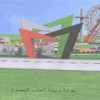
An International Fair was opened in the new Basra International Exhibition Centre in Maaqal in southern Iraq’s Basra Province, with the participation of 70 Iraqi and foreign companies, the Exhibition’s media source said on Sunday.
Aswat al-Iraq reports that the Fair, called “WEBO 2010,” was opened with the attendance of Basra’s Governor, Ahmed al-Hassani and the Iranian Ambassador in Iraq, Hassan Danae, under the auspices of Basra Province and the Iraqi Trade Ministry, Anwar al-Saad, adding that the Fair is organized by Pyramids and through cooperation with the Iraqi “M&T IRAQ”.
“The five-day Fair will cover sectors such as water, sewage, electricity, modern energy, reconstruction and housing, roads, oil and gas and petrochemicals, and will be attended by 70 companies from Iraq, Turkey, Iran, Egypt and Jordan,” she said, adding that the Fair “would conclude a one-year period of different fairs, held in Basra since the beginning of the current year, that had proven their success through the attendance of major international companies.”
(Source: Aswat al-Iraq)
Posted in Iraq Industry & Trade News Comments Off on WEBO 2010 fair in Basra

33 Companies Compete for Iraqi Power Plants
Posted on 18 December 2010 .
As we predicted in our report last week, Iraq's acting Electricity Minister, Hussain al-Shahristani, asked investors on Saturday to compete to build four new power plants to help the country meet it increasing electricity demands.
According to Bloomberg, the Minister promised a healthy profit for the winners.
At a meeting of 33 local and international investors, the Minister the companies that governmental and legal obstacles would be removed for firms that won the right to build and operate the plants.
"I can assure you that the government is interested in implementing these projects and will fully cooperate with the winners," al-Shahristani said.
He also urged the firms to look past Iraq's dangers and focus on the potential payoffs.
"It is true that you could hear about some sabotage attacks in Iraq and some laws that could discourage the investors, but you have to look to the potential of this country," al-Shahristani said.
Over 20 of the 33 firms at the meeting on Saturday bought the bidding data package.
At issue are plans for Iraq to give investors 22 gas fired turbines that the government has already purchased from General Electric, in exchange for building, maintaining and operating power plants. The electricity would then be sold to the Iraqi government to distribute across the country.
Billions of dollars have been spent to rebuild Iraq's electricity network, which was damaged by U.S. shelling during the 1991 Gulf War, the 2003 invasion, subsequent looting and insurgent attacks. The national power grid, however, is still unable to provide more than seven hours of daily power in Baghdad alone. Other areas across Iraq get even less electricity.
The planned power plants, to be built in four southern provinces, will add 2,750 megawatts to Iraq's current production of about 7,000 megawatts daily — about half of the actual demand.
Ten of the turbines will be installed in Basra province, with an additional four each in Diwaniya, Muthanna and Maysan provinces. Each turbine is expected to produce 125 megawatts daily.
Iraq projects it will produce 13,000 megawatts daily by 2014, said Adel Hameed Mahdi, an adviser to al-Shahristani.
Fuel for the planned facilities will come from nearby oil and gas fields that are being developed by international energy companies, Mahdi said. He said it will take two years to build the plants.
The deadline to submit proposals is mid-January, and the contracts will be awarded in May.
Encouraged by Iraq's improved security and new laws to make foreign investment easier, several firms said they were interested.
"The security situation is much better than it was maybe two or three years ago," said Steve Doughty, energy director at UK-based Harlow International, a development and engineering firm that will bid for the project. "At the moment we don't have any real worries."
But Reuters reports that some of the potential investors said the bidding process was poorly organised and that contract terms would not encourage bidders. "There needs to be a lot done yet on the government side to fix the process and make it feasible for the investors," said Alexander Krakovsky, a vice president of New York-based ContourGlobal.
Iraq also is hoping to sign a multibillion-dollar deal with Shell and Japan's Mitsubishi in southern oil fields to help boost power generation.
(Source: Bloomberg, Reuters)
Posted in Iraq Oil & Gas News, Iraq Public Works News, Tenders 1 Comment
Ministry of Electricity Tenders for Cables
Posted on 18 December 2010 .
Iraq's Ministry of Electricity as issued a tender for the supply of medium voltage power cables.
The closing date for receipt of bids is 22nd December.
Posted in Iraq Public Works News, Tenders 1 Comment

Iraq's New Nuclear Plans
Posted on 16 December 2010 .
Wednesday's United Nations Security Council decisions removed, among other things, the restrictions on Iraq's importation of nuclear technology.
But how will Iraq use this new freedom? A report from Reuters suggests some options:
Nuclear Energy
The UN move allows Iraq to re-develop nuclear reactors, but Science and Technology Minister, Raed Fahmy, said a full study would be needed before the government could make a decision.
"The question here is, do we want to enter into the arena of having an electro-nuclear plant? Yes, it is an acceptable project and this option has become the choice of many countries in the world, especially because the world is looking to produce clean energy," he told Reuters.
Iraq is short of electricity and currently has a generating capacity of about 9,000 megawatts. The national grid supplies power for only a few hours a day.
In its effort to rebuild after years of war and sanctions, Iraq hopes to triple its capacity to 27,000 MW in four years.
Israel bombed Iraq's Osirak nuclear reactor in 1981.
Medicine
Iraq's Health Minister, Saleh al-Hasnawi, said Iraq would develop the sorts of nuclear-based medicines widely used by other countries.
(Source: Reuters)
Posted in Iraq Oil & Gas News, Security Comments Off on Iraq's New Nuclear Plans
Iraq Requests Bids to Build 4 Large Power Plants
Posted on 13 December 2010 .
The Iraqi government has asked for bids to build four large power plants in southern Iraqi governorates that could boost its power generating capacity by 2,750 megawatts, a spokesman for the electricity ministry, Mussab al-Mudaris, said on Monday.
"The ministry will announce provisions of new tenders to build four gas power stations during a roadshow meeting that will be held in Baghdad Saturday Dec. 18," he said, according to Dow Jones.
Iraq, which suffers from an acute power shortage, hopes to at least double its power production which is only 7,000 megawatts--less than half of the country's actual electricity needs.
The ministry would offer investors the contract to install and operate 22 gas-fired turbines that it has already purchased from General Electric (GE).
Separately, ministry officials said that they were offering private companies contracts to install and operate these turbines for a period of 20 to 25 years and sell the power back to the government in accordance with international standards and the government, on its part, would sell it to consumers at subsidized rates.
Ten of the turbines would be installed in Basra province, and four in each of Diwaniya, Muthanna and Missan governorates, Mudaris said. Each of these turbines would produce some 125 megawatts, he added.
The ministry wants investors to install and operate these turbines, each valued at around $40 million, within two years of awarding the contracts, the spokesman said.
Iraq Business News will provide full details of the tenders as soon as possible.
(Source: Dow Jones)
Posted in Construction & Engineering In Iraq, Iraq Public Works News, Tenders 1 Comment

USACE Helps Iraq One Family at a Time
Posted on 13 December 2010 .
U.S. Army Corps of Engineers Gulf Region District soldiers and civilians help the people of Iraq everyday through the construction of quality hospitals, schools, water treatment facilities, security facilities and infrastructure projects.
But, recently, the USACE Southern Area Office (SAO) implemented a program that will help the Iraqi’s in a different way – by providing them with clothes, hygiene products, toys, school supplies and treats for school children.
The Adopt-A-Project program (AAPP) brings together stateside schools and other charitable and/or private organizations and companies that would like to adopt “like Corps projects” within the SAO area of responsibility.
According to Maj. Kurt Hense, deputy officer in charge of the SAO the goal of the AAPP is to help build good working relationships with Iraqi contractors, public figures, families and leadership that are vital to the successful completion of USACE projects.
“Apart from the simple humanitarian aspect of giving to those less fortunate than you, there are several other reasons for developing these types of important relationships within a post-war Iraq,” said Hense, of Woodbridge.
“While combat operations have technically ceased, daily incidents targeting the 50,000 troops and several thousands of U.S. and allied civilians remaining have not. Developing relationships while working with Iraqi contractors and public figures and leaders is vital to completing our projects.”
Posted in Construction & Engineering In Iraq Comments Off on USACE Helps Iraq One Family at a Time

Turkey and Iran Battle for Influence in Iraq
Posted on 11 December 2010 .
According to a report from Reuters, Turkish clothing and beer are hot sellers in the streets of Erbil, the capital of Iraq's Kurdish north, while in the South, Iranian cars roam the streets of Basra and Iranian pilgrims flock to Iraq's holy sites.
Sunni Ankara and Shi'ite Tehran, old rivals turned friends, are vying for post-war economic clout in neighbouring Iraq to capitalise on an expected oil boom, and have been flexing their muscles in Baghdad's government formation talks, diplomats and politicians said.
Both Iran and Turkey are using Iraq to increase their respective economic and political power.
Turkish companies are top investors in hotels, real estate, industry and energy in Iraq's semi-autonomous northern Kurdish region, and increasingly in the Shi'ite south where Iranian influence had been almost unchallenged, says Reuters.
Iran is Iraq's main trading partner and has been one of the largest investors in its construction and industrial sectors since the fall of Sunni dictator Saddam Hussein.
"It is clear that they are competing, specifically in Turkey's effort to dam in Iranian influence. Iran has undoubtedly gained a significant role in Iraq since 2003, and from about 2007 on, Turkey has started to push back," said Joost Hiltermann of the International Crisis Group.
"They are holding each other in balance."
Posted in Construction & Engineering In Iraq Comments Off on Turkey and Iran Battle for Influence in Iraq

Ministry of Electricity Tenders for Oil
Posted on 10 December 2010 .
Iraq's State Oil Marketing Company (SOMO) has issued a tender for 2,600 tonnes of gas-oil for the Ministry of Electricity.
Bids will be accepted until 12:00 on 20 December, 2010, Baghdad time.
Please click here to download the English tender document ...
... and here to download the document in Arabic.
Posted in Iraq Oil & Gas News, Tenders Comments Off on Ministry of Electricity Tenders for Oil
Najaf Gets $40m for Generators
Posted on 08 December 2010 .
Najaf's provincial council confirmed that it has been given final approval to get a loan of ID 47 Billion [$40m] for the province to buy new electricity generators to be run by Najaf's citizens.
A source in the province told the National Media Center that generators will be distributed to jobless citizens with guaranties to maintain their service, he added that generators will offer better service to people in the province, and good returns for operators.
(Source: National Media Center)
Posted in Iraq Public Works News Comments Off on Najaf Gets $40m for Generators