


France Wins $52m Power Distribution Contract in Basra
Posted on 04 January 2011 .
Iraq signed deals worth $52 million with France's Schneider Electric and Areva to build 15 power distribution stations in the southern oil hub of Basra, the province's deputy governor, Ahmed Hameed, said on Sunday.
Schneider Electric, has won a $29 million contract to build eight distribution stations, while Areva was awarded a $23 million deal to build seven plants.
The projects would be financed by the province's share in oil revenue and don't need the approval of the Ministry of Electricity in Baghdad.
The province is also in talks with a Saudi private company to supply it with power turbines that could provide an extra 150 megawatts, Hameed said.
Last summer, days of protests in the Shi'ite south, including Basra, over crippling power cuts forced the then electricity minister to step down.
The national grid usually allocates 950 MW of power to Basra, but in case of any technical failure, the supply could fall to less than half of that amount, which is not enough to cover its needs, said Hameed.
Iraq plans to boost power capacity to 27,000 MW in four years and would need to invest at least $3 billion to $4 billion per year to reach that target.
(Sources: Bloomberg, Reuters)
Posted in Iraq Public Works News Comments Off on France Wins $52m Power Distribution Contract in Basra

Iraq and Jordan Agree to New Oil Pipeline
Posted on 04 January 2011 .
Iraqi State Minister, Ali al-Dabbagh, said Iraq agreed to build pipelines across its shared border with Jordan to increase supplies of oil to its western neighbour, according to a report from Bloomberg.
The countries also agreed to discuss development of the Risha natural-gas field along their common border, the minister told a news conference in Baghdad on Monday.
“Iraq and Jordan have agreed in principle to build a pipeline network to carry crude oil to the refinery in Zarqa,” a town to the northeast of the Jordanian capital Amman, he said after talks in Baghdad between Jordanian Prime Minister, Samir Rifai, and his Iraqi counterpart Nuri al-Maliki.
In 2008, the two countries signed a three-year agreement to supply Jordan with 10,000 barrels of Iraqi oil at a discount of $22 per barrel less than the international market price. The amount covers about 10% of Jordan's energy needs of around 100,000 bpd.
The proposed pipeline marks another step in Iraq’s effort to rebuild and reintegrate itself into the regional economy, after suffering for years from war and sanctions. Iraq’s government plans early this year to invite bids for the construction of oil and gas pipelines into Syria, to complement its existing export link for crude terminating at the Mediterranean port of Ceyhan, Turkey.
Posted in Iraq Oil & Gas News Comments Off on Iraq and Jordan Agree to New Oil Pipeline
New Power Plant for Dohuk
Posted on 01 January 2011 .
The Kurdistan Region’s director for electric power generation said a new 125MW electricity power plant will get underway in Dohuk province in the next few days.
Diyar Baban told AKnews that he expects it to “considerably” reduce the Region’s power deficiency.
Kurdistan demands 2,200 MW whereas currently all its plants can output nearly half of the volume, 1,200 MW, according to Baban.
The Kurdish electricity officials announced in December 2010 the construction of three new hydro-electronic plants for the Region will get underway in March.
(Source: AKnews)
Posted in Iraq Public Works News Comments Off on New Power Plant for Dohuk

Maysan Finalises 201 Projects Worth $77m
Posted on 01 January 2011 .
A total 201 projects costing 90 billion Iraqi dinars (IQD) [$77m] were finalized in Missan within the Provincial Development Budget (PDB) for the year 2010, according to the deputy governor on Saturday.
“There were 61 municipal projects, 29 water projects, 24 for sanitary sewage, seven for electricity, four for communications, three for each of reconstruction, housing and Shiite Endowment, two for each of youths & sports and health as well as 33 direct projects and 18 in different fields,” Khalid Abdulwahid Kabyan told Aswat al-Iraq news agency.
The central government in Baghdad had allocated 90 billion Iraqi dinars in 2010 within the PDB, 70 billion dinars within the marshes development projects and 50 billion dinars within the petrodollar project.
(Source: Aswat al-Iraq)
Posted in Construction & Engineering In Iraq Comments Off on Maysan Finalises 201 Projects Worth $77m
$42m Earmarked for Maysan Marshes
Posted on 31 December 2010 .
The Maysan [Missan] Provincial Council allocated more than $42 million [49 billion Iraqi dinars] for the development of the province’s marshlands for 2011, a local official said on Thursday.
“The ministry of state for the marshes’ affairs have allocated the sum of 49.900 billion dinars to set up service projects in the eastern and western marshlands in Missan,” Jasseb Kadhem Himdan, the chairman of the council’s marshes development committee, told Aswat al-Iraq news agency.
“The projects focus on health, housing, education, electricity and communications ,” he added.
He pointed out that the ministry, during 2010, spent 70 billion dinars to refurbish the Missan wetlands, adding some 178 projects were carried out in the spheres of housing, agriculture, water resources, education, roads, electricity, water, sanitation, health, communications and social development.
The marshes in southern Iraq, the largest and oldest in the world, play a key environmental role in housing of indigenous and migrant birds. They cover an area of between 15,000 and 25,000 square kilometers.
With a population of about 500,000 people, the marshlands shrank by one-tenth during the former regime’s time after all river courses were altered and dams were built to cut them into parts, a matter that prompted most of their inhabitants to emigrate.
(Source: Aswat al-Iraq)
Posted in Iraq Public Works News Comments Off on $42m Earmarked for Maysan Marshes
Deadlines Expended for Power Station Bids
Posted on 31 December 2010 .
Iraq's Ministry for Electricity has confirmed the extension of bidding by international companies to invest in four electricity stations for an additional 40 days.
The Ministry's press officer, Musaab al-Mudarris, said that the ministry will study offers in order to choose the best of them to install stations in four areas: "Basra, Amara, Simawa, and Diwania".
He added that ministry invited companies to install three more stations in different provinces.
(Source: National Media Centre)
Posted in Iraq Public Works News, Tenders Comments Off on Deadlines Expended for Power Station Bids
Egypt Opens Consulate in Erbil, Discusses $2bn Debt
Posted on 27 December 2010 .
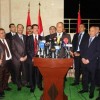
Egypt’s Foreign Minister, Ahmed Abul Gheit, officially opened his country’s consulate in Erbil on Sunday; this is the first Arab consulate to be opened in the Kurdish region, according to a report from Bloomberg.
The opening of the consulate is expected to boost bilateral ties between Egypt and Iraq and Kurdistan Region.
The minister stressed that Egypt would support Iraq and was willing to settle the issue of debts owed by Iraq to his country. According to the Egyptian estimates, the debt owed by Iraq is US$2 billion, including the compensations and interest rates of the companies and individuals affected by Iraq's Kuwait invasion in 1990 and the following wars.
“Today is full of mutual friendship, brotherhood, and love for the Egyptian people and the people, government and presidency of Iraq, and the Kurdistan Region” said Abul Gheit, “Our goal is to be present all over Iraq to help in establishing peace and stability”.
Iraqi Foreign Minister Zebari said “The opening of this consulate in Erbil city means the ongoing Egyptian relations with Iraq and the Kurdistan Region” said Zebari, “which is a very important initiative for the development of bilateral ties in all aspects”.
He welcomed Egypt’s “strong presence” in Iraq and hoped the relations benefited both countries. Egypt is also working to launch flights from Cairo to the Kurdish region.
The Kurdistan Region, due to its stability and security, has served as a gateway to the rest of Iraq. Abul Gheit said Egyptian companies would flow into Erbil and expand to the rest of the Iraqi cities.
According to Iraqi officials, Egyptian companies are urged to invest in Iraq's electricity sector.
Abul Gheit is expected to head to Sulaimaniyah Monday to meet Iraq President Jalal Talabani.
(Sources: AKnews, KRG)
Posted in Iraq Industry & Trade News 1 Comment
Special Parliament Session Demanded to Discuss Electricity Problem
Posted on 24 December 2010 .
Members of Parliament from Iraq’s al-Ahrar (Liberals) Bloc has demanded that the Parliament holds a special session to discuss the problem of electrical power, according to a statement carried by Aswat al-Iraq.
“We demand the Parliament’s chairmanship to add the issue of the electric power on the schedule of the Parliament for next session, in order to discuss the problems of the electric power and lay suitable solutions for it in the forthcoming peiod,” Uday Awad Kadhim said.
The statement quoted Kadhim as saying: “It is necessary to carry out maintenance and rehabilitation of the electric power networks during the next phase, before next summer, when the temperature would rise and leads to failure of enough power to comission the airconditioners and aircoolers.”
(Source: Aswat-al-Iraq)
Posted in Iraq Public Works News Comments Off on Special Parliament Session Demanded to Discuss Electricity Problem
Al-Maliki's New Program For Government
Posted on 22 December 2010 .
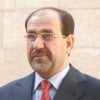
In addition to proposing his new cabinet, Iraq's Prime Minister Nouri al-Maliki presented his government's new program to Parliament this week.
The full text of Iraq's program for government is as follows:
1. Maintaining and commitment to Iraq's constitution completely, and that any subsequent modifications will be in accordance with Article 142 of the Constitution, and activate all of its articles without selective and follow the work of the committees formed in accordance with the Constitution and in particular Article 140. Adoption of legal contexts reference head of the government work to resolve all differences and problems On the basis of outstanding and committed to the political forces and members of the Council of Ministers by the Constitution and the curriculum as is the common government of the forces and parties participating in the political process.
2. Achieve political process, and expand participation in it, in addition to enhance democracy.
3.Consolidation of state institutions and building the rule of law via adoption of asset management and institutional accordance with the principle of citizenship and be regarded as the ministries and state institutions of national identity and property of the people and not the identity of the party, the minister and its personal and prevent any monopoly or domination or tutelage of any class or groups of formations governmental, administrative and public institutions.
4.Human rights respect in the way that ensures expression freedom to all ethnic sides according to law.
5.Renunciation of aggression and terrorism, discrimination and address all acts of aggression, terrorism and discrimination by the enemies of the Iraqi people, led by Saddam's Baath and terrorist groups, and commitment to the fight against sectarianism and to prevent any attempt to return the country to the eras of tyranny and dictatorship and terrorism, blasphemy and the confiscation of the other, and to condemn crimes of deportation and the Anfal and the mass graves, war and adventure, and policies Aggressive and coups.
6. Ensure the right to live in peace and security and freedom for all Iraqis in their homeland, of all religions, nationalities and creeds, and that Iraq will be the components of the social model of brotherhood, coexistence and tolerance
Posted in Iraq Oil & Gas News, Politics Comments Off on Al-Maliki's New Program For Government
Full List of Iraq's New Cabinet
Posted on 22 December 2010 .
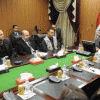
Following on from our listing on Monday of the main cabinet positions, we present a more complete line-up below, compiled from information sourced from Iraq Oil Report and Reuters.
The official website of the Iraq cabinet has not published the official list, and has chosen instead to lead with an article about the importation of eggs. Let us hope that the new government makes it a priority to improve its communications.
Some of the positions have not been filled, awaiting the political blocks (in parenthesis Coalition/Party) to nominate their candidates:
Prime Minister: Nouri al-Maliki (State of Law (SOL)/Daawa) will also be acting ministers of Interior, Defense, and Minister of State for National Security until candidates can be approved.
Deputy Prime Ministers: Saleh al-Mutlaq (Iraqiya/Hewar); Hussain al-Shahristani (SOL/Independent) — with oversight of energy policy — and acting minister of electricity [but Reuters names Ziad Tarek as Minister for Electricity]; Roz Nouri Shawes (Kurdistan Alliance (KA)/Patriotic Union of Kurdistan (PUK)), and acting minister of trade.
Minister of Foreign Affairs: Hoshyar Zebari (KA/KDP) will also be acting minister of womens’ affairs.
Minister of Finance: Rafia al-Issawi (Iraqiya/Mustaqbal)
Minister of Oil: Abdul Karim al-Luaibi (independent but associated with Daawa)
Minister of Higher Education: Ali al-Adeeb [Ali Al Adib] (SOL/Daawa) will also be acting minister of state for national dialogue (reconciliation). [Reuters names Amer Al Khizaii as State Minister for National Reconciliation Affairs]
Minister of Housing and Construction: Mohammed Sahib al-Daraji [Reuters names Mohammed Salem Al Laban] (Iraqi National Alliance (INA)/Sadrist)
Minister of Education: Mohammed Tamim (Iraqiya/Hewar)
Minister of Industry and Minerals: Ahmed Nassar Dali al-Karbouli [Ahmad Nader Dali] (Iraqiya/Tajdid)
Minister of Justice: Hassan Shimari [Hassan Al Shumari] (INA/Fadhila)
Posted in Agriculture, Construction & Engineering In Iraq, Iraq Banking & Finance News, Iraq Education and Training News, Iraq Industry & Trade News, Iraq Oil & Gas News, Iraq Public Works News, Iraq Transportation News, Iraqi Communications News, Politics, Security 3 Comments