


U.S. Firm in Talks to Build 400MW Power Plant in Kirkuk
Posted on 24 September 2010 .
U.S. energy firm ContourGlobal is in talks with the authorities in the oil-rich province of Kirkuk regarding the construction of a 400-megawatt power plant, according to a report from Azzaman.
Governor Abdulrahman Mostefa was quoted as saying that the plant would not be part of the country’s national grid as it wpuld be used exclusively to meet the province’s energy needs.
“The province seeks to finance its own electricity projects,” he said.
Oil-producing Iraqi provinces are taking their own measures to generate more electricity on their own – thanks to massive allocations of hard cash they have been receiving under a new plan which gives them one dollar per each barrel of oil they produce.
At the current rate of production, Kirkuk takes in more than $600,000 per day.
A delegation from ContourGlobal is currently in Kirkuk and the “ governor urged the members to implement the project in the province,” sais a anomynous source.
Kirkuk, despite holding massive oil reserves, suffers from black outs lasting about 20 hours a day.
The source said the U.S. firm’s representatives attending the meeting agreed to go ahead with the project once details on guarantees and financing have been worked out.
The governor, according to the source, wants to see the plant ready in two years.
Once completed, the province would have enough electricity for round-the-clock supply, according to the report.
ContourGlobal was founded in late 2005 by Chief Executive Officer Joseph Brandt and Reservoir Capital Group, a $4 billion USD investment fund based in New York.
(Sources: Azzaman, ContourGlobal)
Posted in Construction & Engineering In Iraq, Iraq Public Works News Comments Off on U.S. Firm in Talks to Build 400MW Power Plant in Kirkuk

DSCEI Sales more than $3m in August
Posted on 20 September 2010 .
The Diyala State Company For Electrical Industries had sales of more than 4.12 billion dinars ($3.4 million) during August, according to a statement from the Industry Ministry.
“The company has supplied the electricity distribution departments in Missan, Anbar and Diala with 308 generators to improve the performance of their networks,” said the statement received by Aswat al-Iraq news agency.
The Diala State Company For Electrical Industries has signed 16 agreements with Oil and Electricity Ministries during June and July 2010, with a combined value of more than 9 billion dinars, to provide them with generators.
(Source: Aswat al-Iraq)
Posted in Construction & Engineering In Iraq, Iraq Industry & Trade News, Iraq Public Works News Comments Off on DSCEI Sales more than $3m in August
500 New Power Transformers for Maysan
Posted on 15 September 2010 .
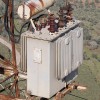
The Iraqi government has purchased 500 power transformers from its Industry Ministry to upgrade the electricity supply in the Maysan province.
“The total cost of the deal is around $4.4 million [5.3 billion Iraqi dinars],” the ministry said in a statement of Wednesday, according to Aswat al-Iraq news agency.
It explained that according to the contract, the ministry will supply 100 transformers, 11/250 KVA, and 400 others, 11/400, all within three months.
(Source: Aswat al-Iraq)
Posted in Iraq Public Works News Comments Off on 500 New Power Transformers for Maysan
Weekly Security Update for 8th September 2010
Posted on 08 September 2010 .
National Overview
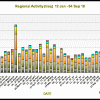
The total number of officially reported hostile incidents nationally was 126 last week, consistent with the number of incidents recorded during the last reporting period. The number of incidents in the west rose by a quarter this week and incidents in Baghdad also rose significantly. The south east saw a very minor rise in the number of incidents. Incidents in the south central, north and north central areas decreased this week.

Although incident levels have remained consistent over this fortnight, the incidents occurring last week affected far fewer casualties and caused less damage. Insurgents operating in the north central and western areas appear to be benefiting from increased freedom of movement brought about by the fall in number of U.S. Forces.
There were further attacks on infrastructure during the reporting period, including Improvised Explosive Device attacks against electrical pylons in Hillah, power generators in Baghdad and a water tower in Anbar. These attacks are assessed to have been the work of Al Qaeda in Iraq (AQIZ) or their associated movements seeking to undermine local and national Government.
The resilient militant networks who undertook the 25 August attacks will be difficult to uproot and we can expect further synchronized attacks to come, probably to correspond with future religious festivals or indeed new government formation. The Ramadan / Eid religious ceremonial period provides a unique opportunity for insurgents to attack when the security forces and civilians’ defences are low. This year the Eid festival will coincide with the anniversary of the 9/11 terrorist attacks, which is potentially an irresistible coincidence for Al Qaeda in Iraq (AQIZ) and their associated movements to launch large scale attacks.
The most likely culprits were neo-Baathist insurgents, probably with assistance from Islamist elements such as Al-Qaeda in Iraq (branded as the Islamic State of Iraq). Though almost all the mass casualty bombings were remote-controlled car bombs, at least two of the thirteen devices were suicide-detonated, indicating an Islamist element. According to Olive’s contacts in the U.S. government, key former regime leaders such as Izzat Ibrahim al-Douri are floating to the top of the boiled-down insurgency. These figures are able to bridge the divide between nationalist and Islamist wings of the insurgency and even to cross sectarian and ethnic lines to some extent. The objective of such movements is to maintain resistance and foster a state of chaos until such time as the Iraqi people call for a stronger nationalist government. At that point, it is posited by U.S. intelligence analysts, elements of the old Baath will seek to gain power through election, running on a platform of experience in security and governance, technocratic competence, and toughness vis-à-vis Iran.
Baghdad
Reported incidents in Baghdad rose from 34 to 47 last week. The International Zone was targeted for three days in a row during the reporting period. This is a continuation of Shia’a militants’ harassment campaign to coincide with the draw down of US Forces. One of the attacks was seemingly conducted to coincide with the visit of US Vice President Joe Biden. Shia’a insurgents were also responsible for the IDF attack against Victory Base Camp – none of the attacks resulted in death or serious injury.
An electricity generator was targeted with an Improvised Explosive Device in the Shia’a area of west Rasid. This may have been carried out by Sunni insurgents to stoke up anger and provoke a response. Such attacks are often conducted to undermine faith in the ability of the GoI to provide basic essential services.
Under Vehicle Improvised Explosive Devices remained the most prevalent form of assassination in the City in this reporting period. An Iraqi Police Services member working at the passport office in Kadimiyah was killed by an Under Vehicle Improvised Explosive Device on 31 August and an Iraqi Security Forces Colonel was injured by device on 02 September; several civilians (probably with links to Government of Iraq or Iraqi Security Forces) were also targeted during the review period. However, the most significant Under Vehicle Improvised Explosive Device attack was aimed at Hussein al Mir’ibi, a leading figure in the Shia’a Fadhila party and member of the Iraqi National Alliance, who did not sustain any injuries from the attack.
Basra
There was only one significant hostile incident in Basra last week which took the form of an Improvised Explosive Device attack against a Private Security Company vehicle as it transited south west of Az Zubayr on route Tampa. The Improvised Explosive Device damaged the vehicle but did not result in any injuries. The area in which the attack took place has been targeted several times in the recently as insurgents know that there is a large volume of United States Forces – Iraq, Iraqi Security Forces and Private Security Company traffic in the area.
The discovery of two Improvised Explosive Devices and an Explosively Formed Projectile around the province indicates that Shia’a insurgent intent remains high. The Explosively Formed Projectile discovery was made in the vicinity of route Tampa in Umm Qasr and was likely designed to target a passing United States Forces - Iraq or Private Security Company convoy as there are an increasing number transporting United States Military equipment out of Iraq via Umm Qasr port.
Atmospherics in Basra were tainted by more demonstrations in the City protesting against the lack of electricity in the province. According to open sources, authorities in Muthana province took action against illegal electricity lines enabling them to increase the electricity supply. Further civil demonstrations in the south east region can be expected.

Posted in Weekly Security Update Comments Off on Weekly Security Update for 8th September 2010

Iraq's reconstruction: Strategy and players
Posted on 07 September 2010 .
By Tariq Abdell, Founder & Chairman, Mesopotamia Insight.
The opinions expressed here are those of the author, and do not necessarily reflect the views of Iraq Business News.
The end of U.S. combat operations in Iraq presents a unique opportunity for a new beginning in U.S.- Iraq’s relationship. However, given Iraq’s crippling challenges and U.S. sluggish economy, the success of a such strategic partnership is contingent upon the political will of both U.S. and Iraqi governments, the support of the international community, and the genuine commitment of the international oil companies - Iraq’s biggest investors.
Drawing on past experiences, the stakeholders (U.S. government, Iraqi government, UNDP, World Bank, international oil companies, etc…) need to devise a concerted post-conflict reconstruction strategy, Marshall plan type, that is capable of a) averting the collapse of State's institutions and b) creating the conditions for a sustainable socio-economic recovery. However, before undertaking a such colossal challenge, stakeholders need to build a strategic framework defining the mission's objectives (attainable and realistic), organizational design (steering committee, for instance) , stakeholders' roles and responsibilities, needed resources, and performance metrics.
Respectively, I'll explore key stakeholders' roles and responsibilities in Iraq's post-conflict reconstruction as it's mandated by their respective missions.
Iraqi government
In this process, Iraqi government should be treated as an equal partner that is fully responsible and accountable of its actions before its constituents and the international community. Consequently, the new elected government needs to formulate a comprehensive development strategy in concert with key stakeholders, including the planning for the impending multi-billion dollar mega-reconstruction projects, and the followings are some key areas of common interest and cooperation:
- National reconciliation to fend off ethno-sectarian strife and political violence.
- Reining in corruption and enhancing institutions efficiency.
- Providing basic services (e.g., drinking water, electricity, running sewer, health care, education, etc....)
- Promoting rule of law and human rights.
- Tackling illiteracy challenges, a serious threat to the country’s future.
- Creating jobs, higher unemployment rates are source of societal and political upheavals e.g., organized crime, militias, etc....
- Revamping severely languished infrastructure.
- Reviving the country strategic industries to curtail its dependence on petrodollars.
U.S. Government
To ensure the success of its new mission "New Dawn" in Iraq, the U.S. needs to learn from its past mistakes - $53 billion of unfinished or poorly executed projects-- and capitalize on its acquired knowledge and understanding of Iraq's ethno-sectarian fabric, political landscape, and socio-economic dynamics. Thus, U.S. Department of State's Iraq strategic partnership office ISPO and USAID should play a crucial role in coordinating and overseeing the reconstruction efforts in concert with other stakeholders e.g., Iraqi government, UNDP, etc....
United Nations Development Programme
Given UNDP extensive experience --Honest broker-- in conflict and post-conflict zones, the UNDP is well-positioned to promote and oversee national reconciliation, rule of law, and rehabilitate State's decadent institutions to enhance efficiency and inclusiveness - Hiring and promotions are merit-based and not politically dictated.
World Bank
Given the decay of Iraq's financial institutions as result of decades of wars and sanctions, the World Bank's role, key partner in this reconstruction efforts, is to provide post-conflict reconstruction expertise, financial and technical assistance, which are key ingredients for a sustainable development.
International oil companies (IOCs)
Given the current Peak Oil and IOCs vested interest in a stable and secure Iraq, IOCs should play a major role in this reconstruction efforts. Oil sector is the engine of Iraq’s economy -%90 of government revenue. Nonetheless, the oil sector challenges are hampering the country's economic recovery:
- Major oil fields require billions of dollars for rehabilitation and development as result of decades of wars and sanctions.
- Current oil workforce is in desperate need of training and technological know-how.
- Oil sector is a highly politicized field.
Thus, given Iraq's vast reserves of oil and gas, IOCs' should help revamp the oil sector swiftly by introducing technological know-how, the industry best practices, and fostering local workforce. With such perspicacious initiatives, IOCs will help enhance the oil sector efficiency, increase production, spur economic recovery; and, eventually, countervail some of deep-seated distrust and apprehension.
In sum, in the absence of a clear post-conflict reconstruction strategy, Iraq's convoluted political impasse and the international community inaction -- lack of political will-- are recipes for a prolonged political instability and ethno-sectarian strife; subsequently, jeopardizing all the hard-earned successes (e.g., fair elections, strong Army, etc...) and exacerbating geopolitical tensions. Moreover, given the endured sacrifices, thus far, in blood and treasure -- thousands of lives and over $ 751 billion war price tag -- it's imperative to stand by Iraq in these difficult times to prevent it from reverting to a military dictatorship or ,worst, religious tyranny. In his speech to congress (12th March, 1947), President Truman exquisitely puts it when he warns us against lose of hope, destitution, and their grim outcomes chiefly chaos and tyranny:
"... The seeds of totalitarian regimes are nurtured by misery and want. They spread and grow in the evil soil of poverty and strife. They reach their full potential when the hope of a people for a better life has died. We must keep that hope alive. If we falter in our leadership, we may endanger the peace of the world - and we shall surely endanger the welfare of our own nation..."
The opinions expressed here are those of the author, and do not necessarily reflect the views of Iraq Business News.
The author, Tariq Abdell, is an Iraq analyst, and Founder & Chairman of Mesopotamia Insight
He can be contacted at: [email protected]
or
Followed on twitter: http://www.twitter.com/atariqx
Posted in Blog, Iraq Oil & Gas News, Tariq Abdell 1 Comment
US General Predicts Years of Electricity Shortages
Posted on 07 September 2010 .
The US general charged with the military's reconstruction efforts in the Middle East said on Tuesday that Iraq will need at least another three years before it is able to satisfy current electricity demand, but this demand continues to rise as Iraqis purchase more consumer goods for their homes such as refrigerators and air conditioners.
"Probably 2013, 2014 would be the earliest that I think they would be able to have a shot at generating enough power, with the requisite distribution and transmission capability, to have some sort of sustained, close to, 24 hours (per day) of power," Brigadier General Kendall Cox told reporters at a briefing in Baghdad.
Cox is commander of the US Army Corps of Engineers (USACE) Transatlantic Division, which handles USACE projects in the Central Command area, stretching from Egypt to central Asia.
He estimated that current demand for electricity in Iraq was between 12,000 and 14,000 megawatts, with supply at just over 6,000 megawatts.
Violent protests swept the country over the summer months when temperatures hit 54 degrees Celsius (130 degrees Fahrenheit), leading to the the resignation of the Minister of Electricity.
(Source: Reuters)
Posted in Iraq Public Works News Comments Off on US General Predicts Years of Electricity Shortages
New Opportunities for Private Power Generation in Baghdad
Posted on 06 September 2010 .
Authorities in Iraq say they will install “giant power generators” in Baghdad in their latest bid to put an end to power shortages.
The plants will have capacities of about 5MW - hardly 'giant', but the plan is to have more than 500 of them in place throughout the city by next summer, operated by private investors, but linked to the national grid.
Electricity shortages have worsened recently and Baghdad’s nearly 6 million people now have barely two hours of uninterrupted supply daily from the national grid.
The U.S. alone has invested more than $5 billion dollars [6 trillion Iraqi dinars] to revamp the grid. Billions more have been poured into the electricity system by the central government.
Nonetheless, power supplies are still much worse than before the U.S. overthrow of the former regime in 2003.
A new committee headed by the under-secretary of the Electricity Ministry, and comprising the Governor of Baghdad as well as other senior government officials, says it is time for Baghdadis to say “good-bye” to power shortages.
But many in Baghdad are skeptical and say all government promises to improve public services, including electricity, have come to nothing.
However, Baghdad's Governor, Salah Abdulrazzaq [Salah Abdulrazeq] says it is different this time, saying all government departments will be involved in the effort to supply Baghdadis with continuous power supplies.
The idea this time is to install large power generators with a capacity of up to 5 megawatts in various neighborhoods throughout the capital.
Abdulrazzaq wants to have at least 500 such generators in place by the summer of 2011. These generators will be operated by private investors but linked to the national grid.
“The generators should produced about 1,750 megawatts of electricity,” he said.
It is the first time private investors are allowed to install power generators as part of the national grid. It is not clear what impact the hundreds of power generators will have on the environment particularly in densely populated neighborhoods.
Baghdad alone needs more than 3,500 megawatts to meet domestic consumption.
That means the government should divert up to 1,500 megawatts from the national grid to Baghdad of a total national power production that hovers around 5,500 megawatts.
(Source: Azzaman)
Posted in Construction & Engineering In Iraq, Iraq Public Works News 1 Comment

Siemens Eyeing up Electricity Investments in Basra
Posted on 04 September 2010 .
Germany's Siemens is eyeing up electricity investments in Basra.
“A delegation from Siemens met today (Sept. 2) with officials of the provincial council’s electricity committee to discuss ways to carry out projects in the power sector in Basra,” Ziyad Ali told Aswat al-Iraq news agency.
“The delegation expressed readiness to carry out power projects in the fields of construction of 11/33 kilovolt stations,” he said.
Also, a consortium of Turkish companies has proposed building a power station in Basra and a refinery to feed the plant with fuel, Ali added.
(Source: Aswat al-Iraq)
Posted in Construction & Engineering In Iraq, Iraq Oil & Gas News, Iraq Public Works News Comments Off on Siemens Eyeing up Electricity Investments in Basra
Tenders Soon for Repair of Mosul Dam
Posted on 04 September 2010 .
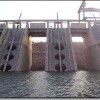
Iraq Minister of Water Resources, Jamal Rashid [Abdul-Latif Rashid], said that cracks in a water dam in Mosul are costing half a million dollars per year.
The Minister said that his ministry is about to offer tenders for international companies to repair the cracks and to reach the stage where the essential level of water is restored which could also help to solve electricity problem in the country.
(Source: Al SumariaTV)
Posted in Construction & Engineering In Iraq, Iraq Public Works News Comments Off on Tenders Soon for Repair of Mosul Dam

Kirkuk Governor Meets PRT Chief
Posted on 01 September 2010 .
Kirkuk's governor, Abdul Rahman Mustafa, met with the chief of the provincial reconstruction team (PRT), Fletcher Burton, to discuss security, economic and service developments in the region.
The governor assured Mr Fletcher that the security situation was good and stable, as evidenced by the completion of projects in Kirkuk and the improvement of services to its citizens.
The administration is keen to complete large important projects in Kirkuk, such as building hospitals and implementing water projects, and is discussing with central government in Baghdad regarding all of these issues.
The electricity crisis was also discussed, and it was recognised that this is a problem throughout the country, which needs considerable investment to solve.
(Source: Eye Media Company)
Posted in Iraq Industry & Trade News Comments Off on Kirkuk Governor Meets PRT Chief