


Iraq to Produce Natural Gas in 2 Years
Posted on 10 August 2010 .
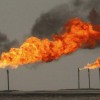
Iraq will produce natural gas in two years, and will become one of the most important gas exporters to Europe, according to a report from Aswat al-Iraq.
As we recently reported, the fate of the three gas fields of Akkas, Mansouriya and Siba will be decided in October.
A source from the Iraqi Oil Ministry told Aswat al-Iraq news agency on Monday that factors such as production levels and costs will be considered in evaluating the bids.
“Iraq will use only about 50% of the produced gas to generate electricity, while the rest will be exported,” the source added.
(Source: Aswat al-Iraq)
Related articles:
Posted in Iraq Oil & Gas News Comments Off on Iraq to Produce Natural Gas in 2 Years

Iraq Confirms Transit Of Iranian Gas To Europe
Posted on 10 August 2010 .
Following last week's announcement that Iraq will import gas from Iran, the country's senior deputy oil minister confirmed on Monday that it has tol Iran that it is ready to allow the transit of Iranian natural gas destined for Syria and Mediterranean countries.
Kareem Al Luaby gave the confirmation to Dow Jones Newswires by telephone from Baghdad, but gave no further details.
Iranian Student News Agency quoted a top Iranian gas official on Sunday as saying that the Iraqi oil and electricity ministers declared that the Iraqi government has permitted Iran's gas transit to Syria and Mediterranean states.
Javad Oji, managing director of the National Iranian Gas Co. said that the project would need a pipeline with a daily capacity of 110 million cubic meters to go through Iraq. This differs from the previously-reported figure of "300 million cubic feet", which is about 8.5 million cubic meters.
Meantime, an Iraqi oil official said that a delegation from the Iranian oil ministry was in Baghdad two weeks ago and met with Al Luaby and other senior officials in the Iraqi oil ministry. The official, however, said that he wasn't informed about the outcome of the meetings.
Earlier, another Iraqi oil ministry official said that such a decision would need to be made by the Iraqi parliament. "In addition to that, we don't have the infrastructure to transit Iranian gas to other countries," he said.
Iraq, which has the fifth highest gas reserves in the region, is trying to hold a bidding round for three major gas fields, with the aim of exporting half of the produced gas. However, international companies have been complaining that Iraq hasn't got the infrastructure to export its gas.
Iran holds the world's second largest reserves of gas. But plans to develop LNG schemes have been hit by the reluctance of Western oil companies to invest in them because of the sanctions imposed by Western countries on the country because of its attempts to acquire nuclear energy.
(Source: Dow Jones Newswires)
Related articles:
Posted in Iraq Oil & Gas News Comments Off on Iraq Confirms Transit Of Iranian Gas To Europe

KRG Dismisses Remarks by Iraqi Oil Minister
Posted on 02 August 2010 .
The spokesman of the Kurdistan Regional Government (KRG) rejected remarks made by the Iraqi Oil Minister, Hussein Shahrestani, on Sunday about illegal oil trade through the Kurdistan Region.
Shahrestani called on the KRG to justify its position regarding exporting oil to Iran, in a statement made to the Arabic radio channel Sawa.
"In accordance with our contract with Jordan, Iraq can send the country 10,000 barrels of oil per day, but we have not negotiated any contracts with Iran,” Shahrestani told radio Sawa.
The oil minister has also asked the Iraqi government to audit the Region’s customs records.
In response to Shahrestani's remarks, KRG Spokesman Kawa Mahmoud rejected the accusation saying, “The KRG’s actions are transparent and conform to the law”.
(Source: AK News)
Related articles:
Posted in Iraq Oil & Gas News Comments Off on KRG Dismisses Remarks by Iraqi Oil Minister

Diyala State Electric Company to Upgrade Plant
Posted on 02 August 2010 .
The Diyala State Company for Electric Industries has set out a new program to rehabilitate and renovate its operations.
For this purpose it signed contracts worth 2 billion Iraqi dinars [$1.7m] with suppliers for the provision new equipment.
A source in the company said that many contracts will be completed in between 2 and 7 months, including installation of new transformers from the Nasr State Company for Mechanical Industries and from the Al Safaya Jordanian Company for General Trade.
(Source: Al SumariaTV)
Related articles:
Posted in Iraq Public Works News Comments Off on Diyala State Electric Company to Upgrade Plant
Iraq Signs Electricity Deal with French Firm Alstom
Posted on 30 July 2010 .
French energy infrastructure firm Alstom signed a memorandum of understanding with Iraq on Wednesday to build a power plant in southern Iraq, which is suffering a severe electricity shortfall.
According to a report from AFP, Alstom is also set to renovate an existing power plant in the city of Najaf that it built 35 years ago.
"Patrick Kron, chief executive officer of Alstom, today (Wednesday) signed a memorandum of understanding with the Minister of Oil and Electricity, Hussein al-Shahristani ... for the development and modernisation of Iraq's electricity infrastructure," Alstom said.
The company has agreed to build a 1,200 MW power station between Najaf and the southern port city of Basra, and to rehabilitate a 180 MW plant in Najaf that it built in 1975.
The agreement also provides for training of Iraqi engineers and technicians.
A source with knowledge of the agreement said the new plant is likely to cost between 1.5 and 2 billion US dollars [1.8 trillion and 2.4 trillion Iraqi dinars].
"We hope to build up the electricity sector in Iraq which has been badly damaged in recent years and meet the country's growing electricity needs," Prime Minister Nouri al-Maliki, who attended the signing, said in a statement.
The statement said the company would begin talks with national and local officials in the coming weeks "for the practical implementation of these projects."
Iraq's daily power generation averages 8,000 megawatts, while demand in temperatures that have hit 54 degrees Celsius (130 degrees Fahrenheit) is typically more than 14,000 megawatts, forcing the use of unpopular rationing.
Only those with access to their own generators and fuel have been able to refrigerate foodstuffs or air-condition their homes around the clock.
Oppressive summer heat has triggered protests in several cities across the country, including in Basra.
Maliki has warned that two more years of shortages lie ahead as there is no quick fix to the problem, which worsened dramatically in the wake of the US-led invasion in 2003.
(Source: AFP)
Related articles:
Posted in Iraq Public Works News Comments Off on Iraq Signs Electricity Deal with French Firm Alstom
Basra Council Discusses $240m Projects
Posted on 28 July 2010 .
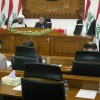
On Tuesday, Basra Council discussed projects which will be implemented in 2011, according to a head of the reconstruction committee.
The projects are in several budgetary categories and have a total value of 286 billion Iraqi dinars ($240m).
“The council made a comprehensive assessments of all projects for 2011 in the areas of health, electricity, education, water and other services sectors, as part of the budget to develop the region,” Mustapha Attiya told Aswat al-Iraq news agency.
“The total cost of these projects is 286 billion Iraqi dinars,” he added, without giving more details.
(Source: Aswat al-Iraq)
Related articles:
Posted in Iraq Education and Training News, Iraq Public Works News Comments Off on Basra Council Discusses $240m Projects
Talabani Calls for Enhanced Trade Ties with Iran
Posted on 27 July 2010 .
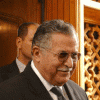
Iraqi President Jalal Talabani met with an Iranian official on Sunday to discuss bilateral economic relations and ways to expand trade between the two countries, according to a presidential press release.
“Talabani welcomed Ali Agha Muhammadi, the economic assistant to the first vice president of Iran, and his accompanying delegation, and expressed Iraq’s keenness on furthering bilateral ties with neighboring Iran at the political, economic and cultural levels,” read the release as received by Aswat al-Iraq news agency.
The president expressed “Iraq’s appreciation of the government and people of the Islamic Republic of Iran for their support for Iraq in its strife against dictatorship and Iraq’s moving to a new stage of independence, stability and freedom”.
Muhammadi, for his part, “reiterated Iran’s wish to further friendly ties and cooperation with Iraq, particularly in the economic field”.
The Iranian official said there are ample opportunities for investment in Iraq, namely in the transport and electricity spheres.
(Source: Aswat al-Iraq)
Related articles:
Posted in Iraq Industry & Trade News Comments Off on Talabani Calls for Enhanced Trade Ties with Iran
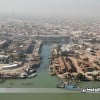
Russian 'Neftegaz Export' Discusses Oil Opportunities in Basra
Posted on 26 July 2010 .
An official spokesman of Basra province said Sunday that a delegation from Russian energy company Neftegaz Export has arrived to the city to discuss investment projects with the governor.
Sheltagh Abboud received on Sunday the Deputy Director of Neftegaz Export, Vladimir Fumujev, and a delegation accompanying him, who were seeking a foothold in Iraq for the "friendly Russia", referring to the likelihood of Neftegaz Export obtaining contracts in local oil fields.
"The Russian company has expertise in a range of disciplines important to Iraq, especially in the areas of generating and distributing electricity, refining drinking water, and sewage water treatment, in addition to the implementation of oil projects in the fields of northern Rumaila, West Qurna and Al-lahis", spokesman Salem al-Taqi said.
Fumujev expressed the desire to invest in a number of projects in Basra, al-Taqi added.
Neftegaz maintains offices in many cities in the world with the main headquarters in the French capital Paris. It is ready to open an office in Basra in the coming days as well, according to the spokesman.
Basra, due to its strategic location, has been attracting foreign companies recently especially companies investing in the sectors of electricity, tourism, housing.
(Source: AK News)
Related articles:
Posted in Iraq Oil & Gas News Comments Off on Russian 'Neftegaz Export' Discusses Oil Opportunities in Basra
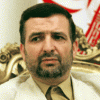
Maliki Urges Iranian Companies to Invest in Iraq
Posted on 24 July 2010 .
Iraqi Prime Minister Nouri al-Maliki called on Iranian companies to contribute in the reconstruction operations in Iraq, according to a statement of his office.
“This came during al-Maliki’s meeting with Iranian Ambassador to Baghdad, Hussein Qomi [Hassan Kazemi Qomi] , at the end of his term in the country,” said the statement received by Aswat al-Iraq news agency.
“The premier underlined Iraq’s keenness to develop relations with all neighboring countries, including Iran,” the statement added.
He urged Iranian companies to contribute in the reconstruction operations and to invest in Iraq.
The ambassador asserted his country’s support for the political process and the efforts exerted by the Iraqi government to strengthen security and stability in the country.
The outgoing ambassador has been accused in the past by US military commander General David Petraeus of belonging to the elite unit of Iran's Revolutionary Guards, the Quds Force.
(Source: Aswat al-Iraq, Al Jazeera)
Related articles:
Posted in Investment, Iraq Industry & Trade News Comments Off on Maliki Urges Iranian Companies to Invest in Iraq

Moody’s Boosts Petronas Rating on Iraq Exposure
Posted on 22 July 2010 .
Energy Risk reports that Moody's has raised its rating of Malaysian state-owned Petronas's A1 senior unsecured debt from negative to stable, despite the group's riskier business profile following a major acquisition of a large oil field in Iraq.
"We expect the company's $20 billion capital expenditure for the Iraqi fields to be spread out over a period of 20 years," says Philipp Lotter, lead analyst and senior vice-president at Moody's. "Annual capital expenditure is expected to peak in the first five years, which potentially allows Petronas to fund capital expenditure in later years with the reinvestment of early returns from the fields."
Lotter added that Petronas's strategy to partner with leading oil and gas companies in all of the Iraqi fields, coupled with its growing track record in managing international investments, provide a degree of comfort with regard to the associated execution risk.
In December last year, Petronas and Royal Dutch Shell won the rights to develop and produce oil in the Majnoon oil field, which has an estimated 12.6–12.8 billion barrels of oil. The consortium says it aims to have a peak production target of 1.8 million barrels per day (b/d).
In the past two years, consortia led by major energy companies have waded into Iraq, signing producing field technical service contracts (PFTSC) to secure fields for crude oil production. Some of these are pledging production of around 1 million b/d by 2017, though this is seen by analysts as somewhat optimistic for a country with high political uncertainty.
A PFTSC was developed by the oil ministry to be used for the first bid round. It is a hybrid model contract to be added to more than 100 fiscal regimes that govern international oil companies' participation in some 75 countries.
Experts have previously said that despite companies securing the rights to produce and develop oil in these fields, the risk is high due to the lack of a petroleum law, poor infrastructure and geopolitical risk. Issues over export rights could also affect the companies ability to sell the finished products.
"One of the main things that Iraq needs to tackle is the basic security issues, such as the ability to provide electricity, power, roads, and hospitals," says David Hart, oil and gas analyst at corporate finance and broking house Westhouse Securities. "While improvements in this area are occurring, many people would say that the country needs to resolve this in order to provide secure environment for oil and gas production. However you can't wait for that to happen, Iraq needs the oil revenue to help bring about this change."
This week, Iraq's oil minister Hussain al-Shahristani urged foreign energy companies to honour their contracts to explore and develop oil reserves in Iraq, as it is "the nation's highest priority".
"You have to prove to us and to the world, your ability to implement these contracts in accordance with the timeframe and the conditions stipulated in the deals," said Al-Shahristani speaking at an oil symposium in Iraq. "Success is not only reaching the production targets, but reaching these targets at a lesser cost, as much as possible. I hope we work together to reduce the costs."
(Source: Energy Risk)
Related articles:
Posted in Iraq Oil & Gas News Comments Off on Moody’s Boosts Petronas Rating on Iraq Exposure