


Ministry of Electricity to Cover Two Thirds of Iraq Electricity Needs by Summer
Posted on 10 April 2010 .
Iraq Ministry of Electricity said that it will cover two thirds of the country’s need of electricity during the upcoming summer after finishing the rehabilitation of Electricity power stations and to establish new units fast.
The General Director of the Middle Zone said that the power stations will operate with their full capacity by July 2010. A source in the Ministry of electricity said that for the first time Iraq power production will reach 9000 megawatt during the upcoming summer.
Posted in Iraq Public Works News Comments Off on Ministry of Electricity to Cover Two Thirds of Iraq Electricity Needs by Summer
Minister Opens Al-Rasheed, Al-Dibs Gas Stations
Posted on 10 April 2010 .
Kareem Waheed, minister of Electricity has inaugurated the reopening of Al-Rasheed, Al-Dibs gas stations which will supply about 65 mega watts of power to Kerkok province.
A statement showed that these two stations were working in the 80's and had stopped. Today, their production is 31 mega watts. The project will be managed by an Italian company which has supplied engineering and technical staffs.
A contract has been signed to buy diesel and other types of fuel due to a shortage of gas in the middle region, Kareem also said that they hope to finish the project quickly.
( Eye media company )
Posted in Iraq Public Works News Comments Off on Minister Opens Al-Rasheed, Al-Dibs Gas Stations

Breakdown of Iraq’s 2010 Budget
Posted on 05 April 2010 .
Iraq’s Presidential Council approved the 2010 budget on February 11, 2010. It is for $71.29 billion, the second largest amount since Iraq regained its sovereignty in 2005. A breakdown of spending shows that operational spending, which goes towards salaries, pensions, and the food ration system is again almost ¾ of the budget, and that electricity appears to be the priority of the government in the New Year.
Iraq has a large and inefficient state-run economy with a bloated bureaucracy. It should be no surprise then that the majority of the country’s budgets since 2005 have gone towards operational costs. In 2010, $51.59 billion, 72.3% of the total, is for the operations budget. Back in 2005, the operations budget was only for $16.1 billion. One major reason for the dramatic increase is that the number of people working for the government has doubled since then, making it the largest employer in the country. Many extra workers have been hired as part of patronage systems and to keep people out of the insurgency. The food ration system, which is the largest in the world, has also increased in cost over the last two years because of declining agricultural output and the on-going drought has led to increased imports. Iraq spent $7.3 billion on the program in 2008. The government has traditionally spent a large percentage of its operational budget.
The capital budget in 2010, which is for investment, is for $19.7 billion. That’s an increase from the previous year when it was $12.73 billion. The Electricity Ministry is getting the largest increase with $3.49 billion in 2010 compared to $1.08 billion in 2009. It has big plans this year to boost output, and build a series of new power plants. Unspecified “other” spending is also going up from $4.73 billion in 2009 to $7.89 billion this year. The Kurdistan Regional Government (KRG) is also getting an increase from $1.95 billion to $2.72 billion. Kurdistan gets a set 17% of the budget however, so the growth in their capital budget is due to the larger budget overall. The other parts of the government are not gaining as much. The Defense, Interior, and Justice Ministries, which deal with security, are only getting modest improvements in their budgets. Defense is getting $380 million compared to $270 million last year. The Interior Ministry is going from $220 million to $260 million, and the Justice Ministry is getting $140 million this year compared to $110 million. Iraq’s eighteen provinces are also getting only $10 million more in 2010. The Iraqi government has never been good at spending its investment budget however, so only around 50-60% of this money may get spent.
The 2010 budget shows where Baghdad’s priorities are for the New Year. First, they want to dramatically increase spending after the 2009 budget had to be cut due to the world recession. Second, electricity and discretionary spending are the focus of investment this year. Last, the bloated government is still eating up the majority of the budget. Baghdad needs to vastly improve its ability to spend its capital budget, and could cut thousands of unneeded workers off the payroll. Both are unlikely to happen however as Iraq’s bureaucracy lacks trained staff and people are use to going to the government for employment.
Iraqi Budgets
2005: $24.4 bil
2006: $34.0 bil
2007: $41.1 bil
2008: $72.2 bil
2009: $58.6 bil
2010: $71.3 bil
2010 Revenue Projections And Budget
Oil Revenue: $47.91 bil
Other Revenue: $4.86 bil
Total: $52.77 bil
2010 Budget: $71.3 bil
Projected Deficit: $18.53 bil
Breakdown Of 2010 Budget
Total: $71.3 bil
Operational Budget: $51.59 bil (72%)
Capital Budget: $19.7 bil (28%)
Operational Budget
Other: $15.82 bil
Finance: $10.55 bil
Kurdistan Regional Government: $6.03 bil
Interior: $5.89 bil
Defense: $4.52 bil
Education: $4.31 bil
Trade: $4.03 bil
Justice: $450 mil
Capital Budget
Other: $7.89 bil
Electricity: $3.49 bil
Kurdistan Regional Government: $2.72 bil
Oil: $2.65 bil
Provinces: $2.18 bil
Defense: $380 mil
Interior: $260 mil
Justice: $130 mil
Posted in Iraq Banking & Finance News Comments Off on Breakdown of Iraq’s 2010 Budget

Basra delegation in India for electricity projects
Posted on 05 April 2010 .
A delegation from Basra province arrived in India on Wednesday to sign contracts related to electricity sector.
“The delegation includes representatives of state-run institutions,” a local media source told Aswat al-Iraq news agency.
He said that the delegation will examine the possibility of establishing Indian projects in the electricity field in Basra.
Posted in Construction & Engineering In Iraq 1 Comment
Power Output Down In Iraq For End Of 2009
Posted on 05 April 2010 .
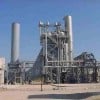
The Special Inspector General for Iraq Reconstruction (SIGIR) reports that power output was down for the last three months of 2009. In the 4th quarter of last year Iraq produced 5,285 megawatts or 126,843 megawatt-hours per day. That compared to 138,475 megawatt-hours per day in the 3rd quarter, which was an all time high since the 2003 invasion. At the same time demand dropped by 8% as Iraq entered into the colder months of the year. Reduced output from power plants was the cause of the decreased production. This was the first time that electricity output decreased since the beginning of 2008.
The Electricity Ministry plans to boost production with a General Electric (GE) and Siemens deal to buy new generators. In the last three years the Ministry already increased the country’s feasible capacity by 40% from 8,500 megawatts at the end of 2006 to 12,000 megawatts by the end of 2009. Feasible capacity is how much a generator can produce given the environment it works in. The GE and Siemens deal is meant to double feasible capacity over the next five years.
The SIGIR is unsure whether this deal will allow the Ministry to meet demand however. Iraq’s power plants have historically operated at much lower levels than they can. For example, Iraq has the capacity to produce 15,527 megawatts, but it’s feasible capacity is 11,968 megawatts, and its actual production was only 5,285 megawatts at the end of 2009. Fuel shortages to run power plants, aging infrastructure, and the lack of maintenance are three major causes for the difference between the feasible and actual production. Another problem is that demand has consistently increased since 2003. The government has large subsidies on power, which encourages consumption because the public doesn’t have to pay the actual cost. As electricity production has increased, so has demand. Finally, the power grid needs to be upgraded because it cannot handle a large increase in capacity, but there are now plans to renovate it.
In the latest survey, only 18% of Iraqis were somewhat or very satisfied with the amount of power they received. Despite the large increase in electricity production since the overthrow of Saddam, demand has sky rocketed as well increasing dissatisfaction. The government is making moves to close the gap, but the institutional and structural problems outlined above make it difficult for Iraq to produce what it could. Those issued need to be addressed otherwise the government is wasting a huge amount of its investment on new generators.
Posted in Construction & Engineering In Iraq Comments Off on Power Output Down In Iraq For End Of 2009
Dora Rail Project launched.
Posted on 05 April 2010 .
Iraq's electricity and transport ministries have announced the launch of a joint railroad project that will carry fuel to the Dora Power Station in southern Baghdad, Aswat al-Iraq has reported.
Transport minister, Amir Abduljabbar has said that a similar project will be carried out in Basra province, south of Baghdad.
( AME Info FZ LLC )
Posted in Iraq Transportation News 1 Comment
Access to Water in Middle East & North Africa World's Lowest
Posted on 03 April 2010 .
People in the Arab world need fuller and freer information about shrinking water supplies but their governments are withholding it for fear of fuelling unrest, a United Nations expert said on Thursday.
Arable land makes up just 4.2 percent of the Middle East and North Africa and is expected to shrink due to climate change - a potential source of political instability, analysts say, in a region where economic privation has sometimes sparked conflict.
"Arab countries do not disclose enough information on their water out of concern that transparency could fuel unnecessary public concern and unrest," said Hosny Khordagui, regional program director of the UN Development Program (UNDP) Water Governance Program for Arab States.
Disclosing figures on water scarcity might be perceived as reflecting bad management on the part of Arab states and so is generally avoided, he told a UNDP round-table on Arab environmental issues.
"If we have public participation, we would have better management, participation and more justice," Khordagui said, adding that ministers were accountable to those who appointed them and not to the public.
"Don't expect accountability without real democracy and free elections," he said.
People in the Middle East and North Africa have access to an an average of just 1,000 cubic meters of water a year, seven times lower than the worldwide rate, according to the UNDP's Arab Human Development Report.
As climate change takes its toll and the region's populations grow at nearly twice the global average, that figure is projected to shrink to just 460 cubic meters by 2025.
Coordinated water policy will be a challenge in a region where water politics is often seen as a zero-sum game and can be used as a lever in larger political feuds.
"If we lose one more drop of water and our capacity to give Arab citizens their right to food, this is a political issue par excellence," said Ismail Serageldin, a former World Bank environmental expert.
In one example, a temperature rise of 1-1.5 degrees in one area of Sudan in 2030-2060 would slash maize production by 70 percent, the UNDP report said. Such scenarios could be repeated elsewhere in the region.
Agriculture consumes more than 85 percent of water in the region, home to the Fertile Crescent in which the first civilizations of the Middle East emerged. Less water could make it impossible for already poor farmers to earn a livelihood, pushing them to move to overcrowded cities.
Droughts in Syria have already displaced hundreds of thousands of people. A September U.N report found that climate-related natural disasters displaced 20 million people in 2009, nearly four times more than conflicts.
"More people in Yemen will leave their villages because of water and environmental reasons," said Ali Atroos, manager of the planning department in Yemen's Ministry of Water.
Yemen is one of the region's most water-stressed countries, with per capita access to water seven times below the average in Europe. Some villages are pumped water only once a month, Atroos said.
Experts urged immediate action to confront the dire issue.
"Water is a security factor. If people do not have water to drink and to use for food production, that would be a direct threat to national security," said Hassan Janabi, Iraq's permanent ambassador to UN agencies in Rome.
At the MEED's 2010 Arabian Power and Water Summit that started on March 29 in Abu Dhabi, MEED said new power capacity requirement to 2015 is 7,500MW and new desalination requirement to 2015 is 310 million gallons per day, which calls for substantial investment.
The summit raised issues that will need to be dealt with going forward, such as how governments can create commercial and economic frameworks that will ensure that the most economic investment decisions are made. Governments still need to determine what the ideal portfolio for GCC future power generation is and how to integrate alternative fuel sources into existing structures.
Edmund O'Sullivan, MEED Events chairman, said "the purpose of the Arabian Power and Water Summit is to provide a platform for the industry leaders to come together and discuss the best way to meet the key strategic and technical challenges that lie ahead. The success of the power and water industry is vital to the region's growth so it is imperative that the industry's decision makers are fully informed of the different solutions available to fulfill power & water demand." For the first time anywhere in the Middle East, the summit also featured a presentation regarding the challenges Iraq is facing as part of their reconstruction effort.
John Dempsey, generation adviser, Iraq Transition and Assistance Office (ITAO) and Jeff Larkin, country manager - Iraq, Parsons Brinckerhoff, outlined the plans to raise the $26 billion that the country's Minister of Electricity has estimated is needed to refurbish and increase the electrical sector capacity in the country.
"It is of critical importance that companies and individuals have their fingers firmly on the pulse of industry developments and the opportunities within it. The involvement of so many of the region's governmental organizations is testament to the high regard that our annual summit is held within the region's power and water sectors, and the value that it offers delegates," O'Sullivan pointed out.
( The Saudi Gazette )
Posted in Iraq Industry & Trade News Comments Off on Access to Water in Middle East & North Africa World's Lowest
Turks back major residential project.
Posted on 30 March 2010 .
The Investment Authority in Thi-Qar is about to reach an agreement with private and government banks in the province to provide guarantees to Turkish company Austm. It would provide loans to local investors to construct two residential areas in Shatrah.
Head of IPCC, Dr. Ismail Aboudi said that the authority has set up a workshop for local investors, businessmen and managers with presidents of private and government banks in the province.
General Manager, Abdullah Abu Abdullah, said that the company planned to create the biggest European style residential project. The first complex includes 45 buildings consisting of 8 floors each and 2, 200 m per apartment on 30 acres of land. An area of 200 acres is allocated to the second Complex to create 1400 villas, each unit consisting of two stories., An area of 2250 m also contains schools, mosques and other public utilities in addition to solar energy electricity.
Both projects are among the most unique architectural and engineering projects in Iraq and work will start next month after the completion of legal and technical approvals.
( Iraq Directory )
Posted in Iraq Banking & Finance News Comments Off on Turks back major residential project.

Shell to Boost Iraq Majnoon Oil Output, Eyes Gas
Posted on 30 March 2010 .
Iraq's Majnoon oilfield is targeting production of 175,000 barrels of oil equivalent per day in 2012, a senior Royal Dutch Shell executive said on Monday.
Iraq's largest field is currently pumping at 45,000 boe/d, Shell's Mounir Bouaziz, Vice-President New Business LNG for the Middle East and North Africa, told an industry event.
Shell and Malaysia's Petronas signed a final contract earlier this year to develop the Majnoon oilfield, one of the world's biggest.
"We have already started work at Majnoon...we have already taken over operations," Bouaziz told Reuters on the sidelines.
"The effective (start) date was on March 1."
The eventual production target for the field is 1.8 million barrels per day (bpd).
Shell and Petronas won the rights in an auction held in Baghdad in December for the field in southern Iraq, estimated to hold 12.6 billion barrels of oil.
The 20-year development contract is one of several deals that Iraq has sealed to try to catapult the country to third place from 11th in the league of oil producing nations.
GAS
Shell has not yet reached a final agreement on a natural gas venture around the southern oil hub of Basra, Bouaziz said.
Earlier this month Iraq's oil minister Hussain al-Sharistani said the OPEC member had extended a memorandum of understanding with Shell on the venture, but a final deal would be left to the new government.
Iraq has been working to finalise a multi-billion-dollar joint venture between its South Gas Company, Shell and Mitsubishi, that would capture huge amounts of gas now being wasted and use it in the domestic market or for exports.
Bouaziz said that delays in capturing the flared gas was costing Iraq about $50 a second.
Iraq is losing 1 billion cubic feet per day (cfd) of gas through flaring, mostly from the south, Bouaziz said.
"What they are flaring now is sufficient to produce power generation for a country like Jordan, twice," Bouaziz said.
"People are getting an average of two hours of electricity a day, there are plans to add power generation but that needs fuel...gas is the natural solution."
Bouaziz said that the basic infrastructure was already in place to start capturing the gas being burned.
"But the task to really get it to work, to improve it, to upgrade it and increase the capacity is huge because of a legacy of many, many years of lack of maintenance and underdevelopment," he said.
Bouaziz said Iraq could start exporting gas "very very quickly".
Bouaziz said the construction of Shell's Pearl gas-to-liquids (GTL) project in Qatar is expected to be completed by the end of 2010, with a ramp up in production expected to start in 2011.
"This will take 12 months," he said.
Posted in Iraq Oil & Gas News 15 Comments
Electricity boost for Diwaniya
Posted on 26 March 2010 .
In cooperation with the local government, the U.S. reconstruction team has inaugurated an electricity transformer station that supplies power to 10 neighborhoods in Diwaniya.
“The station will reduce the load currently placed on the stations of al-Jazaer and al-Malaab,” a media advisor in the team, Ahmed al-Quseer, told Aswat al-Iraq news agency.
The cost of the project was $7 million U.S. dollars, he added.
( Aswat Al Iraq )
Posted in Iraq Public Works News Comments Off on Electricity boost for Diwaniya