


US Team Expects Electricity Increase
Posted on 28 April 2010 .
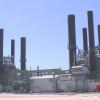
A US construction team expected Iraq electricity production to increase to 22000 megawatt by 2014.
Iraq currently needs 9500 megawatt, the same source said adding that by 2016 Iraq would be able to export electricity.
( Al SumariaTV )
Posted in Iraq Public Works News Comments Off on US Team Expects Electricity Increase
10 Electricity Transformers for Basra
Posted on 26 April 2010 .
The Iraqi Council of Ministers agreed to pay the cost of purchasing 10 electricity transformers for Basra province.
“Each transformer is 400 KVA,” Dr. Ali al-Dabbagh said in a release on Sunday received by Aswat al-Iraq news agency.
He explained that Iraqi Prime Minister Nouri al-Maliki promised to pay for the transformers during his visit to Basra in 2008.
( Aswat Al Iraq )
Posted in Iraq Public Works News Comments Off on 10 Electricity Transformers for Basra
Iraq Wants to Renew Electricity Contract with Iran
Posted on 23 April 2010 .
Iraq has asked Iran to continue supplying it with electricity in the future, according to an official statement reported by Azzaman.
Electricity Minster Kareem Wahid held talks with the Iranian ambassador in Baghdad in the hope that Iran would agree to renew a contract regulating the purchase by Iraq of 350 megawatts from neighboring Iran, the statement added.
Iranian electricity is essential for Iraqi towns bordering Iran, particularly in the provinces of Diyala and Basra.
The existing contract is due to expire soon. The statement by the Electricity Ministry did not say how much Iraq pays for the electricity it imports from Iran.
The statement said Wahid also discussed with the Iranian envoy progress regarding the implementation of other bilateral agreements.
These include new Iranian ventures manufacturing electrical appliances in Iraq, as well as the building of new power plants in the south of the country.
(Source: Azzaman )
Posted in Iraq Public Works News Comments Off on Iraq Wants to Renew Electricity Contract with Iran
New Gas Power Station in Wassit
Posted on 21 April 2010 .
The Wassit council has allocated 216 donums to set up a gas power station, chairman of the Wassit council said on Tuesday.
“The council decided during its session on Tuesday (April 20) to allocate 216 donums to implement a gas power station project as it represents one of the strategic projects, which is included within the electricity ministry’s plan of 2008,” Mahmoud Mulla Talal told Aswat al-Iraq news agency.
“The decision was approved unanimously in accordance with the Article 122 of the Iraqi constitution,” he added.
( Aswat Al Iraq )
Posted in Iraq Public Works News Comments Off on New Gas Power Station in Wassit
More Power Projects for Iraq’s Basra
Posted on 20 April 2010 .
20 April 2010 - Azzaman
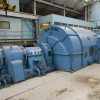
The municipal council of the southern Iraqi province of Basra has approved 25 power projects worth $32 million.
“The projects will improve the supply of electricity in the province,” Ziyad Fadhil, head of the electricity committee in the council said.
He said the projects cover “the three sectors involved in the production, transfer and distribution of electricity.”
Part of the money will be used boost the generating capacity of al-Hartha Power Plant, he said.
The plant is about 20 km north of Basra city, the provincial capital. The 800-megawatt thermal plant was first commissioned in 1979.
With four generation units, the plant is one of the largest in Iraq.
It is not clear whether the plant, which was bombed during the 1980-1988 Iraq-Iran War, the first Gulf war and looted shortly after the 2003-U.S. invasion, is still running at full capacity.
Basra, like other major Iraqi towns, still goes without electricity for the largest part of the day.
The rest of the money will be spent on power lines, transformers and new stations, Fadhil said.
Posted in Iraq Public Works News Comments Off on More Power Projects for Iraq’s Basra
Iraq Announces New Gas Tenders
Posted on 19 April 2010 .
(Source: Petroleumworld.com)
Iraq Prepares New Gas Field Licensing, Cuts Oilfield Signatory Bonuses Retroactively
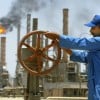
Iraq's Oil Ministry has released plans to tender three gas fields—previously part of the first and second licensing rounds—to 15 invited companies and has named Shell, Total, and KOGAS as frontrunners, while also confirming that signatory bonuses for the renegotiated West Qurna-1 and Zubair oilfields have been slashed.
IHS Global Insight Perspective
Significance
Iraq will invite 15 oil companies to bid for the Akkas, Siba, and Mansuriya gas fields later this year, and has already named Shell, Total and KOGAS as preferred bidders at this stage, while the ExxonMobil/Shell West Qurna-1 oilfield project and the Eni-led Zubair development are seeing their signatory bonuses slashed significantly now that the election has passed.
Implications
Oil companies said that Iraq's financial terms were significantly improved as contracts from the first licensing round were renegotiated in late 2009 and the second (more successful) licensing round was drawing near, although full details of the improvements have remained elusive. Meanwhile, Iraq needs to get some core gas fields onstream, mainly to raise north and central gas feedstock availability for power generation—but pronouncing frontrunners before the tender might prove controversial.
Outlook
As IHS Global Insight has previously written, lower signatory bonuses—reducing upfront risk exposure—were understood to be under discussion early on in the contract renegotiations at West Qurna-1 and Zubair, although too politically risky to present in Iraq before the election as the government was loath to appear to be giving in to corporate interests.
Gas Trio Re-Offered
Fifteen oil companies—expected to be mainly among the companies that pre-qualified for Iraq's first and second licensing rounds—will be invited to bid for three strategic gas fields in Iraq. The Akkas and Mansuriya gas fields were initially offered as part of Iraq's first licensing round in mid-2009, but failed to be awarded, while the Siba field was initially to be offered as part of the late 2009 second licensing round, but was removed as that round's focus changed somewhat under political pressure to encompass more border-area fields in the north and east.
The Akkas field has been thought for a long time to be the closest to development, with large expectations in 2007 and 2008 that the field would be offered to bidders on a singular project basis, given its relatively fast development and export revenue-generating potential. The Akkas field is located in Western Iraq, on the border with Syria, and has always been seen primarily as an export field, given the proximity to Syrian gas pipelines on the other side of the border and the expense of reaching Iraq's domestic market through the construction of a pipeline traversing the Western Desert into central Iraq. In the 1990s and early 2000s Total and Shell expressed interest in the field, but a consortium of Italy's Edison, Malaysia's Petronas, China's CNPC, KOGAS, and Turkey's state-owned TPAO was the only bidder for the field in the first licensing round, which thus failed to meet the government's maximum remuneration level.
The Siba field has previously been eyed by Kuwait as a source of imports, but after having initially sounded optimistic about a bilateral deal in the post-2003 war environment, the Iraqi government earmarked the field for domestic supplies. Mansuriya in the north could, in theory, be interesting for potential future gas exports across Turkey on to Europe—currently being prepared from some gas fields in Iraqi Kurdistan under the leadership of Dana Gas, OMV and MOL—but domestic demands for gas feedstock for Iraq's power generation, as the rebuilding of the electricity sector gathers pace, are likely to make exports from Mansuriya a relatively distant prospect for now.
| Iraqi Gas Fields On Offer | ||
| Gas Field | Reserves (tcf) | Production Capacity (mmcf/d) |
| Mansuriya | 3.3 | 330 |
| Akkas | 2.1 | 350 |
| Siba | . . | 125 |
Jumping the Gun
In a staggering pre-judgement of any competitive bidding, Sabah Abdul Kadhim, legal and commercial chief of the Oil Ministry's Petroleum Contracts and Licensing Directorate (PCLD) told Reuters that "we are keen to select international companies with experience with gas and which have gas projects across the world", adding however that "Shell, Total and KOGAS will be at the top of the list because they have good experience in the gas industry and gas operations worldwide". Thus jumping the gun, Kadhim might find himself the centre of criticism, as any suggestions that Iraqi contracts have not been completely competitively awarded (for example, at Shell's South Gas Project) have drawn significant—and often damaging—disapproval. Currently the attempts and negotiations to form a new Iraqi government in the aftermath of the March elections mean that the focus is elsewhere, but the politicisation of the oil industry is likely to return as a new government settles in—and with it attempts by parliamentarians to gain influence over oil policies and supervise the privatisation process. Being mentioned as a frontrunner by one of the licensing round's organisers before it has even started is thus probably not a blessing at all for the companies and could well backfire if they do indeed secure any contracts.
Cutting Bonuses
Meanwhile, Reuters is reporting that Iraq's Oil Ministry has also agreed to slash signatory soft-loan bonuses on two of the flagship projects significantly, albeit turning the remaining sums into unrecoverable payments. The long-term soft loan initially required will be cut from US$400 million at ExxonMobil's and Shell's West Qurna-1 project, to US$100 million, while the US$300-million soft-loan signatory bonus to be paid by the Eni-led consortium developing Zubair also will be cut to US$100 million—in both cases being changed into a straight non-refundable signatory bonus, according to Kadhim.
The contracts for the deals in question were signed in January and renegotiated (both mega-fields were initially unsuccessfully offered in the first licensing round) during the latter part of 2009, indicating that there has been an understanding regarding this term improvement since before the definitive signing. As oil companies came back to the Oil Ministry and renegotiated some of their failed first-round bids just ahead of the second licensing round, oil executives indicated that Iraq had relented on its excessively tight terms and helped forge compromises that made the contracts more attractive. Iraqi Oil Ministry personnel and Oil Minister Hussein al-Shahristani, however, maintained that Iraq had not eased terms in any material way, fearing a domestic political backlash ahead of the March elections if the Iraqi government was to be seen as going to oil companies cap in hand and caving in to their economic demands. While little since then has emerged on exactly what had made the contracts significantly more attractive—apart from certain changes to how taxes were applied—rumours of the signatory bonuses being cut prevailed.
Outlook and Implications
The signatory bonuses were always relatively unpopular, demanding that the companies pay large sums upfront at a time when political risk and legal uncertainty ahead of the 2010 elections still loomed large and the fear of political parties winning and later changing or scrapping the contracts as completely illegal could not be ruled out. Hence scrapping them, or lowering them significantly, was always going to have a huge impact on the companies' risk exposure as they approached the planning and waiting time between the early 2010 signings of their contracts and the deadline for full deployment, some time after the likely installation of a new government. For the Iraqi government and Oil Ministry political considerations were always at the heart of their financial negotiations, and the need for secrecy surrounding the concessions that would make deals possible were always clear—and impressed upon their counterparties.
Iraq's gas plans show that the Oil Ministry now is moving forwards with its attempts to tie up some of the remaining loose ends from its first and second licensing rounds. Iraq will need to raise its gas production fast in order to meet domestic demand from its electricity sector as it is rebuilt, and although a lot more associated gas is likely to be produced as the oil mega-projects begin, both Siba and Mansuriya have the geographical capacity to act as early stable producers—and later as buffers—while oil companies decide on how much associated gas they need for reinjection and how much they can spare. In the case of Akkas, however, exports remain the most cost-efficient option, given that the field is much closer to Syrian pipelines then to Iraqi demand and domestic markets. Appearing to jump the gun and declare three companies as frontrunners for the late 2010 auction—even if misinterpreted—might cause both the Oil Ministry and the named companies some level of later aggravation.
Posted in Iraq Oil & Gas News 2 Comments
AVEVA Wins Iraq Reconstruction Role
Posted on 18 April 2010 .
16 April 2010 -Business Weekly
AVEVA Group in Cambridge, one of the world's leading providers of engineering data and design IT systems to the plant, power and marine industries, has won work in Iraq.
State Industrial Design and Consultation Company (SIDCCO), one of the largest EPC contractors in Iraq, has selected AVEVA Plant solutions for ongoing and future projects in the strife-torn country.
SIDCCO is owned by the Ministry of Industrial and Minerals. As one of the largest EPC contractors in Iraq, SIDCCO offers services ranging from feasibility studies to turnkey constructions. Ministry of Industry and Mineral Companies, Ministry of Oil Companies and Ministry of Electricity are among the company’s biggest clients.
Ali Al-Naama, SIDCCO DG, said: "We are impressed by AVEVA Plant's engineering and business benefits, which make it possible to work in the most complex projects by enabling coordination amongst various disciplines in a clash-free environment.
“We look forward to benefiting from AVEVA solutions for more productivity and site rework reduction. SIDCCO's engineering and design teams are having intensive training to be able to start implementing and using AVEVA's solutions immediately.”
Louay Dahmash, VP of AVEVA Middle East, said AVEVA had increased its presence in the Middle East despite the economic downturn.
“We are very excited to be entering such a promising market and being a part of Iraq's reconstruction projects with SIDCCO.
“I am confident that AVEVA will continue proving itself with its proven and evolving technology in Iraq, which will play a great role for AVEVA's growth in the region."
The Iraq success adds to further significant export wins in the first quarter of this year for the Cambridge company.
AVEVA says that sales of its AVEVA NET Information Management solution have surged forward in Russia over recent months despite challenging worldwide economic conditions.
AMET University, India's premier marine industry university, will be featuring AVEVA Marine solutions as part of its curriculum. Located in Chennai, AMET University is the first private maritime academy in India.
Peter Finch, president, AVEVA Asia Pacific, said: “India's prominence as a source of skilled labour in the marine industry is seen in the rise of outsourced marine engineering projects by the world's leading shipyards.
“The AVEVA Academic Initiative equips graduates with hands-on skills in using the leading shipbuilding range of solutions preferred by top global shipyards.”
Posted in Construction & Engineering In Iraq 2 Comments
Finance, Electricity Ministers Review Important Projects
Posted on 14 April 2010 .
Finance Minister Baqer al-Zubaidi discussed on Tuesday with Electricity Minister Karim Wahid the important projects, which will be implemented by the electricity ministry in Iraq, according to a ministerial statement.
“The meeting was attended by representatives of finance, planning and electricity ministries,” said the statement received by Aswat al-Iraq news agency.
“The projects will include the development and rehabilitation of the power grid to provide citizens with excellent services,” the statement added.
The finance minister stressed the importance of benefiting from the financial allocations given to the electricity ministry within 2010 general budget.
( Aswat Al Iraq )
Posted in Iraq Public Works News Comments Off on Finance, Electricity Ministers Review Important Projects
Exports to Iraq Double
Posted on 14 April 2010 .
He pointed out that Iran's exports to Iraq exceed Iran's exports to the UAE.
"Iran's export to both these countries in 2008-9 was almost the same Iran's exports to Iraq in 2009-10 doubled compared to the previous year.
Masoud Daneshmand, the head of Iran-Iraq Chamber of Commerce, told Iran Daily on Saturday that Iran's exports to Iraq increased from $2.5 billion in 2008-9 to $5 billion in 2009-10.
He noted that with the situation in Iraq calming down and reconstruction underway, Iranian products are highly favored in Iraq.
"Given the fact that during the (1980-88) war, many infrastructures of Iraq such as electricity and gas were ruined and consumption declined significantly. But now that many infrastructures of the country are being completed, the type of lifestyle and the respective needs change," he said.
Daneshmand also said plans are underway for exporting technical and engineering services to Iraq.
"The Iranian private sector has conducted negotiations with the Iraqi side for concluding contracts, a number of which have reached the implementation phase," he said.
At present, a power plant in Najaf with a capacity of 500 megawatts is under construction. The project will become operational in a year's time and the investment of the Iranian side will be recovered through the sale of electricity.
Two housing projects, with a capacity of building 4,000 residential units, are being implemented in Iraq by the Iranian private sector. One of these projects is located in Basra. These housing projects will be completed within a couple of years.
Negotiations have been finalized for constructing two power plants in the Iraqi Kurdistan region and Al-Amara province. The two sides have also conducted negotiations for building a brick factory and a detergent factory in Al-Amara.
The official said that in 2009-10, Iran's exports of technical and engineering services to Iraq amounted to $1 billion.
"Since launching projects from the feasibility phase to implementation phase is a time-consuming process and technical and engineering services project in 2009-10 did not become fully operational, only $300 million of the projected estimates were realized," he said.
and reached $2.5 billion each.
However, the figure pertaining to Iraq reached $5 billion in 2009-10 while exports to the UAE in 2009-10 remained the same as 2008-9. Our exports to the UAE are reexports, but the Iraqi people are end users of Iranian products," he said.
Daneshmand said the Iranian private sector's exports to Iraq are mostly construction materials such as cement, bricks, plaster and consumer goods as well as food products.
( Iran Daily )
Posted in Iraq Industry & Trade News 1 Comment
Maysan Expects Electricity 500 mw load
Posted on 11 April 2010 .
Director of electricity distribution in Maysan , Faleh Hadi Alwan, has said that the highest power load this summer, will be up to 500 megawatts, adding that the national network provides a good share of electricity to the province at the present time.
Alwan said that misuse of the electricity network is one of the major challenges facing workers in electricity conservation.
,At the present time electricity supply in Maysan province is two hours for every four hours of disconnect , according to specialists.
( Iraq Directory )
Posted in Iraq Public Works News Comments Off on Maysan Expects Electricity 500 mw load