


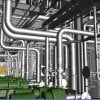
Aveva Enters Iraq Market with SIDCCO Projects
Posted on 23 March 2010 .
Aveva Group plc, one of the world's leading providers of engineering data and design IT systems to the plant, power and marine industries, today announced that State Industrial Design and Consultation Company (SIDCCO), one of the largest EPC contractors in Iraq, has selected Aveva Plant solutions for their ongoing and future projects in Iraq.
SIDCCO is owned by the Ministry of Industrial and Minerals. As one of the largest EPC contractors in Iraq, SIDCCO offers services ranging from feasibility studies to turnkey constructions. Ministry of Industry and Mineral Companies, Ministry of Oil Companies and Ministry of Electricity are among the biggest clients of the company.
Ali Al-Naama, SIDCCO Director General, comments, "We are impressed by Aveva Plant's engineering and business benefits, which make it possible to work in the most complex projects by enabling coordination amongst various disciplines in a clash-free environment. We look forward to benefiting from Aveva solutions for more productivity and site rework reduction. SIDCCO's engineering and design teams are currently having an intensive training to be able to start implementing and using Aveva's solutions immediately."
Louay Dahmash, Vice President of Aveva Middle East, said "Aveva has increased its presence in the Middle East despite the economic downturn. We are very excited to be entering such a promising market and being a part of Iraq's reconstruction projects with SIDCCO. I am confident that Aveva will continue proving itself with its proven and evolving technology in Iraq, which will play a great role for Aveva's growth in the region."
Aveva Plant is a set of integrated applications for plant engineering, design and design management providing the fastest, most productive and risk-free toolset to design, build and revamp plant of any size and complexity. Aveva Plant provides integration of engineering and 3D design data, flexibility in the choice of engineering authoring tools such as P&ID applications, the most productive 3D plant design solution in the world, and concurrent global project execution.
Posted in Construction & Engineering In Iraq 1 Comment
Electricity Ministry Produces Lighting Columns
Posted on 23 March 2010 .
The Iraqi Electricity Ministry has been able to produce lighting columns at competitive pricing.
“The prices of produced columns are greatly reduced in comparison to those on the local market,” a media source from the Ministry told Aswat al-Iraq news agency.
He said that the pillars were produced by the Ministry’s own efforts.
( Aswat Al Iraq )
Posted in Iraq Public Works News Comments Off on Electricity Ministry Produces Lighting Columns
Iraq Raises $2.1bn to Fund Electricity Projects
Posted on 21 March 2010 .
Iraq's finance minister, Bayan Jabor has said that the country has raised $2.1bn from local banks to fund electricity projects, Reuters has reported.
In 2008, Iraq signed multi-billion dollar deals with General Electric and Siemens to add nearly 9,000 megawatts of capacity over the next few years. Iraq's current electricity capacity is 7,500 megawatts, far short of the country's requirement of 12,000 megawatts.
Posted in Iraq Public Works News Comments Off on Iraq Raises $2.1bn to Fund Electricity Projects
More than $250m Allocated to Basra Infrastructure
Posted on 18 March 2010 .
Basra province is to allocate ID200 billion ($170m) to upgrading the province’s sewerage systems, and a further ID100 ($85m) billion to its electricity supply.
“Basra will get revenues from oil exports and border crossings,” Basra Governor Shaltagh Abod said in a press conference on Wednesday, attended by Aswat al-Iraq news agency.
He said that the plan will be implemented when funds are available.
The oil-rich city of Basra lies 590 km south of Baghdad.
( Aswat Al Iraq )
Posted in Iraq Public Works News Comments Off on More than $250m Allocated to Basra Infrastructure
Two Turkish Ships to Supply Basra with 250 Megawatts of Electricity
Posted on 16 March 2010 .
A Turkish barge for electricity generation is scheduled to arrive on Monday in the port of Basra, and will supply power to the national grid.
The Minister of Electricity Karim Wahid said in an interview that the barge will be installed at the port of Umm Qasr, while a second barge will arrive on 15th May, and will be installed at Khor Al-Zubair.
"They will have a capacity of 250 megawatts each", Wahid added.
(Eye Media Company)
Posted in Iraq Public Works News Comments Off on Two Turkish Ships to Supply Basra with 250 Megawatts of Electricity

Water Shortages Impact Power Output
Posted on 09 March 2010 .
The issue of power shortages is related to water shortages, Electricity Minister Kareem Waheed said.
Waheed said water shortages have forced his ministry to redirect investments in this vital sector.
Power outages in Iraq may last up to 20 hours a day.
Waheed said volumes of water reaching Iraq have dropped substantially .
Iraq relies on the Tigris and Euphrates, but both originate in neighboring states.
“Water volumes reaching Iraq from both rivers amounted to 79 billion cubic meters a year. It has dropped to 49 billion cubic meters and will slump to 33 billion cubic meters a year in 2020,” he said.
Water is not only needed for hydro-electric power but massive amounts of water are needed to cool fuel-driven Iraqi power plants.
Facing more drops in water volumes reaching Iraq, “we have decided to go for modern power plants with large capacity,” he said.
He said the new power plants would only need minimum water for cooling as they will rely on closed circuits.
“The water in the basins of our rivers is for drinking and cultivation and not for industrial purposes,” Waheed said.
Khayoon Saleh
Posted in Iraq Public Works News 2 Comments
Russian Firm to Complete Work at Damage Power Plant
Posted on 08 March 2010 .
08 March 2010 (Azzaman)
Russia’s Technopromexport has agreed to resume constructing a large power plant south west of Baghdad.
The al-Youssifya Power Station is one of the largest under construction in the country with an output capacity of 630 megawatts.
The Russians started work in 1990 and had to halt activities in 2003 due to U.S. invasion of Iraq.
But U.S. occupation troops occupied the plant and turned it into a military base, forcing the Russians to abandon the site altogether.
The Russian had completed nearly 35% of work on the plant when the Americans took it over.
U.S. troops are reported to have partially destroyed what the Russians had already done.
An Iraqi delegation was in Moscow last month, where it agreed with Technopromexport’s executives on terms to resume work at the plant.
Technopromexport, a Moscow-based firm, is a leader in construction of power projects and export of electricity.
Among its major power contracts in the country are the al-Hartha Power Station and other electricity projects.
The terms of the agreement have yet to be made public but the main hurdle for the Russians has insecurity.
Posted in Construction & Engineering In Iraq Comments Off on Russian Firm to Complete Work at Damage Power Plant

Iraq's Oil Deals Dominate PM Election Campaign
Posted on 08 March 2010 .
BASRA - AP,03/03/2010
International oil executives have flocked to this southern Iraqi city to survey their potentially lucrative prizes: the fields that it is hoped will one day dramatically increase output of cheap, plentiful crude.
For their companies, the fields that they won the rights to develop in two biddings rounds last year are their first foray into Iraq's oil sector in over three decades.
For Iraqi Prime Minister Nouri al-Maliki, the executives and their investments are a vital part of his bid to win a second term in March 7 elections. Al-Maliki has billed himself to voters as the leader that can ensure the development of Iraq's dilapidated oil sector and bring in billions of dollars to rebuild the country's struggling economy.
Al-Maliki's promises could take years to fulfill and many experts see his predictions for increasing oil output as wildly optimistic. But what matters for the premier is persuading voters to keep him in his post to shepherd the process.
"Al-Maliki can present himself as a guarantor to these plans ... whether they are going to meet their huge targets or not," Mideast oil analyst Samuel Ciszuk of the London-based IHS Global Insight said.
Iraq sits atop 115 billion barrels of crude, the world's third largest proven reserves of conventional crude oil. But current production of about 2.4 million barrels per day remains well below levels before the 2003 U.S.-led invasion that toppled Saddam Hussein.
Al-Maliki's government has vowed, based on developers' promises, to raise output to more than 12 million barrels a day within six to seven years. The production increase would translate into hundreds of billions of dollars in sorely needed revenue for a government that relies on crude sales for 95 percent of its revenues.
Iraqi officials hailed the multibillion dollar deals as the dawn of a new day in the oil sector after two international auctions since June secured commitments from international firms to develop 10 oil fields. The government plans to develop 11 others left over from the two biddings on its own.
But meeting the government's timetable will be difficult. After decades of neglect because of years of war and Saddam-era sanctions, infrastructure is poor. Also, continuing violence in the country means security costs to keep workers safe as the U.S. looks to withdraw all its troops from the country by 2011.
"Bottlenecks are everywhere and it is going to be very tall order," Ciszuk said. "It's going to be very, very tough to do."
The southern city and province of Basra -- home to 70 percent of Iraq's daily oil output and its only Persian Gulf outlet -- is a key litmus test for al-Maliki. Five of the fields awarded in the auctions are located near the city, and representatives from 11 oil companies have been visiting since early this month to meet with oil officials and tour the fields.
Yet Basra, Iraq's second largest city with 3 million residents and a Shiite stronghold crucial for al-Maliki's Shiite-led government looks like a city that fortune overlooked.
Its dust-covered streets are strewn with mounds of garbage around which some of its poorest residents compete with sheep and goats for discarded food. Streets are packed with cars jostling for space with donkey carts and, in a few neighborhoods; residents still endure water and electricity shortages.
Al-Maliki's Coalition of State and Law secured a sweeping win in Basra and other parts of the mainly Shiite south in last year's provincial elections, boosted by his crackdown on militants and image as the protector of Iraq's security.
But his stature in Basra has been hurt by the continued lack of basic services and the faltering fight against corruption -- as well as continued militant attacks in Baghdad.
"During the last elections, they promised to change everything, but they didn't honor their word and instead they focused first on lining their pockets, then those of their aides," said Jassim Riadh Mohammed, a 43-year-old supermarket owner. Mohammed won't be voting for al-Maliki.
Al-Maliki also faces sharp competition in the south from rival Shiite parties, some of which harshly criticized his oil deals. The Sadrist party, loyal to radical cleric Muqtada al-Sadr, Fadhila Party and nationalist Iraqis, accused him of surrendering the nation's oil wealth to international companies.
Al-Maliki is hoping the promise from Basra's giant oil fields will be enough to win over voters. But years of neglect weigh heavily on that possibility.
About 60 kilometers (38 miles) northwest of Basra, roaring flames billow from Rumaila, Iraq's biggest oil field. The flames are the result of the burning of natural gas that is extracted along with the crude -- a reminder that Iraq desperately needs foreign help even in capturing and selling the gas instead of burning it off.
Rumaila, with an estimated 17.8 billion-barrel reserve, is considered the workhorse of Iraq's oil industry, producing about 1.1 million barrels per day. It was snapped up at the oil auction by British giant BP PLC teaming up with the China National Petroleum Corp.
Their consortium plans to drill 56 wells and upgrade equipment to boost output by 10 percent by the end of 2010, Dhia Jaafar, the director-general of the state-run South Oil Co., told The Associated Press.
They hope to ramp up ramp up production to 2.85 million barrels per day within seven years. Like other firms, the BP-CNPC consortium offered production targets in exchange for a per barrel fee in a 20-year contract.
The work in Basra's four other fields will begin in the next two months, Jaafar said.
Casting a shadow over development hopes is the lack of a legal rule book to govern foreign oil investments. The proposed national oil law has been in limbo since 2007 amid bickering between the Baghdad government and the semiautonomous Kurdish government in the oil-rich north.
That fight could put these deals in danger of being scrutinized or canceled by the new government.
The political rivalries among Shiites in the south also make investors wary.
"I think that's why we have not seen a lot of investment before the elections and before the results that will allow the companies to see who has become stronger and who has become weaker," said Ciszuk.
Posted in Iraq Oil & Gas News 7 Comments

South Korea Regains Its Investment Role in Iraq
Posted on 06 March 2010 .
06 March 2010 (Iraq Directory)
Visions of the world head towards Iraq for investment opportunities after improvement in legally and security, and able to attract different foreign companies... The presence of the Minister of the Korean economy was accompanied by a large number of investors of the biggest Korean companies.
During the Korean delegation’s visit, they discussed investment opportunities in the areas of industrial energy and military infrastructure as well as in the field of knowledge... show the best evidence of this trend.
Nuri al-Maliki, the prime minister said while attending the opening of the Iraqi Korean Forum that this Korean presence in Baghdad and this scale reflects a genuine desire and willingness to work, which is a message to the world that Iraq is in the initial phase of construction and reconstruction were deprived of for decades. He pointed out that the improvements in security and legislation, as well as the legal guarantees and protection of foreign companies from political instability in Iraq. The Koreans also during their visit encouraged all investors in the world and in the forefront of Korea.
He said that much investment obstruction which Iraq had passed through them during the last period and work to create an attractive investment environment... He pointed out that the investment that is built according to the mechanisms of cooperation with international companies with advanced experience of up to the stage of people, being required to Iraqi ministries to offer all of its projects to international companies and Korean companies.
Particularly that Iraq needs large-scale projects in the field of electric power and industrial sectors. As well as in the housing sector should also be cooperation in the areas of training and exchange of experiences that help usually in construction...
Konkan Korean economic minister: said we carried with us a great desire in the activation of economic cooperation and research between the two sides of Iraq and Korea. He pointed out that Korean firms implemented various projects in Iraq during the seventies of the last century and lasted until 1989 and contributed Korean companies on a limited scale in 2003 implementation of some projects. He pointed out that Korea has sophisticated companies and industries in the areas of significant industrial, petrochemical, cars and roads as well as communications and electric power generation and water desalination. Konkan stressed Korean company’s desire of the union with Iraqi companies to activate cooperation in the implementation of projects.
But for this we need the cooperation of the Iraqi side with Korean investors to know the most important projects to be implemented through the mechanism of cooperation between the two countries as we work to transform forward in trade relations and transfer to a better state than they are now.
Sami Al Araji, Chairman of the National Investment said that the success of the investment process reflects a positive reality on the lives of Iraqi society. He pointed to the existence of more than 750 investment projects on display up costing more than $ 600 billion. Iraq is seeking to attract foreign investors and analysts to implement during the coming period. Al Araji continued by saying: Today we have the bids for construction of more than one and a half million units implemented during the next three years. Either in the field of electric power provided by foreign investors to build power plants with a capacity of up to 24 thousand MW, on the other hand preparations are underway to start implementing these projects. In addition to large housing projects in Al Rashed camp and the housing project west of Baghdad, as well as in Karbala and awaiting the implementation of the early stages of these projects, pointing out that Korean companies are determined to enter into this field. He added, saying the Korean side presented the Iraqi Oil Ministry a lot of consulting projects for modernizing Al Dora refinery, as the new company Hyundai for Heavy Industries to negotiate with the electricity for the processing of packets of energy supply.
On the other hand the company STX for Heavy Industries signed a Memorandum of Understanding with the Ministry of Industry and Minerals in the field of oil and petrochemical projects as well as Korean companies initiatives put forward a number of projects such as rehabilitation of power stations in Basrah and the use of gas associated with oil in the south and water desalination plants in Basrah.
Raid Fahmi Minister of science and technology, said: The Iraqi Korean Cooperation Forum is an important step at the level of development of cooperation with an important country in terms of economic and technological development. Because it is one of the most sophisticated global 10 countries in all sectors on the level of implementation of infrastructure projects. Especially that the conference dedicated to cooperation in the fields of electricity, oil and housing as well as the potential Korean extends for more than that in the fields of technology, industries and other Fahmi believes that there is a need to enter the Korean expertise to contribute to the development program in Iraq under the large Korean desire to work in Iraq in all sectors of the economy, beneficiaries of the investment law and its amendments, which came in line with the desire of companies that have the capacity and advanced implementation authority as the desire of both Iraq and Korea on the exchange of knowledge helps to raise the efficiency of workers in various fields. On the sidelines of the forum, it was signed by Iraq who was represented by Minister of Industry Fawzi Hariri, along with the Korean side represented by the Minister of Economy Konkan, memorandum of cooperation for the development of the petrochemical industry in Iraq. Hariri stressed that the industry is important and many countries are investing large sums to develop the industry and help develop many aspects of the Iraqi economy. He pointed out that such a project will cost more than two billion dollars.
Posted in Iraq Banking & Finance News Comments Off on South Korea Regains Its Investment Role in Iraq
Basra Airport Invites Businesses
Posted on 04 March 2010 .
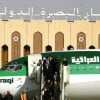
Basra International Airport has announced that it will make space available to companies wanting to set up within the airport complex.
Domestic and international companies can lease land within the BIA airport grounds (outside of the USF-I COB limits) for a fee for a term of one or two years.
Interested firms will need to supply their own trailers for office/housing/conference needs, supply their own water/sewage/electricity, and supply their own internal security.
The cost, as quoted, is $150 per square meter per year, plus an additional 15% (of the total charge) for GOI-provided security (e.g. 1 square meter = $150 per year + $22.50/year for security = $172.50/square meter/year). This security surcharge is for the outer perimeter and Alpha Gate (main airport entrance) security. The lessee would be responsible for their own compound and security.
Posted in Iraq Transportation News Comments Off on Basra Airport Invites Businesses