


Iraq Sets up National Authority to Manage Environment
Posted on 29 June 2018 .
Iraq Sets up National Authority to Mobilize Global Climate Finance, Manage Environment and Climate Change Challenges
On June 2018, Iraq has established a high-powered National Designated Authority to help mobilize global climate funding in support of dealing with pressures imposed by a range of environmental and climate change-related issues.
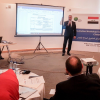
This was announced by the Iraqi Deputy Minister for Health and Environment, Dr. Jassim Abdul Aziz, at a high-level workshop on Iraq’s Green Climate Fund Readiness held in Amman this month.
With grant assistance from the Green Climate Fund (GCF), the Government of Iraq has embarked on a national readiness programme for a period of two years during 2018-2019.
UNDP Iraq will serve as a delivery partner for this grant assistance that aims to support the Government of Iraq in strengthening the national capacities to effectively access and efficiently manage, track and guide climate financing with particular attention to the requirement of Green Climate Fund (GCF).
Water insecurity, land degradation, desertification, loss of vegetation and biodiversity and salinity form part of the complex challenges that Iraq faces, posing significant obstacles for the country to mount a resilient recovery following decades of conflict.
The Government of Iraq has formulated an economy-wide plan to cut GHG emission by around 14% between 2020 until 2035. However, Iraq is also facing a huge economic challenge as a result of the collapse in the international oil market in 2015 and its very significant impact on the national economy.
Guided by Iraq’s national development plan, policies and priorities, the readiness programme will include the preparatory activities that include establishing a National Designated Authority (NDA) in Iraq under the leadership by the GCF Focal Point.
Strengthening stakeholders’ engagement and effective participation, and assisting Iraq in developing a gender- responsive country programme including climate change adaptation and mitigation priorities are some of the core objectives of the readiness programme.
The accomplishment of readiness activities will lay the foundation for Iraq to kick-start concrete steps towards meeting the need for climate financing in an effective and coordinated way.
The three-day workshop, attended by the Iraqi Ambassador in Jordan (Safia Al Sauhail), the Iraqi deputy minister of Health and Environment Dr. Jassim Al Falahy, and by an inter-ministerial group comprising several heads of Iraqi government institutions, took stock of Iraq’s readiness for GCF and the roles and responsibilities of the associated the National Designated Authority.
Participants at the workshop agreed on the steps to be taken for the implementation of a roadmap for Nationally Determined Contributions consistent with the UN Framework Convention on Climate Change (UNFCCC) guidelines.
(Source: UNDP)
Posted in Agriculture 1 Comment
ShaMaran Petroleum Announces Results
Posted on 17 November 2017 .
ShaMaran Petroleum has announced its financial and operating results for the three and nine months ended September 30, 2017. (Unless otherwise stated all currency amounts indicated as "$" in this news release are expressed in thousands of United States dollars).
HIGHLIGHTS AND DEVELOPMENTS
Operations
- Oil production on the Atrush Block commenced in July 2017. Atrush is currently producing at approximately 26 thousand barrels of oil per day ("bopd"). In order to address certain production constraints the facilities were shut down in the beginning of October. These constraints have now successfully been resolved.
- One of the four production wells, Atrush 4, ("AT-4") is currently shut in. The well was back-producing drilling fluid lost during drilling operations. In order to not upset the production system it was decided to clean up the well via temporary facilities upon the receipt of a flare permit from the Kurdistan Regional Government ("KRG"). This operation is now planned for Q4 2017.
- In October and November 2017 the Company received payments totalling $2.5 million representing its entitlement share of the $9.7 million in total payments received by the Atrush Non-Government Contractors from the KRG for July and August oil sales from Atrush and reimbursement instalments of the Atrush Exploration Costs receivable. 703 thousand barrels of oil were exported from Atrush for the months of July and August with an average netback price1 of $35.3 per barrel of oil. Total oil produced and exported from Atrush over the third quarter was 1.3 million barrels resulting in an average of 14.6 thousand barrels per day. The average netback price over the quarter was $36.86 per barrel and the average lifting cost was $8.54 per barrel.
- The Chiya Khere-7 ("CK-7"), which was spudded on September 17, 2017 reached a final depth of 1,861 metres in early November 2017. The reservoir section was encountered approximately 114 metres shallower than prognosis. The well was drilled on time and under budget. Testing and completion of the well will be performed in 2018 to coincide with installation of flow lines between the Production Facility and the Chamanke E location were the well is located. The main objectives of the well are to appraise the commercial potential of the Mus formation, to help reduce the uncertainty in the location of the medium to heavy oil transition zone and to serve as a further producing well.
- In September 2017 an agreement was concluded between the Atrush Non-Government Contractors and the KRG for the sale of Atrush oil whereby the KRG will buy oil exported from the Atrush field by pipeline at the Atrush block boundary based upon the Dated Brent oil price minus approximately $16 for quality discount and all local and international transportation costs. This discount is based on the same principles as other oil sales agreements in the Kurdistan Region of Iraq.
- The Final Completion Certificate for the Atrush Feeder Pipeline ("FCC") was issued on October 31, 2017 which completes the obligation of the Non-Government Contractors to fund the KRG's share of development costs and triggers the commencement of repayment of both the Atrush Feeder Pipeline Cost Loan and the Atrush Development Cost Loan. The first loan repayment instalments are due later in November 2017.
- Following the independence referendum held in Kurdistan on September 25, 2017, operations in the Atrush field in Kurdistan are continuing in a normal, safe and secure manner. Exports from Atrush are continuing via the Kurdistan Export Pipeline system and drilling operations on the CK-7 well are progressing as planned. Nevertheless, events since the referendum suggest an increase in the potential for political instability within the region.
1 This includes a discount to Dated Brent for oil quality and all local and international transportation costs.
Corporate
- On January 30, 2017 the Company completed the issue of 360 million common shares of ShaMaran on a private placement basis (the "Private Placement") at a price per share of CAD 0.10 (equal to SEK 0.67) which resulted in gross proceeds to the Company of $27.3 million ($26.4 million net of transaction related costs). Zebra Holdings and Investments SARL, Lorito Holdings SARL and Lundin Petroleum BV, the Company's major shareholders, subscribed for 43,463,618 shares, 16,984,621 shares and 17,800,000 shares, respectively, in the Private Placement.
- In February 2017 the Company reported estimated reserves and contingent resources for the Atrush block as of December 31, 2016. Reserves and resource estimates have remained unchanged from those reported for the prior year. Total discovered oil in place in the Atrush Block is a low estimate of 1.5 billion barrels, a best estimate of 2.1 billion barrels and a high estimate of 2.8 billion barrels, with Total Field Proven plus Probable ("2P") Reserves on a property gross basis estimated at 85.1 MMbbl and Total Field Unrisked Best Estimate Contingent Resources ("2C") on a property gross basis estimated at 304 million barrels oil equivalent (MMboe). 2 3
2 "MMbbl" means million barrels and "MMboe" means million barrels of oil equivalents. Boe may be misleading, particularly if used in isolation. A boe conversion ratio of 6 million cubic feet ("Mcf") per one barrel is based on an energy equivalency conversion method primarily applicable at the burner tip and does not represent a value equivalency at the wellhead.
3 This estimate of remaining recoverable resources (unrisked) includes contingent resources that have not been adjusted for risk based on the chance of development. It is not an estimate of volumes that may be recovered.
OUTLOOK
Operations
| • | In the fourth quarter of 2017 it is planned to produce the AT-4 well until clean via temporary facilities and bring Atrush production up to the facilities' design capacity of 30,000 bopd. | |
| • | Plans for Atrush for 2018 include: | |
| • | continue with program to identify bottlenecks in order to maximise output from the Production Facility; | |
| • | testing and completion of the CK-7 well; | |
| • | install the CK-7 flow line and bring CK-7 into production; | |
| • | drilling, testing and completion of Chiya Khere ("CK-10"), a sixth development well; | |
| • | drilling and completion of Chiya Khere ("CK-9"), a dedicated water disposal well; and | |
| • | conducting extended testing of the CK-6 well which is located on the eastern side of the Atrush Block and which is outside the 2P reserve area of Atrush. This would involve the installation of temporary production facilities near the Chamanke–C well pad and the delivery by truck of oil to the main Phase 1 Production Facilities. | |
| • | Following the results of the CK-7 and CK-10 wells, the extended well testing in CK-6 and sustained production from the Phase 1 Production Facilities the Company expects to be in a position to further assess the significant undeveloped Atrush resource base. | |
| • | The political situation in the Kurdistan region will be monitored continuously and the market will be appraised of any material impact on operational activity. | |
Posted in Iraq Oil & Gas News Comments Off on ShaMaran Petroleum Announces Results
Shaw Wins Feasibility Study on Basra Refinery
Posted on 15 December 2011 .
The Shaw Group Inc. (NYSE: SHAW) has announced that it has been awarded a contract by the South Refineries Company, which is part of the Republic of Iraq’s Ministry of Oil, to provide a feasibility study for the rehabilitation of its 140,000 barrels per day refinery in Basra, Iraq.
The study will assess the current condition of the refinery and estimate the engineering, equipment supply and construction services required to improve its operation.
The study is funded by the United States Trade and Development Agency (USTDA) through a grant to the South Refineries Company. This is the first grant the agency has provided directly to an Iraqi grantee, marking the USTDA’s support of Iraq’s long-term economic development.
“This study will help to promote the development of Iraq’s oil business and modernize vital facilities,” said James Glass, president of Shaw’s Energy & Chemicals Group. “This is Shaw’s fourth refining project in Iraq, reinforcing our continuing commitment to the Middle East region.”
In Iraq, Shaw is conducting feasibility studies and front end engineering and design (FEED) for two grassroots 150,000 barrels per day refineries near the cities of Maissan and Kirkuk, for the Republic of Iraq’s Ministry of Oil.
The FEED work includes all process units, offsite facilities and utilities for both refineries. Through a fluidized catalytic cracking alliance, Shaw, with its partner, Axens, are providing a process design package for a 30,000 barrels per day residual fluidized catalytic cracking (RFCC) unit at Midland Refineries Company’s refinery in Daura.
The undisclosed value of the contract will be included in Shaw's Energy & Chemicals segment’s backlog of unfilled orders in the first quarter of fiscal year 2012.
Posted in Iraq Oil & Gas News Comments Off on Shaw Wins Feasibility Study on Basra Refinery

Honeywell Chosen for Nassiriya Refinery
Posted on 01 June 2011 .
UOP LLC, a Honeywell (NYSE: HON) company, announced that its technology has been selected for a new transportation fuel refinery to be built in Iraq.
The State Company for Oil Projects (SCOP), under the Ministry of Oil for Iraq, has selected Honeywell’s UOP to provide key technologies to process 300,000 barrels per day (bpd) of domestic crude oil into gasoline and diesel fuel at the new facility in Nassiriya, Iraq.
Honeywell’s UOP previously received awards in 2010 from South Refineries Company and North Refineries Company for new refineries in Maissan [Maysan, Missan] and Kirkuk, Iraq, each rated at 150,000 bpd.
“We are pleased to be working with the SCOP again as Iraq focuses on doubling its oil refining capacity,” said Rajeev Gautam, president and CEO of UOP. “The high yields delivered by our technologies combined with our methodology for process unit integration and optimization will enable SCOP to produce the maximum yields of high-quality gasoline and diesel product while also maximizing the economic value of the project.”
Refining capacity in Iraq is expected to reach 1.6 million bpd by 2017, more than two times the capacity of its existing refineries. This capacity is expected to double again by 2030, driven by increased transportation fuel demand within Iraq.
UOP will provide reforming, isomerization, fluid catalytic cracking (FCC) and selective hydrotreating technologies. As part of the overall technology package, UOP will provide basic engineering, technology licenses, catalysts and specialty equipment for the new refinery. Design will begin in the second quarter of 2011. SCOP has made the implementation of this new refinery a priority and is currently offering the project as an opportunity to potential investors.
The specific UOP technologies to be provided to SCOP include the CCR Platforming™ and Penex™ processes, which are used to produce high-octane gasoline, as well as the UOP FCC and Selectfining™ technologies, which enable high-yield production of ultra-low sulfur diesel fuel and gasoline.
In 2010, Honeywell opened a full-service office in Baghdad and has plans to open other offices in southern and northern Iraq over the next few years. Honeywell’s Baghdad office focuses on supplying technology solutions, including process automation equipment, to Iraq’s oil and gas industry.
Posted in Iraq Oil & Gas News, Tenders Comments Off on Honeywell Chosen for Nassiriya Refinery
KBR Wins Maysan Refinery Contracts
Posted on 24 August 2010 .
KBR (NYSE: KBR) today announced that it has been awarded two contracts by the Republic of Iraq Ministry of Oil through the South Refineries Company. KBR will provide licensing and basic engineering services for the construction of Fluid Catalytic Cracking (FCC) and Solvent Deasphalting (SDA) units at the planned grassroots Maissan Refinery in Maissan [Maysan], Iraq. Work on the projects is expected to commence immediately.
KBR will license its FCC Technology for an anticipated 47,500 barrels per day (BPD) FCC unit and its Residuum Oil Supercritical Extraction (ROSE(R)) technology for a 45,000 BPD SDA unit. The FCC unit will be delivered under a joint marketing alliance between KBR and ExxonMobil Research and Engineering Company (EMRE).
"These awards mark the first wins for KBR's Technology Business in Iraq and provide KBR the opportunity to introduce two of its leading refining technologies into an important, emerging market," said Tim Challand, President, KBR Technology. "We look forward to forging a solid and sustainable relationship with the Ministry and South Refineries Company."
KBR is a global engineering, construction and services company supporting the energy, hydrocarbon, government services, minerals, civil infrastructure, power and industrial markets.
Posted in Iraq Oil & Gas News Comments Off on KBR Wins Maysan Refinery Contracts
Iraq’s media regulator calls for greater press freedoms
Posted on 26 May 2010 .
Ali Al-Mawlawi, Iraqi Institute for Economic Reform
18 May 2010
The head of Iraq’s Communications and Media Commission (CMC) has announced plans to hold a major conference in partnership with the Iraqi Supreme Judicial Council as part of efforts to abolish laws that are incompatible with press freedoms.
Dr Burhan Al-Shawi explained that the CMC, an independent authority that is solely responsible for licensing and regulating telecommunications and media in Iraq, also seeks to propose new laws that guarantee greater rights to media professionals. Al-Shawi said that Iraq was in need of legislation that entitles journalists broader access to information, as well as stronger mechanisms to hold media professionals accountable to ensure responsible and accurate journalism.
Iraq has yet to pass a freedom of information law, which is seen as a crucial step towards promoting transparency, guaranteeing access to public documents and combating corruption. Earlier this month, UNESCO held a conference in Baghdad to coincide with World Press Freedom Day, and in an open letter to the Iraqi government, over 1000 journalists and media workers called on the passage of freedom of information legislation that meets international standards and best practices.
Al-Shawi also revealed that the CMC, which acts as a converged regulator similar to the American Federal Communications Commission (FCC), was making 50 million dollars per month in revenues. The CMC is a stakeholder in major mobile and internet network providers operating in Iraq, including Zain, Asiacell and Kalimat. It has now become the second largest revenue generator for the state after the Ministry of Oil. Al-Shawi pointed out that the CMC is entitled to invest 10 percent of its revenues in research and development, with the remaining profits going to the state treasury.
Experts suggest that the CMC model could not only be a significant source of finance for Iraq’s reconstruction needs, but it could serve as a model for other countries in the Middle East to follow. Although the CMC was established by Paul Bremer in 2004 under Coalition Provisional Authority Order 65, Al-Shawi believes that the lack of adequate legislation and staff shortages are limiting the Commission’s potential growth and impact.
Ali Al-Mawlawi, [email protected]
Posted in Construction & Engineering In Iraq Comments Off on Iraq’s media regulator calls for greater press freedoms
Media Regulator Calls for Greater Press Freedom
Posted on 24 May 2010 .
The head of Iraq’s Communications and Media Commission (CMC) Dr Burhan Al-Shawi, has announced plans to hold a major conference in partnership with the Iraqi Supreme Judicial Council as part of efforts to abolish laws that are incompatible with press freedoms.
An independent authority that is solely responsible for licensing and regulating telecommunications and media in Iraq is proposed., New laws that guarantee greater rights to media professionals are also proposed.
Al-Shawi said that Iraq was in need of legislation that entitles journalists broader access to information, as well as stronger mechanisms to hold media professionals accountable to ensure responsible and accurate journalism. Iraq has yet to pass a freedom of information law, which is seen as a crucial step towards promoting transparency, guaranteeing access to public documents and combating corruption.
Earlier this month, UNESCO held a conference in Baghdad to coincide with World Press Freedom Day, and in an open letter to the Iraqi government, over 1000 journalists and media workers called on the passage of freedom of information legislation that meets international standards and best practices.
Al-Shawi also revealed that the CMC, which acts as a converged regulator similar to the American Federal Communications Commission (FCC), was making 50 million dollars per month in revenues. The CMC is a stakeholder in major mobile and internet network providers operating in Iraq, including Zain, Asiacell and Kalimat.
It has now become the second largest revenue generator for the state after the Ministry of Oil. Al-Shawi pointed out that the CMC is entitled to invest 10 percent of its revenues in research and development, with the remaining profits going to the state treasury. Experts suggest that the CMC model could not only be a significant source of finance for Iraq’s reconstruction needs, but it could serve as a model for other countries in the Middle East to follow. Although the CMC was established by Paul Bremer in 2004 under Coalition Provisional Authority Order 65, Al-Shawi believes that the lack of adequate legislation and staff shortages are limiting the Commission’s potential growth and impact.
( Iraq Directory )
Posted in Iraqi Communications News Comments Off on Media Regulator Calls for Greater Press Freedom