


COP26: Call for Urgent Climate Action in Iraq
Posted on 16 November 2021 .
As COP26 negotiations conclude, call for urgent climate action in Iraq is louder than ever
The United Nations in Iraq has welcomed commitments made at COP26 in Glasgow but stresses the need for urgent action on these promises to limit climate change's adverse impacts on human rights and sustainable development in Iraq.
Commitments made at the UN Framework Convention on Climate Change (UNFCC) conference - attended by a Government of Iraq high-level delegation from representatives of the ministries of Environment, Finance, Foreign Affairs, Higher Education, Industry and Oil, as well we representatives from the private sector - include:
- The announcement of an additional $US356 million to the Adaptation fund which will increase the resilience of vulnerable communities on the frontline of climate change. This stronger commitment paves the way for greater resources to avert, minimise and address loss and damage in Iraq.
- The Breakthrough Agenda, an international strategy to deliver clean and affordable technology everywhere by 2030, signed by more than 40 world leaders. This commitment is critical to helping Iraq's gradual energy transition and accelerating low carbon solutions.
- The Global Forest Finance Pledge, a commitment to end deforestation by 2030 will help Iraq scale up its forest conservation efforts, facilitate trade to promote sustainable development and increase rural employment opportunities.
- A commitment to improving transparency and environmental integrity through the implementation of Article 6 of the Paris Agreement on international emissions trading. Iraq fully supports an independent mechanism to redress potential harms and support the creation of new markets for carbon unit trading by both public and private sectors.
Additionally, the Glasgow Climate Pact cites several areas of cooperation relevant to Iraq, including the need to boost funding for diverse climate technologies and a stronger commitment to capacity building.
"Iraq is a country vulnerable to the negative impacts of climate change - one of the most vulnerable in the region and indeed the world. We are grateful to the United Nations Development Programme in Iraq for its ongoing support to climate action in Iraq, and for supporting the delegation to this important conference," says Iraq's Acting Minister for Environment, Dr Jassem Al-Falahi.
The United Nations Secretary-General's Deputy Special Representative for Iraq and Resident Coordinator Irena Vojáčková-Sollorano emphasises the UN in Iraq's commitment to urgent action on climate change.
"Climate Change in Iraq is a severe threat to fundamental human rights and creates barriers to sustainable development. Across the UN system in Iraq, we are working on the key components of climate action - from awareness-raising and adapting to climate change, to mitigating its risks. With COP26 now done and dusted, we urge world leaders to make good on their promises, many which are critical to supporting a cleaner, safer and greener Iraq," she says.
Resident Representative of UNDP Iraq, Zena Ali Ahmad acknowledged UNDP's role in supporting the COP26 delegation and Iraq's formal submission of its Nationally Determined Contribution (NDC) - the country's central policy for driving climate action.
"UNDP Iraq was proud to support the Government of Iraq's formal submission of its NDCs, as well assisting the delegation to COP26 to ensure Iraq's needs were firmly placed on the global agenda. Our support to the country's fight against climate change does not end with COP26, and we look forward to continuing our work with the Government, UN partners, the international community and others to implement Iraq's NDCs and turn the conference outcomes into tangible actions," she says.
(Source: UN)
Posted in Politics Comments Off on COP26: Call for Urgent Climate Action in Iraq

Axens to support Basrah Refinery Upgrading Project
Posted on 20 April 2021 .
By John Lee.
French-based Axens -- part of the IFP Energies Nouvelles group -- has said it is pleased to continue working with JGC Corporation on the Basrah Refinery Upgrading Project.
Earlier this month, Prime Minister Mustafa Al-Kadhimi laid the foundation stone for the $4bn-project.
In a statement, the company said:
Part of Iraq's Ministry of Oil, the state-owned South Refineries Company (SRC) executed the upgrading of its refinery located in Basrah, Iraq by implementing a new refining plant adjacent to the existing refinery facility. The Basrah Upgrading Project is now reaching the engineering, procurement and construction (EPC) phase carried out by JGC Corporation (JGC).
Axens is pleased to continue being involved in this important Iraqi project, which will increase the gasoline and diesel production along with other oil products, reducing the national refined products imports. The Basrah Upgrading Project will also improve oil refinery efficiency of the complete facility.
Different Axens' technologies were selected and will be used:
- a Diesel hydrotreatment unit (Prime-DTM)
- a VGO Hydrotreating unit
- a VGO FCC unit
- an oligomerization unit (PolynaphthaTM)
Thus, an integrated scheme around the FCC unit is implemented thanks to Axens' unique position for a complete FCC suite of technologies from pre-treatment to post-treatment. The PolynaphthaTM technology downstream the FCC unit for oligomerization of light olefins aims at maximizing gasoline production.
With this award, another reference is added to the long list of more than 300 FCC projects. Industrial successes in this domain keep the FCC Alliance as a global leader with a track record of 4 new grassroots FCC units started up in the past 4 years.
In addition, Axens will provide catalysts & adsorbents, key technology features such as proprietary equipment, trainings and technical services.
Jacques Rault, Conversion & clean fuels Business Line Director, Process Licensing at Axens, said:
"The Basrah refinery is expanding its operations by increasing its gasoline and diesel production while improving the fuels quality. This will help to solve one of the main challenges to lower national petroleum products imports revitalizing the Iraqi refining sector damaged by war and deterioration. South Refineries Company selected Axens for its wide and proven experience in refining as a partner to supply technologies but also to support throughout the whole project."
Ibraheem Al-Salihi, FCC Project Manager, South Refineries Company, said:
"The Iraqi Ministry of Oil and the Southern Refineries Company with the support of the Japanese government represented by the JICA Organization are doing great work to complete the Basrah Refinery Development / FCC Project by adopting the latest technologies and designs provided by Axens. With the construction contract signed with the Japanese company JGC on October 1, 2020 and then activated on February 15, 2021, the project activities started according to the agreed schedule. Among other developments, we are pleased to complete this vital and important project that supports the production of oil derivatives meeting international standards and environmental requirements adopted in this field and relieves the burden of oil products imports."
(Source: Axens)
Posted in Iraq Oil & Gas News Comments Off on Axens to support Basrah Refinery Upgrading Project

Iraqi PM lays Foundation Stone for $4bn Refinery Project
Posted on 13 April 2021 .
By John Lee.
Prime Minister Mustafa Al-Kadhimi has laid the foundation stone for the South Refineries Company (SRC)'s new Fluid Catalytic Cracking (FCC) complex at Basrah Refinery.
The project will be built by Japan's JGC Corporation, and will increase refinery capacity by 55,000 barrels per day (bpd).
It will be funded by a loan from the Japan International Cooperation Agency (JICA).
More information here, here and here.
(Sources: Iraqi Ministry of Oil, Office of the Iraqi Prime Minister)
Posted in Construction & Engineering In Iraq, Iraq Oil & Gas News 1 Comment
Chinese Consortium to Develop Dhi Qar Refinery
Posted on 22 January 2021 .
By John Lee.
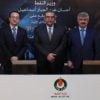
Iraq's Ministry of Oil has signed an outline agreement with a Chinese consortium for the development of the Dhi Qar refinery.
A Ministry official described the signing of the initial principles agreement as an important step forward, and a prelude to the signing of the final investment contract for the Dhi Qar refinery project, which will have a capacity of 100,000 barrels per day (bpd).
The Director General of the Southern Refineries Company (SRC), Hussam Wali, said that the final signature of the contract will be made "after the completion of the economic model of the investment contract", and it is hoped that this will take place within three months.
The consortium consists of Chinese state-owned arms manufacturer Norinco (which owns ZhenHua Oil), PowerChina (Power Construction Corporation of China), CNEC (China Nuclear Engineering & Construction?) and the UAE Company for Middle Services Ltd.
The refinery contains units for hydrogenation, benzene improvement, isomerization, catalytic cracking (FCC), a (CCR) unit, an asphalt unit, and an electric power production unit.
(Source: Ministry of Oil)
Posted in Iraq Oil & Gas News Comments Off on Chinese Consortium to Develop Dhi Qar Refinery
New Agreement prioritises Iraq's Environmental Sustainability
Posted on 31 October 2020 .
Iraq's environmental sustainability prioritized in new UNEP/UNDP agreement
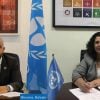
The UN Environment Programme's (UNEP) Regional Office for West Asia based in Manama, Bahrain, and the UN Development Programme (UNDP) in Iraq have joined forces, signing a four-year Memorandum of Understanding (MOU) that aims to accelerate the implementation of the 2030 Sustainable Development Agenda, particularly the environmental Sustainable Development Goals (SDGs).
The MOU identifies several priority areas that UNEP and UNDP will jointly address including; environmental policy, biodiversity and ecosystems, pollution and waste management, climate change, and supporting the Government of Iraq in its post-COVID-19 response on areas related to environmental sustainability.
UNEP and UNDP share a successful history of collaboration on projects and initiatives at the global, regional and country levels. In late 2019, the two organizations signed a global strategic partnership which strengthens engagement and collaboration at the institutional level.
UNEP and UNDP share unique and complementary attributes. While UNDP has a strong country presence and access to a wide range of stakeholders and sectoral policy, UNEP is the leading global environmental authority that sets the global environmental agenda, it has a deep-rooted science foundation, and a strong normative mandate that promotes the coherent implementation of the environmental dimension of sustainable development.
Since 2009 UNEP in West Asia and UNDP in Iraq have worked on a large portfolio of projects, including supporting Iraq with its reporting obligations under the United Nations Framework Convention on Climate Change (UNFCCC) and the Kyoto Protocol, and developing a National Environment Strategy and Action Plan that outlined the scale of environmental degradation in Iraq, its root causes and impacts, and necessary next steps.
As one of the signatories to the Paris Agreement in 2016, Iraq continues to priorities climate change adaptation and mitigation measures in its environmental planning and is committed to adopting a green vision and implementing green programmes.
Today's agreement puts UNEP and UNDP firmly on a path to supporting Iraq's progress towards achieving the 2030 Sustainable Development Agenda.
From his side, the Regional Director and Representative of UNEP in West Asia, Mr. Sami Dimassi, highlighted that:
"UNEP is committed to forging a strong collaboration with UNDP in Iraq to support the country in addressing environmental challenges while supporting the Government and the people of Iraq to build back better after the COVID-19 pandemic. UNDP has a successful track record in Iraq, and today, I am pleased that we have joined forces towards achieving a sustainable environment for all".
Resident Representative of UNDP Iraq, Ms. Zena Ali Ahmad, said:
"Iraq faces a number of environmental challenges - from water scarcity, to rising temperatures, to pollution, to environmental degradation due to years of conflict and neglect. Tackling these challenges in a complex setting like Iraq cannot be done alone, so we are proud to join UNEP and support the Government of Iraq in securing a healthy, sustainable environment, now and for future generations."
Resident Coordinator for Iraq, Ms. Irena Vojackova-Sollorano, said:
"Without increasing efforts to decelerate the climate crisis, the Iraqi population will not be able to live prosperously in the future. The goal of the SDGs of leaving no one behind, especially SDG 6 on Clean Water and Sanitation, SDG 7 Affordable and Clean Energy, and SDG 13 Climate Action are of particular importance for Iraq. I am pleased to see that UNEP and UNDP are increasing their activities in order to help Iraq and its population."
(Source: UN)
Posted in Iraq Industry & Trade News Comments Off on New Agreement prioritises Iraq's Environmental Sustainability
JGC signs Contract for Basra Refinery Upgrade
Posted on 02 October 2020 .
By John Lee.
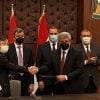
Yesterday (Thursday), the South Refineries Company (SRC) and Iraq's Ministry of Oil (MOO) signed the contract with Japan's JGC Corporation to start construction of a new Fluid Catalytic Cracking (FCC) Complex at Basrah Refinery.
The project is funded by the Japan International Cooperation Agency (JICA)'s ODA (Official Development Assistance) loan project.
The contract ceremony was successfully held at the Governmental Palace with the presence of H.E. Mr. Ihsan Abdul Jabbar Ismael, Minister of Oil, H.E. Dr. Eng. Khaled Battal Najim Abdullah Al-Jujifi, Minister of Planning, Mr. Husam Hussein Weli, Director General, SRC, Mr. Shu Nakagawa, Charge d'Affaires ad interim, Embassy of Japan in Iraq, Mr. Yutaka Yamazaki, President of JGC Corporation, and Mr. Kei Toyama, Chief Representative of JICA Iraq Office. At the sideline of the ceremony, H.E. Prime Minister Mustafa Al-Kadhimi hosted the meeting with the participants.
For this project named "Basrah Refinery Upgrading Project (I)(II)", JICA has so far concluded three loan agreements for:
- engineering services loan in the amount of JPY 2,079 million [$20 million];
- first tranche loan in the amount of JPY 42,435 million [$403 million]; and,
- second tranche loan of JPY 110,000 million [$1.04 billion].
This project is the largest Japanese ODA loan project in Iraq. Under the assistance of JICA's concessional loans (low interest rate at 0.20% and the repayment period of 40 years including 10-year grace period). It is expected to be completed in 2025.
According to a statement from JICA, the project to construct Iraq's first-ever FCC Complex will unleash the potential of Iraq's refining sector to produce the larger volume of the high-value outputs, promote the transfer of refining technologies from Japan and help save valuable foreign currencies to import huge amount of fuels.
It says the new plant will also reduce sulfur content in the oil products in accordance with the international environmental standards, adding:
"The project is expected to pave the way for energizing private sector involvement in the downstream of Iraq's energy industry and provide economic and employment opportunities for the people of Iraq, especially in Basrah.
"JICA looks forward to the collaborative efforts made by Iraqi government and the contractor to overcome every challenge to be encountered during project implementation, including the ongoing COVID-19 pandemic. JICA reaffirms its commitment to making every possible means to support in delivering the project benefits and realizing its effectiveness."
(Source: JICA)
Posted in Construction & Engineering In Iraq, Investment, Iraq Oil & Gas News Comments Off on JGC signs Contract for Basra Refinery Upgrade

Hyundai to Build Al-Khairat Power Station
Posted on 30 July 2020 .
The Cabinet held its weekly meeting on Tuesday under the chairmanship of Prime Minister Mustafa Al-Kadhimi.
The Cabinet discussed the needs of Iraq's health sector, and agreed several measures to expand existing capacity and introduce new services. The measures included:
- Adding additional ward capacity for the treatment of cancer patients at the National Amal Hospital and the National Cancer Centre
- Establishing general nuclear medicine centres in Anbar, Basra, Babylon, Najaf and Nineveh provinces
The Cabinet discussed other policies and agreed to:
- Make a one-off payment in the sum of 75,000 dinars to citizens who receive social security benefits on the occasion of Eid Al-Adha
- Cancel the outstanding debt due from 17,552 families who receive social security support
- Appoint graduates of medical colleges to positions in the health sector
- Refer Al-Khairat Power Station Project to the consortium led by Hyundai. This important project will contribute to increased power generation and support the operation of the Karbala Refinery Project
- Approve a recommendation from the Ministerial Council on Energy in relation to the fluid catalytic cracking (FCC) project at Basra Refinery
The Cabinet reviewed and approved a number of other measures and policies.
(Source: Govt of Iraq)
Posted in Construction & Engineering In Iraq, Iraq Industry & Trade News Comments Off on Hyundai to Build Al-Khairat Power Station

An Iraq for All Iraqis
Posted on 17 December 2019 .
By Yassir Khudayri, for Open Society Foundations (OSF).
In early October 2019, in Baghdad’s Tahrir Square and in many of Iraq’s other major cities, young Iraqis took the streets, chanting slogans such as “with life and blood we defend you, Iraq.” To those unfamiliar with the specifics of political and social life in the Middle East, where sectarian divisions often trump national identities, this may not have seemed like a big deal.
It may have seemed, in fact, like just one more of the countless mass protests that have engulfed the region over the past decade.
In both respects, however, these observers would be wrong. The chants were a big deal. And the protests, while not entirely unprecedented, were nevertheless a sharp break from the norm. Because, for the first time in recent memory, Iraqis weren’t demanding their rights under the banner of any specific religious or ethnic group, but their rights as Iraqi citizens.
And they weren’t demanding privileges—they were demanding the fall of a system that has worked to keep them apart, and that has been feeding into the pockets of corrupt elites to the detriment of ordinary citizens.
To understand why this embrace of nationality is so important, however, a look into the recent past is necessary. Under Iraq’s current model of ethno-sectarian balancing [paywall], established after the United States-led invasion of 2003, coalition governments hand out ministerial positions and budgets according to the proportion of the country’s sectarian populations—Shiite or Sunni Muslim Arabs, and Kurds.
This has led to staggering corruption in which the elite’s control over government ministries, major enterprises, and media has actively worked to maintain the status quo. Spawned in the aftermath foreign occupation, this form of governance has benefitted few and served as little more than a failed attempt for perpetual ceasefire, rather than a sustainable system of government meeting the needs of the Iraqi people.
Corruption and sectarian favoritism in the public sector have played a major role in entrenching sectarian division among Iraqis and have led to rampant unemployment and lack of access to basic services. Transparency International ranks Iraq as the 18th most corrupt country in the world; according to official figures cited in a report from the Telegraph, since 2004, a remarkable $450 billion in public funds have been unaccounted for. Meanwhile, about a quarter of the country’s young population is unemployed, while access to clean water and electricity is unreliable at best.
This wave of protests—which encompasses multiple sectors of the population—illustrates the rise of a pan-Iraqi movement. Just as importantly, this remains an essentially grassroots-run and leaderless movement. In the same streets that recently staged over a decade of inter-sectarian fighting, Iraqis are now refusing to be torn apart, demanding a universal government for all its citizens, and are willing to face the rain of bullets and tear gas to see it happen. This is unique and its importance should not be understated. It is a rare moment that could build a new bedrock for a country that has been through so much, by the hands of its people.
The international community must acknowledge the magnitude of this movement and rise to its responsibility in ensuring protesters’ rights to call for a better life, and support them in their legitimate demands—but it must tread carefully. States and international groups should learn from past mistakes and refrain from throwing money at the problem or call for new elections in hopes that the country will miraculously jump to its feet and prosper. This has proven to be counterproductive or even disastrous in the past, especially in the Middle East.
What can the international community do, then? As a start, it should use its leverage with the Iraqi government to ensure an immediate halt to the slaughter of peaceful protesters. Since the movement began in October, about 400 protesters have been killed and thousands injured by government forces, and all efforts should prioritize an immediate halt to the onslaught. Further, it should pressure the government to address protesters demands and provide any support in doing so in a way that is consistent with their human rights.
This applies regardless of the resignation of Prime Minister Abdul Mahdi, since this systemic problem transcends who heads the government. The UN Secretary General has uttered harsh words at the Iraqi government’s brutality against its people, while the Arab League’s chief called for “restraint.”
Any systemic change should not be held hostage to constitutional rupture or the loss of any more lives. Change must start now in support of a transition to a new form of governance, which can then build on its own progress. The demands of protesters should be met now, and the international community has a duty to acknowledge them and support the sitting Iraqi government in adopting structural changes for a new system, regardless of who sits in in Baghdad now or in the future.
What is outlined above is necessary, but it will not sufficiently address the matter. There are too many dimensions to resolving this issue than I could possibly explain or understand. But one thing is for certain: The rage that initially drew people to Tahrir Square rapidly turned into a passionate display of popular unity that was once thought impossible, and it does not appear to be slowing down. A generation born into war and ripped apart by tragedy is now rising—and demanding recognition of their common identity.
(Source: The Intercept, under a Creative Commons licence)
Posted in Politics Comments Off on An Iraq for All Iraqis
$1bn Japanese Financing for Basrah Refinery
Posted on 17 June 2019 .
JICA to Support Iraq’s Reconstruction and Revitalization through Upgrade of Basrah Refinery
Signing of Japanese ODA Loan Agreement for Iraq
On 16 June, 2019, the Japan International Cooperation Agency (JICA) and the Iraqi Government signed a loan agreement at Ministry of Finance in Baghdad.
The ODA (Official Development Assistance) loan amounting to JPY 110,000 million (approximately USD 1 billion) will be used for Basrah Refinery Upgrading Project. The loan agreement was signed by H.E. Mr. Fuad Mohammed Hussein, Minister of Finance and Masayuki Hirosawa, Chief Representative of JICA Iraq Office, in the presence of H.E. Mr. Hamid Younis Salih, Deputy Minister of Oil and H.E. Mr. Naofumi Hashimoto, Japanese Ambassador to Iraq. This concessional ODA loan aims to support the Government of Iraq in its efforts to reconstruct the country and revitalize its economy.
The loan named “Basrah Refinery Upgrading Project (II)” is the second tranche loan for Basrah Refinery Upgrading Project, one of the mega projects known in the region. For the same project, JICA previously concluded two loan agreements for (i) the engineering services loan in the amount of JPY 2,079 million and (ii) the first tranche loan in the amount of JPY 42,435 million.
The entire project aims to increase the quantity and quality of oil products including gasoline, diesel and kerosene, by installing a new refining plant called Fluid Catalytic Cracking (FCC) Complex in Basrah Refinery, which is one of the biggest oil refineries currently operational in Iraq. It will be implemented by South Refineries Company, Ministry of Oil.
Iraq has the world’s fifth-largest proven oil reserves and is currently OPEC’s second-largest producer. Nevertheless, most of the existing refineries in the country have been shut down or decreased their production capacity, suffered from damages and deterioration in the previous decades of conflicts. Many of the plans to construct new refineries have faced with challenges and delays and are yet to achieve substantial increase of the refining capacity.
On the contrary, the ongoing reconstruction efforts in liberated areas and the revitalization of socio-economic activities across the country have prompted huge demand for fuels, such as gasoline and diesel. As a result, despite being one of the largest oil producers, Iraq has no choice but to import the significant amount of oil products from neighboring countries so as to meet the demand for transport, power generation and industrial production.
Against this backdrop, the project to construct Iraq’s first-ever FCC Complex will increase the volume of the high-value added oil products, promote the transfer of refining technologies from Japan and help save valuable foreign currencies to import huge amount of fuels. The new plant will also reduce sulfur content in the products in accordance with the international environmental standards. Furthermore, the project is expected to pave the way for energizing private sector involvement in the downstream of Iraq’s energy industry and provide economic opportunities for the people of Iraq, especially in Basrah.
The loan is very concessional with the low interest rate and long repayment period: the interest rate of 0.20% and the repayment period of 40 years including 10-year grace period.
(Source: JICA)
Posted in Iraq Banking & Finance News, Iraq Industry & Trade News, Iraq Oil & Gas News Comments Off on $1bn Japanese Financing for Basrah Refinery
Iraq committed to Mitigating Climate Change
Posted on 24 October 2018 .
Iraq is committed in its efforts to achieve climate security. Mitigation efforts, employing local and international resources, that ensure food and water security are met and are a priority for the government due to them being major effects of climate change. This was stated at the stakeholders consultation on Iraq’s nationally determined contributions to the UNFCCC stakeholders’.
In Collaboration with the Ministry of Health and Environment, the United Nations Development Programme (UNDP) organized a two-day workshop attended by senior-level representatives from the Ministry of Oil, Ministry of Electricity, Ministry of Trade, Ministry of Finance, Ministry of Transportation, Ministry of Housing, Ministry of Agriculture, Ministry of Planning, Ministry of Science and Technology, Ministry of Reconstruction and Municipalities and Baghdad Mayorality. In addition to Leading and research NGOs, including the National Center for Climate Change and the Centre of Earthquake Prediction.
Deputy Minister of Health and Environment, Dr. Jassim Al Fallahi highlighted the progress on Nationally Determined Contributions (NDCs) that is critical for effective follow up of the implementation of the Climate Agreement signed at the 2015 Paris Summit. Saying: “The sacrifices of the youth that had made Iraq secure today would not be allowed to go in vain. we are committed to redoubling our reconstruction efforts that are fully sustainable. Several Ministries have lined up projects that are designed to reduce emissions from their inception”. Said Mr. Al Fallahi.
UNDP Country Director a.i, Mr. Gerado Noto, said “The collaboration and partnership amongst Iraqi institutions in the development of the NDCs is a clear signal that Iraq is serious in responding to the global call of action, for addressing the cause of climate change”. Adding that: “Environment protection is core to UNDP’s development mandate. UNDP plays a strong role in forging connections between development and environmental sustainability, for achieving the sustainable development goals”.
UNDP is also engaged in supporting Iraq by implementing the first full-size Global Environment Facility GEF project on Catalyzing the Use of Solar Photovoltaic Energy in Iraq. The objective is to reduce Green House Gas emissions, by catalyzing the application of distributed solar power, to meet the energy needs of small businesses, residences, and small-town services.
(Source: UN)
Posted in Iraq Industry & Trade News Comments Off on Iraq committed to Mitigating Climate Change