


Gazprom to Begin Oil Output at Badra in 2013
Posted on 30 November 2011 .
Russia's Gazprom Neft expects to start commercial production at Iraq's Badra (Badrah) gas field in August 2013, according to Reuters.
Initial production is expected to be 15,000 barrels per day.
The company said it commenced drilling the first appraisal well on Thursday.
"The results of the initial appraisal wells will allow us to better understand the geology of the location, produce a definitive operating plan and move to commercial production of at least 15,000 barrels of oil per day in August 2013," Vadim Yakovlev, Gazprom Neft's first deputy head, said in a statement.
In January, Iraq signed a deal with Gazprom Neft, Turkey's TPAO, Korea's Kogas and Malaysia's Petronas to develop Badra oilfield, which has estimated reserves of 100 million barrels of oil. The field is near Iraq's border with Iran.
(Source: Reuters)
Posted in Iraq Oil & Gas News Comments Off on Gazprom to Begin Oil Output at Badra in 2013
Men of Steal: US Troops Profit in Iraq
Posted on 30 November 2011 .
The Russian news agency RT produced this report on corruption in the US military in Iraq:
(Source: RT)
Waterford Increases Stake in Gulfsands
Posted on 29 November 2011 .
Waterford Finance & Investment Limited disclosed after the close of Monday's business on the London Stock Exchange it has increased its holding in Gulfsands Petroleum to 12.7%.
This follows an increase to 6.39% on Wednesday, and to 9.27% on Friday.
Waterford is an investment vehicle controlled by Russian investor Michael Kroupeev.
Shares in Gulfsands Petroleum (LSE: GPX) were up 4.5% on Monday.
Posted in Investment, Iraq Oil & Gas News Comments Off on Waterford Increases Stake in Gulfsands
Iraq to Compete with Russia and Iran in Natural Gas Market
Posted on 16 November 2011 .
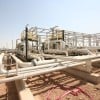
Iraq is expected to compete with both Iran and Russia in the natural gas market in Turkey and Europe, thanks to its geographic location and prices, according to a report from Al Sumaria TV.
A marketing expert on the sidelines of the Kurdistan Oil & Gas conference told the agency:
“The European Union has real interests in Iraq’s Kurdistan region. Kurdistan’s biggest opportunities will be coming from the European Union which wants to import gas from Middle East and Kurdistan region is on its borders. Turkey’s demand for gas will double in the upcoming decade and Kurdistan region should move along in works and start competing in that market.”
Saad Saadallah, trade counselor for the Ministry of Natural Resources in the Kurdistan Region Government said:
“Kurdistan region can start exporting gas after meeting all the needs of the local market. It would be able to aim at Turkish market by the year 2015 and to start competing with Russia and Iran, which is possible because of its geographic location.”
Aydın Selcen, Turkish consul general in Erbil said that Turkey’s development rate is very high and it should diversify its oil and gas import sources:
“We [import] a lot of gas from Russia and the best alternative would be Kurdistan region ... Turkey aims to reach the highest level of synergy with the region and we are doing so through highways, airlines as well as oil and gas transportation pipelines via the borders.”
“The development in oil and gas sector in Kurdistan region raised my interest”, said Jennifer College an expert in oil and gas affairs.
Turkey and Azerbaijan signed contracts to transport gas to turkey and via turkey towards Europe which raises the importance of Iraqi gas and helps to develop oil and gas transportation pipelines from Iraq to Turkey and via Turkey towards Europe, the expert added.
Iraq Kurdistan region has 45 billion cubic meters of gas reserves, sources in KRG confirm. Dana Gas and Al Hilal Oil, Emirati companies invest in Kurdistan gas sector. The two companies’ sources say they spent 900 million dollars as investments and produce nowadays 300000 cubic meters of gas used mainly to supply Kurdistan power plants in Erbil, Suleimaniyah and Duhok with their needs.
(Source: Al Sumaria TV)
(Picture: Dana Gas)
Posted in Iraq Oil & Gas News Comments Off on Iraq to Compete with Russia and Iran in Natural Gas Market
Iraqi Dinars "One of the Most Foolhardy Investments you can Make"
Posted on 11 November 2011 .
A local newspaper in Georgia, USA, reports that some local residents are buying Iraqi dinars in cash form, in the hope of profiting from a revaluation of the currency.
According to the Moultrie Observer, people are buying boxes of crisp Iraqi dinars that look fresh off the printing press. It goes on to quote a local commodities trader as saying he could possibly think of worse investments than Iraqi money at this time, but would be hard pressed to do so:
"If you want to make a wild investment, I'd buy Russian rubles ... It (the dinar) would be one of the most foolhardy investments you can make."
Meanwhile, CNBC columnist Kelley Holland says the dinar is the subject of a variety of scams, and regulators and watchdogs are sounding alarms:
"If someone has been telling you about the rosy prospects for the dinar, please, please, be careful. It's almost certainly too good a story to be true."
On Thursday, Komo News in Seattle, Washington, ran a news report on the dinar and interviewed one woman who had actually bought what she believes to be Iraqi dinars on the internet. You can find the full video report on the next page ...
Posted in Investment 651 Comments
ARINC Delivers New Air Traffic Control for Iraqi Air Force
Posted on 10 November 2011 .
ARINC Engineering Services, LLC today announced it has completed the procurement, integration, testing, and installation of new Air Traffic Control Tower (ATCT) systems and equipment for two bases of the Iraqi Air Force.
The new technology will allow Iraq’s Air Force to establish efficient operational control with modern equipment in the control towers at Tikrit and Taji Airbases, as part of the rebuilding of Iraq.
ARINC performed the work under a U.S. Air Force Foreign Military Sales (FMS) contract, awarded by the USAF Electronic Systems Center (ESC) Aerospace Management Systems Division.
ARINC completed the first equipment installation earlier this year at Tikrit Airbase, and the second installation at Taji was handed over to representatives of ITAM, the Iraq Training and Advisory Mission, in September. ARINC’s Charleston, SC-based installation and integration team completed both of the technology installations despite disruptions caused by construction delays and frequent brownouts.
“The team’s ability to improvise, adapt, and overcome was key to ARINC’s success on the ground in the dynamic environment of post-war Iraq,” stated Rivers Cleveland, ARINC Director. “The success of this project is a testament to the collaboration and teaming of the Electronic Systems Center, ITAM, and ARINC.”
ARINC’s work enables the U.S. government to deliver turnkey operational Air Traffic Control Towers to the Iraqi Air Force as part of the rebuilding of Iraq. It is a key step in helping them operate autonomously with modern facilities and equipment. The new equipment replaces outdated Russian systems and will allow Iraqi personnel to manage their airspace in accordance with modern FAA guidelines. This could open the door for more civilian overflights, and possibly the opportunity for increased revenue.
The U.S. Air Force FMS contract was managed by the ARINC Engineering Services Program Office in Charleston, SC. ARINC Engineering Services will continue to provide maintenance and logistics support services at Tikrit and Taji to maintain the equipment installed as part of this program.
ARINC Incorporated, a portfolio company of The Carlyle Group, provides communications, engineering and integration solutions for commercial, defense and government customers worldwide. Headquartered in Annapolis, Maryland with regional headquarters in London and Singapore, ARINC is ISO 9001:2008 certified.
(Source: ARINC)
Posted in Security Comments Off on ARINC Delivers New Air Traffic Control for Iraqi Air Force
500-MW Power Station Approved in Thi Qar
Posted on 05 November 2011 .
The Provincial Council of Thi Qar [Dhi Qar] has announced that the ministry of electricity has approved the award of a contract to build a 500-megawatt power station to a local company.
Aswat al-Iraq reports that the council expects the work to start this month, after verifying the company's records and abilities.
The contract had previously been withdrawn after the resignation of ex-electricity minister Raad Shalal, as Deputy Premier for Energy Affairs Hussein Shahristani cancelled all contracts with Iraqi companies.
There are two power generation stations in Thi Qar. The first was built by a Russian company in 1978 and has a capacity of 800 megawatts, and the second is the gas powered station with 40 megawatt capacity.
(Source: Aswat al-Iraq)
Posted in Iraq Public Works News Comments Off on 500-MW Power Station Approved in Thi Qar
LUKoil Starts Drilling at West Qurna-2
Posted on 26 October 2011 .
Russia's RIA Novosti reports that the country's largest private oil firm, LUKoil, has started exploration drilling on the giant West Qurna-2 oilfield in Iraq.
Company head Vagit Alekperov said on Tuesday, "we have launched drilling, well borers are already there".
In 2009, a consortium comsisting of LUKoil and Norway's Statoil won a tender to develop one of the world's largest oilfields West Qurna-2, whose recoverable reserves are estimated at 12.9 billion barrels of oil.
(Source: RIA Novosti)
Posted in Iraq Oil & Gas News Comments Off on LUKoil Starts Drilling at West Qurna-2
Iraq Earmarks $50bn for Airport Projects
Posted on 26 October 2011 .
According to The Saudi Gazette, the Iraqi government has earmarked an estimated $50 billion for airport development projects in Iraq over the next few years.
Iraqi Airways is scheduled to add new 55 Boeing and Bombardier aircraft to its fleet soon.
The emerging markets of China, Russia, India, the Middle East, and Africa are forecast to be among the growth leaders in airport infrastructure development spending over the next few years.
Abdulmunaim M. Ismail and Ghaml Darweesh Al Isuozah, special advisors to Benkin Regane, Iraq's Deputy Minister for Technical Affairs with Ministry of Transport , will make a presentation on Iraqi government's plan to spend $150 billion for the infrastructure program related to airports, sea ports and railways. Special focus will be on ongoing and new transportation projects in Baghdad, Basra, Dohuk, Karbala, Salhaddin province etc. The Umm Qasr seaport expansion and country-wide railway network projects will also be highlighted.
"The presentations by Iraqi authorities will provide an overview of business opportunities available at the airports in Iraq, assesses challenges and obstacles with a view to mitigating them, leading to business opportunities for all," said Raj Menon, General Manager of Arabian Reach, the organizers of the conference. "We were happy to have them as our featured speakers and are even happier to note that EMASC 2011 is on the road to becoming one of the largest airport suppliers event ever held in the Middle East."
(Source: The Saudi Gazette)
Posted in Iraq Transportation News Comments Off on Iraq Earmarks $50bn for Airport Projects
Foreigners Invest in Iraq's Bourse, Expect Boom
Posted on 24 October 2011 .
According to a report from Reuters, with better regulation and the expected listing of the country's three main mobile phone firms, foreign investors are increasingly choosing Iraq's stock market as a lucrative investment.
Iraq's bourse is still tiny in comparison with other regional or international stock markets, but a drop in violence since the peak of sectarian fighting in 2006-2007 and the scope for quick growth is lifting interest.
Taha Abdulsalam, chief executive of the Iraq Stock Exchange (ISX), recently announced that the volume of shares traded through Sept. 30 this year was $495 million compared with $337 million in full-year 2010.
The ISX, which started operating in 2004 and currently has 86 listed firms, is one outpost of private investment outside of the oil industry in a country still dominated by state firms.
The number of shares foreign investors bought through to end-Sept. this year was 66 billion, valued at $110 million, Abdulsalam said. Foreign trading was almost non-existent a few years ago.
Russian-based 55 North Company is a bold example of foreign appetite in the ISX.
The firm plans to establish an investment fund worth $25 million, its managing director Paul Collison said, the maximum it can invest right now due to the low level of liquidity in Iraq's stock market.
"It is important to start early on... it is a fantastic opportunity for a small fund to get established," he said.
Panu Saukkonen, a senior partner at Finnish Virtus Capital Oy Company which started investing in the Iraqi bourse three years ago, said Iraq was a great choice to invest in as there is no serious competition and market values are still low.
The three mobile phone operators, Asiacell, Korek Telecom, and Zain Iraq, are required by the terms to their licences to list shares on the local bourse, and this could see the ISX's current market capitalisation of $4 billion double, Abdulsalam told Reuters last week. .
Oliver Emanuel, executive director of Middle East and North Africa sales and trading at Morgan Stanley, said the initial public offerings by Iraq's mobile phone firms would give a great boost to the local market.
"The upcoming telecom IPOs will no doubt act as a catalyst for the Iraq stock market precipitating greater focus by international and regional investors, helping improve liquidity," Emanuel said.
Investors said the implementation of some regulations such as custodian bank services and share trading settlement could further open the market for more foreign capital.
A share trading settlement would allow non-Iraqi investors up to two days to arrange their payment after making a trade, compared with currently having to pay before conducting a trade.
Saukkonen said having a custodian bank could boost its investment by at least 10 times within three years.
The head of the Iraqi Securities Commission (ISC), Abdulrazaq al-Saadi, said custodian regulation would be issued in November.
The ISX moved from manual to automated trading in 2009 and is open for trading for two hours a day, five days a week. Each trade takes around 8 seconds to process.
The banking sector is the largest on the bourse, which also lists industrial, insurance, hotel and agriculture firms.
Collison said he expected the ISX to grow quickly once an international bank takes on the custodian role but said the market would need to be closely monitored.
"The risk is you get a very quick bubble and it will lose 50 percent and that is exactly what happened in places like Russia," said Collison.
(Source: Reuters)
Posted in Investment Comments Off on Foreigners Invest in Iraq's Bourse, Expect Boom