



'Misappropriated' Computers for Children Recovered
Posted on 31 August 2010 .
AFP reports that 90 percent of the $1.9m batch of US-purchased computers destined for schoolchildren but allegedly sold off on the cheap have been recovered.
As we reported on Saturday, an unnamed senior official at Umm Qasr port had reportedly misappropriated the gift and auctioned the computers for just $45,700.
But customs chief Nofal Salim denied the claim, saying the sale was in accordance with a legal disposal procedure for all goods not claimed by the addressee 90 days after their arrival in Iraq.
"On May 19 we received a list from the port of Umm Qasr of containers arriving more than 90 days earlier and which had not been claimed," Salim said.
"No container belonging to the American military appeared on the list.
"However, there were two belonging to a company named Global, although there was no indication that they were destined for the education authorities in Babil province."
Global did not submit a claim for the containers until August 22, six months after their arrival, Salim said.
"The customs service in the south cancelled the sale and has recovered more than 90 percent of the cargo, which will be sent to the Umm Qasr port where the company can get them back."
But in a statement received on Saturday the US military disputed Salim's version of events.
"The disposition of the shipment was unknown until early April when the two containers, containing the computers, were identified through shipping documents," a spokesman from the US army's southern division told AFP.
"Once identified, US forces began coordinating transportation for the containers and computers from the port to Babil province.
"During this process the containers were declared abandoned by custom officials and subsequently put up for and sold at auction."
The US army commander in southern Iraq, Major General Vincent Brooks, called on Friday for "an immediate investigation into the actions of the Umm Qasr official."
Umm Qasr is a large port, and corruption issues led the British military to dismiss many officials there when they administered the facility following the 2003 US-led invasion that toppled Saddam Hussein.
(Source: AFP)
Posted in Iraq Education and Training News, Security Comments Off on 'Misappropriated' Computers for Children Recovered

Tenders for Seismic Surveys at West Qurna-2
Posted on 28 August 2010 .
Reuters reports that Russian energy company Lukoil and its partners have issued a tender for seismic surveys at Iraq's West Qurna-2 oilfield, according to a statement published on Saturday.
Lukoil, which along with Norway's Statoil won a contract to develop the field, invited companies to bid for carrying out 3D field seismic surveys at the oilfield, with a deadline of Sept. 26, according to a statement published in the Assabah newspaper.
Lukoil and Statoil signed a 20-year deal to develop the 12.9-billion-barrel West Qurna Phase Two oilfield in southern Iraq, in an auction in December, pledging to boost output to a plateau target of 1.8 million barrels per day (bpd).
Production at West Qurna will hit 120,000 bpd in 2012, a senior executive from Statoil said in April.
(Source: Reuters)
Posted in Iraq Oil & Gas News Comments Off on Tenders for Seismic Surveys at West Qurna-2

US-Donated Computers for Children Missing
Posted on 28 August 2010 .
The U.S. military is demanding to know what happened to $1.9 million worth of computers purchased by American taxpayers, and intended for Iraqi schoolchildren, that have instead been auctioned off by Iraqi officials for less than $50,000.
Reports from Associated Press and al Jazeera say the shipment of computers intended for schoolchildren in the central Babil province was auctioned by a senior Iraqi official at the southern port of Umm Qasr on Aug. 16 for $45,700 — before the computers could be sent to the province.
"United States Division-South Commander Maj. Gen. Vincent Brooks called for an immediate investigation into the actions of the Umm Qasr official to determine why computers destined for children to facilitate their education were approved for auction," said an American Milatary statement.
The port director, Talib Bayesh, told The Associated Press that the equipment had been sitting in the port for more than 90 days and that, according to the law, any items sitting in the port for more than three months without being claimed could be confiscated by the port and sold at public auction.
Transparency International's 2009 corruption perceptions index ranked Iraq as one of the world's most corrupt nations - 176th out of 180 countries.
(Sources: Associated Press, al Jazeera)
Posted in Iraq Education and Training News, Security Comments Off on US-Donated Computers for Children Missing
Gas Fields Bidding - Iraq Readies Contracts
Posted on 28 August 2010 .
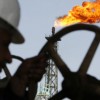
Iraq, site of the world’s third-largest oil reserves, will hold a third bidding round for gas fields which will take place on October 1, an Oil Ministry official has confirmed, according to a report from Bloomberg.
“Definitive model contracts and final tender protocols will be ready on September 10, and the bidding process will be on October 1,” Abdul Mahdy al-Ameedi, deputy director general at Iraq’s Petroleum Contracts and Licensing Directorate, said in a telephone interview.
“We expect the round to be a success, it is now all going fine and everything will be on time,” al-Ameedi said.
It held two licensing rounds last year for oil and gas investments, and the third is specifically for the gas fields Akkas, Mansouriya and Siba, which Iraq is eager to develop for domestic power generation as well as export revenue.
You can find more details of the gas fields here.
(Source: Bloomberg)
Posted in Iraq Oil & Gas News Comments Off on Gas Fields Bidding - Iraq Readies Contracts

UAE Firms Weighing Up Iraqi Oil Industry
Posted on 17 August 2010 .
Energy companies from the UAE are interested in investing as Iraq’s oil and natural-gas industries, a government official said.
“There are indications that the UAE will have a place in the petroleum and energy sector,” Abdullah Ibrahim Al Shehi, the country’s ambassador to Iraq, said on Monday at a gathering of diplomatic officials in Abu Dhabi.
Mubadala Development Co, the Abu Dhabi government-owned investor, is among companies that may be interested in expanding to Iraq, Al Shehi said. There is about $5 billion worth of bilateral trade between the UAE and Iraq, and that value is expected to increase to $7 billion next year, he said.
UAE property companies and airlines are looking to Iraq as a market for expansion. Ethidad Airways of Abu Dhabi started flights to Baghdad in April, and Dubai-based Emirates, the Middle East’s largest airline, plans to start flights to Baghdad this Year. Budget carrier FlyDubai travels to northern Iraq.
Abu Dhabi property developer Bloom signed a $12.5 billion [14.6 trillion Iraqi dinars] contract in March for a housing project west of Baghdad. Dana Gas, based in the UAE emirate of Sharjah, produces fuel in northern Iraq’s semi-autonomous Kurdish region.
Iraq, seeking to boost oil and gas output, held two bidding rounds last year to auction rights to develop hydrocarbon deposits. The country is planning a third round for three gas areas this year.
UAE companies previously wanted to invest in Iraq’s oil industry and lost out as other international firms won development rights, Al Shehi said. No U.A.E. companies qualified to bid in Iraq’s first two auctions last year, according to data from the Iraqi government.
Mubadala, which has exploration and production assets in Kazakhstan and Thailand, has joint ventures in the U.A.E. and Bahrain with U.S. producer Occidental Petroleum Corp., a partner to develop the Zubair oil field in Iraq. The Los Angeles-based company may sell part of its stake in the deposit to the Abu Dhabi investment arm, Chief Executive Officer Ray Irani said in October.
Petromal, an oil and gas explorer funded by members of Abu Dhabi’s ruling family, aimed to bid for Iraqi assets in auctions last year along with partner Premier Oil, the U.A.E. company’s CEO Radhwan Al Saadi said in an interview in Feb. 2009. Neither company qualified to bid in the auctions last year.
(Source: Arabian Business)
Posted in Construction & Engineering In Iraq, Investment, Iraq Oil & Gas News Comments Off on UAE Firms Weighing Up Iraqi Oil Industry
Iraq to Produce Natural Gas in 2 Years
Posted on 10 August 2010 .
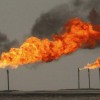
Iraq will produce natural gas in two years, and will become one of the most important gas exporters to Europe, according to a report from Aswat al-Iraq.
As we recently reported, the fate of the three gas fields of Akkas, Mansouriya and Siba will be decided in October.
A source from the Iraqi Oil Ministry told Aswat al-Iraq news agency on Monday that factors such as production levels and costs will be considered in evaluating the bids.
“Iraq will use only about 50% of the produced gas to generate electricity, while the rest will be exported,” the source added.
(Source: Aswat al-Iraq)
Related articles:
Posted in Iraq Oil & Gas News Comments Off on Iraq to Produce Natural Gas in 2 Years

Iraq Confirms Transit Of Iranian Gas To Europe
Posted on 10 August 2010 .
Following last week's announcement that Iraq will import gas from Iran, the country's senior deputy oil minister confirmed on Monday that it has tol Iran that it is ready to allow the transit of Iranian natural gas destined for Syria and Mediterranean countries.
Kareem Al Luaby gave the confirmation to Dow Jones Newswires by telephone from Baghdad, but gave no further details.
Iranian Student News Agency quoted a top Iranian gas official on Sunday as saying that the Iraqi oil and electricity ministers declared that the Iraqi government has permitted Iran's gas transit to Syria and Mediterranean states.
Javad Oji, managing director of the National Iranian Gas Co. said that the project would need a pipeline with a daily capacity of 110 million cubic meters to go through Iraq. This differs from the previously-reported figure of "300 million cubic feet", which is about 8.5 million cubic meters.
Meantime, an Iraqi oil official said that a delegation from the Iranian oil ministry was in Baghdad two weeks ago and met with Al Luaby and other senior officials in the Iraqi oil ministry. The official, however, said that he wasn't informed about the outcome of the meetings.
Earlier, another Iraqi oil ministry official said that such a decision would need to be made by the Iraqi parliament. "In addition to that, we don't have the infrastructure to transit Iranian gas to other countries," he said.
Iraq, which has the fifth highest gas reserves in the region, is trying to hold a bidding round for three major gas fields, with the aim of exporting half of the produced gas. However, international companies have been complaining that Iraq hasn't got the infrastructure to export its gas.
Iran holds the world's second largest reserves of gas. But plans to develop LNG schemes have been hit by the reluctance of Western oil companies to invest in them because of the sanctions imposed by Western countries on the country because of its attempts to acquire nuclear energy.
(Source: Dow Jones Newswires)
Related articles:
Posted in Iraq Oil & Gas News Comments Off on Iraq Confirms Transit Of Iranian Gas To Europe

Iraq to Import Gas from Iran
Posted on 04 August 2010 .
A memorandum of understanding signed with Iraqi officials calls for the import of as much as 300 million cubic feet (8.6 million cubic meters) of gas per day from Iran, an Iranian director said.
Javad Oji, a managing director at the National Iranian Gas Co (NIGC), said an Iranian delegation traveled to Iraq at the weekend to sign preliminary arrangements for Iranian natural gas exports through Iraq, the Iranian Oil Ministry's Petroenergy Information Network reports.
The director said the deal on the table includes the delivery of as much as 300 million cubic feet of gas per day for a period of five to seven years.
Both sides agreed to form technical, financial and legal working groups to hammer out the details of a final contract.
Delegates at the talks discussed the possibility of shipping Iranian gas to Europe through gas transit networks in Syria, he added.
Iran would most likely pump its gas to Iraq via two pipelines that cross the border at Dehloran and Khorramshahr.
Iran is pushing ahead with plans to build a natural gas pipeline to Pakistan. The country, which holds some of the largest natural gas deposits in the world, has also petitioned for a role in the Nabucco pipeline to Europe. Western supporters of the project ruled out that possibility, however.
(Sources: UPI, MEED, Tehran Times)
Related articles:
Posted in Iraq Oil & Gas News Comments Off on Iraq to Import Gas from Iran
Gas Auction Postponed, but Terms Sweetened
Posted on 02 August 2010 .
Iraq is about to sweeten the contract terms for its third bidding round for its three prized natural gas fields, in an attempt to entice international companies to enter the auction, according to a report in the Wall Street Journal.
Unlike oil deals for the first and second bidding rounds for oil fields last year, winning companies won't need to pay 'signature bonuses' to the Iraqi government for the three natural gas fields on offer, a company executive said on the sidelines of two-day roadshow held by the Iraqi oil ministry in Istanbul.
International oil companies have had to pay bonuses of between $100 million and $500 million for deals they won in the first and second licensing auctions.
Iraq has also delayed the bidding by a month, with it now scheduled to be held Oct. 1, according to a reporf from Reuters.
Iraq's oil minister, Hussein al-Shahristani, said that one of the incentives for interested companies would be to allow them to export 50% of the natural gas produced from these fields. The Iraqi government will commit to purchasing half of the gas produced.
However, for some companies the export clause is a "negative condition," said another company official. Iraq hasn't the infrastructure to export gas from these fields, he said. So if half of the produced natural gas would be for exports, pipelines, reservoirs and gathering stations for exports would need to be built. Companies also need to look for customers for the Iraqi gas, he added.
Bloomberg reports that developers will be paid on the basis of barrels of oil equivalent, and will not be involved in setting the prices of gas exports.
The three natural gas fields to be bid for are:
- the Akkas field in Anbar province, near the Syrian border, which the oil ministry puts at 5.6 trillion-cubic feet of gas reserves. Discovered in 1998, Akkas already has six wells, and Iraq is interested mainly in exporting associated gas produced there along with oil. There was a single bid for this field last year, from a consortium of five companies led by Italy’s Edison, but it was rejected;
- the Mansouriya field in Diyala, with 4.5 trillion-cubic feet of reserves. There were no bids for this last year. Discovered in 1979, this would be used first for domestic consumption, then later for exports, possibly supplying the proposed Nabucco pipeline; and,
- the Siba field, located in Basra province, with 1.13 trillion-cubic-feet of reserves and three existing wells. Discovered in 1968, Siba was withdrawn from a previous auction last year.
Fifteen international companies have so far shown interest in taking part in the third bidding round, reports the Wall Street Journal. Sabah Abdulkadhem al-Saaidi, head of the legal and commercial section at the oil ministry's petroleum contracts, also said that Aug. 20 would be the last date for companies to register for the natural gas bidding round.
The roadshow in Istanbul was reportedly attended by companies including Total of France, Italy's Edison, South Korea's KOGAS, India's Oil & Natural Gas Corp Japan Oil, Gas and Metals National Corp (JOGMEC), Itochu Corp, Russia's TNK-BP (half-owned by BP), Kuwait Energy, Turkey's state-run TPAO, and Kazakh KazMunaiGaz
It is believed that companies like Total, Royal Dutch Shell, and KOGAS are favoured because of their experience; the state energy companies may also take stakes of up to 25% in the projects, similar to the earlier oil contracts.
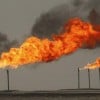
Despite huge gas reserves estimated at 112 trillion cubic feet—the fifth highest in the region, according to U.S. Energy Information Agency data—Iraq is producing 1.65 billion cubic feet a day of gas, some 700 million cubic feet a day of which is flared due to lack of infrastructure.
The goal is to fuel turbines ordered for new power stations with gas instead of crude, and the fields on offer could start commercial production in one to two years.
(Sources: Wall Street Journal, Reuters, Bloomberg)
Related articles:
Posted in Iraq Oil & Gas News 1 Comment

Eni to Award Oilfield Drilling Contracts
Posted on 28 July 2010 .
Italian oil major Eni is expected to award a tender to drill more than 100 new oil wells at its Zubair oil field in southern Iraq in August, according to a report from Dow Jones.
"We received the bids and we are in the process of assessing them," an executive told the news agency.
Several well-known oil services companies submitted offers, including Weatherford International Ltd (WFT), Schlumberger AS (SLBS.VI) and Egyptian General Petroleum Corp. among others, the executive said. The wells will be drilled over three years.
On Tuesday ENI reported that it will be "[reinforcing] the cooperation between Eni, the [Egyptian] Ministry of Petroleum, and the two Egyptian state oil and gas companies, EGPC and EGAS".
Earlier in June, Eni said it would drill 12 new wells and 'overwork' five others this year to boost output by 10%, according to its initial plan. The field, with 6.5 billion barrels of proven oil reserves, is currently producing 183,000 barrels a day.
Eni, in partnership with Occidental Petroleum Corp. and Korea Gas Corp. (Kogas), set a plateau target of 1.2 million bpd for Zubair to be reached in 2016.
The consortium won the right to develop the field at Iraq's first postwar licensing auction last year. The license for the field wasn't awarded at the auction in June, but a deal was reached in January this year following subsequent negotiations.
Eni has a 32.81% stake in the venture, while Occidental holds a 23.44% stake, Kogas 18.75% and Iraq's state-run Missan Oil Co. holds the remaining 25%.
(Sources: Dow Jones, ENI)
Related articles:
Posted in Iraq Oil & Gas News Comments Off on Eni to Award Oilfield Drilling Contracts