


Appraisal Wells Planned for Garraf
Posted on 24 July 2010 .
Malaysia's Petronas and Japan Petroleum Exploration (Japex) are planning to award a deal shortly to drill several wells at Iraq's untapped Garraf [Gharraf] oil field in southern Iraq, a company executive said.
The consortium is planning to drill two appraisal wells at Garraf, in Dhi Qar province, starting in November, he said.
"We have issued a tender but we haven't awarded it yet," the executive told Dow Jones Newswires.
The Petronas-Japex alliance was awarded the deal to develop Garraf, with estimated proven oil reserves of one billion barrels, during the country's second licensing auction in December last year.
The field was discovered in 1984, but has not yet been developed. It is situated 5 km northwest of Al-Refaei city, 9 km southeast of Qal’at Suker city, and 85 km north of Nasiriyah.
The executive said the consortium is in discussions with tribesmen who had allegedly refused to cede their ancestral lands peacefully without a cash payment from the two companies.
"We are in discussions with them," the executive said.
The alleged extortion drew condemnation from the Iraqi oil ministry, and the tribal sheiks have since denied any threat of violence, saying that they merely approached the two companies with a request.
Local leaders appear to have helped mitigate the tribal pressures, an Iraqi oil industry source said.
The companies pledged to boost crude oil production from Garraf to 230,000 barrels a day in 2016 and accepted $1.49 for each barrel produced.
Petronas holds 45% stake in the venture, Japex owns 30%, while the remaining 25% sake is owned by Iraq's state oil company.
(Sources: Upstreamonline.com, Dow Jones, Iraqi Ministry ofOil)
Related articles:
Posted in Iraq Oil & Gas News Comments Off on Appraisal Wells Planned for Garraf
Occidental, Pertamina Consider Sonangol's Iraq Deals
Posted on 19 July 2010 .
US oil major Occidental Petroleum Corp and Indonesian state oil firm Pertamina have shown an interest in taking a stake in Sonangol's two Iraqi oilfield development projects, a company official said on Sunday.
"Our proposal will be for Sonangol to have 45 per cent in Najmah and Qayara [Qaiyarah]," Sonangol executive J. da Graca Luis told Reuters in Baghdad, on the sidelines of a meeting between oil companies and the Oil Ministry.
"The rest will be for Occidental or Pertamina or whoever," Luis said. Sonangol currently has a 75 per cent stake in the oilfield projects, with the state oil company holding 25 per cent.
Dow Jones reports that the companies will meet in August to discuss co-operation.
According to the plan, Sonangol would boost production from the two fields to 50,000 barrels a day in 2013, of which 20,000 barrels a day will come from Najmah and 30,000 barrels a day from Qaiyarah oil fields. Four to five rigs are needed to drill these wells, according to the Dow Jones report.
The two fields, each holding some 800 million barrels of proven oil reserves, are located near the volatile city of Mosul, 400 kilometers north of Baghdad.
The company will drill up to 40 wells in both fields next year, but this depends on the availability of rigs, Luis said. It will also start building camps this year, he added.
Two oil licensing auctions last year awarded 11 deals to international oil companies that promise to add nearly 10 million barrels a day of capacity to Iraq's existing 2.5 million barrels a day by 2017.
Sonangol was awarded the two fields last year. According to the 20-year contracts, the firm needs to boost production from the Qaiyarah and Najmah oil fields to 120,000 barrels a day and 110,000 barrels a day at a fee of $5 and $6 a barrel, respectively.
(Sources: Reuters, Dow Jones)
Related articles:
Posted in Iraq Oil & Gas News Comments Off on Occidental, Pertamina Consider Sonangol's Iraq Deals
BP to Raise Iraq Output by 100,000 bpd
Posted on 19 July 2010 .
British oil major BP, along with its partner China National Petroleum Corp, plans to increase production from Iraq's Rumaila oil field by more than 100,000 barrels a day at the beginning of next year, a BP executive said Sunday, according to a report in the Wall Street Journal.
"Initial production will go up by 10% (at the) beginning of 2011," Michael Townshend, president of BP Iraq, told a two-day symposium held by the Iraqi oil ministry in Baghdad to discuss the co-ordination and implementation of the country's oil expansion plans.
Two oil licensing auctions last year awarded 11 deals to international oil companies that promise to add nearly 10 million barrels a day of capacity to Iraq's existing 2.5 million barrels a day by 2017.
The Rumaila field, with some 17 billion barrels of proven oil reserves, is currently producing 1.07 million barrels a day.
The BP-led consortium has pledged to almost triple production at the field to 2.85 million barrels a day in six years.
BP holds a 38% stake in the venture, while CNPC has 37% and Iraq's state-run South Oil Co. the remaining 25%. The three contractors will receive a fixed fee of $2 for each additional barrel of oil produced from Rumaila.
Rumaila also has the potential to produce 1 billion cubic feet of gas a day, Townshend said.
(Source: Wall Street Journal)
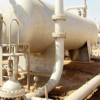
(Picture: BP Rumaila)
Related articles:
Posted in Iraq Oil & Gas News Comments Off on BP to Raise Iraq Output by 100,000 bpd
International Oil Symposium in Baghdad
Posted on 18 July 2010 .
Iraq's oil ministry is holding an international symposium beginning on Sunday to discuss the best ways for the government to co-ordinate and implement the country's oil expansion plans, a senior Iraqi oil official said Thursday.
Two oil licensing auctions last year awarded 11 deals to international oil companies that promise to add nearly 10 million barrels a day of capacity to Iraq's existing 2.5 million barrels a day by 2017.
"We will discuss the pace of implementation of the signed deals," Sabah Abdulkadhim al-Saaidi, head of legal and commercial office at the petroleum contracts and licensing directorate, told Dow Jones Newswires.
Saaidi said that the ministry has invited all the firms involved in the oil field projects to discuss their plans for development and the requirements and obstacles that lie ahead.
The symposium is expected to come out with recommendations that will be referred to the cabinet to be approved as guidelines for all ministries and relevant authorities to back the implementation of these oil field deals, Saaidi said.
"This intensive two-day program will issue recommendations to be referred to the cabinet to be approved as guidelines for all the ministries and relevant authorities to support the implementation [of the expansion]," Abdul Mahdy al-Ameedi, head of the Petroleum Contracts and Licensing Directorate, previously told International Oil Daily.
The two-day meeting is organized by the ministry of oil in co-operation with the cabinet's energy committee. The ministries of industry, trade, interior, finance and environment will send representatives to outline how they will support the oil ministry's efforts in implementing these strategic projects. In addition, officials from the local governments of Basra, Missan, Wasit and Dhi Qar and Nineveh will be also attending.
Iraq holds the world's third largest proven reserves of crude oil, with more than 115 billion barrels, but its oil infrastructure is creaking after decades of sanctions, war and neglect, and in dire need of boosting its oil production to help rebuild its war-torn infrastructure.
Baghdad signed late last year and early this year some 11 deals with international oil companies, including the majors such as BP PLC (BP), Royal Dutch Shell PLC (RDSA), Exxon Mobil Corp.(XOM), Total S.A. (TOT), Eni SpA (E) and Lukoil Holdings (LKOH.RS) among others.
(Source: Dow Jones, International Oil Daily)
Posted in Iraq Oil & Gas News Comments Off on International Oil Symposium in Baghdad
WiMAX Improves Communications in the Arab World
Posted on 16 July 2010 .
By end of June 2010, 26 out of 55 operators licensed to offer WiMAX offered the service. WiMAX is commercially available in Algeria, Bahrain, Iraq, Jordan, Kuwait, Lebanon, Libya, Morocco, Saudi Arabia, Tunisia and the UAE. Moreover, Yemen and Oman are slated to WiMAX services in the second half of 2010.
WiMAX stands for World Interoperability for Microwave Access. WiMAX/IEEE 802.16 is a global standard-based technology for Broadband Wireless Access. WiMAX is a broadband wireless technology that is largely supported by the computer and the telecom industry. Its guarantee is that it is engineered to deliver ever-present fixed and mobile services such as VoIP, Information Technology and Video at relatively low cost. Furthermore, WiMAX vendors state that WiMAX systems are able to cover a large geographical area (up to 50 km) and to deliver significant bandwidth to end-users at up to 40 Mbps. WiMAX technology can be deployed as a Point Multi-Point in last mile connection and as part of the backhaul to the PSTN and Internet access points.
The first commercial deployment of WiMAX in the Arab World was in Algeria in 2007. Moreover, by end of June 2010, a total of 26 service providers in 11 countries (including Algeria) in the MENA region offered WiMAX. The Arab Advisors Group expects an increase of 3 operators, at least, by end of 2010. A new report, “WiMAX in the Arab World 2010” was released to the Arab Advisors Group’s Telecoms Strategic Research Service subscribers on June 19th, 2010. This report can be purchased from the Arab Advisors Group for only US$ 950. The 37-page report, which has 51 detailed exhibits, investigates the availability of WiMAX regulations in 18 Arab countries, the frequencies used, entities that have tested WiMAX or pre-WiMAX services, and vendors for equipment. The report covers the following Arab countries: Algeria, Bahrain, Egypt, Iraq, Jordan, Kuwait, Lebanon, Libya, Mauritania, Morocco, Oman, Palestine, Qatar, Saudi Arabia, Syria, Tunisia, UAE, and Yemen. Any investment in this report will count towards an annual Strategic Research Service subscription should the service be acquired within three months from purchasing the report. Please contact the Arab Advisors Group to get a copy of the report’s Table of Contents. “There are still no detailed regulations specific to WiMAX in some Arab countries. Still, a few have specified the type of license that needs to be obtained to provide WiMAX service. For example, in Algeria, the company should have a VoIP authorization and the regulator’s specified band for WiMAX. In Jordan, the company should have an individual license needed to use the frequency (a scarce resource) as well as win the spectrum auction for WiMAX.” Alaa Numair, Research Analyst at Arab Advisors Group noted in the report.
The top three frequencies allocated to operators in the Arab world are 3.5 GHz, 3.6 GHz and 2.6 MHz. The 3.5 GHz band, allocated to 19 out of 55 licensed operators to provide WiMAX, is the most common allocated frequency in the Arab countries. 3.6 MHz and 2.6 MHz followed with 8 and 7 licensed operators, respectively. Tareq Masarweh, Research Analyst at Arab Advisors Group added. The Arab Advisors Group’s team of analysts in the region has already produced over close to 1,920 reports on the Arab World’s communications and media markets. The reports can be purchased individually or received through an annual subscription to Arab Advisors Group’s (www.arabadvisors.com) Strategic Research Services (Media and Telecom). To date, Arab Advisors Group has served over 600 global and regional companies by providing reliable research analysis and forecasts of Arab communications markets to these clients.
Posted in Iraqi Communications News Comments Off on WiMAX Improves Communications in the Arab World

Iraq Oil Revenues 95% of State Income
Posted on 15 July 2010 .
Revenues from oil sales account for 95 percent of Iraq's income, Oil Minister Hussein al-Shahristani said on Tuesday, underlining the war-battered nation's reliance on crude to rebuild its economy.
Shahristani said Iraq raised 171 billion dollars from sales between 2006-2009, which accounted for all but five percent of the government's income during those years.
Shahristani said the following amounts were raised from oil:
- $30bn in 2006;
- $40bn in 2007;
- $60bn in 2008; and,
- $41bn in 2009.
The decline in revenues in 2009 was likely attributed to a fall in global crude prices in the second half of the year.
Iraq produces about 2.5 million barrels per day (bpd) of crude, of which it exports 1.85 million, according to Shahristani.
Last year, Iraq held two auctions of its oil fields for development, the first time foreign energy firms have had the opportunity to plant a foot firmly in the country since its energy sector was nationalised in 1972.
Some 10 deals were agreed at the auctions, and one more signed since will, if fully realised, ramp up Iraq's oil output five-fold to 12 million bpd, putting it on a par with the world's top producer Saudi Arabia.
At 115 billion barrels, Iraq has the world's third-largest proven oil reserves, behind only Saudi Arabia and Iran.
However, there has been little exploration or development of fields in the past three decades because of wars and a UN embargo imposed on Iraq in 1990 following now executed dictator Saddam Hussein's invasion of Kuwait.
(Source: AFP)
Posted in Iraq Oil & Gas News Comments Off on Iraq Oil Revenues 95% of State Income
Multi-billion Gas Deal with Shell and Mitsubishi
Posted on 01 July 2010 .
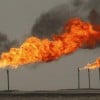
Iraq's cabinet has approved a multi-billion dollar deal with Royal Dutch Shell and Japan's Mitsubishi Corp. The deal, signed on Tuesday, will provide much needed electricity from natural gas that is currently being burned off.
The State-owned South Gas and Basra Gas companies in southern Iraq will take a 51 percent stake in the contract, with Shell taking 44 percent, and Mitsubishi taking a 5 percent share.
Lacking the technology needed to capture the gas for power generation, Iraq produces a negligible quantity of gas compared with the size of its reserves, and currently flares off most of what is produced as a by-product of its crude oil production.
The joint deal with Shell and Mitsubishi will exploit gas in the Rumaila, Zubair, West Qurna and Majnoon fields near Basra.
At the time said the deal was first proposed in 2008, the government expected it to be worth around $4bn, but no specific financial figures were given on Tuesday.
As we reported recently, Iraq has invited international energy firms to submit bids in an auction for three gas fields, in a third major tender aimed at developing the war-torn state's oil and gas sectors.
Existing power plants in Iraq have proved incapable of generating sufficient electricity to meet peak summer demand, forcing draconian rationing that sees consumers receive supply for one hour in five, or less.
Iraq's LNG reserves are estimated at 110 trillion cubic feet.
(Sources: AFP, WSJ)
Posted in Iraq Oil & Gas News 1 Comment
BP President of Iraq on Progress of Rumaila Development
Posted on 22 June 2010 .
22 June 2010 (Source: PressReleaseNetwork.com)
For the first time in more than three decades, two oil and gas exploration license bidding rounds took place in Iraq in 2009. The first round saw a consortium consisting of the UK's BP and China's CNPC spearheading IOC activities as they won the first 20 year service contract to develop Iraq's Rumaila oil field, which holding 17.8 billion barrels in crude reserves, is Iraq's largest oilfield and one of the largest in the world.
The Energy Exchange catches up with Michael Towshend, BP President of Iraq ahead of the Iraq 2010: Future Energy conference.
The Energy Exchange: It has been sometime now since BP and CNPC were first awarded the 20 year service contract for Rumaila, can you briefly tell us, how are thing progressing? What in your opinion would you say were the main obstacles that you faced being the first IOC to enter Iraq from such an auction?
Michael Townshend: It is now six months since the contract became effective and much work has been achieved. The Joint Management Committee has been formed and is meeting regularly with partners of South Oil Company (SOC), PetroChina and SOMO. Along with the initial production rate, the annual work programme and budget was approved early on. Key contracts have been awarded and plans are in place to double the activity in the field towards the end of the year. Key appointments have been made at the senior and team leader level and from July the Rumaila Operating Organisation will be established which will run the Rumaila field.
It's been a great opportunity for BP and our partners. We have worked on Rumaila for a long time in the past and know the field well, plus over this last six months we have spent time working closely with SOC and PetroChina to develop plans to increase the field production over time.
The Energy Exchange: You teamed up with CNPC (PetroChina) for the consortium. Were there any major factors that they brought to the table which complimented BP and will help in the development of the field?
Michael Townshend: BP, SOC and PetroChina have complementary strengths. All world class companies, with SOC having deep expertise in running Rumaila, Petrochina with an already established presence in Iraq and access to a diverse and competitive supply chain.
The Energy Exchange: An important role of the IOC working in Iraq today is that of information and knowledge transfer through employment opportunities, training and best practice knowledge sharing. On Rumaila, are BP actively working with local companies and actively encouraging the local workforce to work in the oil and gas sector?
Michael Townshend: One of the largest direct employment and training opportunities will come through the 3,000 plus SOC staff that are transferred into the Rumaila Operating Organisation which will run the field. In addition and from the start Iraqi companies will have the opportunity to participate. Recently the Iraq Drilling Company won the tender for the supply of rigs and associated services for the field. In addition the Base camp being constructed is mostly through Iraqi companies.
In terms of training we have already started working with the British Council, undertaking preliminary English language needs assessment for staff working on Rumaila. Its still early days though and over the course of the next year we will start to develop more comprehensive programmes.
The Energy Exchange: In terms of getting to grips with production from Rumaila, what role are both the local and international technology and service providers playing in helping you to increase oilfield performance? Are you finding the technology needed locally or is there a requirement for international support?
Michael Townshend: It's not a question of either/or. The point about the contracts was to bring the best of local experience and knowledge with expertise from around the world. The recently awarded drilling contracts are an example of this where we have a mixture of international and local companies.
The Energy Exchange: Through the Rumaila field, do you envisage further opportunities to diversify within Iraq? Will BP become involved in downstream operations focusing upon refinery and petrochemical mega projects or do you see your efforts remaining mainly in upstream projects?
Michael Townshend: Our priority is Rumaila. This is a giant field and worthy of our full attention. We are a long term partner of Iraq and although we have other activities in the country, and will always look for other opportunities, the Rumaila field rightly deserves our foremost focus.
Posted in Iraq Oil & Gas News Comments Off on BP President of Iraq on Progress of Rumaila Development

Local Iraqis Oppose New Oil Deals
Posted on 17 June 2010 .
In June 2010 Iraq Oil Report had two stories about locals in southern Iraq who opposed the government’s new oil deals. In Dhi Qar, tribal leaders stopped an oil exploration company from doing their work, and threatened them with violence if they didn’t give them money for using their land. Sheikhs also asked Malaysia’s Petronas, which won an auction for the Gharraf field in Dhi Qar in December 2009, to pay them as well.
In southern Iraq, marsh Arabs claimed that oil companies were encroaching on their property and forcing them out. The Arab Marshes Revival Committee also said that their territory was being polluted by petroleum projects. As development steps up on Iraq are other oil fields, more Iraqis may begin protesting.
The first demonstrations actually began last year in Wasit province. There the China National Petroleum Corporation (CNPC) won the first post-Saddam oil contract for the Ahdab field. Shortly after the foreign company began work, farmers started destroying equipment and demanding compensation for damages to their land.
One news story said that the locals caused up to $1 million in damages. They also complained that the company had not hired any locals for jobs as they had hoped. As a result, CNPC actually shut down operations for a month until the government deployed more security for them.
Iraqi’s Oil Ministry has signed twelve oil deals in the last two years. It’s hoping that they will dramatically boost exports, which account for 90% of the government’s revenue, and provide jobs and development as well. The 2010 budget will also pay provinces that produce oil $1 per barrel.
Some Iraqis are not satisfied with these promises, and are taking matters into their own hands by protesting against encroachments upon their property, and threatening international oil companies unless they are paid directly.
This could cause problems for the Oil Ministry’s plans, and may ironically lead the government to crackdown on its own people to develop the country’s greatest resource. This is an issue that needs close attention as the work on the petroleum fields unfolds.
CBI Dollar Sales Up to $182m
Posted on 09 June 2010 .
The Central Bank of Iraq (CBI) dollar sales went up to reach $182.444 million in its daily auction Tuesday, compared to $82.740 million in the previous session.
“The demand hit $4.690 million in cash, covered at an exchange rate of 1,183 Iraqi dinars per dollar, and $177.754 million in foreign transfers outside the country, covered at an exchange rate of 1,173 Iraqi dinars per dollar,” according to a CBI news bulletin received by Aswat al-Iraq news agency.
( Aswat Al Iraq )
Posted in Iraq Banking & Finance News 1 Comment